
 PHOTO COURTESY KVH
Middletown, R.I.-based KVH Industries reported total revenues for the second quarter of $34.2 million, down 1% from $34.6 million in the same period in 2022. Net income from continuing operations was $900,000, compared with net losses from continuing operations of $200,000 in 2022.
“Our increased strategic focus on service revenue opportunities continued to generate growth in the second quarter as our airtime service revenue was up in comparison to the same period last year, while our subscriber base increased to more than 7,140,” CEO Brent C. Bruun said in a statement. “We also established a robust pipeline for our new OpenNet program, which brings non-KVH antennas onto our global VSAT network and opens a new service revenue stream that is not reliant on hardware sales or shipments.”
He added that the company is experiencing headwinds driven by new LEO services, a transition to streaming content instead of satellite TV, and a corresponding reduction in satellite TV and leisure VSAT terminal sales.
“As a result, our quarterly revenue declined 1% versus the second quarter last year,” Bruun said. “In light of the changing market and competitive environments, we are tempering our guidance for the full year. We now anticipate revenue of $133 million to $139 million, with continued growth in both service revenues and adjusted EBITDA from $12 million to $15 million.”
VSAT airtime revenue increased $1.1 million to $26.9 million, or 4%, compared with the second quarter of 2022. Net income from continuing operations was $900,000, or 5 cents per share, compared with net loss from continuing operations of $200,000, or 1 cent per share, in the prior-year quarter.
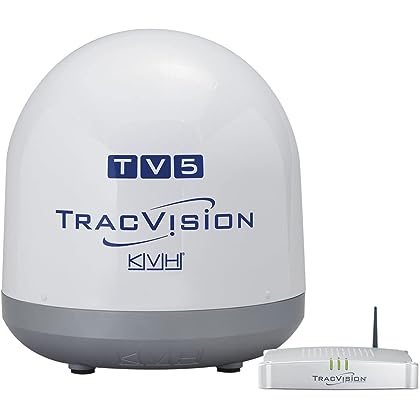
Product revenues for the quarter were $5.4 million, an 18% decrease. This was due primarily to a $1.8 million decrease in TracVision product sales partially offset by increases in VSAT antenna and other product sales.
Service revenues were $28.7 million, an increase of $800,000, driven primarily by a $1.1 million increase in VSAT service sales.
Operating expenses decreased $3.5 million to $11.7 million for the quarter, compared with $15.2 million in 2022.