
For 34 months, U.S. workers’ pay increases outpaced inflation, but that streak is now over, and it’s not good news for the recreational boating industry and other big-ticket consumer industries.
The Commerce Department said Thursday that the Personal Consumption Expenditures Price Index — the Federal Reserve’s preferred inflation gauge — rose 3.8% on a year-over-year basis in April, topping the 3.6% rise in average hourly earnings for workers on private, non-farm payrolls for the same month in the Labor Department’s jobs report.
The government’s fresh report on inflation followed the Labor Department’s report earlier this month that the Consumer Price Index for April also rose 3.8% on an annual basis, as well as lower readings for May in both major U.S. consumer confidence surveys.
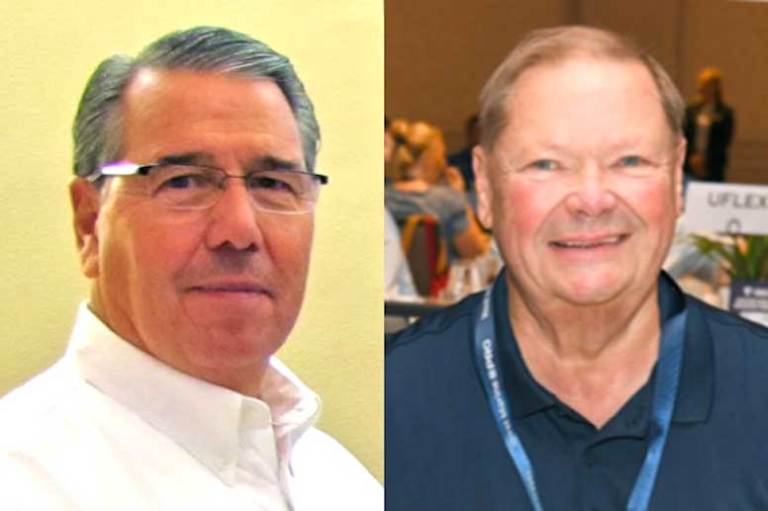
“The April PCE print marks an important crossover,” Brian Thompson, an investor and clinical professor of economics at DePaul University in Chicago, told Trade Only Today. “For a long stretch, real wage growth was providing a tailwind to consumer purchasing power; with the price index now running ahead of earnings, that tailwind has stalled.
“For recreational boating, this should be read alongside the sentiment numbers, rather than in isolation,” Thompson added. “I would expect the impact to be most pronounced in the entry- and middle-market segments, where buyers are wage-dependent and exposed to rising fuel, insurance and slip costs. The premium end is largely insulated, where those buyers are still benefiting from rising asset prices.”
The government also reported Thursday that consumer spending was up by a solid-looking 0.5% in April, but adjusted for inflation the gain was only 0.1%.
“The 0.5% nominal spending figure looks fine on the surface, but the 0.1% real reading is what matters — consumers are paying more for roughly the same volume of goods, which is a yellow flag for discretionary categories,” Thompson said.
Meanwhile, the U.S. consumer’s mood continues to worsen.
The Conference Board said Tuesday that its Consumer Confidence Index fell 0.7 points in May, to 93.1, from an upwardly revised 93.8 in April. And last week, the University of Michigan said its final Consumer Sentiment Index for May fell 5 points, to 44.8, marking another all-time low for the 74-year-old measure, from 49.8 in April.
For the boating industry, Thompson said, news that the era of pay gains topping the inflation rate has ended should be read alongside the consumer sentiment numbers, rather than in isolation.
“I would expect the impact to be most pronounced in the entry- and middle-market segments, where buyers are wage-dependent and exposed to rising fuel, insurance and slip costs,” he said. “The premium end is largely insulated, where those buyers are still benefiting from rising asset prices.”
Thompson said the two consumer surveys are telling different parts of the same story, and both are worth hearing.
“The Conference Board reading reflects the fact that, for now, people who have jobs still have jobs,” he said. “The labor market has slowed but has not broken, and that provides a floor under household confidence. The Michigan reading is picking up the other side: The cost-of-living squeeze is real, and households feel it every time they fill up at the pump or do a grocery run. When that index falls below its prior all-time low, the personal-finance lens has gotten very dark, even if the employment lens has not.
“For boating heading into summer, the Michigan signal probably matters more,” Thompson added. “A boat purchase is much closer to how people feel about their household finances than to whether their neighbor still has a job. I would expect dealers to see longer decision cycles, more buyers walking the lot multiple times before committing, and more sensitivity to all-in cost of ownership than to sticker price alone.”
Joanne Hsu, director of the University of Michigan’s Surveys of Consumers, stated in a press release accompanying its May results that the gauge “is now just below the previous historical trough seen in June 2022.
“The cost of living continues to be a first-order concern, with 57% of consumers spontaneously mentioning that high prices were eroding their personal finances, up from 50% last month,” Hsu said. “Lower-income consumers and those without college degrees posted particularly strong sentiment declines; these groups are more sensitive to increases in the cost of gas and other essentials.”
Politically speaking, Hsu said, independents and Republicans saw decreases in sentiment, “with both groups reaching their lowest readings of the current presidential administration. Meanwhile, sentiment of Democrats was little-changed from [the previous] month. Critically, consumers appear worried that inflation will increase and proliferate beyond fuel prices, even in the long run.”
Hsu said consumers’ year-ahead inflation expectations were only modestly higher, at 4.8%, than the 4.7% reading from April, but she pointed out that the current reading is substantially higher than the 3.4% inflation that consumers surveyed by the university in February were expecting, before the Iran war began.
Hsu said long-run inflation expectations climbed to 3.9% in May from 3.5% the previous month, and they were notably higher than the range of 2.8% to 3.2% that the university’s surveys recorded as recently as 2024.
Jerome Powell, during his tenure as Fed chairman, frequently said the central bank’s policy needed to keep Americans’ inflation expectations “well anchored” so that inflation does not get out of control and become “unmoored.”
“Unmoored is a term the Fed uses precisely because it is hard to define with a bright line,” Thompson said. “In practice, it means consumers and businesses have stopped believing the central bank can return inflation to its 2% target within a reasonable horizon.
“Once that belief breaks, expectations get embedded into wage demands and pricing decisions, and the process becomes self-reinforcing,” he added. “That is the scenario policymakers are probably working very hard to avoid.
“The 4.8% one-year reading [in the University of Michigan survey] largely reflects what consumers see at the pump and at the grocery store right now, and tends to come back down as those line items moderate. The long-run number is more telling. A 3.9% reading is meaningfully above where it has been for most of the past decade, and if it continues to drift higher across multiple consecutive surveys, that is the kind of signal that would get the Fed’s attention.
“From the outside looking in, the Fed will know [unmoored inflation] when they see it, but they often err on the side of caution,” Thompson added.
The Conference Board said in its consumer confidence report for May that its Present Situation Index, which is based on consumers’ current assessment of business and labor-market conditions, declined, but its Expectations Index, based on consumers’ short-term outlook, rose, suggesting that consumers now believe better days may be ahead.
“Consumer confidence edged downward in May as the inflationary impacts of the war in the Middle East intensified,” Dana M. Peterson, chief economist at The Conference Board, stated in a press release that accompanied the index results.
“Consumer appraisals of current business conditions and the current labor market were moderately less positive, compared to last month,” she added. “This was somewhat offset by modest improvements in consumers’ expectations for business conditions and the labor market six months from now. Meanwhile, income expectations eased in May, as those anticipating less income rose.”
The think tank said consumers’ plans to buy big-ticket items during the next six months “continued to shift from ‘yes’ to ‘no’ in May,” although purchase plans for cars continued to rise on a six-month moving average. Consumers expressed a clear preference for used cars over new ones.