Consumers’ overall view of the economy dimmed in August — not a good sign for the recreational boating industry — as both major national surveys revealed that Americans are upbeat about current conditions but pessimistic about the short-term future.
Investor and DePaul University clinical economics professor Brian Thompson saw those “splits” within the surveys as more revealing than the headline numbers. Thompson said The Conference Board’s Present Situation Index improved, but the think tank’s Expectations Index, which measures consumers’ short-term outlook, fell to a level of 68.2, well below the 80 mark that historically flags the risk of a recession.
“People who have jobs still have jobs, and that puts a floor under how households responded,” Thompson told Trade Only Today. “What has deteriorated is what they think comes next. That matters more for boating than the headline does because nobody finances a boat based on how this month felt. It’s a multiyear commitment — payment, insurance, slip, fuel — priced against expectations, and expectations are the part that’s weakening.
“The premium buyer has continued to be insulated,” he added. “The entry- and middle-market buyer who is more wage-dependent is likely the one who is recalculating. I’d expect longer decision cycles, more trade-downs into smaller or used boats and far more sensitivity to all-in cost of ownership than to sticker price alone.”
The overall Consumer Confidence Index fell 0.8 points, to 89.4, moderating “slightly” in the view of Dana M. Peterson, chief economist at The Conference Board.
The University of Michigan’s Consumer Sentiment Index fell about 6%, to a level of 51.7, about 11% below its mark a year earlier “amid continued worries that inflation will remain elevated for the foreseeable future,” Joanne Hsu, director of the university’s Surveys of Consumers, stated in a press relase accompanying the survey results.
Hsu said the university found sentiment declines in August among all political groups and that they were “particularly acute among Republicans. Moreover, groups who are typically less equipped to absorb increases in the cost of living also exhibited stronger decreases in sentiment, including older consumers, lower- and middle-income consumers, and those with no stock holdings. With ongoing policy uncertainty, including the Iran conflict, consumers anticipate further increases in gasoline prices both in the short and long run.”
Hsu said that in addition to the pocketbook issues that have been central to consumers’ opinions about the economy, “they are increasingly worried that prospects elsewhere in the economy could be weakening. Expected year-ahead business conditions fell back 10%, along with a 13% drop for the five-year horizon.”
Peterson said consumers’ appraisals of current business conditions were “mildly positive” in The Conference Board’s survey.
“Perceptions of the current labor market improved, reversing three months of moderate decline,” she added. “Looking ahead, consumers were more pessimistic about business conditions and the labor market over the next six months. Expectations for household incomes moderated but remained optimistic overall.”
Former NMMA president Thom Dammrich told Trade Only Today that falling consumer confidence “is never good news for the boating industry, as new-boat sales are highly correlated with consumer confidence. Americans feel OK today but are worried about tomorrow. And when you are worried about tomorrow, you are less likely to make a big-ticket discretionary purchase.”
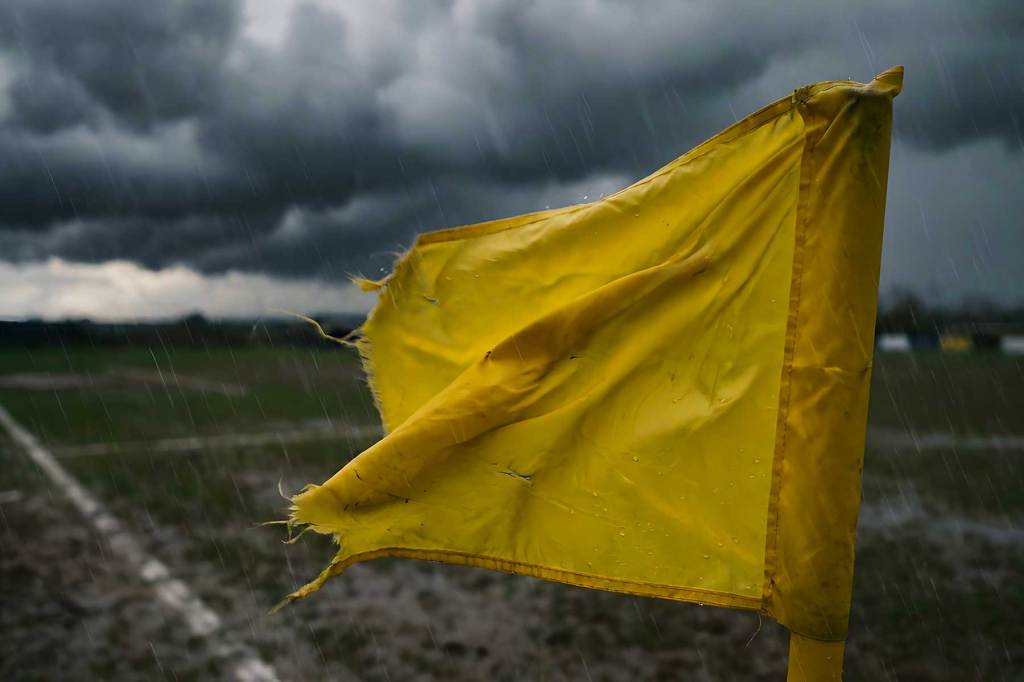
Like Thompson, Dammrich noted the sharp drop in The Conference Board’s Expectations Index, and added that “it is not time to panic, but this yellow flag indicates it may be time to exercise some caution.”
Both major national indicators of inflation worsened in July, the most recent month for which data were available, with the Consumer Price Index rising 0.1% for the month and 3.4% for the year that ended in July, and the Personal Consumption Expenditures Price Index rising 0.2% for the month and 3.7% for the same 12-month period.
The PCE Price Index is the Federal Reserve’s preferred inflation gauge. The central bank’s long-held goal is to reduce the level of PCE year-over-year inflation to 2%.
“The important thing about the July PCE report isn’t the level; it’s that the level has stopped moving — headline at 3.7% for a second month and core at 3.3% for a fourth is a plateau, not a spike, and a plateau is much harder for anyone to discount,” Thompson said.
“Real [consumer] spending was essentially flat, just under 0.1% after 0.4% in June, which means consumers are paying more for roughly the same basket of goods,” he added. “That’s the yellow flag for discretionary categories. The drivers are also supply-side — tariffs, data-center power demand, gasoline near $4 — and [Federal Reserve] rate policy doesn’t address any of them directly; it works by cooling demand, so a hike would land on a consumer whose real spending is already flat.”
Thus, Thompson expects the Fed’s policy-making Federal Open Market Committee to keep the central bank’s benchmark federal funds rate unchanged at its Sept. 15-16 meeting.
“Three members dissented for a hike in July, four more votes would be needed to flip the committee, and the majority will want another inflation print first,” he added. “But I’d call it a hawkish hold. The risk is no longer that rates come down too slowly; it’s that the next move is up, and I’d plan financing costs around current levels persisting through year-end rather than around relief.”
Dammrich said stubborn or rising inflation, with the PCE index up 3.7% year-over-year and the core rate unchanged at 3.3%, is a “double hit” for the boating industry. “It raises the cost of dealer floorplan, as interest rates are likely to rise, while at the same time raising the cost of buying and owning boats, and it reduces consumers’ ability to afford them. I would characterize the economy as uncomfortable. Employment is still decent, but purchasing power is eroding, and financing costs are likely to increase.
“We see consumer spending still growing, albeit slowly, but spending on goods is declining, while spending on services is increasing,” added Dammrich, who is now an adviser at Global Marine Business Advisors. “This is not a good trend for manufacturers of high-cost durable goods like boats. The personal savings rate is also down to 3%, further indicating that households are stretched. The premium segment, which has been holding up the best, is likely to remain resilient but more price-sensitive.”
Dammrich said a rate increase from the Fed “grows more likely with every report that inflation is not receding.”
Fed chairman Kevin Warsh committed Friday during a speech at the Fed’s annual symposium at Jackson Hole in Wyoming to achieving 2% inflation as measured by the PCE Price Index, although, as is his practice, he avoided giving consumers and the financial markets guidance as to when or whether the central bank might raise its benchmark interest rate to achieve that goal.
Warsh said the 2% inflation goal is a “firm, fixed target” and that the Fed “also bears responsibility for maximum employment. Achieving both sides of our mandate over the medium term is not an either/or proposition. I do not believe that the Fed’s dual mandate works at cross purposes. After all, high inflation itself is very harmful to economic prosperity.”
Warsh also told his audience that he is impressed by the overall performance of the economy, “which appears to have strengthened. One indicator of strength is how well an economy holds up to shocks. On that score, both Main Street and Wall Street have been remarkably resilient.”
Warsh said business capital expenditures are rising rapidly, and that profits for companies that are part of the S&P 500 Index have risen by more than 20% during the past year.
“Profit margins are quite elevated, relative to history,” he added.
Warsh said real consumer spending has been healthy despite the shocks the economy has endured, rising more than 2% during the past four quarters. President Trump’s tariffs have resulted in price increases for many goods, and the Iran war has caused gasoline prices to climb.
Warsh said labor markets are stable and that the current 4.1% jobless rate “remains low by historical standards and has not changed much for a couple of years.”
Warsh said he found the numbers on the price-stability side of the Fed’s mandate to be “more concerning.” He said the CPI and PCE indexes “tell a similar story: Inflation is running above our 2% target. So the Fed’s predominant focus right now should be on prices.”
Warsh said that although this summer’s PCE and CPI readings were better than expected, “they do not tell me that underlying trends have meaningfully improved.”
He added, “Here is my standard: We must be confident that underlying inflation is moving to our objective, clearly and at sufficient speed. Otherwise, we have work to do. That’s our job — our mandate — and our charge to keep.”
Dammrich said he found Warsh’s commitment to push inflation down to 2% to be encouraging, “even if it means a rate hike is likely in the near future.”
“The inflation numbers are not improving, and the Fed must act before inflation gets too embedded in the American psyche, or it will require even harsher moves in the future,” he said. “Consumers expect inflation to increase to 5.8% over the next year. Consumer expectations could drive prices higher. I think his remarks are very consistent with what we have heard from him since becoming Fed chair, though his acknowledgement that financial conditions do not appear restrictive enough appears to be a more hawkish shift.”
Thompson said that because Warsh has been a longtime critic of the Fed’s past practice of forward guidance, he expected “more of a framework discussion” from Warsh in his speech.
“What I didn’t expect was how hard the inflation section would land,” Thompson added. “Two lines stood out. The six-month change in PCE is running at 4.1%, above the 12-month rate of 3.7% — that’s the wrong direction — and he said plainly that this summer’s better prints ‘do not tell me that underlying trends have meaningfully improved.’ He also said he would be ‘hard-pressed to describe broad financial conditions as restrictive.’ Put that next to his judgment that labor markets are consistent with full employment, and he has removed the employment-side argument for easing while telling you policy isn’t actually tight.”
Thompson flagged one caution for the boating industry: Warsh described a consumer whose real spending is up more than 2% over four quarters.
“That’s the aggregate,” Thompson said. “The marginal, wage-dependent buyer that entry- and middle-market dealers actually see doesn’t look like that, and the distance between the two is where this gets uncomfortable. The practical takeaway is to stop waiting for the Fed to signal. It is less likely that we will receive a specific signal that will definitively tell us what is next. It is probably better to aggregate information over time.”