
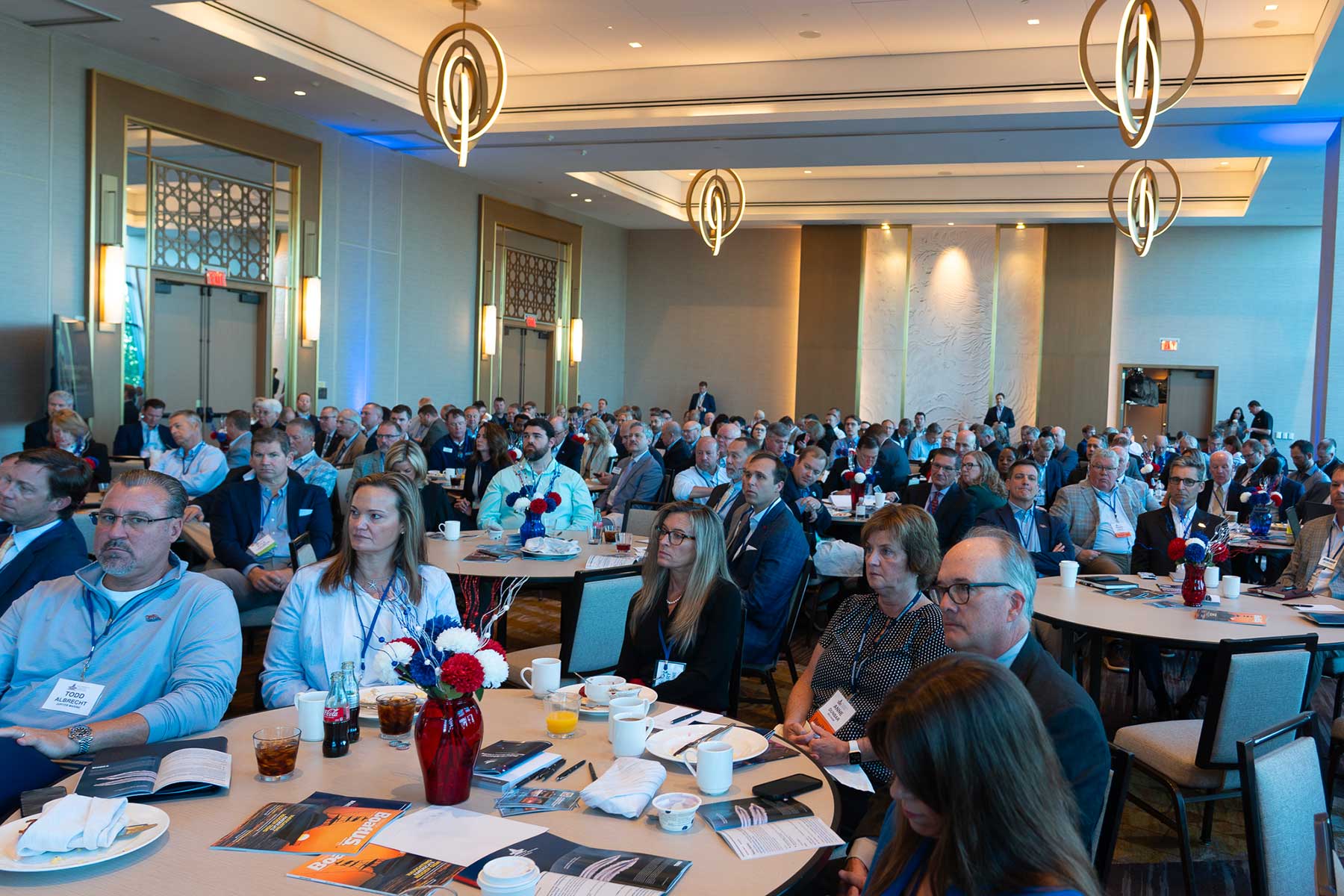
Day two of the National Marine Manufacturer’s American Boating Congress got underway early yesterday at the Intercontinental Hotel at The Wharf in Washington, D.C.
The overarching themes covered in several discussion panels included the renewal of the Sport Fish Restoration and Boating Trust Fund, improving water access and U.S. Army Corps of Engineers facilities, the status of the WAVS (Whale and Vessel Safety) task force, the economy and midterm elections, and the effects of onerous state and federal regulations on manufacturers.
“Fireside Chat”
NMMA president and CEO Frank Hugelmeyer took the stage first for a “fireside chat” with National Fish and Wildlife Foundation chief conversation officer Holly Bamford, who discussed the role of the foundation, how it works and the way its work affects the boating industry.
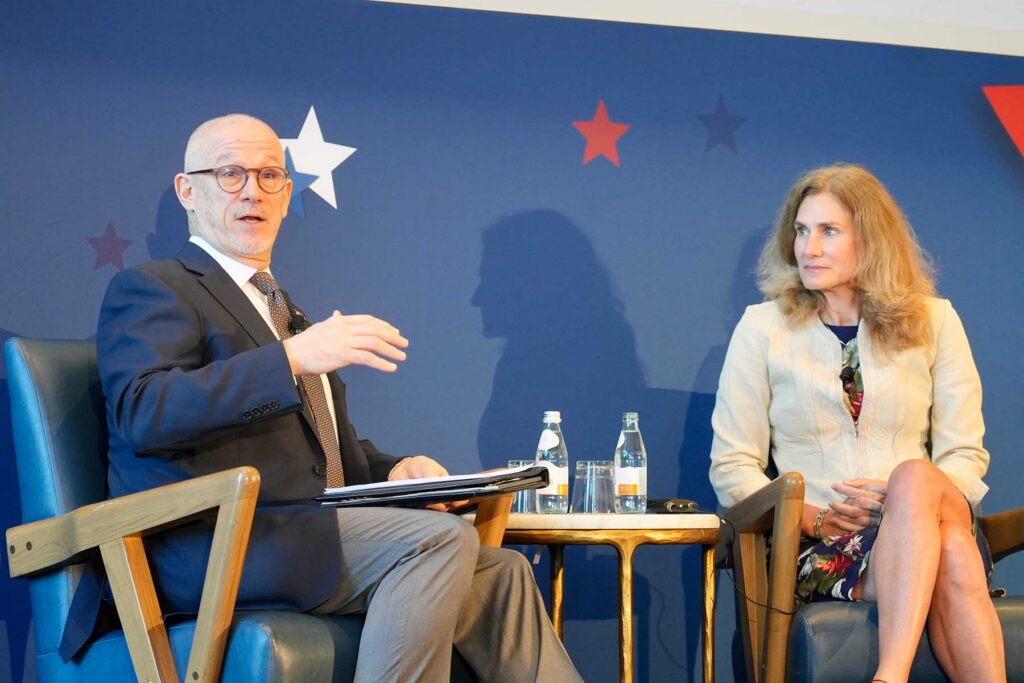
Bamford spoke about fisheries issues relating to gear entanglement and whales, the vessel speed rule designed to protect North Atlantic right whales and more. Specifically, she spoke about how the agency is working with the WAVS task force to use on-board technology to prevent vessel strikes with right whales.
“I am very excited about the technology that’s being tested,” Banford said. “There’s this thermal detection, so that day or night, if a whale breaches the surface, you can detect it. And then artificial intelligence can use large language models to learn and identify specific whale species. The collaboration with our agency and WAVS has been so satisfying and shows that when we work together, we can implement real solutions.”
Vessel Speed Rule
Further discussion about reducing vessel strikes and encounters with right whales was conducted by NMMA chief advocacy officer and senior vice president of government relations Robyn Boerstling. Boerstling spoke with National Marine Electronics Association president and executive director Mark Reedenauer about using technology as the best way to address whale-strike risks.
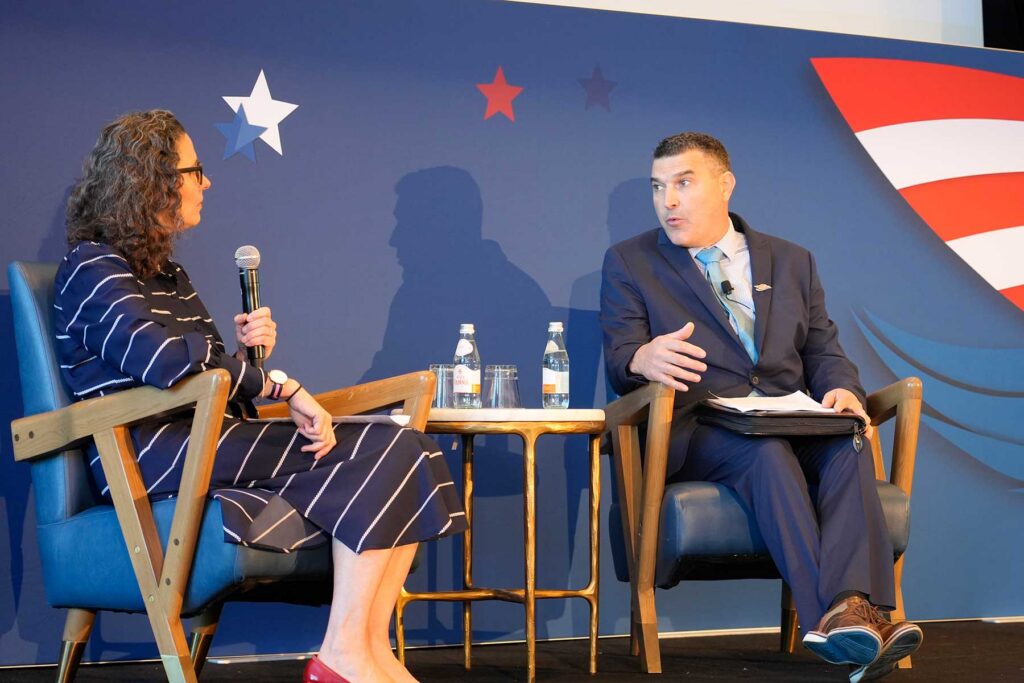
“The most important part right now is that NOAA is having a public comment period about the regulation,” Boerstling said. “The comment period ends June 2.”
“We just want to get it through to NOAA and regulators that there are solutions for this problem that involve technology, not heavy regulation against boaters,” Reedenauer said.
Morning Keynote
National editor of the Cook Political Report Amy Walter provided scenarios regarding what could happen in the House and Senate after the November midterm elections.
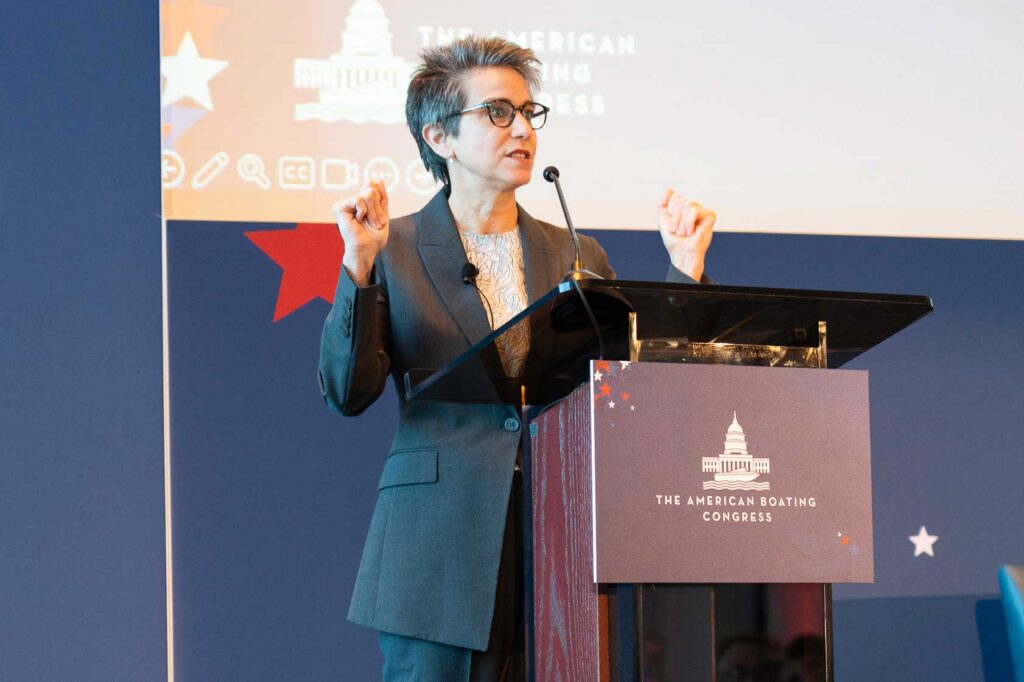
“Where the president sits right now is in a very precarious place,” Walter said. “Overall, his approval rating is just teetering at 40%, with almost 60% of voters saying they disapprove of the job that he’s doing. This is the lowest he’s been in the second term. This is usually bad news for the party running Congress. Obviously, right now, that’s Republicans.
“So the higher the president’s disapproval rating gets, the harder it is for people seeking seats in Congress, because most of those people are who show up are going to vote for the other party,” Walter added.
Access
One of NMMA’s biggest advocacy pushes is the Water Resources Development Act, which authorizes U.S. Army Corps of Engineers projects that are partially funded by the Sport Fish Restoration and Boating Trust Fund. The fund is set to expire Sept. 30.
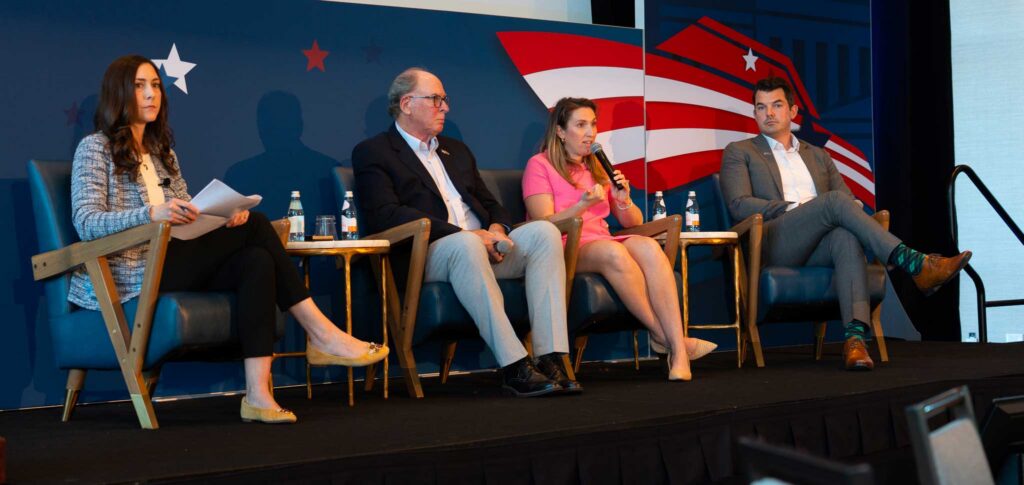
NMMA vice president of North American Public Affairs Molly Drenkard moderated the panel, which included Annie Brody, business coalitions director for house majority whip Rep. Tom Emmer (R-Minn.); Suntex Marinas vice president of government relations Jim Frye; and NMMA interim vice president of public policy and government relations Clay Crabtree.
The Sport Fish Restoration and Boating Trust Fund is “one of those programs where the taxpayer dollars that are going into the trust fund go back to exactly what it’s meant to support,” Crabtree said. “So whether it’s a Republican or a Democrat you’re talking to, it’s easy to argue that this is a very good use of taxpayer dollars, because the money is going exactly where it should go — into water access and facilities.”
Awards
An awards luncheon started with the presentation of the Marine Industry Lifetime Achievement Award, which was given to Brunswick senior director of product integrity Dave Marlow by Yamaha president and executive officer Ben Speciale.
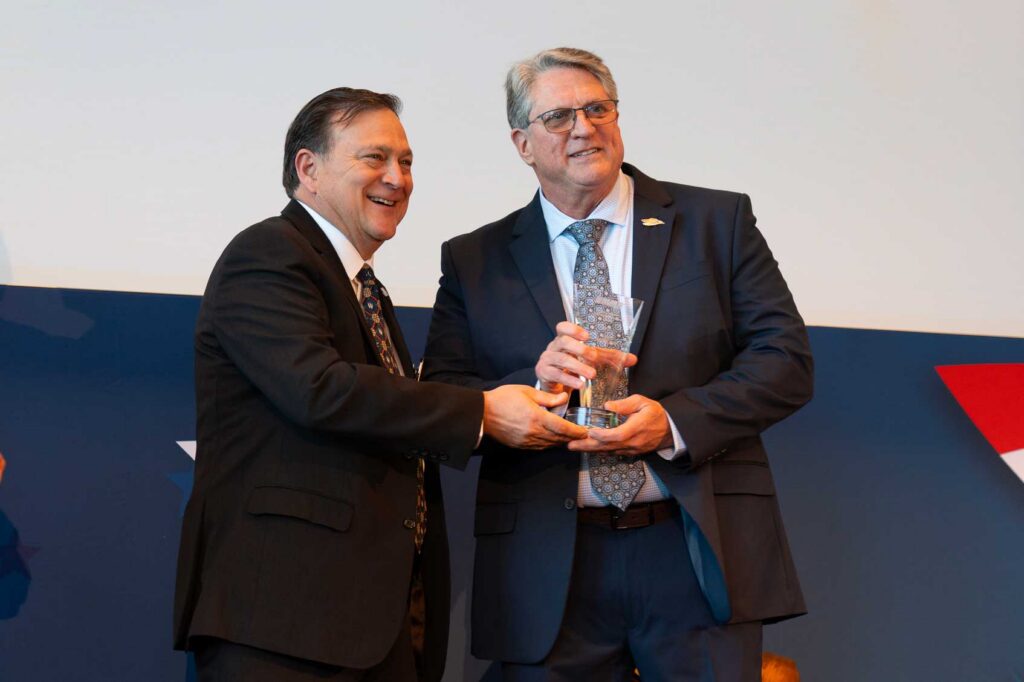
Jeff Angers, president of the Center for Sportfishing Policy, presented the Eddie Smith Award to Contender Boats founder Joe Neber.
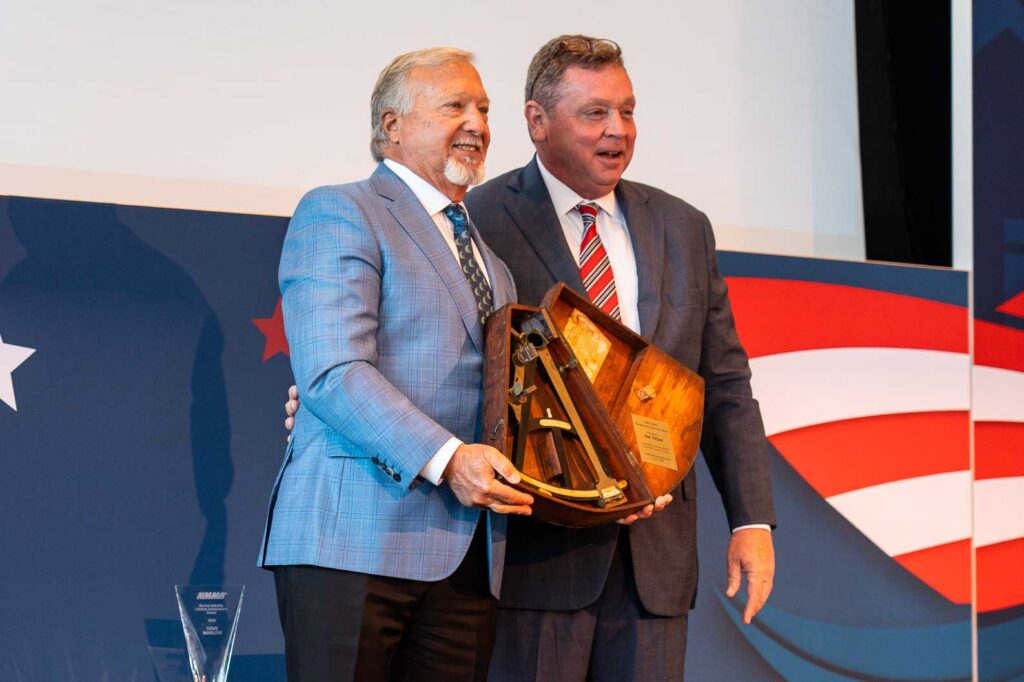
“There are so many people smarter than me that have helped me do well in my career,” Neber said. “I want to thank them because without them I would not be standing up here.”
Checking the Numbers
Economist, futurist and author Shawn DuBravac gave an overview of economic conditions and how they are affecting the boating industry. DuBravac covered five bullet points:
- consumer confidence
- rising prices
- effects of higher fuel prices
- economic case for access
- importance of global trade
DuBravac spent considerable time discussing fuel prices, the oil supply and its effect on the industry.

“Surprisingly, people who already own a boat consider fuel prices to be part of the game,” DuBravac said. “Folks who don’t already own a boat but are thinking about it consider those fuel costs heavily.
“I don’t see a quick reduction in prices at the pump,” he added. “The macroeconomics of how oil supply and demand affect prices doesn’t happen fast.”
Trade and Tariffs
This in-depth panel discussion included an update on the U.S.-Mexico-Canada Trade Agreement and the latest tariff announcements, including Section 122 and Section 301.
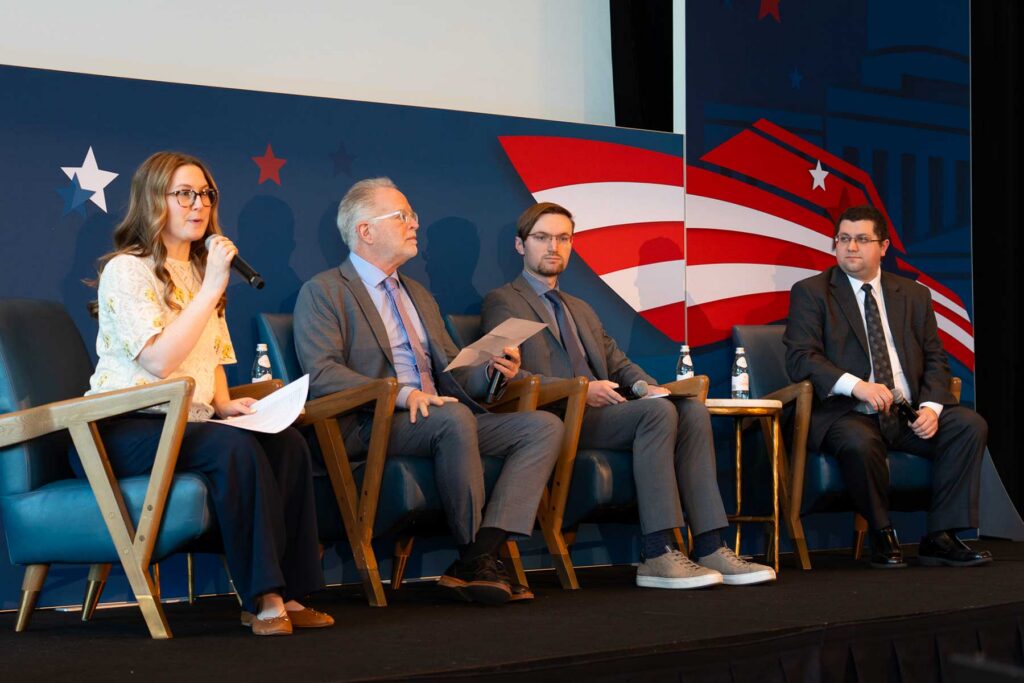
Moderated by Tori Smith, senior vice president at Forbes Tate Partners, the panel included Bryan Riley, director of the Free Trade Initiative, National Taxpayers Union; Richard Stern, vice president of the Plymouth Institute for Free Enterprise, Advancing American Freedom; and Jacob Jensen, trade policy analyst, American Action Forum.
Panelists largely discussed the effects of tariffs on the boating industry, especially the impacts of high input costs relating to steel and, more important, aluminum. Panelists noted that a majority of marine companies are able to source steel from within the United States, while many rely on aluminum from outside the U.S., which is subject to stiff, ever-changing tariffs.
Regulations
Onerous regulations affecting industry participants were discussed during a panel that included Jeff Wasil (moderator), NMMA vice president, environmental compliance and marine technology; John Schweitzer, senior vice president, EH&S and sustainability, American Composites Manufacturers Association; Lynn Bergeson, managing partner, Bergeson and Campbell; and John McKnight, NMMA environmental health and safety advisor.
Styrene, a major component in polyester and vinylester resins, has come under scrutiny by the Environmental Protection Agency under the Toxic Substances Control Act, and Schweitzer updated boatbuilders on potential regulatory oversight within their facilities.
“Any attempt to remove styrene from boatbuilding would put us out of business,” a builder who asked to not be named told Trade Only Today. “And it wouldn’t just be us; it would be virtually the entire industry.”
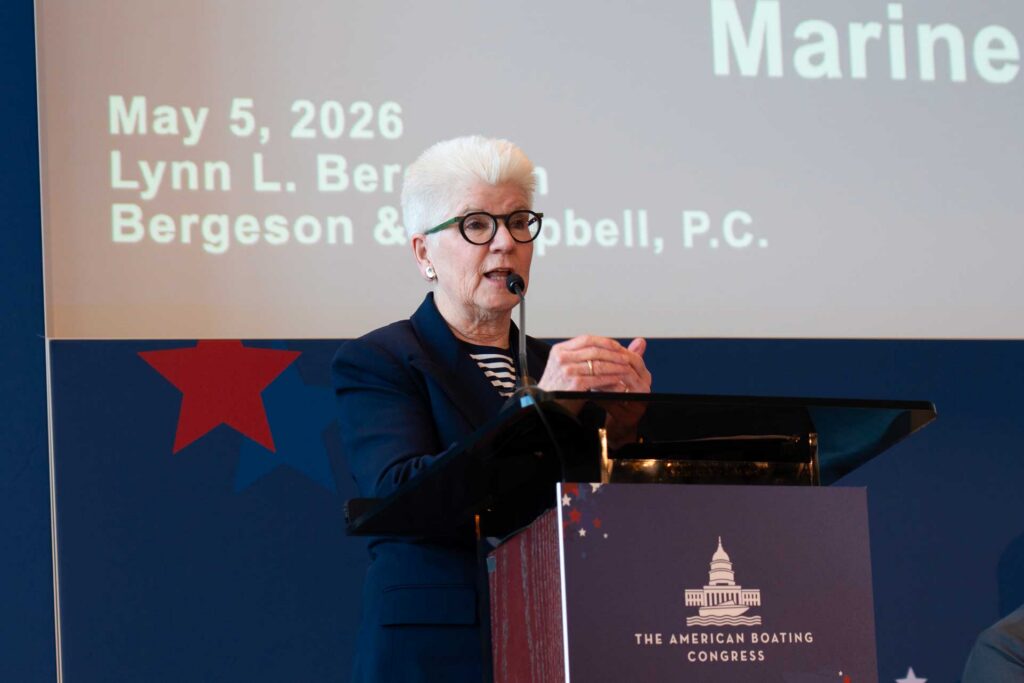
Bergeson spoke about regulation of PFAS — so-called “forever chemicals” that have been cited in studies as carcinogens — in Minnesota, which recently passed regulations that would require strict labeling of any products that use them, including boats.
“This will put certain businesses in an almost impossible situation of identifying these components in their products, making sure they’re labeled properly and all the while facing potential liability suits for not getting it right,” Bergeson said. “It’s enough to make your head explode.”
McKnight spoke about OSHA regulations around heat exposure in work environments. He presented a bar graph representing an acclimation process for what a company without climate-controlled spaces would have to do when an employee returns to work after vacationing in a cold climate.
“Someone coming back from Alaska after a specific amount of time would have to work only two hours maximum before being sent home the first day back,” McKinght said. “It goes up from there, but it would take a week to acclimate them according to the proposed regulation. We all know this is an impossible thing to follow.”
“This is crazy,” another unnamed boatbuilder said. “Have you ever been in a Florida boatbuilding facility? It’s just absolutely mind-blowing that they come up with these things.”
The American Boating Congress concludes today after industry participants visit Capitol Hill to meet with elected representatives, who will learn about legislation that is affecting boating businesses and customers.