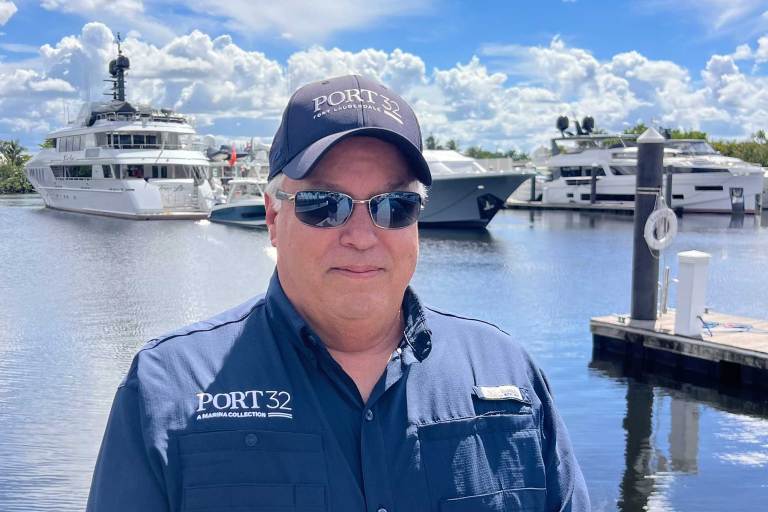


Minutes before the 90-day pause on reciprocal tariffs was announced yesterday, Florida dealer Roger Moore told Trade Only Today, “I can tell you that we’ve got half a dozen boats sitting in Poland right now that I don’t want to receive. Even though they are customer-owned boats, they’re going to arrive here, and we’ll be upside down on them when we deliver them to the customer.”
With the announcement of the 90-day reprieve, those boats may be shipped without the burden of tariffs, but an air of uncertainty still hangs over Moore’s every move. Dealers and manufacturers across the industry know the strain.
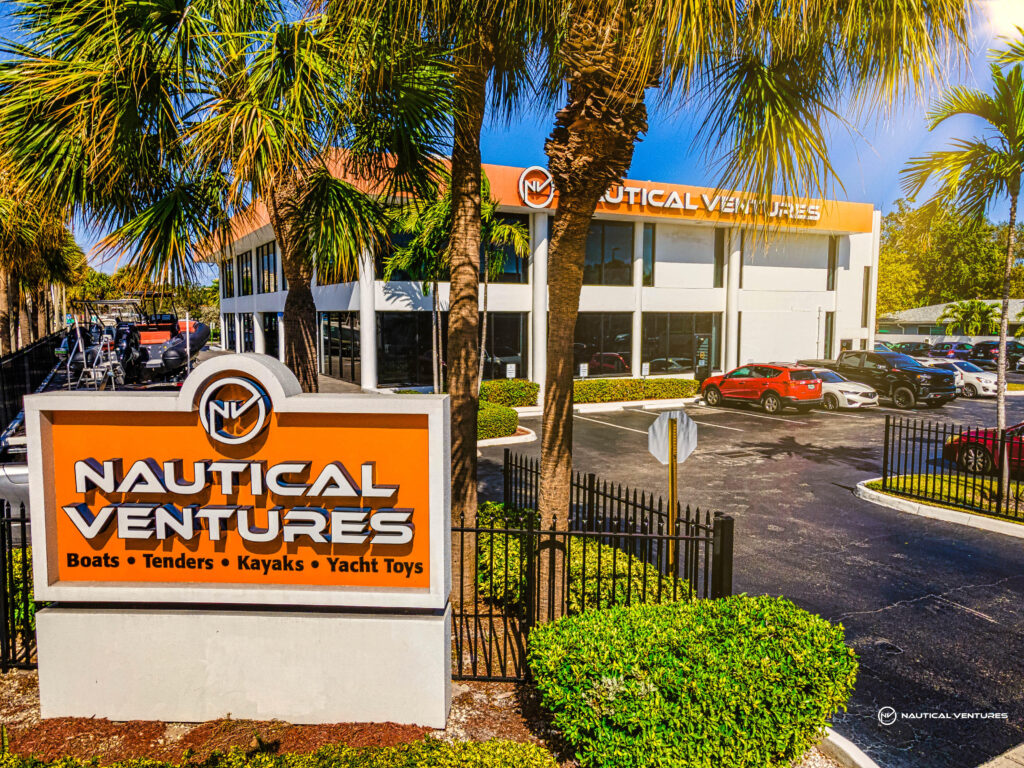
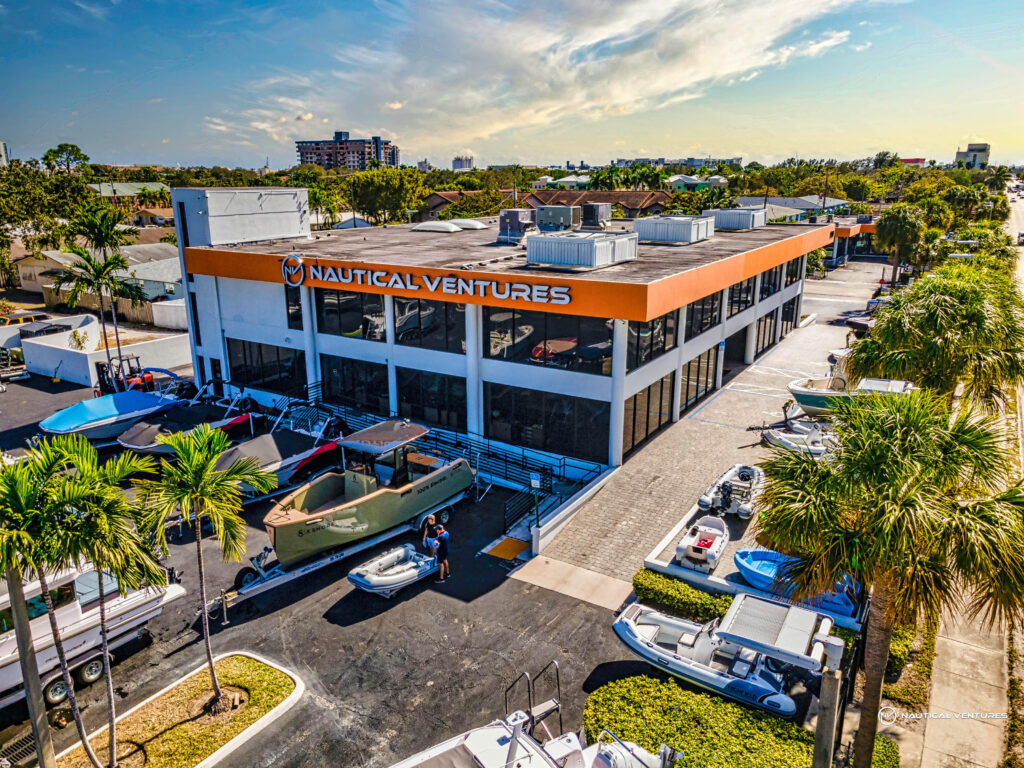
When Moore spoke to Trade Only Today, he had just left an hour-long call with 32 Axopar dealers who were trying to parse out their moves under the tariff structure. The founder and CEO of Nautical Ventures Group, Moore runs 11 Florida locations, five of which are retail dealerships. Others include marinas, rigging and service, facilities, a kayak rental operation and warehouses. In Palm City, the company rigs Highfield tenders imported from China.
“We are truly facing some crazy times as it relates to the importation of those tenders that we rig there,” Moore said. The reciprocal tariffs on China were not paused with yesterday’s announcements, at least for the moment.
At his dealerships, Moore carries such brands as Hobie, NorthStar and Highfield RIBs, Starcraft, Beneteau, EdgeWater, Wellcraft and Axopar (built in Poland), as well as Fairline and many others, all with various permutations of built and assembled in the United States and abroad.
“It’s an amazing mess,” he said about the overall situation.
Moore provides a quick study of the strategic thinking and adaptability dealerships and other businesses with international ties have to employ under the imposition — even the threat — of tariffs, which are impacting business in multiple ways. They are struggling with how to handle presold boats that are now subject to tariffs, as well as how to price new boats. Moore and his teams are trying to find creative ways to take advantage of current inventory and promote sales, such as promoting lower-priced existing inventory compared with a prospective import.
Moore and chief marketing manager Frank Ferraro sent an email blast to customers with a video pitch to buy tariff-free Axopar boats, titled: “Don’t Be Tarif-fied!”
“I think we’ve just gotten a new closing tool to work with customers — that with our current inventory, they can take advantage of buying without tariff,” Moore said.
Moore and his staff are speaking with freight-forwarding companies, floorplan financing teams, and manufacturers in the United States and in Europe, trying to determine if not mounting engines to boats will alleviate tariffs on the cost of the engine on imported boats.
“As of today, if the engine is affixed to the vessel, it becomes a tariffed boat,” he said. “So we used to do all the rigging here, and we would buy the engines from Mercury, bring in a blank boat, and we would rig it. We may have to go back to that because we can’t possibly bear paying for the importation of a U.S. product attached to a foreign-built boat,” he said.
Yet for all the positioning, Moore is uncertain about how the tariff situation will ultimately be resolved. He’s focused on tightening the belt and making the best decisions each day.
“The thing that gets very intense for us is we have presold boats, customer-sold boats with deposits that have yet to be shipped,” he said. “And of course, how do we face these surcharges or tariffs as it relates to boats that have not yet been shipped?
“We never anticipated this sort of a tariff or surcharge. What do we do with the new boats that we’re now ordering? How do we price them? How should the tariff be shared? Should it all be the dealer’s cost? Should it be the manufacturer’s cost? Should it be the customer’s cost? Well, it’s really quite interesting in some respects how everyone is approaching it. We all know we can’t lay it on someone else, so we’re going to somehow have to share because if we price it all to the consumer, then needless to say, that’s going to adversely affect sales. I think dramatically.
“I’m quite nervous about how this is going to affect the market in general,” Moore added, “and then more specifically, how these increases are going to affect the consumer because the consumer’s going to have to pay a portion of this. We can’t absorb it. The manufacturer can’t absorb it all. And of course, from what I understand — and I’m no political or economic expert — but this is certainly going to drive more and more production into the U.S. market.”
No one knows how long the uncertainty will last. “So it’s hard to plan,” Moore said. “We just have to react each day and figure out how we get through it.”