
More Americans joined the labor force, and significantly more people found work in August, usually a sleepy time for the economy deep into the summer vacation season.
The recreational boating industry was surely heartened when the Labor Department said today that the U.S. added 162,000 August jobs, nearly triple economists’ consensus estimate. The unemployment rate held steady at 4.1% and has now been at a rate of 4.5% or lower for 59 months in a row, the longest streak in modern U.S. economic history.
“This report helps answer a big question: Was the pickup in job growth we saw starting in March noise or the start of a new, more positive trend?” said Ian Wyatt, senior vice president and chief economist at recreational marine lender Huntington National Bank.
“We think this debate is now settled, and job growth is moving at a faster pace,” Wyatt told Trade Only Today. “Over the prior 12 months — February 2025-February 2026 — job growth averaged just 11,000 a month. Since March, job growth has averaged 107,000 a month. Job growth suggests a somewhat stronger economy. However, the picture is not entirely rosy. Wage growth continues to decelerate, and average hourly earnings are now growing 3.1% year over year.”
Payroll revisions for June and July showed that the economy added 55,000 more jobs during those months than was previously reported. The June figure rose by 11,000, to 31,000, and the July total climbed by 44,000, to a net gain of 21,000.
That month’s performance was skewed by a decline of 50,000 jobs in local public education, as school systems let some workers go for the summer because their services weren’t needed once the school year ended. Education employment rebounded by 42,000 in August as schools reopened and districts restaffed.
The main job driver in August was bars and restaurants, which added 59,000 jobs. Construction added 22,000, and manufacturing added 16,000, reflecting a boom in the building of data centers. Health care, a bellwether category in recent years, also grew, but added just 13,000 jobs, far below what the government said was its 12-month average gain of 32,000.
NMMA chief economist Shawn DuBravac said the report reveals a resilient but still low-velocity labor market.
“While the headline numbers were stronger than expected, it does not point to a broad hiring boom,” he told Trade Only Today. “While the change in school employment in both July and August is just seasonal adjustment voodoo, the upward revisions to July do suggest that the perceived summer slowdown was not as severe as it initially looked. The 16,000 new jobs in manufacturing are especially constructive and put manufacturing employment 58,000 above its December 2025 low. The 22,000 additional construction jobs are also promising.
“Outside of the headline employment numbers, we also got a view of the character of those jobs,” DuBravac added. “Aggregate weekly payrolls rose 0.7%, and average hourly earnings are up 3.1% over the last year. The average workweek also rose. Unemployment stayed low, even while 683,000 people joined (or rejoined) the labor market. The number of people working part time because they can’t find full-time work fell by 414,000.
“While the overall report was encouraging, the low-hire, low-fire environment likely remains intact. Employers are reluctant to expand payrolls aggressively but also don’t want to let skilled workers go. While job security is strong, it can still be difficult to change jobs or for recent graduates to find that first job.”
Drew Pope, president of the 16-member Independent Boat Builders Inc., said August’s strong jobs report, along with the upward revisions to the previous two months’ numbers, reveals a more stable labor market.
“While the market isn’t booming, it’s healthier than last month’s report suggested,” Pope told Trade Only Today.
“All eyes now look to August’s Consumer Price Index report next week,” he added. “Persistent inflation, plus a strong labor market, would increase the chances of a rate increase at one or more of the upcoming [Federal Reserve policy-making] meetings this year.
“After today’s jobs report, the estimated chance of a rate increase at the September FOMC meeting rose to 65% from 55% — not at all ideal for boatbuilders and dealers relying more on floorplan financing going into the slower selling season of fall and winter. We are likely looking at a stable, if not strong, economy with an expensive boat financing environment extending well into 2027.”
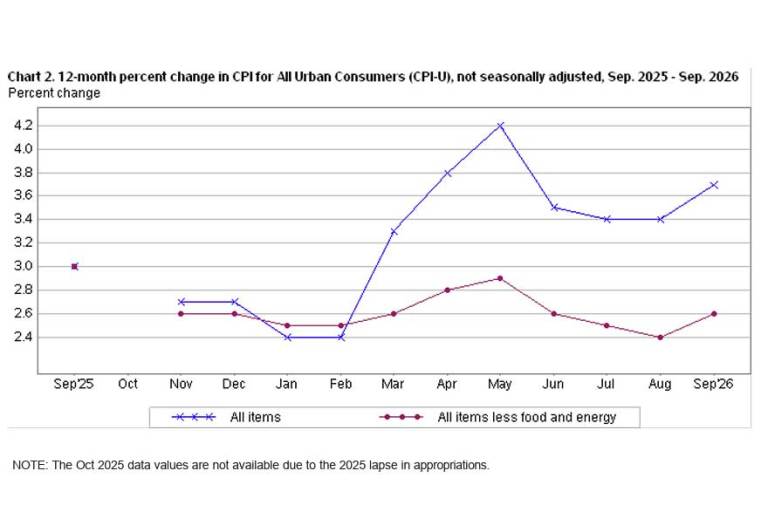
Workers made pay gains in August, but they continued to lag the rate of inflation. The government said average hourly earnings rose 10 cents, or 0.3%, to $37.75, and were up 3.1% on an annual basis, but that was more than a half-percent behind the pace of inflation, as measured by the Personal Consumption Expenditures Price Index, the Fed’s preferred inflation gauge. It rose 3.7% for the year that ended in July, the latest month for which index data are available.
The widening gap between pay and prices may help to explain why the country’s two main measures of consumer confidence were lower in August and have broadly been trending lower.
Today’s jobs report comes just two weeks before the boating industry’s first major fall show, the Newport International Boat Show. It will feature more than 450 boats and will run Sept. 17-20, following directly on the heels of the Federal Reserve’s next policy meeting Sept. 15-16.
DuBravac believes that the Fed will raise its benchmark federal funds rate at that meeting by a modest 0.25% to combat inflation that has stubbornly remained above its 2% target rate.
“This month’s [jobs] report is modestly positive for the boating industry,” DuBravac said. “Potential buyers continue to see rising wages, though wage gains are currently being outpaced by inflation. Job security looks strong, even if headwinds and uncertainty pose a real threat. Consumers are well-positioned to commit to large discretionary purchases, even if they don’t believe it. The boating industry enters the fall on cautiously optimistic footing.
“At the same time, the results are likely negative for financial conditions,” DuBravac added. “The 2-year yield rose to its highest level since January 2025, and the 10-year yield moved modestly higher. The relatively strong employment report makes it more difficult for the Fed to sit on the sideline when the FOMC meets later this month. Stubbornly high inflation, combined with a labor market that is holding up, likely means the Fed will raise rates 25 basis points at the next meeting.”
Wyatt has a different view.
“We raised the probability of a rate hike this fall to 45% from 30% a few weeks ago, based on recent speeches by Fed officials, the rise in bond rates and this jobs report reducing concerns about the state of the labor market,” he said.
“Nevertheless, we see a solid case (55%) for the Fed not hiking this year, as inflation seems to be slowing, and hiking in response to an oil supply shock would do little to address the underlying causes of inflation while imposing pain.
“However, if the Fed hikes, it may not be all bad news for boat dealers,” he added. “Floorplan lending is tied to the federal funds rate, and hikes would likely lead to higher inventory financing expenses. On the other hand, following Chair [Kevin] Warsh’s recent hawkish speech, short-term rates rose while long-term rates fell. Long-term rates, of course, are what drive boat-buyer financing costs, so a Fed hike might result in lower monthly costs for boat buyers.”
Pope said that with the core PCE Price Index at 3.3% year-over-year, “there are unfortunate cost increases in some key commodities that directly impact boat affordability and the ability for consumers to go out and purchase a new boat.
“You could almost say there are two distinct economic stories happening in our economy today: The labor market appears stable, and manufacturing and production is growing (Purchasing Manufacturers Index, factory orders, durable goods orders), while simultaneously consumer metrics aren’t as positive, with a decline in consumer sentiment, along with a decrease in discretionary income and buying power,” he added.
The labor force participation rate rebounded in August, rising to 61.6% from a more than five-year low of 61.4% the previous month. The government said the rate is down 0.5% since the year started.
DuBravac said that although aging and baby-boomer retirements “are likely the dominant long-term force [causing the workforce to decline], there are other factors, including reduced immigration and some workers simply removing themselves from the labor force for a variety of reasons.”
Wyatt agreed that much of the decline in labor force participation reflects an aging population “and most people leaving the labor force state it is because they do not want to work. The percent of prime-working-age adults (age 25-54) remains stable. We see the decline in labor force participation mostly reflecting the very large baby-boomer generation moving into their prime retirement years.”