Anyone who knows me will testify to my sometimes (or often) annoying obsession with Phish, the rock/jazz/reggae/blues/psychedelic/you-name-it band from Vermont that started wowing people nearly four decades ago with 45-minute-long improvised jams, often launched by the fan-favorite song “Tweezer.” An economy swirls around the band’s 30 to 40 tour dates each year.
About six times every touring season, I take time off to grab a handful of two- or three-night runs in various cities. This year, I saw summer shows in Colorado and New York City. Chalk up airline tickets, hotel stays, meals and Uber rides, multiply those times 20,000 people, and you’ve got a localized economy bump at each stop.
I got to thinking about the concert economy recently, after the U.S. Bureau of Economic Analysis released a gross domestic product report showing that the U.S. economy grew by an unexpected 4.9% in the third quarter. According to Fox Business, a not-insignificant amount of this consumer spending can be attributed to Americans spending thousands of discretionary dollars on Taylor Swift, Beyonce and other artists. Swift’s tour alone reportedly raked in $780 million in 2023, not even counting spending outside the concert gates.
The GDP report also noted a $95.8 billion increase of disposable personal income during the quarter, and a $223 billion decrease in personal savings. The bureau said these were signs of folks placing a priority on seeking out vacations, concerts and other memorable events that pack a long-lasting punch in the “feel goods.” The pandemic is to thank, in part, according to The Wall Street Journal, which reported: “People are tired of waiting to enjoy themselves, and the nationwide Covid lockdown only strengthened those feelings.” Some people are even going into debt to finance their adventures, the article stated.
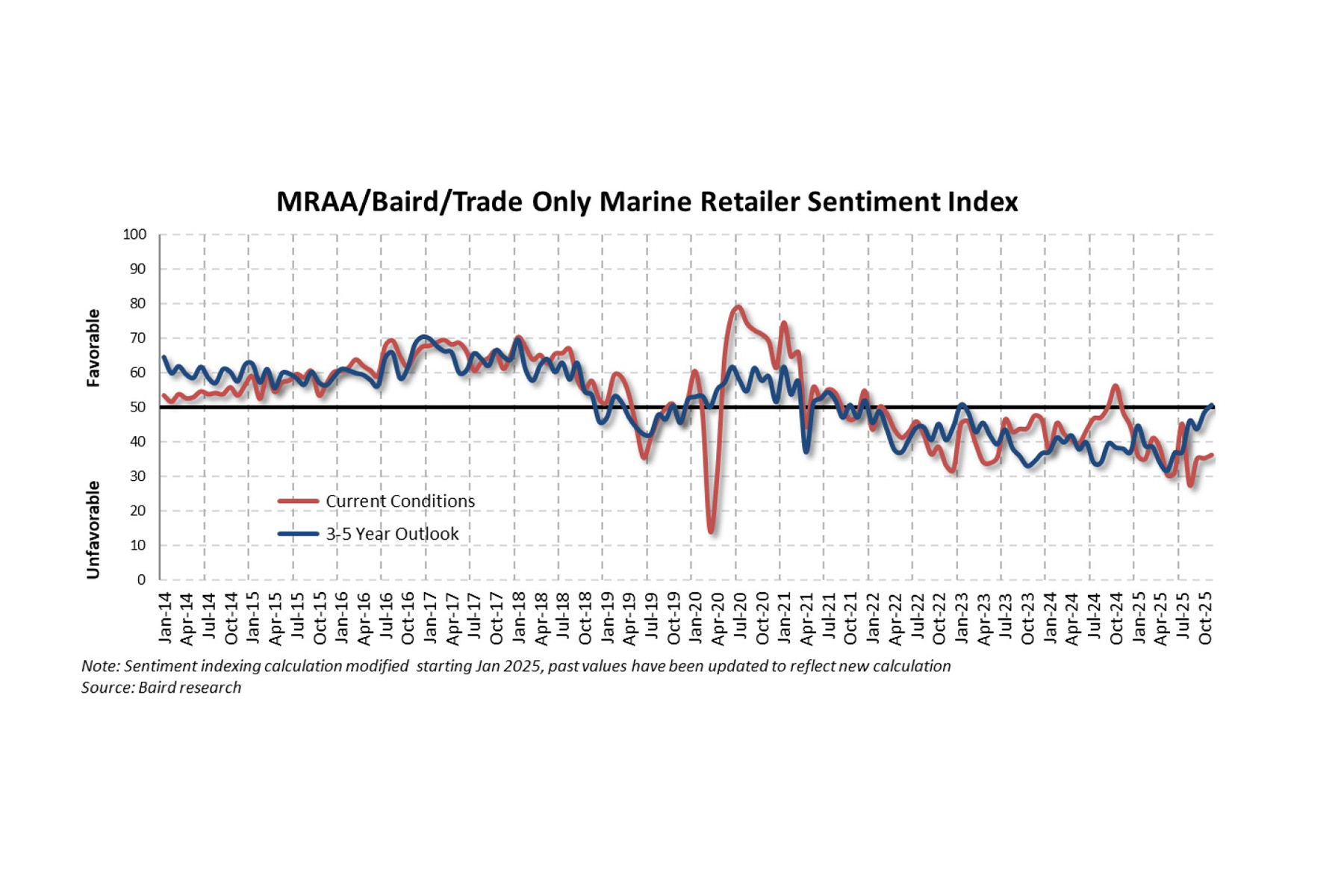
What does all of this mean for the recreational boating industry? If you look at our By the Numbers data on Page 47, consumers are wary of economic instability and high interest rates, which may be suppressing entry-level buyers and the lower-middle end of the market. It feels as if these buyers may not be able to afford a new boat but will spend savings or use credit to finance a vacation or some other short, pleasurable experience, like a concert run.
Sixty percent of boat dealers who responded to the Pulse Report, which you can read on Page 78, reported sales declines. Sixty-six percent reported a downturn in used-boat sales — a sector typically dominated by middle-income buyers. These are the same buyers who are usually first affected by changes to personal income and, as a result, personal spending.
Lots of analysts, including Connor Lokar from ITR Economics, are still predicting a soft recession, which could have a heavy impact on middle-income buyers. “We are forecasting a mild recession for 2024, a speed bump, a normalization,” he said. “The growth rates that started in the second half of 2020 and carried through the last year were largely not sustainable.”
When I unscientifically asked dealers around the Fort Lauderdale International Boat Show about any changes they were seeing in the market, many said that the entry level was suffering most, but that the folks with deep pockets seemed to be spending. “Those who have it, have it,” one Northeast dealer told me. “Capturing the lower end of the market is a challenge and requires lots of sales prowess and follow-up work.” Another dealer joked: “If we can get people to stop having so much fun on dream vacations and concert tours, maybe we’ll have a chance.”
Economic suffering for boatbuilders and dealers always begins with entry-level and middle-class buyers. It’s been this way for the 30 years I’ve participated in the industry. Folks who had money a year or two ago for a big-boat purchase generally still have it, save for some catastrophic event akin to the Great Recession.
What we can do as an industry right now — impending recession or not — is focus our energies on convincing the middle-income buyer that boating is a sustainable, long-term and affordable way to have lasting fun. Maybe even as much fun as a “Tweezer” jam.
This article was originally published in the December 2023 issue.