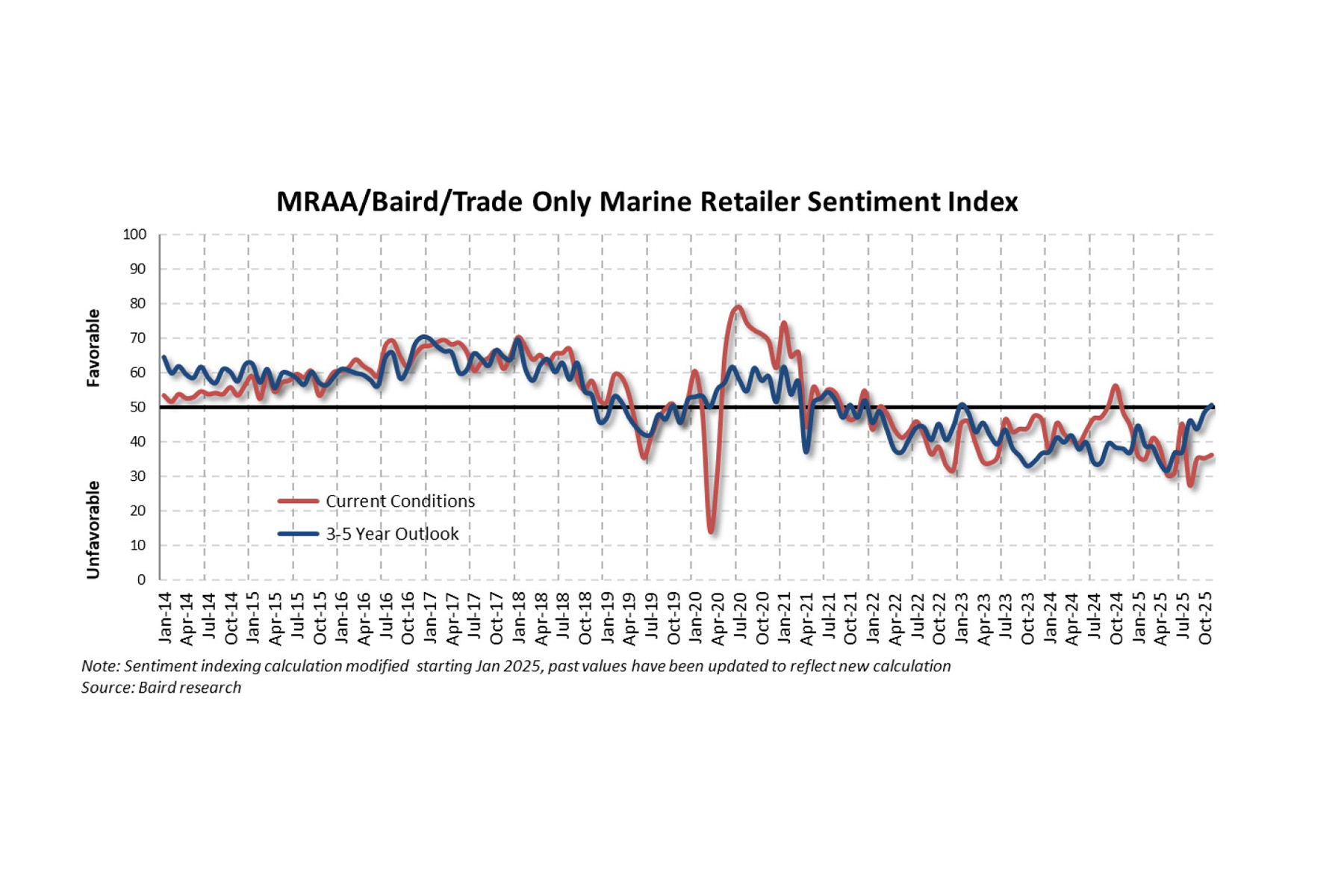

The news from the National Marine Manufacturers Association that boat sales dropped 9.1% last year is hardly surprising. Indeed, I know some dealers who wish it was only that much for them.
And with economically uncertain months ahead, relationships and communications with existing customers remain paramount. After all, existing customers are always the most likely to buy again.
To that end, my own recent interactions with customer service reminded me of the importance of doing communications right with existing customers.
“There’s an interest charge on my credit card statement that I don’t believe should be there,” I recently told a Bank of America customer service representative by phone.
After looking up my account, she gave me an explanation that didn’t make much sense. So, somewhat irritated, I walked her through the statement again and she ultimately acknowledged there could be an error.
“You’re right, Mr. Schultz,” she admitted. “We’ll give you a credit on your next statement. Now, if there’s nothing else I can do for you, we’re sorry for any inconvenience.”
The nearly 55-minute episode got me thinking about those times in every marine dealership when things get screwed up, the customer’s expectations can’t or won’t be met and they’ll likely be upset when they find out.
First, apologizing for any mess up is something we hasten to do as a sound business practice. It’s a must. But saying “we’re sorry” is now so commonplace, so rote, it makes us wonder if it has lost all meaning. Is the customer really calmed or satisfied by it? Can an apology really work anymore?
I’m convinced it still can. But it can’t be that obvious mindless scripted apology I got from the bank customer service representative. Instead, it must begin with the fact that any apology is genuine. Consider pausing for a moment and try really feeling the disappointment that the customer will feel. Your first goal is to make them know you’re sensitive to what they’re feeling.
First, anyone in the dealership that may have to communicate bad news or deal with an upset customer should be trained to avoid the meaningless “we’re sorry” script. If the apology comes over as simple memorization, the situation can easily escalate, customer placidity can disappear and the track to hard feelings can be set.
Next, anytime an apology is in order, consider having the dealership owner or top dog join the conversation. An apology from the top can demonstrate sincerity and concern. Moreover, the leader has the authority to go beyond “we’re genuinely sorry,” assuming the situation warrants it.
Such was the case for me during a Southwest Airlines interaction I vividly recall. I got on the computer to routinely check in and it showed I didn’t have a reservation from Tampa to Chicago. I immediately called customer service. Cathy quickly confirmed I was booked, but something clearly wasn’t right with the computer records. What followed is a model of good customer relations and service.
“Mr. Schultz, this just isn’t acceptable, and I am sincerely sorry this is happening to you,” she said. “I’m going to have to go to my supervisor about this and I don’t want you to be inconvenienced any more than you already are. So, I will personally take care of everything for you, and will call you back as fast as I can get this handled for you. And, Mr. Schultz, again I really want to apologize for this, but I’m on it.”
Hanging up, I felt her apology was sincere. If she was reading a script, she should consider an acting career. I believed she’d take care of me. And she and her supervisor did just that and even upgraded me with priority boarding “for your trouble.”
As meaningless as a memorized “we’re sorry” can be these days, an apology done right can actually be powerful, especially when it gives the existing customer the feeling (1) it’s genuine and (2) makes them feel important. And I can tell you I now book Southwest first any time they fly where I’m going.
Perhaps a quote from author Maya Angelou best sums up why concentrating on good customer communication and service is the high necessity today: “I’ve learned that people will forget what you said. People will forget what you did. But people will never forget how you made them feel!”
How is your dealership team making your customers feel today?