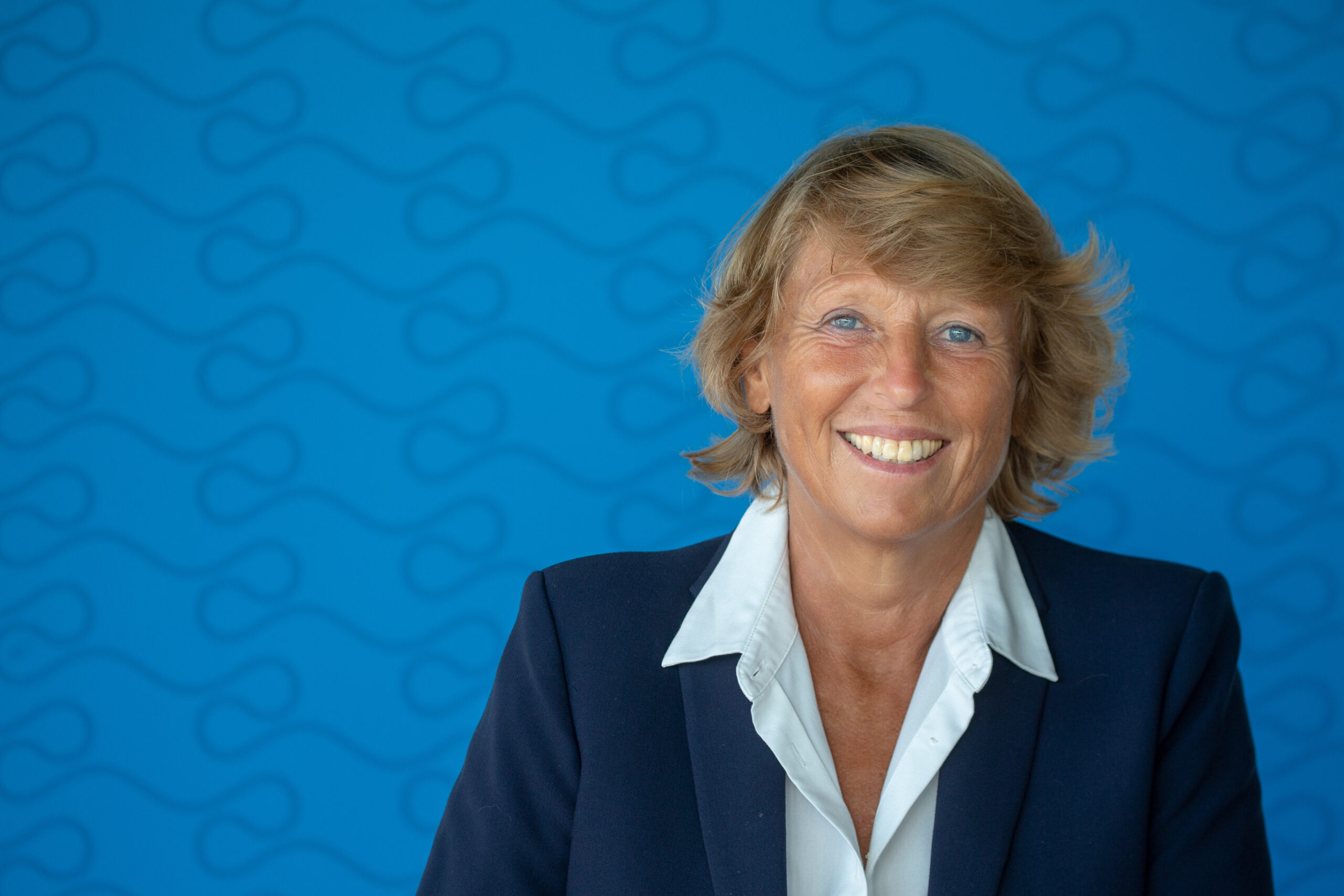
Sylvie Ernoult, show director for the Cannes Yachting Festival for the past 13 years, has always felt the pull of the sea. Living in the port of Le Havre, France, she remembers going down to the waterfront as a child to watch huge, cargo-bearing ships come and go.
After college, her jobs included working for a shipping company that had a fleet of cargo and other merchant-type ships. Years later, she took a position as a charter manager, and after some positions in hotel management, she eventually landed at Club Med as a commercial real estate manager.
The 2025 edition of the Cannes Yachting Festival will be the last one for Ernoult, who plans to retire around the end of the year. (This interview has been lightly edited for length and clarity.)
Please tell us about your personal and professional backgrounds.
I grew up near a big port, Le Havre, which is the second largest in France. It handles large cargo ships and moves tens of thousands of containers every year. I remember going down to the ocean to watch them pass by and seeing the small sailboats racing around on the water all year long.
For the first 10 years of my career, I worked for a big shipping company that owned and financed cargo ships, gas tankers and similar vessels. I used my computer degree from college to build financing models for the ships. The programs were used by bankers and other financial people on what were the first microcomputers. I did this for a long time and spent many hours on the ships our company owned. Working in a maritime environment has always been important to me.
The next step in my career was to jump to smaller boats, which was much more interesting than merchant cargo, and doing the same thing: financing. I eventually switched to sales and began developing a luxury charter fleet for that company. I was in control of 15 boats all over the world, in places like the Seychelles, the Caribbean, Tahiti and the French Riviera. I ran the fleet, handled sales and managed the crew.
No matter the job I held, I always worked in and around the boating industry in some way. Then, about 13 years ago, I received a call and was offered the helm of the Cannes Yachting Festival. I immediately accepted. It’s funny because one of my big issues before taking this job was wanting to stay in Paris. I previously worked with Club Med because it involved luxury real estate in my area of interest, but it was also because I wanted to be in Paris for personal reasons. I was tired of moving to every port and different destinations around the world. I wanted to be stable in Paris.
Usually, if you want to work in Paris, you don’t find any yachting or maritime jobs. This is why I worked for Club Med. But of course, when I received the call telling me I can be in charge of the Cannes Yachting Festival, I wanted to know where the job was located. Thankfully for me, they told me the job is based in Paris.
This is going to be your last year as show director, as you prepare to retire.
After 13 years at a job where I’ve had so many amazing adventures and challenges and loved watching the evolution of the show, I’m going to leave my seat to Constance Brément. She has been working with me since February. She’s learning the ropes.
I asked management to have a year of transition to train her for the position because the job is tough, and it’s much smoother, much nicer for the job, for the clients and for the staff to have this in-between period to get her up to speed. She’s already taking control of some of the job duties, especially communication, marketing and things like that, because she’s very good at those aspects of running this huge show, which has a lot of moving pieces.
What do your numbers look like for this year’s show?
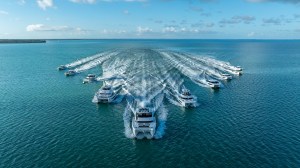
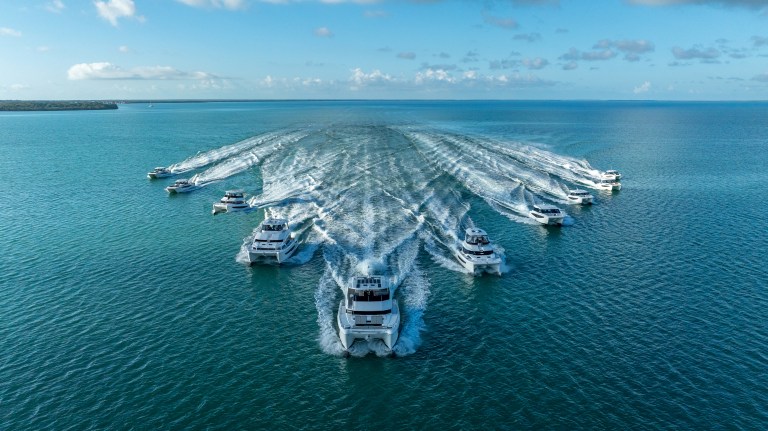
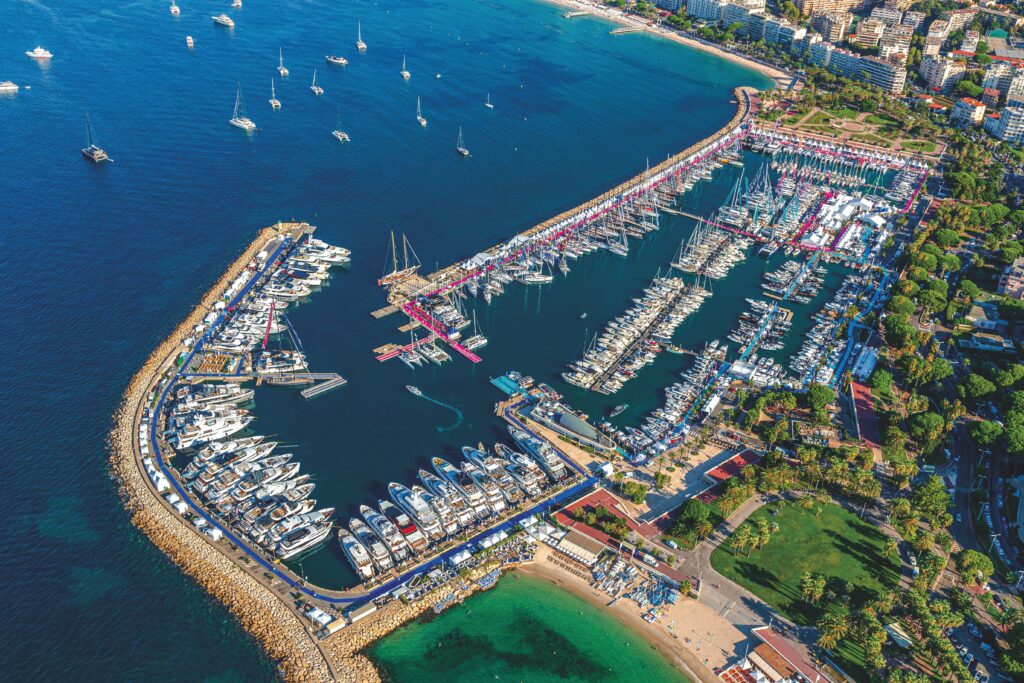
It’s good. Last year we had around 700 boats and 600 exhibitors. I think, as of today, that we have roughly 620 exhibitors and 700 boats. The two ports that we use to display the boats are packed, so I have no more space to expand. The boats keep getting bigger and bigger. To maintain the same volume, this year I increased the on-water surface area for the boats, and I also optimized the shoreside display overall square footage.
The big issue is that we always want to be focusing on the quality of the shows and never want to compromise that. This year, I’m not growing the show; I’m concentrating on the quality. This concerns the show content, innovation and new products, which attracts the journalists, the press and the visitors because it’s all brand-new. The evolution of the industry is very important to keep in mind when planning the show these days.
Another important factor is planning and staging product where it is easy to find for show attendees. It’s a matter of having everything well-organized and presented well, too. This is where we are making big improvements this year, and people will notice it.
How many visitors do you usually have in a year?
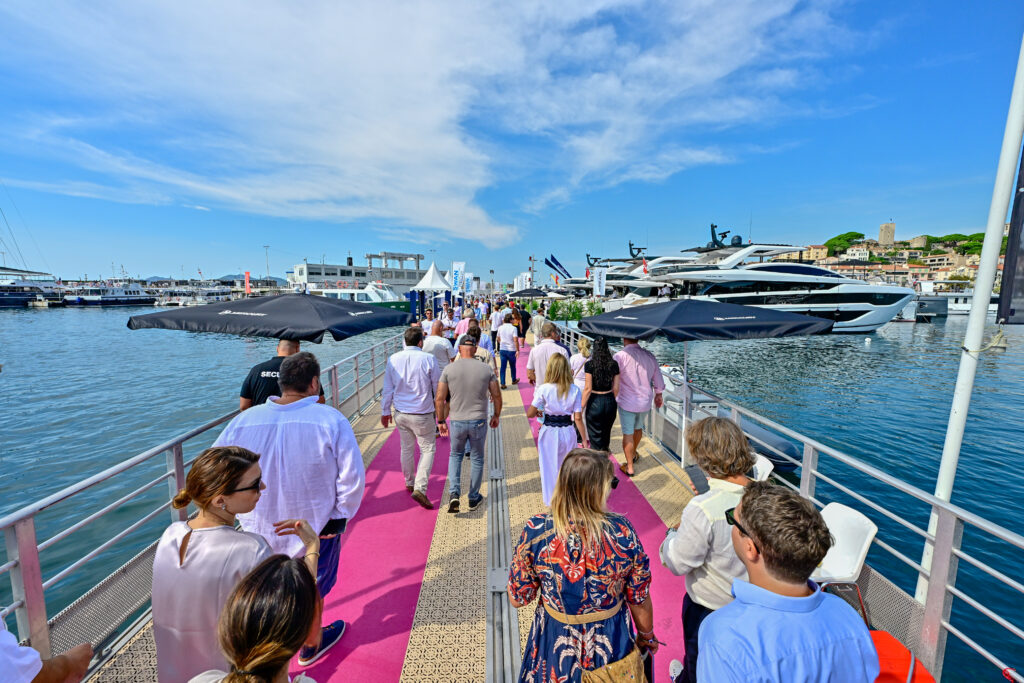
For three years, I have had roughly the same number, 55,000, and I’m not chasing more. If I have 60,000, I can take them. The show is big enough that I can accept more. It’s important to have a lot of people, but it’s also important to have the right people. We want to attract those who are ready to buy or seriously thinking of buying a boat. It’s so important for our exhibitors.
I also have tourists who don’t know anything about boating or have no plan to buy. They come. And if they come, it’s because of this magical environment, the beauty of Cannes. Walking the show is a pleasant way to take it all in. They get to see the boats and yachts, and it is a way for people to discover the yachting world.
As a boat-show organizer, you have a responsibility to educate the population and to have more people getting interested in boating. And we need the young generation to come on board and discover; it’s very important.
Are there any new components to the show this year?
Innovation is the key to making better boats and marine products that people will want to buy, so highlighting them is a big focus for us. We look for innovation in terms of sustainability, developing new products, in design and efficiency, and in many other important product areas. This is where our World Yacht Trophies and Boat International Design & Innovation Awards come into play.
We enlist six or seven global marine industry experts to judge different categories, such as technical advancements, energy efficiency, yacht design and other areas. Winners get recognized with large, green stickers for each winning product or boat around the show that are easy for everyone to see. These programs are good support for our exhibitors because of the enhanced visibility they provide.
The economic climate is uncertain, but it sounds like your show is as big as ever. Is that right?
Yes, we’re lucky. Our show has a good reputation, probably the best in Europe. That doesn’t mean that we’re safe from outside influences like the economy. We are always challenged as a leader, and that means we must perform perfectly. Otherwise, you end up being replaced by someone else.
Obviously, the world is a difficult place right now in so many ways. There’s the economy, world politics, tariffs and a lot more. Cannes is a great place for builders and manufacturers to show their products, and it always will be. But we don’t relax — we’re always looking to be the best investment and value for exhibitors’ marketing spend.
When does the planning for next year’s show start?
As a show director, you start 18 months ahead. But you’re always working 50% on this year’s show and 50% looking at the following year. The show director is constantly thinking about strategy, pricing and evolving the show to stay current with the market. That means, for example, doing market studies, which need to be done well ahead of time. Right now, I am working on the marketing plan for the 2027 show with our marketing team. There’s always something taking the show director and staff’s time, even as many as two years ahead.
What are some of the most challenging aspects of running the Cannes Yachting Festival?
I think my answer is going to be silly, but this job … it’s a lot. This is why I love it, because it’s not one challenge, but many new challenges year after year. For some years, it will be a logistical challenge. Another year, it will be a marketing challenge. Yet another year, it’ll be sales pressure, maybe because exhibitors are deciding they want to do something different, not to exhibit at all or they feel the prices are too high. So it’s multiple areas of challenges.
My main challenge this year has been logistics because of space considerations. When I build out the show, I must make sure there are places to park, space for every exhibitor and boat, the right spacing for visitors to be comfortable walking, and that the logistical considerations are in place: electricity, water, restrooms, food and so many other things.
The magic of Cannes is that the port is in the heart of the city. It is great, but it’s not ideal when you talk about logistics because, for example, if I need to have a truck coming through the streets at a certain time of day, I have to go and talk to the mayor. And he may very well say, “No way, Sylvie, you’re not going to do this. I have the tourists of Cannes staying there. This is for the city bus, not for you.” OK, so I exaggerate. But the truth is that mixing organizational and logistic things for a big event inside a very upscale city is not easy.
Another big challenge is gathering boats together by category and size. In 2019, I decided to create a sailboat area within the show, which required moving everything with a mast to Canto. It was very, very complicated because certain manufacturers do not want to be next to competitors or certain types of boats. Or maybe it’s a company that has boats in Vieux Port and you’re separating their team. Then there’s length, draft — all kinds of variables.
A lot of exhibitors were very unhappy when I moved the sail component, but in the end they came to me and they said, “Sylvie, you were right. This is much better now, thank you.” You really have to think that you are right. In general, I’m not making those decisions alone. I have my big boss helping me in the strategy. The salespeople who talk with their clients and who know the feeling of the exhibitor are also very helpful. I’m not doing this alone, but sometimes hard decisions have to be made and you have to resist giving in to outside influences until it’s done. And when it’s done, it works.
How many people do you have on staff?
We have three or four people doing management work in the office for the entire year, but there are many others who work for us in one way or another. There is a sales management team, which includes a sales chief and a sales director with the data. Then there is the sales team, which is, I don’t know, maybe 50 guys.
And then the logistical technical team, which is huge, though I don’t know the exact number. They share their tools, they share their knowledge, they share the engineer development. I also have the temporary team on site for the last three months before the show, and that is around 100 people. The week before the opening of the show, there are as many as 3,000 people on board working directly for me, from electricians to security to dock builders.
What makes Cannes so good as a location for a boat show?
To have a good location for a show, you need a few critical components. First, you need to have the boats available within a reasonable distance, which means that the show is in a good geographic area — both land and sea.
It’s also important that the venue is in a yachting area, and Cannes is one of the best Riviera cities. So in terms of the quality of welcome, available lodging, good restaurants and other luxury elements, Cannes has everything show attendees could want.