The Education Data Initiative estimates that the average cost of one year of college in the United States is $38,270. “Considering student loan interest and loss of income, investing in a bachelor’s degree can ultimately cost in excess of $500,000,” says Tim Murphy, education director with the American Boat & Yacht Council.
Given the difficult job market for many recent college graduates and the cost of that four-year degree, it might be time that the trades gain favor as a career option. “Pursuing a skills-first path allows young people to immediately start earning good wages and mastering the skills that allow them to climb into the positions they aspire to,” Murphy says. “Quite often, companies will subsidize the cost of a degree for those who later choose that path.”
Yet many students are unaware of careers in the marine industry. Those who do enter training programs often discover that they enjoy the work’s technical complexity and hands-on nature. A common thread among this year’s ABYC Outstanding Technician Award winners — a program meant to raise awareness of the marine trades as a career path — is that many found their way into the trades through training programs and industry outreach.
“Virtually every marine-service business we know would hire skilled technicians today if they could find them,” Murphy says. “ABYC certifications are a universally recognized credential that demonstrates a technician’s knowledge and commitment to his or her trade, whether it be electrical, engines or marine systems. An ABYC certification is a proven boost in the job market. Techs use them to enhance their career prospects; businesses use them in the competitive marketplace to demonstrate the quality of their work.
“One of the challenges we see across the board is that marine-service businesses tend to be in coastal or recreational areas with a high cost of living,” Murphy says. “While some of these businesses have found creative ways to help with housing costs, in broad terms, this problem hasn’t gone away.”
Two of this year’s ABYC honorees — Outstanding Technician Julia Briggs, a sailboat rigger at Irish Boat Shop in Harbor Springs, Mich., and New Achiever Alex Plante, a systems integration technician at Flux Marine in Bristol, R.I. — took early risks in their training to redefine themselves and are now seeing the rewards. Their paths reflect broader trends among young technicians who buck norms to enter the field.
Redefining Risk
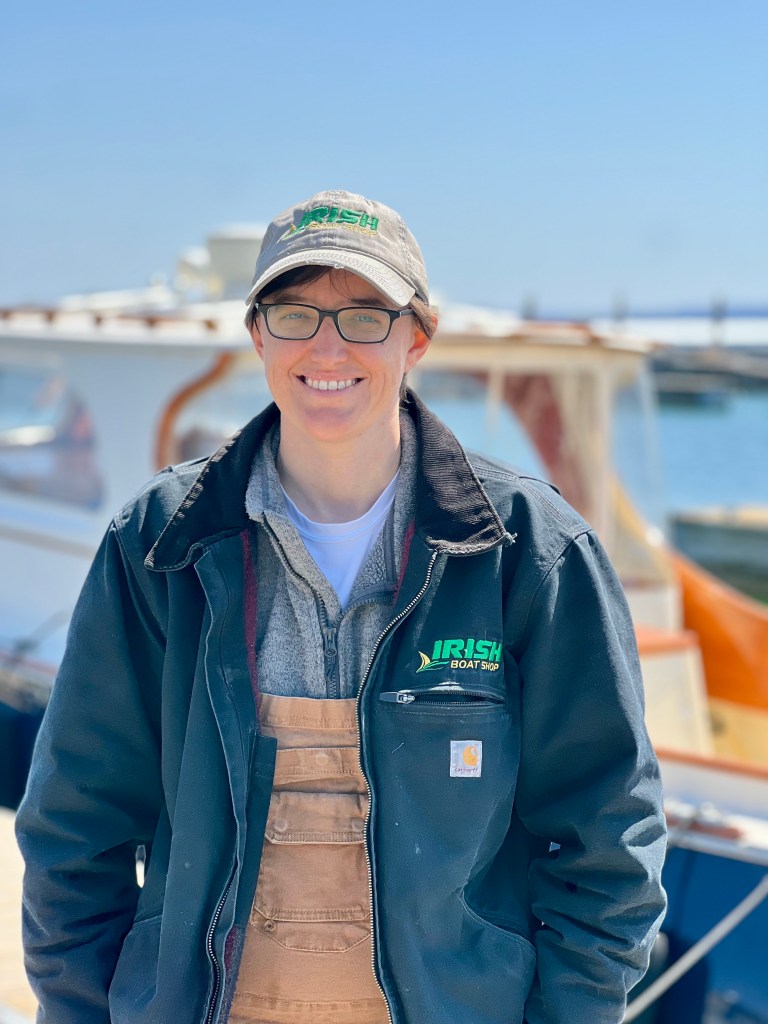
Raised in Alpine, Utah, Briggs, who is 33, discovered boating through family trips to California and the Great Lakes — experiences that eventually drew her into commercial diving. The work was intense and dangerous. During one job, she was nearly pulled into a dam intake.
“The only reason I am here is that my size is smaller than most of my co-workers, so my body did not block the intake hole entirely, and water was able to pass around me as they got the pumps shut down.”
The experience reshaped how Briggs approaches risk. “If you feel what you’re doing is unsafe, don’t let anyone bully you into doing it anyway,” she says.
Briggs stepped away from diving to study marine science and took a summer job at Brion Toss Yacht Riggers in Port Townsend, Wash. Toss recognized her aptitude and offered an apprenticeship grounded in safety and precision. “You never know what is happening up at the top until you’re there,” she says of climbing masts. “That is not when you want to find out the block you’re on is about to snap.”
As a rigger, Briggs says the work is “never boring. Because we are short-staffed and many tasks take two people, I have learned a lot of skills just by being the person people call when they need a hand.”
Briggs is also helping shift perceptions about those who work in the marine trades. “There’s always a bit of surprise when people first meet me, but it goes away quickly once they see you know what you’re doing,” she says, pointing out that what some might see as a limitation can be an advantage. “Being smaller and more flexible than my colleagues is a huge advantage in this industry.”
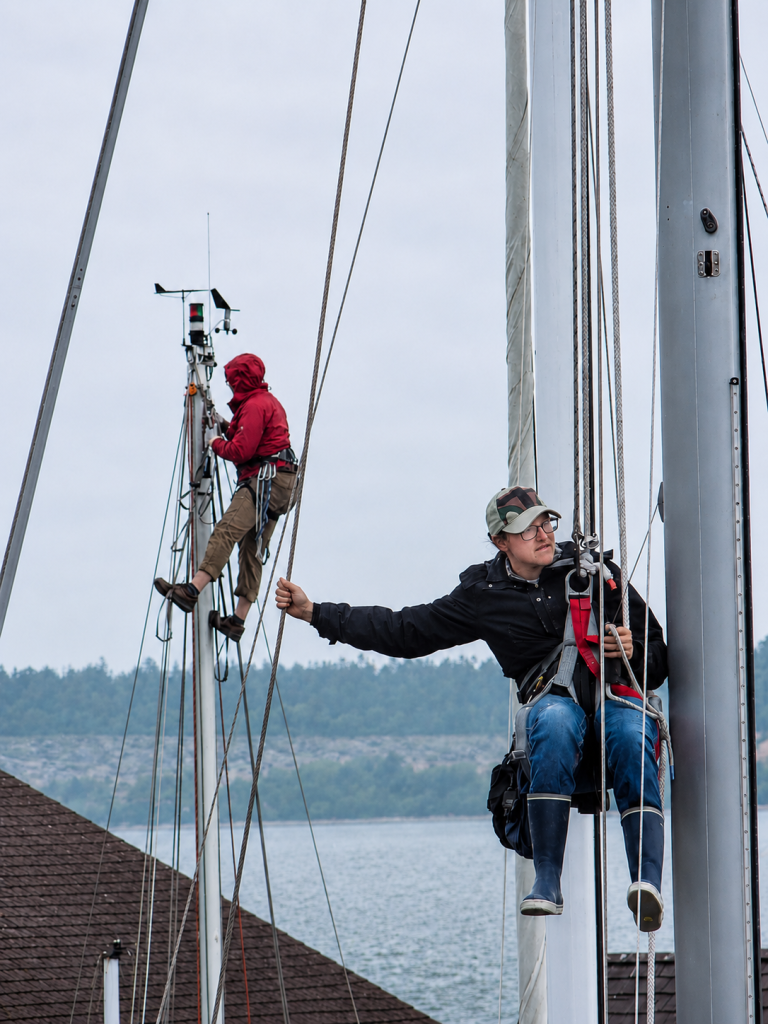
Through outreach, including work with Women at the Helm, Briggs encourages others to get comfortable with boating, and she’s always ready to encourage people to enter the marine trades. “Never be scared or embarrassed to ask a question,” she says. “No one is born knowing how an engine works.
“There is no ‘type’ for the marine industry techs,” she adds. “We are just a collection of weirdos with a special interest in boats.”
At the Edge of Tech
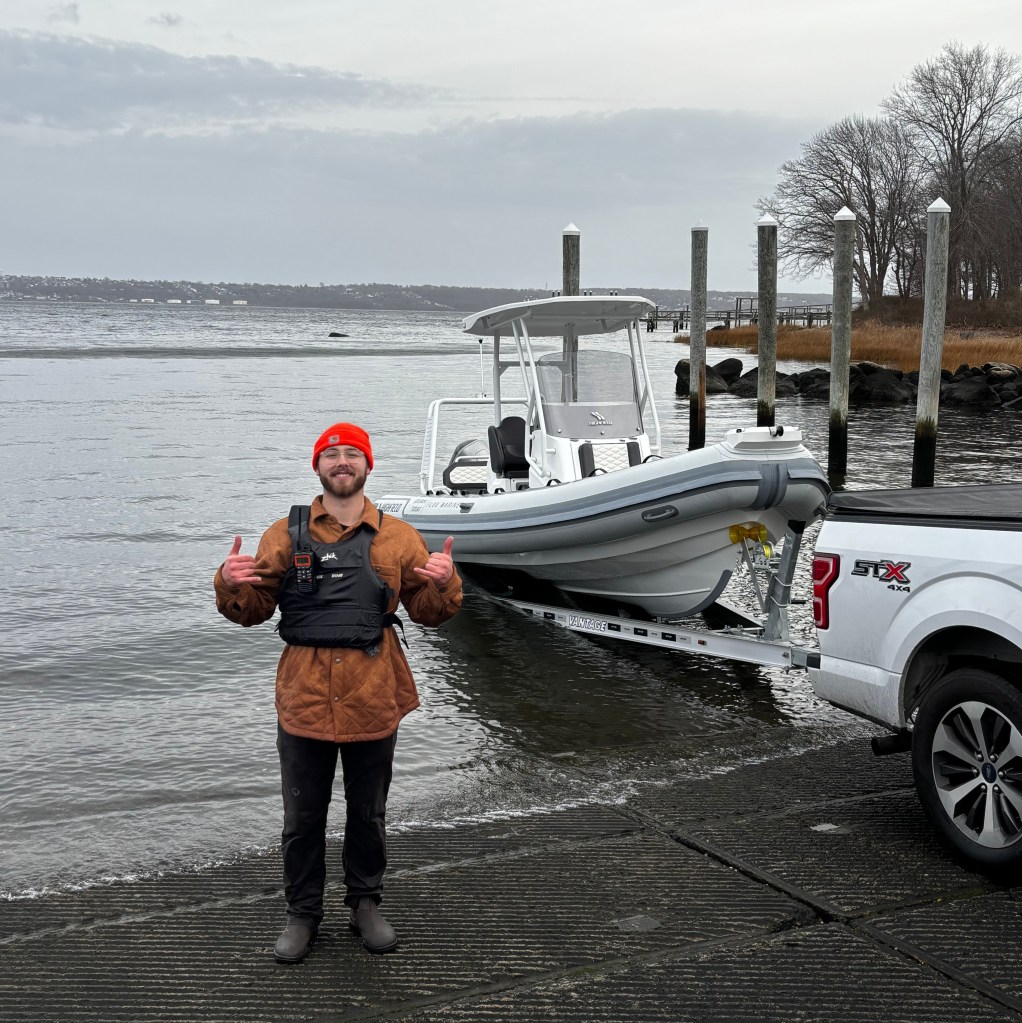
Alex Plante’s early years in Westerly, R.I., were shaped more by skateboarding, surfing and small engines than boating, but he knew he wanted to pursue a career tied to the ocean and emerging technology. A marine technology program at Chariho High School and one of his teachers there pointed him to IYRS School of Technology & Trades in Newport, R.I. Support from his family reinforced the decision.
“I was lucky that my parents were incredibly supportive of me pursuing the trades — that kind of reinforcement meant a lot when I was mapping out my future. Having both of those things, a mentor who was genuinely passionate about the work and a family that believed in the path, made the decision a lot easier.”
At IYRS, Plante found electrical work to be his biggest challenge. Rather than avoid it, he committed to learning it. “I wanted to work on the ocean. I cared about keeping it healthy, and I wanted to be involved in new technology,” he says. “So when I had the opportunity to extern at Flux Marine, I made it a point to throw myself into the deep end and force myself to become more fluent in marine electrical systems. After the externship, they offered me a full-time position.”
As a systems integration technician working in electric propulsion, Plante, who is 20, integrates high-voltage battery systems, communications and controls into production and custom boats — work that requires deep knowledge and constant problem-solving.
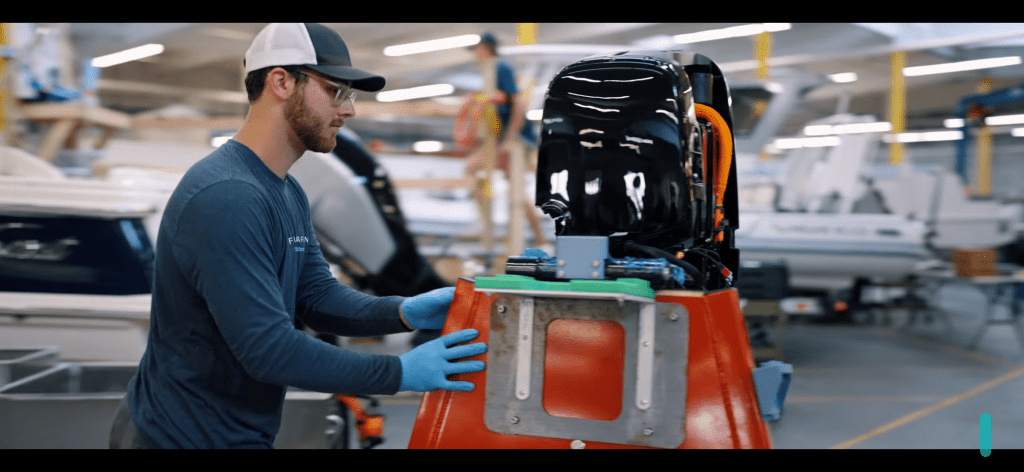
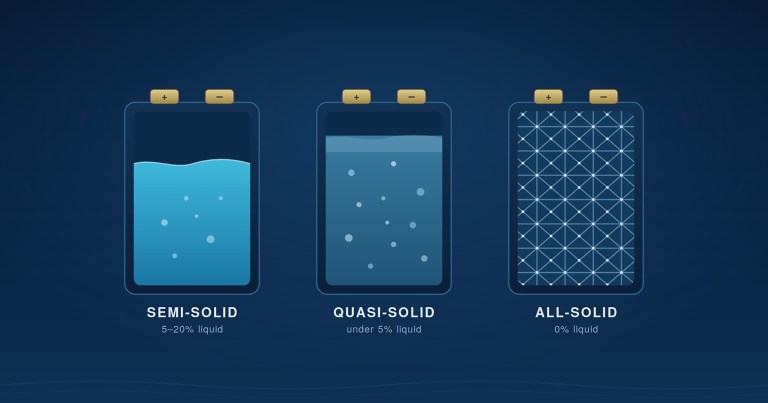
He sees pure electric propulsion as well-suited for near-shore boating, while hybrids remain viable for longer distances and larger boats. “Bay boaters, lake boaters, oyster farmers and other near-shore aquaculture applications make up the vast majority of our customer base today,” Plante says. “And until we can master battery technology for longer-range applications, diesel-electric hybrids are a great alternative for larger vessels.”
Plante’s job blends physical and digital work. About 40% of his service involves diagnostics or software updates, sometimes performed remotely — a shift from traditional service work.
As a young technician, Plante entered a workplace where his colleagues were far more experienced. “Knowing when to shut up and listen has served me well,” he says. “We all have to start somewhere.”
This story originally appeared in the June 2026 issue of Soundings Trade Only.