
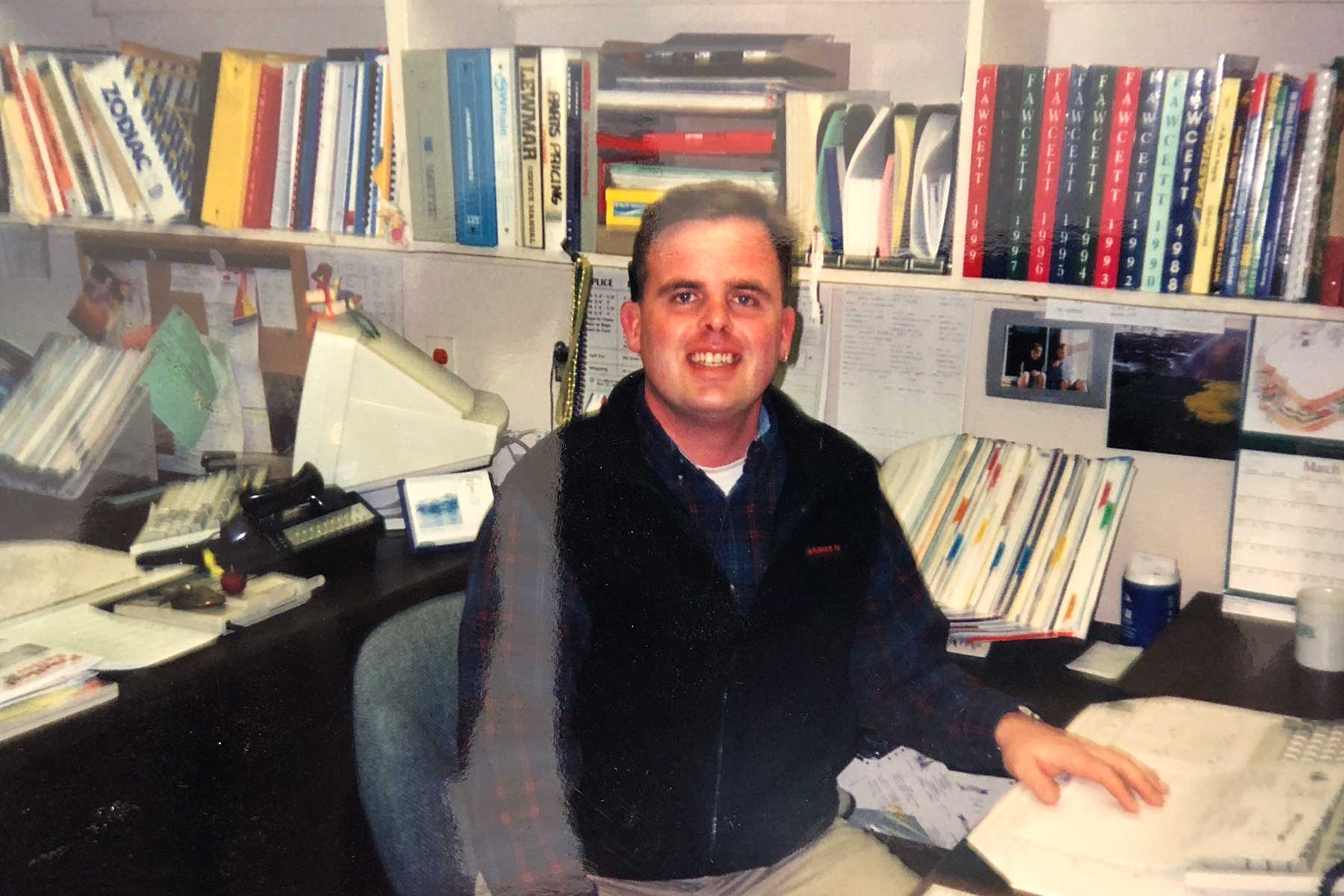
I got my start in the marine industry at a retail ship’s chandlery on the Annapolis, Md., waterfront as a salesclerk. It was an amazing place to learn and work, and I scaled my way up through the store ranks, eventually servicing a marine wholesale territory of about 300 boatyards, marinas and other industry shops.
Early in my tenure, in fall 1991, a grave threat had us all running scared: West Marine was opening a brick-and-mortar location just up the road. The West Marine brand was known for helpful staff, broad inventory and low prices. Many of us worried they’d bulldoze right over us.
But quick thinking on our ownership’s part, and some retail sales programs that turned out to make us competitive with the retail giant, worked to keep us relevant. In fact, we thrived, reporting year-over-year sales increases right up until the time I left to pursue a career in marine journalism in 2001.
I’m thinking a lot about those days right now because as most everyone knows by now, West Marine is in what many in the industry and beyond are calling deep trouble, having filed for bankruptcy on Sunday as they seek to restructure.
Enter Private Equity
West Marine thrived and still has that Maryland location, but around 2017, the business fell into what seemed like a long, slow decline after private equity firm Monomoy Capital Partners bought the retailer for a reported $338 million in cash. A number of CEO changes followed, and in 2021, private equity firm L Catterton acquired West Marine. Eric Kufel was appointed CEO in August 2021, company headquarters were moved from Watsonville, Calif., to Fort Lauderdale, Fla., in 2022, and in December 2022, Chuck Rubin, the fifth CEO since 2012, took over the helm.
Rubin oversaw a recapitalization of the retailer in March 2023. According to a West Marine press release, that process “provides the company an aggregate $150 million of additional capital as it enters into a significant cash flow generating quarter, allowing West Marine to continue providing the boating community all of its product and service needs and aspiring to deliver a superior customer experience.” Rubin then retired in late 2025 and was replaced by Paulee Day, who had started with the company in Sept. 2022 as chief legal human resources officer and secretary.
All of which leads us to present day, with West Marine this week listed in court documents as having liabilities of $500 million to $1 billion. The Chapter 11 bankruptcy filing — which, let’s face it, hardly surprised anyone at this point — aims to allow the company to pay off its creditors and restructure.
What Went Wrong?
A perfect storm of problems led West Marine to be in this position. Online retailers began nipping away steadily at West Marine’s customer base. Users on forums ranging from Reddit to Catamaranguru and Trawlerforum created a broad perception that Amazon beats West Marine’s price on everything from marine heads and hoses to nuts and bolts.
Another problem the company faced was keeping its stores stocked with the right things. When boaters want something, they want it immediately, lest their boating plans be upended. I’ve personally been in West Marine locations in the past few years and was not able to find what I needed, or I found myself searching for a pair of something and the store only had one. Posts by customers on cruisersforum.com suggest more of the same: “I went to a local West Marine this past weekend for clevis pins, bolts nuts, and some washers, was surprised to see almost half of the store empty, and instead of the two salespeople there was only one.” Another poster commented: “The chandlery at Napa Valley Marina has far more goods and priced well, too.”
As for the stock that did exist, its quality was also a problem, according to people I’ve spoken with on the docks: “They’ve turned into more of a clothing and lifestyle outfitter than a store that carries serious hardware. Their store is staffed by teenagers and not serious, salty types like they used to have.”
West Marine’s team would argue these points, but what can’t be argued is that there were also macroeconomic headwinds leading consumers to retreat: inflation, high interest rates, tariffs, supply-chain disruptions, foreign wars and more. Any single one of these factors can cause business headaches. Combine them all, and a company that’s already wobbly can stumble.
Additionally, West Marine faces long-term store lease obligations, according to real estate data firm CoStar. Those obligations reportedly exceed $50 million at a time when more and more people are shopping online, indicating that at least some of West Marine’s challenges will persist into the future.
Lessons for the Industry
West Marine, very likely, will remain in business and come back in yet another incarnation. But there’s a clear lesson for the recreational marine industry as a whole in this once proud retail giant’s story: Consumers are rapidly changing and have more choices than ever. They’re not afraid to wield technology in any form to find products at lower prices — including boats. Companies that fail to adapt are likely to face a similar fate.
Think about the last time you wanted to buy something. If you searched online, chances are you got the information you needed from AI. In-store service is also important, but plenty of people are getting the knowledge they need by asking AI. That’s bad news for boatyards and marine retailers alike.
For at least five years now, consumers in our space have been using words like service, selection, affordability and quality, all while expecting to get what they want instantly and at a competitive price.
It’s about time we start listening to what they want and figure out how to give it to them, including through the West Marine brand, if we all want to be part of these consumers’ future.