 ABYC
ABYCEnergy density. Volatility. Resources both rare and abundant. Safe boating.
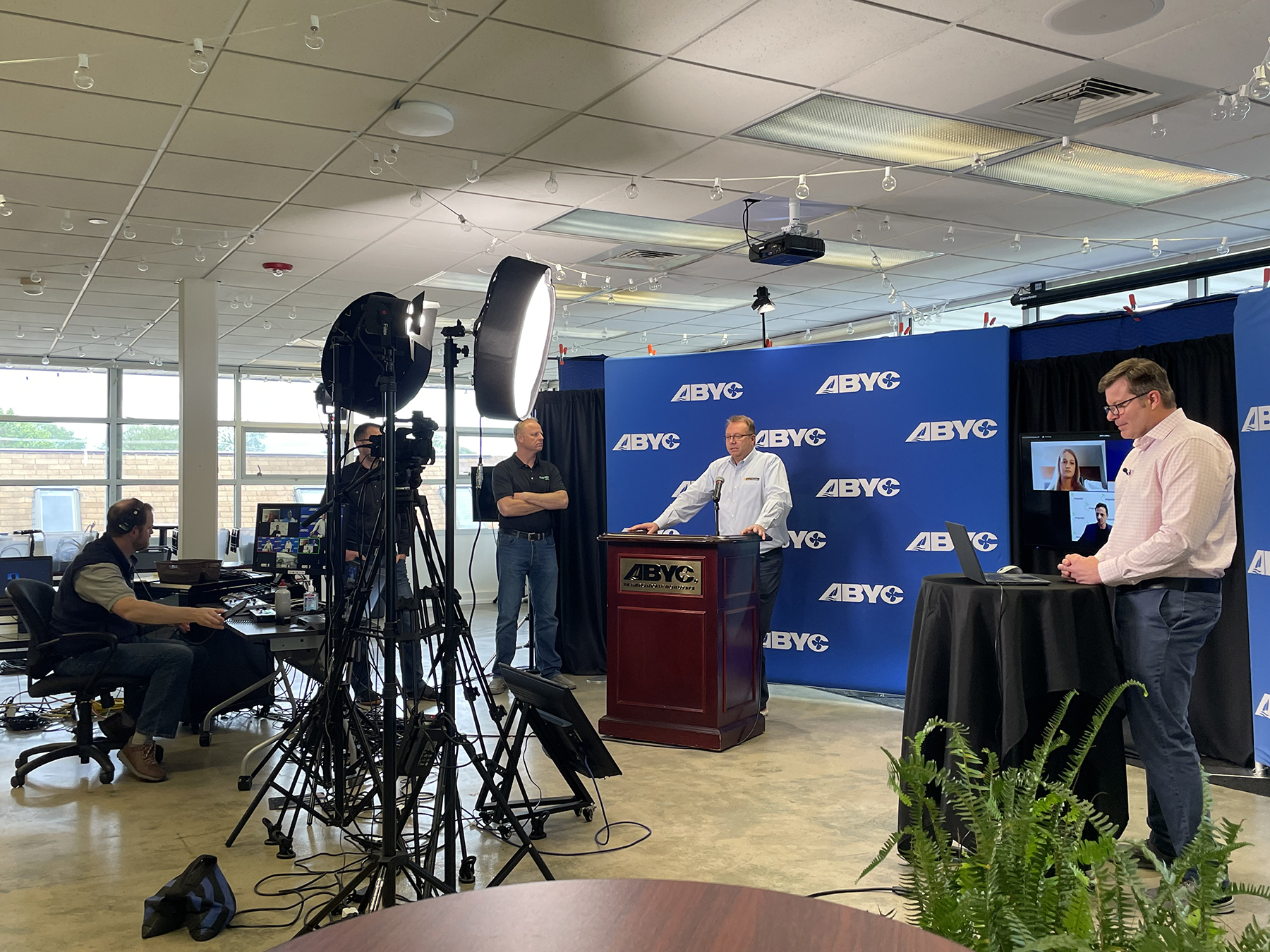
An exploration of the present and future state of energy storage and distribution aboard boats was the topic as marine electrical and compliance experts gathered for “Staying Current with Electrification,” hosted by the American Boat & Yacht Council and the U.S. Coast Guard on May 3. It was the fourth in a series of risk-mitigation seminars that have run twice a year since 2021.
More than 500 marine professionals from around the world registered for the free webinar this month. Free recordings of each event are available at abycinc.org/riskmitigation.
Jeff Ludwig, chief of the U.S. Coast Guard’s Recreational Boating Product Assurance Branch, announced new requirements for electric boats. Details can be found under the Boat Builders Took Kit tab at safeafloat.com. “On the Policy page,” Ludwig said, “you’ll find our boat test policy for safe loading, safe powering, and flotation compliance guidance for electrically powered recreational vessels.”
If you are building boats less than 20 feet long with electric propulsion, this is critical information.
For builders selling boats internationally, Craig Scholten, ABYC technical vice president, provided compliance updates from Canada, Europe and the United Kingdom. “Transport Canada recently approved a new policy accepting ABYC electrical standards, including Standard E-13, Lithium Ion Batteries, for electric and hybrid vessel compliance in Canada,” he said.
ABYC is the American National Standards Institute-accredited U.S. Technical Advisory Group to ISO TC 188 for small craft. The TAG collaborates with industry leaders to harmonize requirements and support boating safety internationally. U.S. delegates will attend work group meetings in Norway this June to support the development of new ISO small craft standards regarding electric propulsion.
The May 3 event focused on existing and emerging technologies to store and distribute electrical power aboard boats. The holy grail of any emerging battery technology is energy density: the amount of energy a battery can store per unit of weight, typically expressed in watt-hours per kilogram.
Emily Klein, a materials scientist and engineer with Element Materials, a testing lab that analyzes batteries, displayed a graph showing the progression of energy density over time with lithium-ion chemistries. The line climbs steadily from 1990 through 2015, then flattens.
“Things were increasing very rapidly,” she said, “but we’re starting to hit a plateau. There is only so much energy you can get out of existing lithium-ion chemistries. But if we want things like electric flight or higher-powered EVs” — or long-range, high-speed, oceangoing boats — “we’re going to need a different cell chemistry.
“Silicon anode cells are a really interesting concept,” Klein added. “Instead of using materials that are harder to get, you can use silicon, which is readily available. It’s easy to process, and it offers orders of magnitude more energy density than graphite does.”
But normal silicon cracks and breaks apart during charge and discharge cycles, so instead of thousands of cycles, you get only 30 or 40 with silicon. Today’s researchers are looking for combinations that harness the energy density and availability of silicon while mitigating its brittleness.
In April, The New York Times reported that China-based CATL, the world’s largest manufacturer of electric car batteries, is going into full-scale production on sodium batteries, replacing lithium. In some cases, the company is combining sodium and lithium cells in a single battery module.
Are we likely to see sodium batteries in our boats anytime soon?
“I think we might,” Klein said. “It came up very quickly. We had not seen it until recently, but over the past two or three months, we have started getting in more work with sodium-ion. I don’t have any personal experience with it quite yet, but I do think it’s going to be a big player.”
Mitigating risks, a core mission of ABYC and the Coast Guard, was a central theme of the event. While emerging battery technologies always bring new challenges, lithium-ion chemistries for marine usage — particularly lithium-iron-phosphate batteries — have matured to the point where we can call them reasonably safe when installed according to the battery manufacturer’s specifications and ABYC standards.
“I am not aware of any damage to a boat or other accidents caused by a lithium-ion battery installed in compliance with ABYC Standard E-13, Lithium Ion Batteries,” said Maciej Rynkiewicz, ABYC assistant standards developer.
Other speakers focused on working with the technology we have available today. For example, how can an operator know the real-time capacity of today’s battery banks? With lead-acid batteries, simply measuring the voltage across the positive and negative terminals provides a useful sense of the battery’s state of charge. But not so for lithium-ion batteries.
“I have to say, it’s an active area of research,” said Denis Phares, president and CEO of Dragonfly Energy. “There are so many algorithms that take into account the temperature and the state of health, and all kinds of things. But the simplest, coarsest way is just a coulomb counter, a shunt that can measure the number of cumulative amp-hours that have passed through the shunt.”
Menno Ligterink of Navico Group and Chris DeBoy of Vetus Maxwell spoke about the promises and implications of installing 48-volt DC systems in today’s boats. The promise is the ability to run such high-draw loads as air conditioning, bow thrusters, windlasses and, sometimes, main propulsion while eliminating an internal-combustion generator. Boaters expect ever more AC power from their inverters.
“Most 12-volt systems cap off at 10 kilowatts, which is still really pushing the envelope,” Ligterink said. “With a 48-volt system, you could increase that capacity to 35 or even 50 kilowatts.”
In 48-volt systems, the loads run with less amperage and less voltage drop, and the whole system runs more efficiently. “If you calculate 3 percent increase in efficiency over 24-hour power consumption, it definitely saves you a lot of amp-hours over time,” Ligterink added.
For more details about each of these topics, go to abycinc.org/riskmitigation. If you’d like to attend the Risk Mitigation seminar on Nov. 8, keep an eye on abycinc.org for details.
This article was originally published in the June 2023 issue.