
 PHOTO COURTESY NOAA
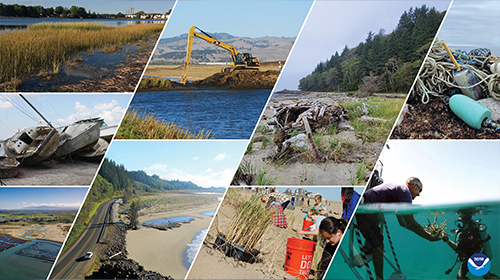
The Department of Commerce and the National Oceanic and Atmospheric Administration are recommending that $575 million be provided for 19 projects to boost climate resilience in U.S. coastal and Great Lakes states and territories.
As part of the Biden-Harris Administration’s Investing in America agenda, NOAA’s Climate Resilience Regional Challenge is a competitive grant program that makes awards under the Climate-Ready Coasts and Communities Initiative. The grants are funded by the Inflation Reduction Act. Investing in America is driving more than $50 billion to build resilience to the effects of climate change in communities across the country.
“As part of President Biden’s commitment to combating the climate crisis, we are investing $575 million to help make sure America’s coastal communities are more resilient to the effects of climate change,” Secretary of Commerce Gina Raimondo said in a statement. “This is a historic investment in our nation’s climate resilience, the largest in the history of the Commerce Department, and a key piece of the Biden-Harris Administration’s ambitious climate agenda.”
Administered by NOAA, the grant program was announced in 2023. The Resilience Challenge set a goal that 40% of the overall benefits of federal investments go to disadvantaged communities that are marginalized by underinvestment and overburdened by population.
“From sea level rise and storm surges to eroding infrastructure, coastal communities are on the front lines of dealing with the worsening impacts of the climate crisis,” said national climate advisor Ali Zaidi. “Under President Biden and Vice President Harris’s leadership we are driving progress and innovation in climate resilience across the board, using every tool in our nation’s toolbox to fight climate change and safeguard communities.”
The funding was offered in two tracks.
Planning and capacity-building awards focus on communities and regions that are initiating or advancing existing collaborative efforts designed to improve coastal resilience. These comprise 11 of the 19 projects that were recommended to receive funding, with the average award amount of $1.8 million.
Implementation awards encompass eight projects recommended for funding with amounts from $56 million to $75 million for more than five years. Total funding for these awards is approximately $555 million.
“This unprecedented investment will be transformative for our nation’s coasts following an extremely competitive award program,” said NOAA administrator Rick Spinrad. “Equity and inclusion, community engagement, and regional coordination are critical elements of this funding and NOAA’s efforts to build climate-ready coasts.”