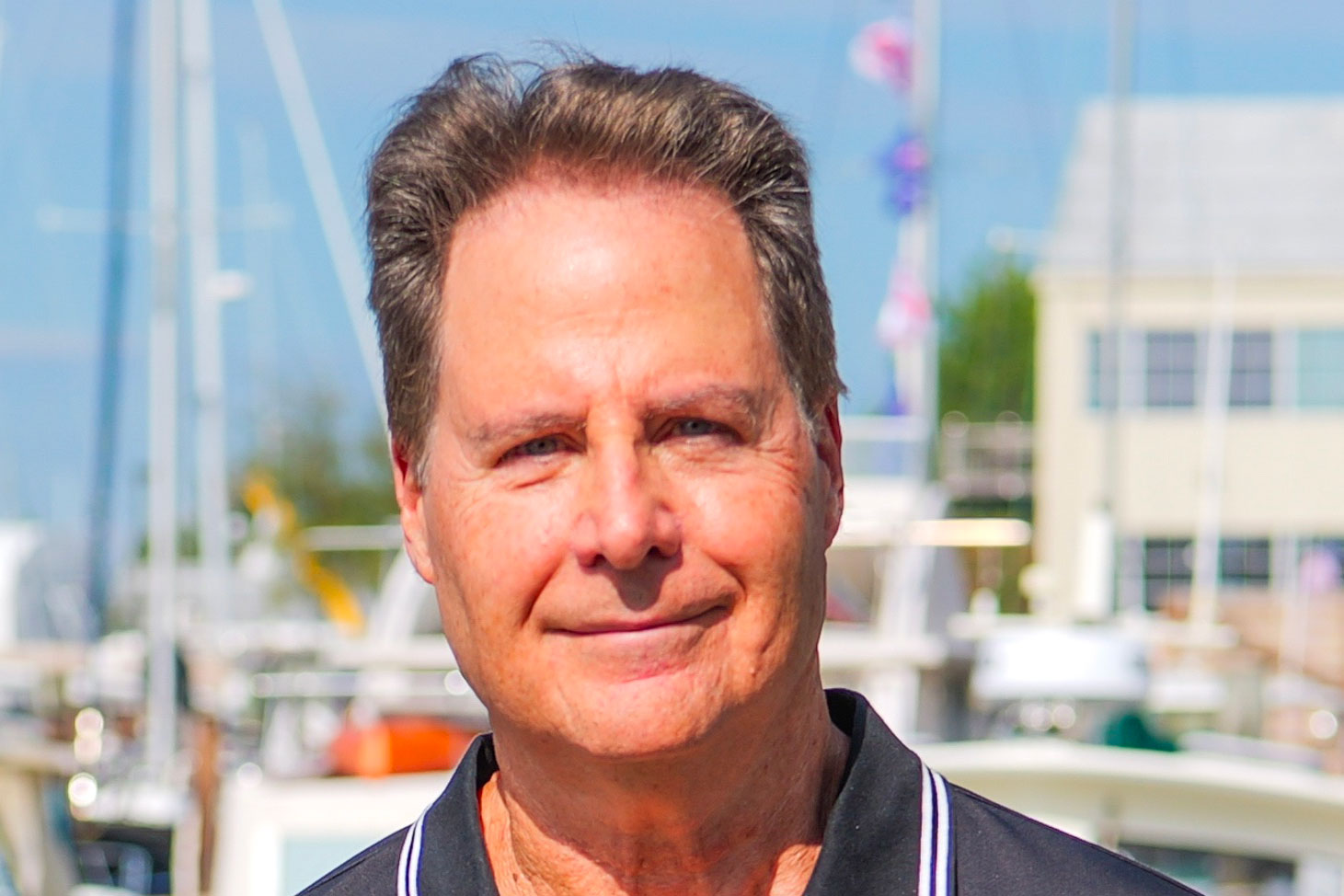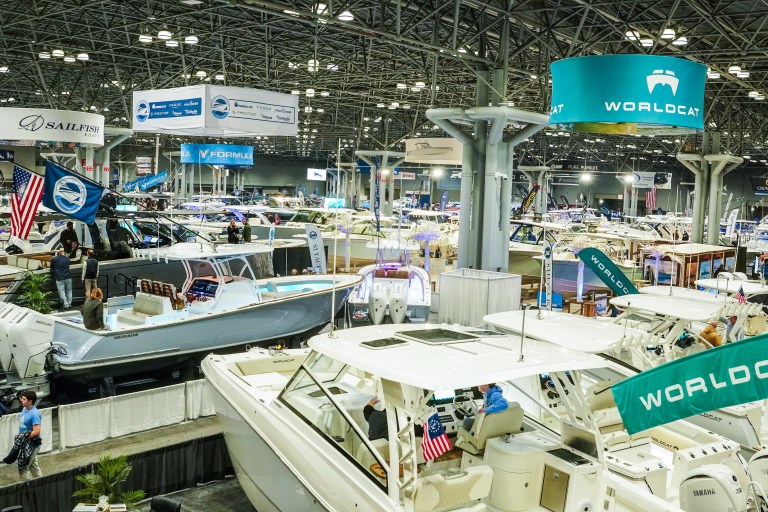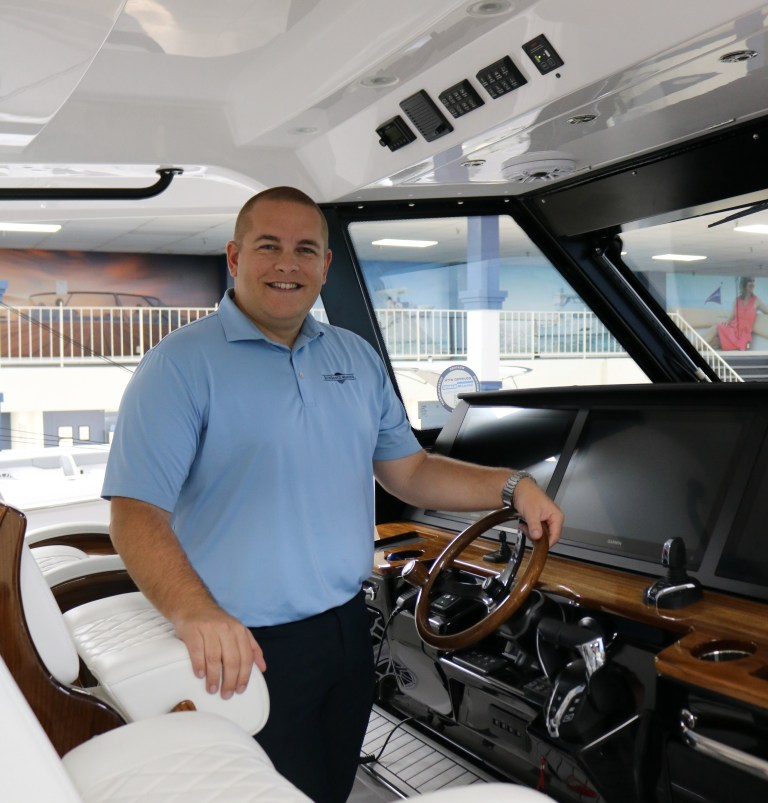
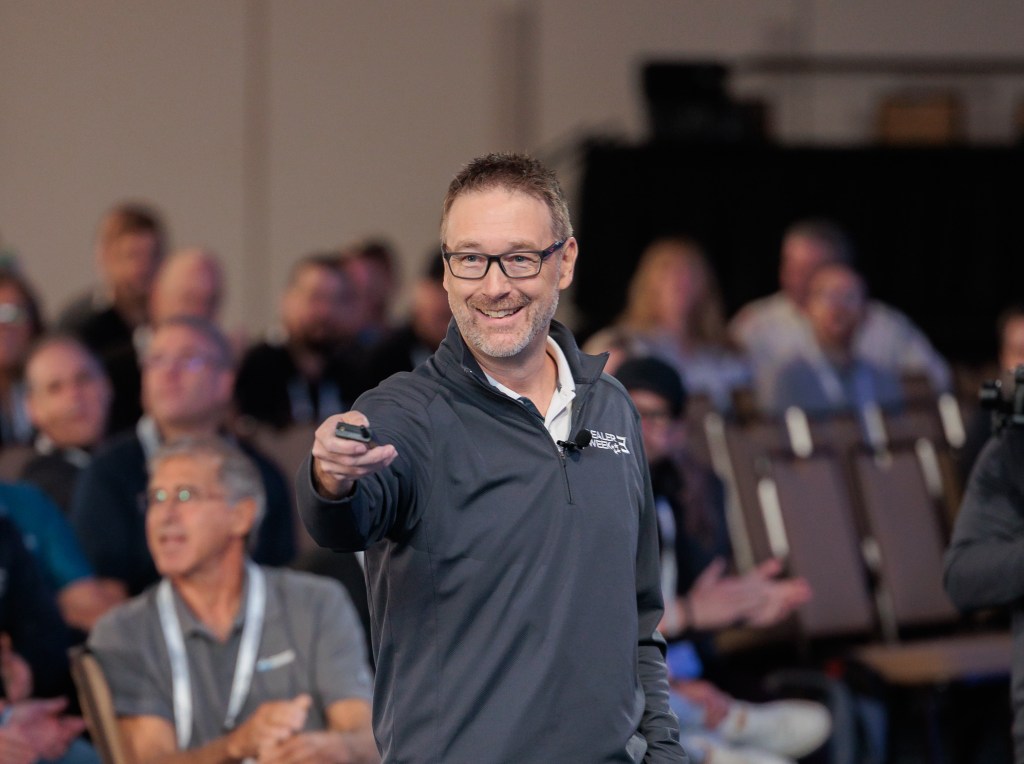
We know what Matt Gruhn, president of the Marine Retailers Association of the Americas, is and isn’t doing right now. He’s working on Dealer Week 2026, coming up Dec. 6-9 in Tampa, Fla., and not writing his regular monthly piece for Soundings Trade Only. Given how busy he is this time of year, we thought we’d have a conversation in late September to replace his column. If you like what you read and want to hear more, we’ll also be posting a longer, video version of this conversation online. (This piece has been lightly edited for length and clarity.)
Let’s start with this year’s Dealer Week theme: the new fundamentals. What does that mean to you?
What we’re seeing in our industry right now is really a fundamental change of the business model for the dealer, right? The conversations I’m having at dealer meetings this season are all about the fact that the way we did business that got us to where we are today is not the business model that is going to get us where we need to go in the future.
So what we’re talking about is a new set of fundamentals: how we’re running the dealership, the different types of strategies and tactics we’re using, and the way that we’re operating as leaders within our organizations. With all the changes we’re seeing, it’s a big ask, really. There’s a lot of work to do in this realm. For this year’s Dealer Week, we’ve built an educational program that’s designed to help dealers understand what those fundamentals are and how to execute them within the dealership.
Given these changes, what familiar practices still matter, and what needs to evolve?
The boat sale is still the target. But the thing that has been so eye-opening for me, and for the dealers I speak to, is what the customer expects today, and how different the customer journey looks. By the time we have our first contact with a customer, they have more information than they have ever had before, and from multiple sources. Further, they not only expect digital-first, mobile-first, always-on, but they also want a unique, personalized experience.
Some dealers I speak to seem not to grasp just how much they need to change to meet these changing consumers. Others simply shrug and say something along the lines of, “We’ve survived three generations doing it our way, and we’ll survive into the future.” Let’s talk about the gap between how dealers believe their business is operating and what a customer actually experiences.
That’s a really deep question. I’ve come to the conclusion that we have two different types of leaders in our dealerships today. We have the operators, the ones who are really good at getting it done. They operate with instinct. They make good, sound decisions. And then we have the architect, who’s building something new out into the future that may not resemble the dealership of today very much.
You can identify so many different places in the customer journey that we could deliver much better. Let’s take one example I really like to use, and that’s the boat delivery. The sale has been made. We’ve got the paperwork and the payment. Now we’re focused on that next sale. But first, we must deliver the product. And we tend to short-change the delivery process, and we wind up sending this customer off in a boat who may not really know and understand fully how to use it.
That is such a big deal for so many people, especially first-time boaters, and I don’t think we fully appreciate it always. What’s our follow-up process? How often are we checking back with them? I’ve experienced these gaps myself as a boat owner and as an RV owner, where I never hear from the dealer again after the sale. We just really have to understand where that customer is coming from and how we can deliver more for them.
You have written in your column that today’s customers want more speed, more convenience, more transparency. What does a better experience look like at specific moments during the journey?
If I’m a dealer listening to this conversation, I’m thinking to myself: Where would I want to pause and reflect? Am I being intentional enough when designing an optimal customer experience? Because it’s so easy to just let that experience happen. From the salesperson to the delivery captain to the service tech, we can just let that happen, or we can design intentional moments. We can design those moments to deliver an experience that’s going to blow that customer away.
They don’t want a standardized approach. They want it to be personalized for their use case, the way they want to experience boating. There are lots of dealers doing a good job with this. But everyone needs to do better. We can’t just offer a one-size-fits-all approach and expect today’s customer to be satisfied with it. We need to be so intentional about planning these optimized experiences.
I have a friend who bought a wake boat, and he heard from his salesperson after five days, 15 days, 30 days and 45 days. The salesperson checked to see if his factory surf settings were working. Asked if his wife wanted to attend a free Women at the Wheel class. Wanted to know if he remembered he got a discount at the pro shop. There are dealers delivering that kind of experience.
Again, we have put so much emphasis on the sale of the boat because it matters so much to the profitability of the dealership. But the post-sale experience like that is far more important today. Those neglected, unsatisfied customers who aren’t using their boats, and aren’t having fun with their boats, will leave and never come back.
Let’s talk about artificial intelligence. Dealer Week is going to give the subject considerable attention. Where do you see most dealers on the AI learning curve today?
We have done studies on this, and we’ve done quite a bit of education around it. Every dealer meeting I go to, there’s more conversation about it. I think the message is: We have to jump in somewhere and get started because it’s not going away.
Some dealers are on the leading edge of this and are already using it effectively. However, my fear is for the dealer who is not even attempting it, and getting left behind. There may be a point where they won’t be able to catch up. I highly encourage dealers to just get started, test it out, use it and dedicate the time to getting to know it. We’re using Dealer Week to help those who haven’t been using it be positioned to launch in 2027.
Give us an example of a place where a dealer can get started and maybe overcome a little bit of their fear.
We’re building a “how to get started” platform and playbook that we’ll be making available at Dealer Week. The biggest thing is finding ways to optimize your systems and processes, which can make you more efficient and more effective across your operations. Your Excel spreadsheets would be a part of it, your email conversations would be a part of it, and Copilot can go in or Gemini can go in and find this stuff extremely fast and help you get going.
I think that’s the real place to get started. And once you do, you can identify a problem within your dealership and ask the AI system how to help you solve it. One of the biggest examples that dealers talk about is communication between the sales department and the service department. There’s often a breakdown there. AI systems can help you bridge that gap. It will get to know your systems, your platforms, your customers, your data. We know the boating industry is a relationship-based business, and there is nothing about AI that suggests that should go away. To the contrary, it can help you build a more efficient relationship business.
Operational efficiencies is another central theme of Dealer Week. Tell us what you are planning to help dealers in this area.
Dealers go through seasons. They experience ups and downs and different pain points, whether that be cash flow, aging inventory, marketing or whatever. In general, dealers really are focused on how to make more money and become more operationally efficient and effective.
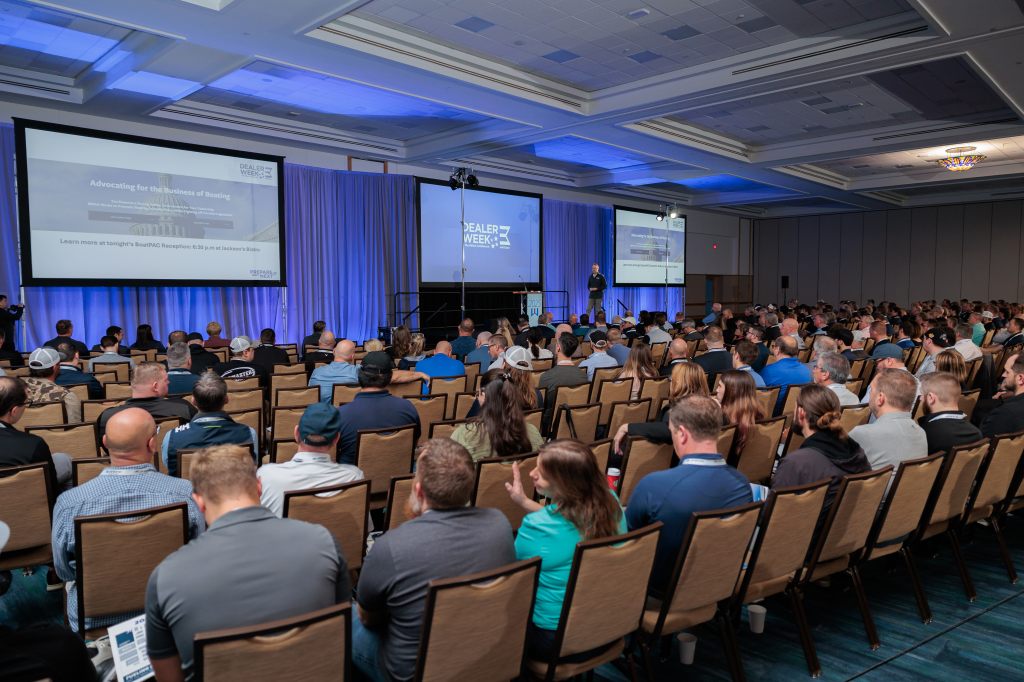
That’s what Dealer Week is about. We have a lot of content this year on crafting the new retail playbook. How to adapt your shopping experience for a new generation. And how to perform and execute when there is so much uncertainty. We have a subject matter expert coming in who’s written a book on operations with AI. And we have a great sense of how to help dealers prepare to make a shift in their operations.
How can an attendee, or potential attendee, prepare to come to Dealer Week? What should they do before they arrive in Tampa?
I think the first thing is to identify your priorities. We always offer multiple pathways of content. We have a sales and marketing pathway, a leadership and management pathway, a service and parts pathway. So it’s a matter of understanding where your pain points are and where you likely need the most help. Before Dealer Week officially begins, on-site, you also can join top dealership leaders for hands-on, preconference workshops focused on the challenges shaping marine retail today. There’s one on how to run a proactive and profitable service department. And Marcus Sheridan is leading a hands-on, half-day sales boot camp on the habits that define elite marine salespeople and the dealerships that build them.
Just a reminder: You don’t have to choose ahead of time and stick to those courses. You have the freedom to move around and find what’s going to be most valuable for you. But I think plotting that out in advance is helpful. We also have about 200 exhibitors who are there to help dealers be more successful, profitable, efficient and effective.
You can go to the Dealer Week website (dealerweek.com) or reach out to any one of us on the staff at any time, and we’ll help you map your experience out. We also have an AI platform we built ourselves that we call AIMIE. AIMIE can also help you build out your schedule.
Finally, answer this question: If you change just one thing in your business for 2027, what should it be?
Your mindset. The future isn’t as scary as some make it out to be, but we do need to evolve our business models, and we do need to shift our mindsets into architect mode. We need to be intentional about what comes next and how we are going to deliver for our customers.
This article first appeared in the November 2026 issue of Soundings Trade Only.