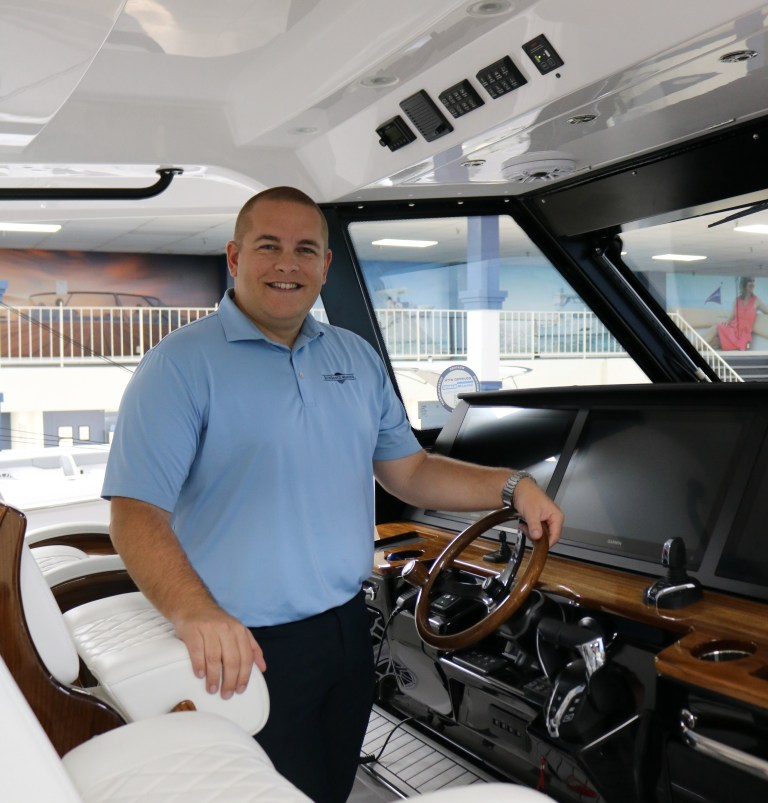
At Mount Dora Boating Center & Marina in Mount Dora, Fla., sales manager Julia Baugh says new-unit sales this year are off by 60% to 70%. The dealership is making up revenue on used boats, she says, but the pattern she’s seeing is clear.
“So many of the people I’ve been talking to have been people who hear the price of a new boat, and they shift to a used boat immediately,” says Baugh, whose dealership sells new Starcraft deckboats and pontoons. “It’s way out of their league, for sure. They find something that they want, but it’s a $100,000 boat. And they think they’d be paying something like $50,000, but then they look at those boats, and they expect a lot more features, bells and whistles at that price.”
Dealers who sell all kinds of boats, in seasonal and year-round regions alike, are reporting much the same thing. From center consoles and multipurpose dayboats to coastal cruisers that top $1 million, the price that new-boat shoppers think they should pay — and, often, what they’re able to pay — is so far removed from actual prices that it’s a real challenge for even the best-trained salespeople to close the gap.
Some dealers estimate the chasm between consumer expectations and reality at 20% to 25%. Others cite real-life examples at 100%. No matter the ultimate figure, there’s a widespread belief that this disparity is knocking a lot of shoppers out of the new-boat market.
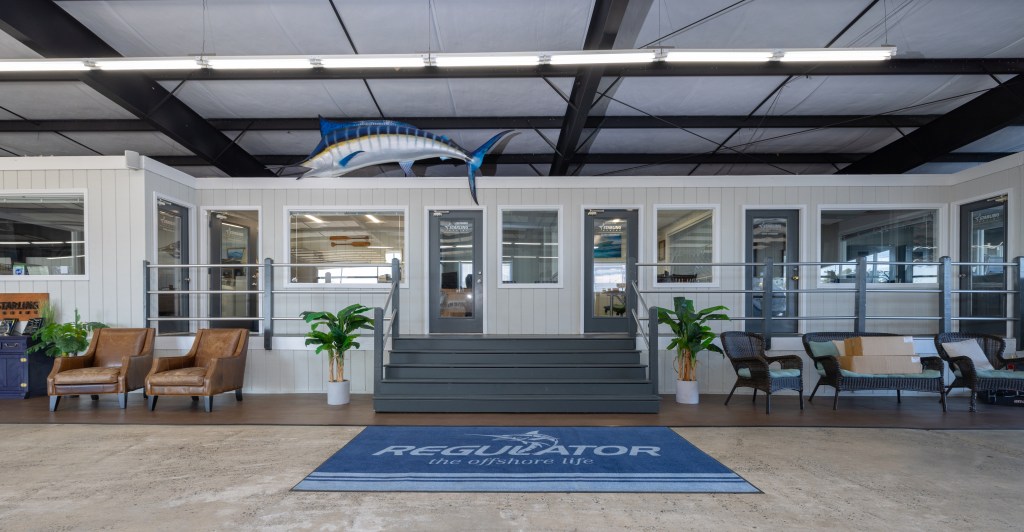
At Starling Marine in Morehead City, N.C., owner David Starling says customers looking at the new-model Regulator, Boston Whaler and Contender boats are frequently pivoting to used options. “Price point is an issue,” Starling says. “With more used product on the market, if there was a brand-new model in inventory and there’s a three-year-old model and not much has changed, that difference in price has steered a lot of customers to the used side, where three years ago, that wouldn’t have been the case.”
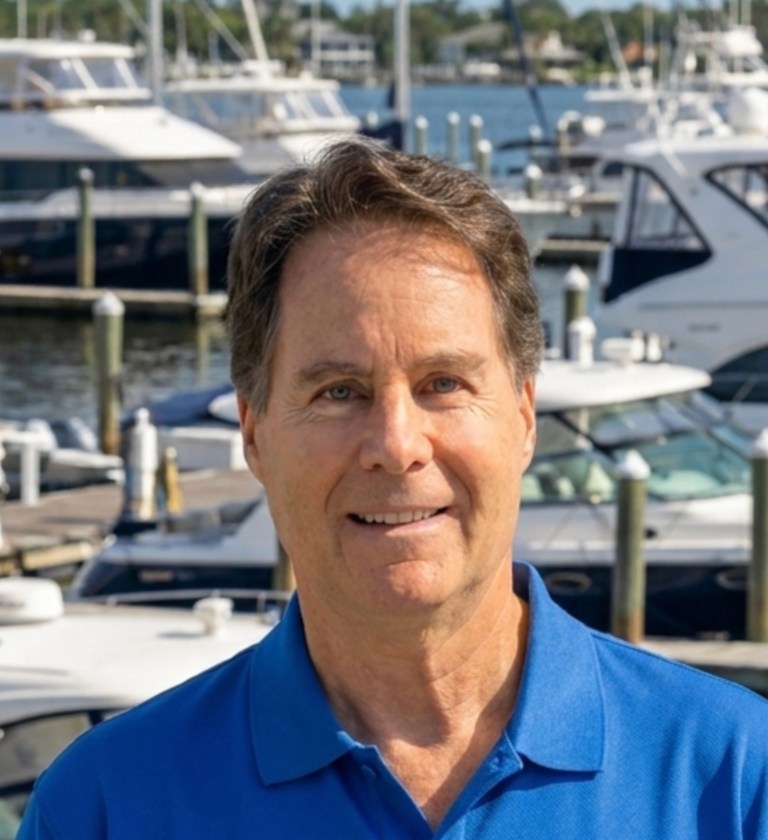
Chris DiMillo, founder of DiMillo’s Yacht Sales in Glen Cove, N.Y., says he’s seeing customers shopping for his dealership’s Tiara, MJM, Hunt, Sabre and Back Cove coastal cruisers hold back on placing orders. “The most demonstrative example of it is the models that were available in ’21, ’22 and ’23, and what’s out there for ’26 and ’27. The price difference is enormous,” he says. “If you’re looking at a Sabre 45, a 2023 vintage, that’s about $1.3 million. A 2027 is going to sell for $1.9 million. There’s some new features, but the hull, the deck, the engines, those are all the same. And $600,000 is a big number.”
The current level of consumer reluctance is a problem that could mean serious headwinds for the boating industry in the future, DiMillo says. If enough new-boat buyers keep getting priced out of the market, there won’t be enough boaters in the future. “We look carefully and thoughtfully at prices, especially the ones on the variable side. We try not to raise hourly rates or dockage rates every six months. We really think about it,” he says. “We don’t want to participate in what’s going on and driving people out of the market by catering to rich people only. Those people are going to get old and die. We need young people.”
Causes of the Disconnect
Bob Petzold, president of Petzold’s Marine Center in Portland, Conn., says affordability has always been an issue because boating is an expensive hobby. But at the same time, he says, the new models that manufacturers are producing have changed in a way that’s particularly tough on first-time buyers.
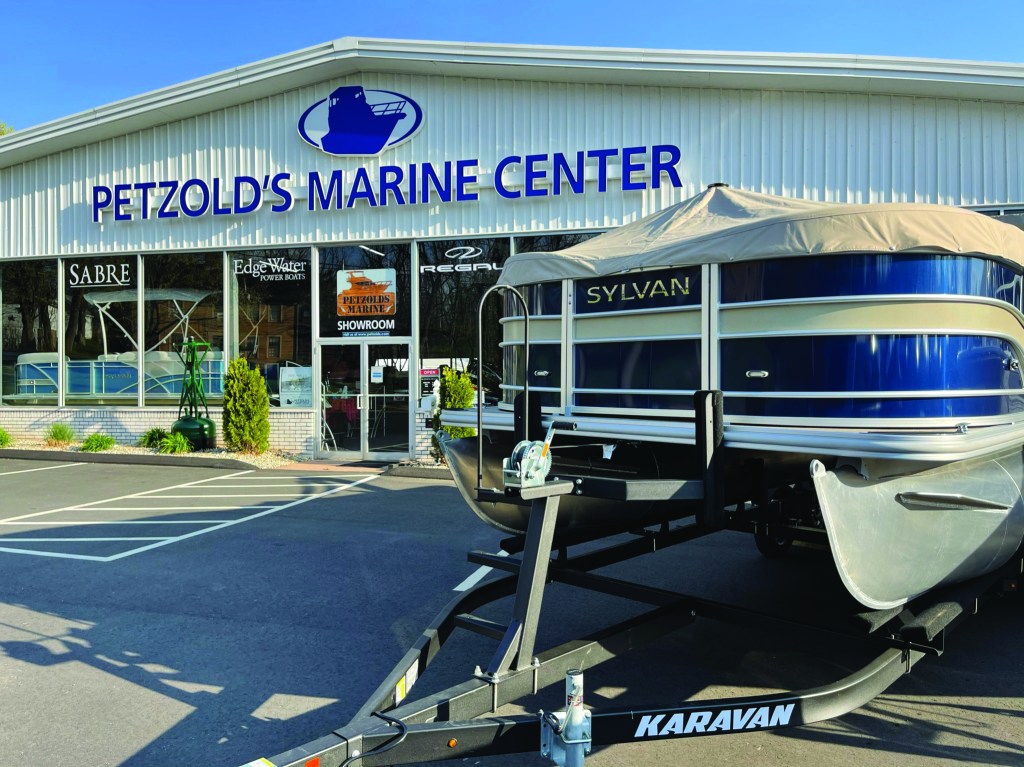
“It’s always been an issue, but the manufacturers always had loss leaders,” Petzold says. “They’d have several small boats with entry-level prices that maybe they’d make no profit or a small profit in order to get the customer into boating, or to get the customer into their brand. What we’ve seen in the last five or six years is they’ve gotten away from those loss leaders.”
Depending on the manufacturer and model, he says, there are still some affordable options. “You can buy a nice pontoon boat for $50,000 or $60,000 that I think is a pretty darn good buy to take your family and friends on,” he says. “But a fiberglass boat is now $120,000. It used to be about $80,000, so the gap wouldn’t be so much.”
Bringing back those lower-priced, entry-level options is key, Petzold says, especially for customers with kids who only have so much money in the family budget. “I think we need to get the loss leaders to come back, and I think we need to take away some of the features that maybe these manufacturers think people need and want,” he says. “There still are some affordable boats out there, but it’s tough to find a cabin cruiser that a family of four can sleep on for under $200,000. That used to be $100,000 just a few years ago.”
Starling compares what budget-minded shoppers are seeing at boat dealerships to what they’re encountering if they go look at an RV. “A family of four can still buy a camper for $25,000 or $30,000 — a tow-behind, entry-level. Even if you call it $40,000, they can buy that, go to a campground all weekend and have tons of fun,” Starling says. “Then they walk into our dealership, and a 22-foot boat is around $120,000.”
DiMillo has a different type of client, but says he’s seeing something similar. His shoppers typically have the means to purchase a boat without financing. But even for them, the prices of new models have changed so substantially that the customers’ heads spin.
“When I started selling boats a long time ago, an entry-level boat was $100,000. My entry-level boat now is a little bit bigger, but it’s $800,000,” he says. “Part of that is because my manufacturers no longer will build boats under 30 feet.” The economics, he’s been told, simply don’t work. Manufacturers tell him they don’t see enough sales volume to make producing the smaller models worth the effort.
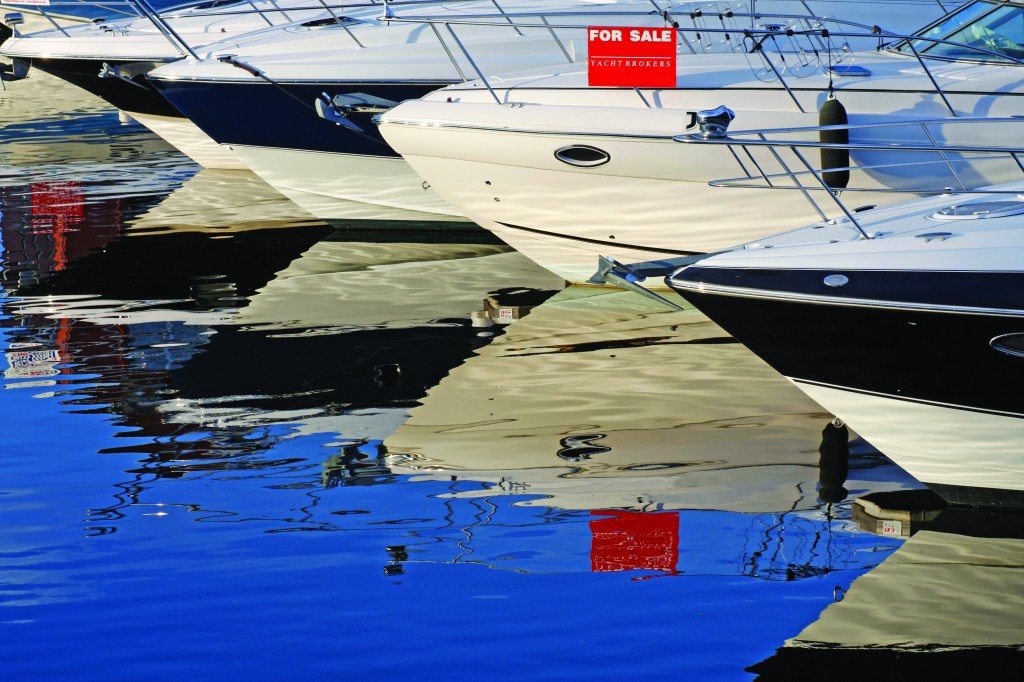
Baugh says sticker shock has even been eating into Mount Dora’s rental business. It’s also off for the year, she says, by about 20% to 25%. New renters in particular are stunned by variable expenses, such as the price of fuel, which was $7.75 a gallon for rentals at Mount Dora as of late September. “Cost-of-living is increasing, and wages aren’t always increasing,” Baugh says. “People are doing what they have to do, not necessarily what they want to do.”
Everything, Everywhere, All at Once
Baugh does see some manufacturers making helpful moves. She says Smoker Craft, which is based in New Paris, Ind., and owns the Starcraft brand, has done a “really good job” of providing more entry-level options at better price points. They’re doing it, she says, by putting fewer features in the boats and using less-costly materials to build them.
Julia Baugh
Mount Dora Boating Center & Marina
Customers are enjoying their time on those boats just fine, she says: “We’ve put some of those boats in our rental fleet, and if they are used to using it, they’re more likely to buy it.”
On the flip side, she says, are manufacturers who keep adding all kinds of new technology that a lot of buyers simply don’t want, even if they have money to spend. “There are manufacturers going to all-digital screens and gauges, but our new-boat buyer is still older, and younger buyers can’t afford that right now,” Baugh says. “So we’re trying to push 60- and 70-year-olds into all this technology that they don’t even understand.”
She says she realizes that manufacturers are dealing with their own inflationary issues, but at the same time, she believes more could be done for dealers. “I get that the cost of materials has not gone down,” she says, “but I do think there’s an opportunity for manufacturers to help the dealers out more with marketing.”
Incentive marketing is working with some buyers, Starling says. He’s seeing buyers get a lot more excited than they have in the past few years about any manufacturer’s incentive that’s available. “Not that they didn’t always appreciate it,” he says, “but this year, knowing that dealers were being aggressive and then there was a manufacturer’s incentive on top of it, that has helped — if the incentive was good enough to get people’s attention.”
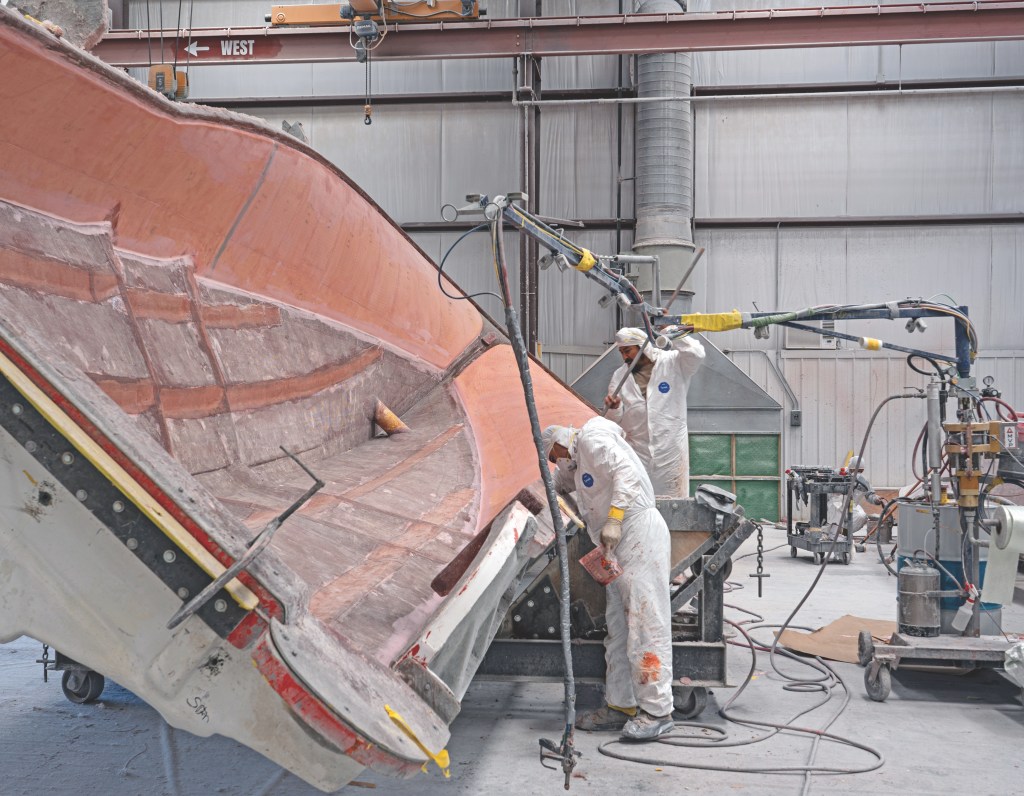
Those kinds of adjustments, numerous dealers say, are things that the marine industry can control. But many headwinds are macroeconomic, including inflation, higher interest rates and flagging consumer confidence. Such big-picture factors, dealers say, are now so pervasive that they’re even weighing on the minds of higher-end buyers.
“Our people can always afford what they want. Affordability is that the environment all around us, there’s a worry about what the price of gas is going to be, all those things,” DiMillo says. “That’s more of a problem for us than the ability to afford it.”
The Evolving Sales Pitch
DiMillo’s goal, he says, is to ease the minds of would-be buyers about the product, the reasons the price is what it is, and the fact that they’re not being gouged. “If you look at all our competitors, they’ve gone up the same. It’s tariffs, petroleum that goes into resin, it’s a perfect storm of everything,” he says. “These people can afford it. This is getting them comfortable. If you have the money, what are you waiting for? Do you think the stars are going to line up next year? Buying this boat won’t affect the trajectory of your life. It’s about, do you want to have fun next summer or not?”
He describes sales during the first part of 2026 as “terrible,” although sales in August turned his year around. “These people have the money to do it. They spent seven months not doing it. Now they’re starting to come out,” DiMillo says. “They were just under the impression they shouldn’t do it because that’s what the world was telling them.”
Petzold says he’s working on getting customers comfortable with the idea of being full-on boaters. He doesn’t see fuel prices as a barrier right now, and he says everyone is pretty much resigned to the fact that 3% and 4% interest rates aren’t coming back anytime soon. To him, the current situation means customers need help understanding the role that boating can play in their lives.

“If you’re pausing on a boat, it’s because you haven’t decided that boating is in your blood,” Petzold says. “I live for boating. Do I travel? No. Do I go skiing? No. It hasn’t become a priority with a lot of people. Covid helped us with getting new people into boating, and thankfully, most of them have stayed, but I think it becomes more difficult when the kids are back in baseball, soccer and all the activities.”
Starling is yet another dealer who says the biggest challenge is what’s going on in the world beyond boating: “Everyone wants a good deal on what they buy, but I’m just not sure the confidence is there for a lot of consumers about what’s going to happen in the next six months, 12 months, five years.
“Everybody talks about fuel prices, which are very important, but for people buying the stuff we’re selling, fuel isn’t their main consideration,” he adds. “Our dealership’s customers may put 30 to 40 hours a year on a boat. It’s not like they’re putting a ton of fuel into the boat all year long. It’s everything else going on. There’s not a warm, fuzzy feeling right now that makes people want to buy a camper or a boat or trade in their car and get a new one.”
Baugh says that overall, the situation is going to require numerous changes for the industry to reverse course. “As long as the used-boat market is so flooded with inventory, and as long as wages aren’t keeping up with inflation, and as long as the new-boat prices keep going up — just with Covid alone, they went up about 40%, and there’s been no coming down from that,” she says, rattling off the many hurdles that are top of mind. “We’re not missing one piece of the puzzle right now. A lot of things have to change.”
This article first appeared in the November 2026 issue of Soundings Trade Only.