
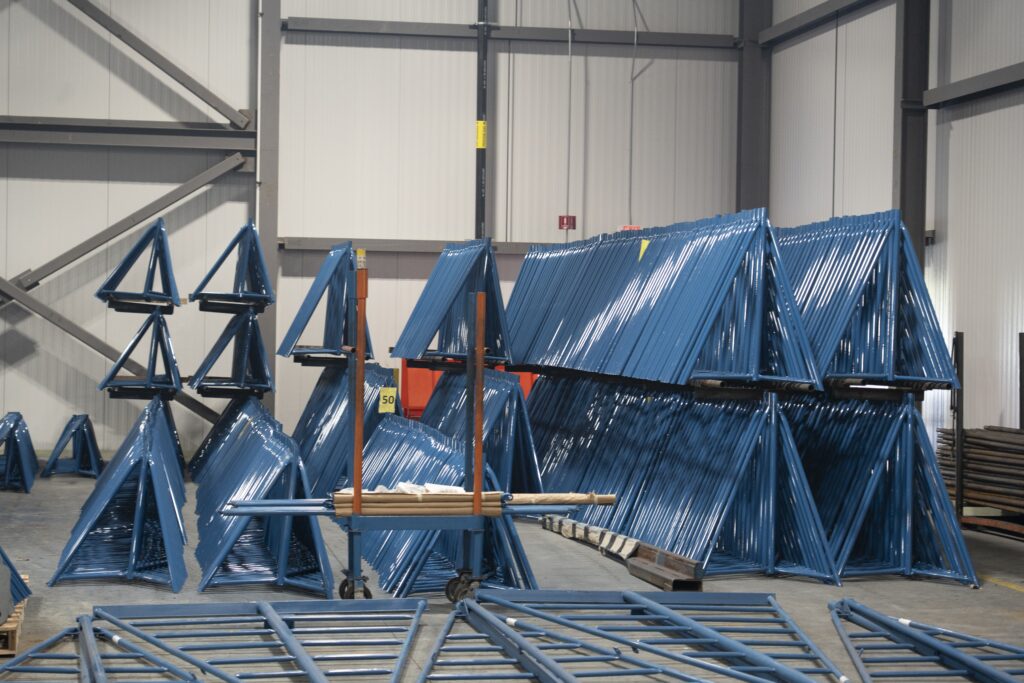
Many pieces of gear that support the boating industry are taken for granted, but few are more important for getting things done than the metal boat stand. What looks like a humble invention actually revolutionized the way boats are stored on land, shown at dealerships and boat shows, and moved around shipyards and service shops.
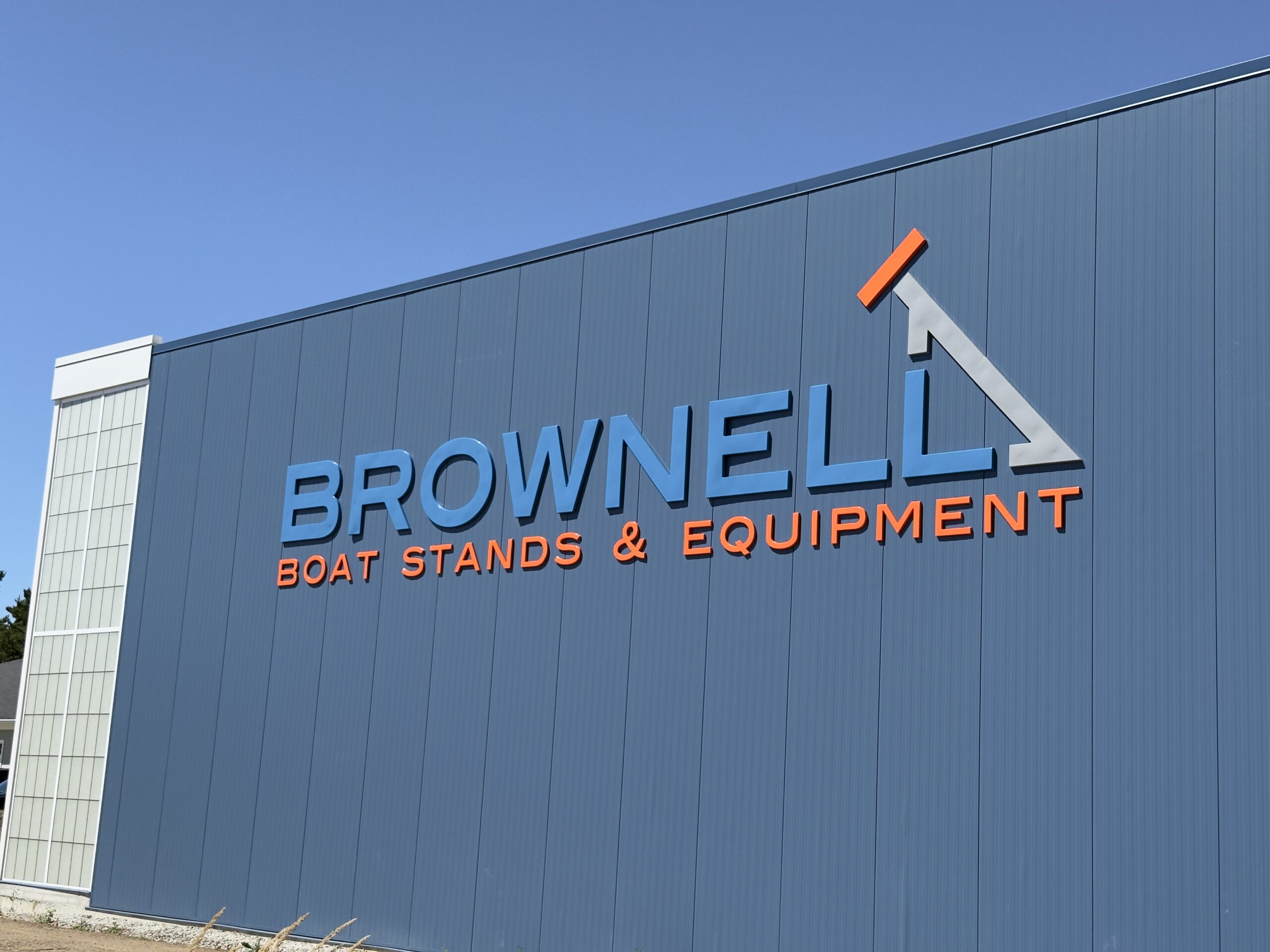
Brownell Boat Stands churns out tens of thousands of these marvels each year, along with dollies and other pieces of boat-moving and storage equipment. It all happens at the company’s new facility in Dartmouth, Mass. Whether it’s a 20-foot runabout or a 90-foot sailing yacht, the company manufactures a stand for just about any kind of boat or storage application.
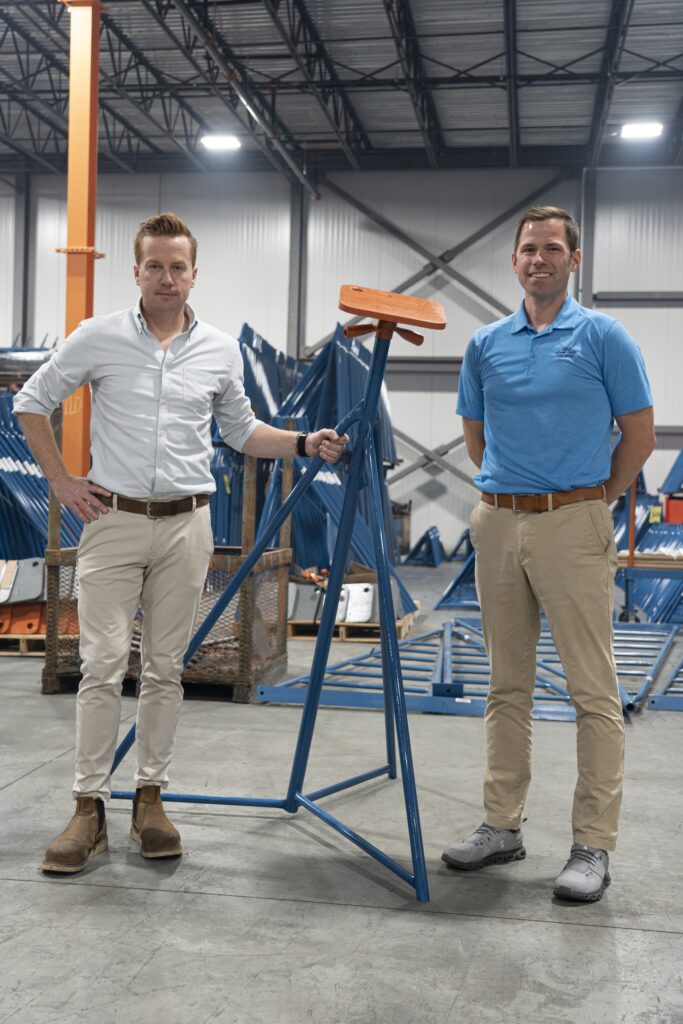
The metal boat stand is a relatively recent invention, developed by boatbuilder and boatyard operator David “Fred” Brownell in 1954 at his facility in Mattapoisett, Mass. Before the metal stands, boats were largely stored on land and steadied with pieces of timber or unsawn logs.
According to Brownell president Alex Kavanaugh, the inventor “used to just take a piece of wood, stick it in the ground, knock it against the hull and call it good, but he didn’t like wasting timber to do that. He wanted those cuts of wood for his boatbuilding operation. Over time, he developed the adjustable metal boat stand, which he could use on any boat he was storing.”
GARY REICH PHOTO
Another invention of Brownell’s is the adjustable hydraulic boat trailer, which was born out of necessity, since his boatyard was situated a mile inland. You can see many of these trailers on highways today, loaded up with boats of all sizes. “Brownell developed a trailer that could be adjusted to fit just about any sort of boat that needed moving,” Kavanaugh says. “Eventually he had the boatbuilding business, the boatyard, boat stands and the boat-trailer and boat-moving service.”
Kavanaugh says all of the Brownell businesses grew over the years, and in the late 1980s, Brownell’s two children took over. “The second generation ran the business until around 2009, which is when my father bought the stand and equipment end of things,” he says. “The hydraulic trailer company today is in Fairhaven, and we’re here in Dartmouth.”
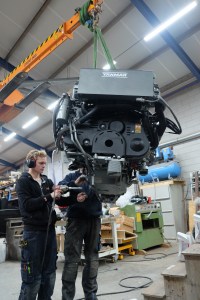
The paint on the walls is still drying at the new facility, which Kavanaugh says took about four years from conception to finish. “We’re built out at around 48,000 square feet,” he says. “We’ve got a new crane system, which makes moving things around much easier, and the roof was built intentionally high to facilitate the storage of more inventory, since the stands are stored stacked on top of each other.”
There’s also an air-filtration system that whooshes away welding and paint fumes, as well as particulate matter. An expanded receiving area lets Kavanaugh create a manufacturing workflow that ushers components along, minimizing the distance that parts and components have to move from station to station.
“We’re still working out the kinks,” Kavanaugh told me as he pointed to equipment that was yet to be placed on the factory floor. “We’re always trying to find some extra time to get fully moved in, but it’s a process.”
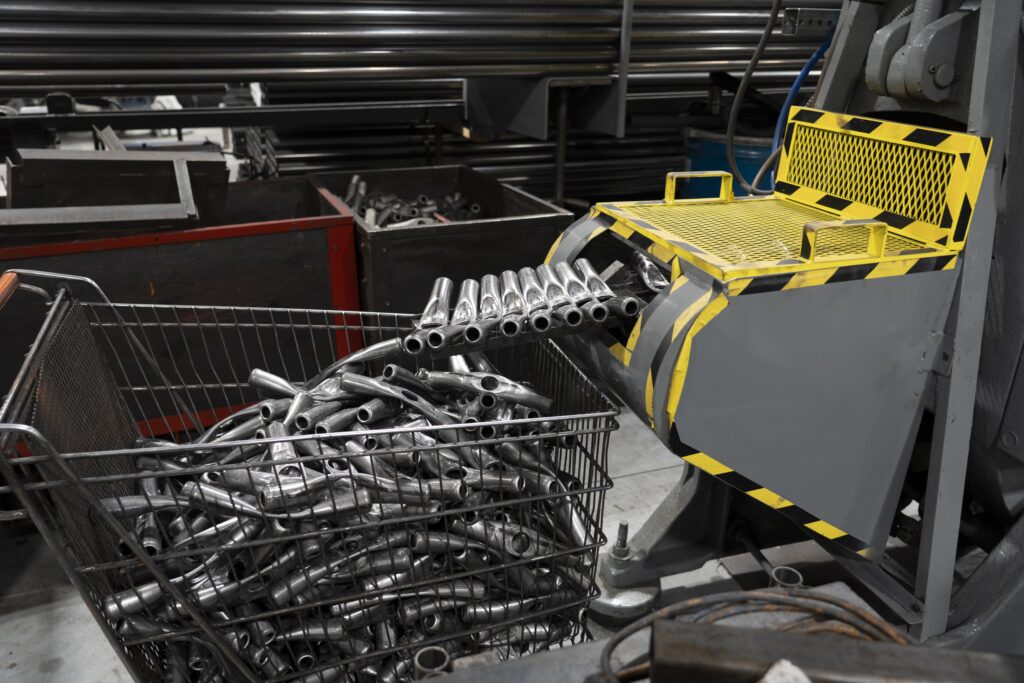
Brownell’s facility felt spotless compared with some of the metal-working facilities I have visited. The air was remarkably clear and odor-free. The floor was well-organized and tidy. The temperature was cool and comfortable.
Creating each boat stand begins with steel tubing, which Kavanaugh says is fully sourced from U.S. mills. The tubing arrives in neat but sizable bundles, wrapped tightly in metal banding. “The cranes make moving these so much easier,” Kavanaugh says. “The truck pulls in. We offload quickly and put the materials right where they’re needed.”
There are also solid steel rods to deal with. They come in shorter lengths to be cut into adjustable screws, as well as shaped steel components used to build stands, and the dollies and keel pads the company manufactures.
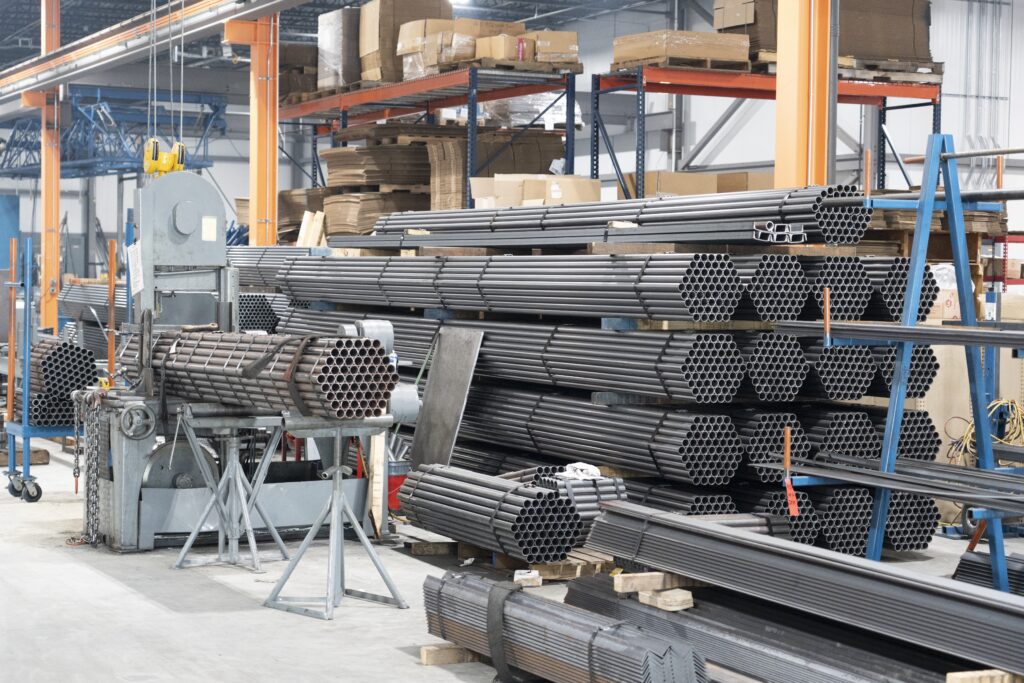
The tubing and other steel components next move to metal-cutting bandsaws that are lubricated with cutting fluid, making quick work of sizing the lengths of steel into smaller component pieces. The process is still quite manual in nature, but given the amount of time it takes to slice through the steel, one worker can manage more than one machine at a time.
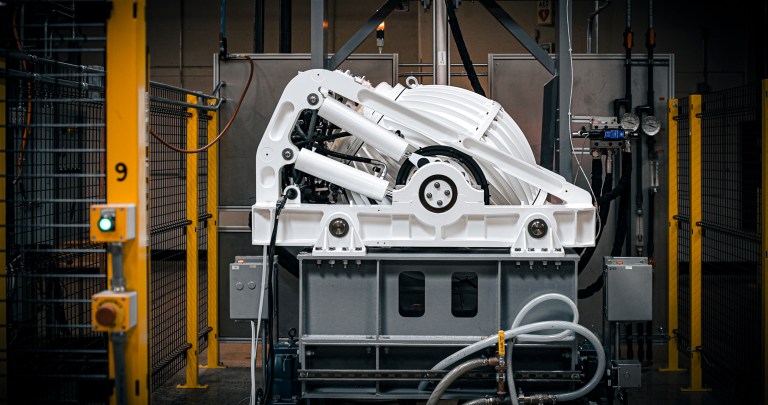
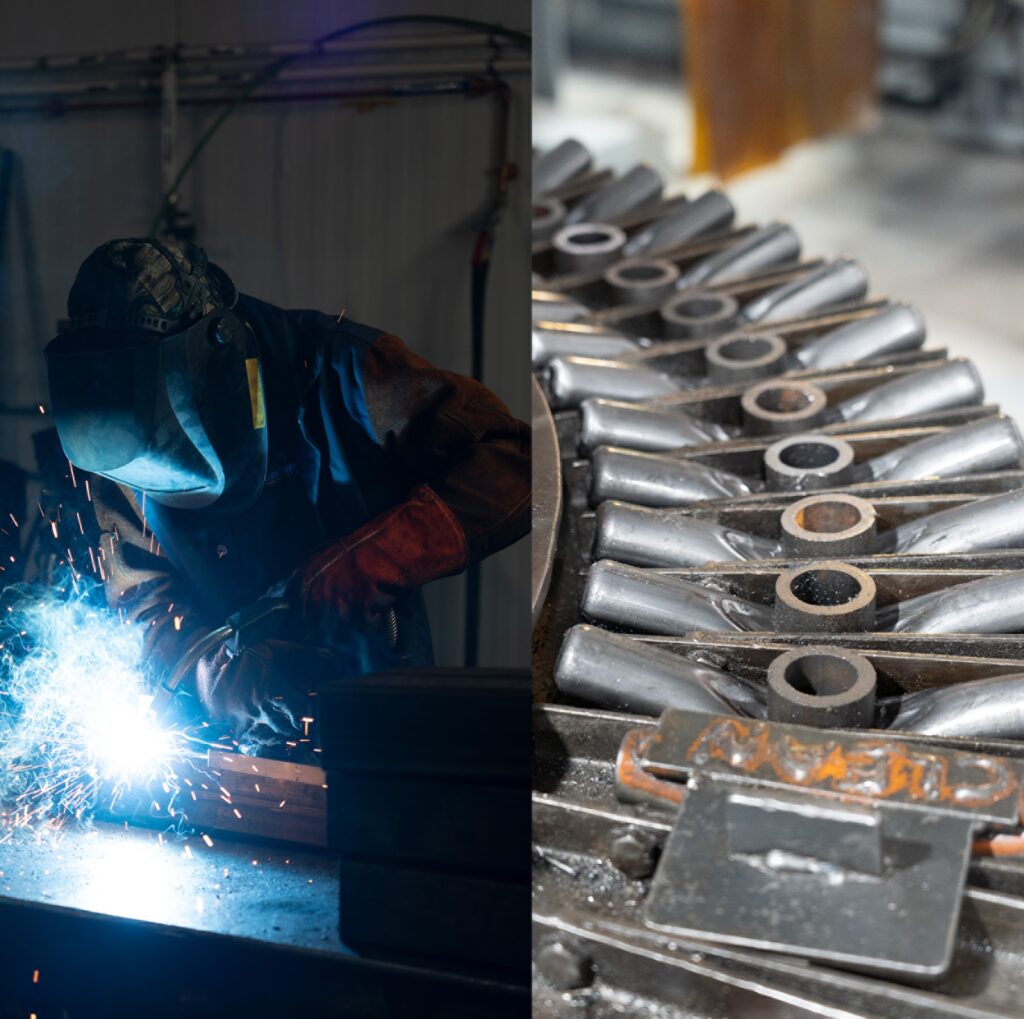
Brownell employs robotics in a couple of areas. There are two six-axis robotic welders — one more than a decade old, and one a newer piece of equipment — that speed up the welding process of the triangular stand bases, which have multiple complex welds.
“We’re certainly not averse to automating processes,” Kavanaugh says. “But it’s not just welding. We’re looking at ways to move components around that are heavy and cumbersome. That can eat up a lot of time, even with forklifts and other tools we currently use. At some point we’ll obviously look at robotics for other areas of our manufacturing process where they’re a good fit.”
Some of the most common components crafted at Brownell are the stand bases, adjustable stand screws and trademark orange stand pads. This is another area where automation is helping speed things up. Kavanaugh showed me a machine that takes stamped and chamfered steel tubing, angle iron and marine plywood to make the bright-orange, adjustable pads that are fitted to the top of each stand. Everything but the marine plywood is manufactured in-house, Kavanaugh says.
“There are certain components that make sense to farm out to companies who are set up to manufacture them cheaply and efficiently,” he says. “These pads are CNC-cut from large sheets and then shipped to us.”
Another process that Brownell contracts out is hot-dip galvanizing. “Some of our boat-stand applications call for an extra layer of corrosion protection,” Kavanaugh says. “It just doesn’t make sense for us to have a huge plating operation when there’s a local company that can do it and turn the job around in a few days. Then there’s the permitting process, which could take years to navigate. It just doesn’t make sense for us to do it ourselves.”
As I toured the facility with Kavanaugh and vice president of sales and business development Matt Duggan, a shipment of these galvanized boat stands was being loaded into a full-length shipping container bound for France. “This is a new customer for us,” Duggan says. “North America is our biggest sales territory by volume, followed by Europe and the Caribbean, with other customers in Australia and Asia.”
Duggan and Kavanaugh say that recently imposed tariffs as high as 50% have made trading out of the country challenging at times, but that things are improving. “We’ve definitely had some prospective customers pull back and adopt a wait-and-see attitude, especially in Europe, but pending trade deals seem to have loosened things up,” Duggan says.
Brownell does not sell direct-to-customer within the marine trade, instead relying on a number of distributors to sell and ship its products. “Shipping this kind of equipment can be a challenge in smaller numbers,” Duggan says. “It’s more sensible to rely on well-placed distributors around the country to carry our inventory. That way, the response to orders is much quicker, and we don’t have to house a ton of equipment.”
Back on the factory floor, sparks were flying around a number of workbenches where skilled welders mate components with molten metal. The work happens surprisingly fast as they pull together multiple pieces of steel tubing onto metal jigs before letting loose with high-voltage electricity.
Like many segments of the marine industry, Brownell has been frustrated trying to hire skilled workers to show up and get the work done. “We cooperate with a couple of local vocational schools, and that has been helpful,” Kavanaugh says, “but we have also found it challenging at times to find the welders and metalworkers we need. It’s an evolving situation.”
Kavanaugh and Duggan were guiding me past the banks of welding stations when the sweet, chemical smell of paint wafted our way. Once the stands have been welded, they take a bath in a trough of blue enamel paint. The blue color of the stands and their paired orange stand pads are something of a trademark for the company, so I asked Kavanaugh how the color combo came about.
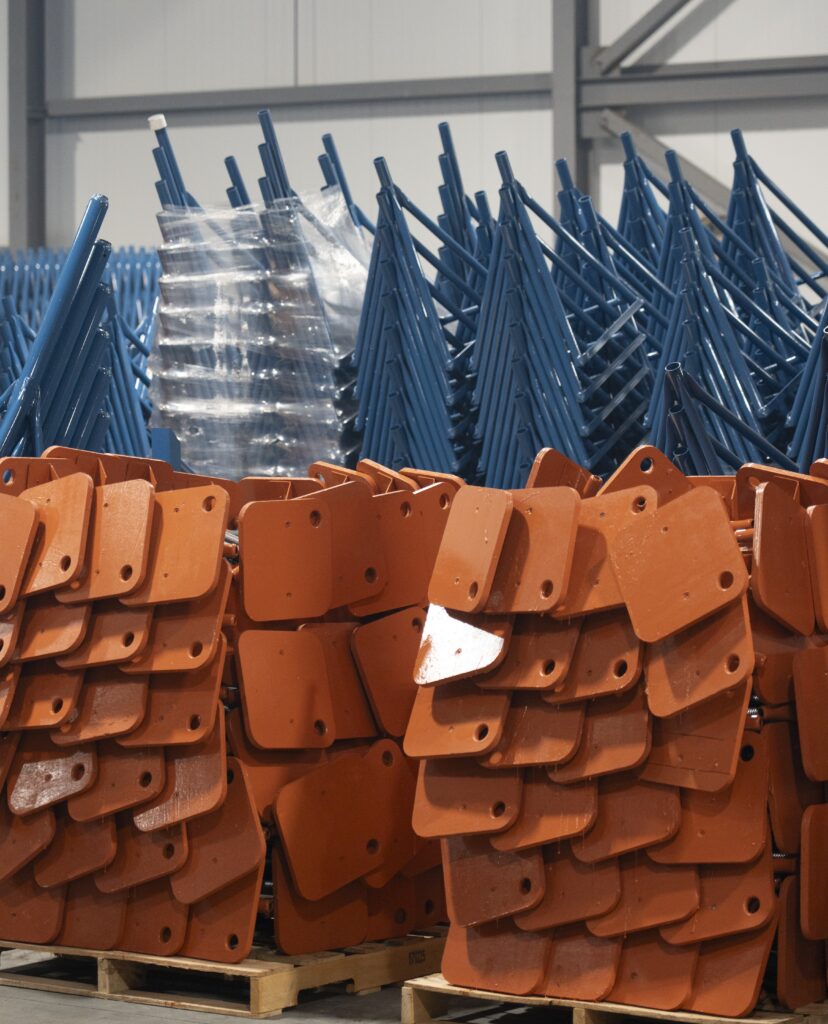
“I really don’t know, to be honest,” Kavanaugh says. “If I think about what Fred Brownell would do, my guess is he had extra blue and orange paint lying around when he first started building the stands. I really don’t think it was an intentional marketing thing, but today it’s kind of a signature that identifies the stands were made by us.”
Brownell does have competitors, mainly stands and various equipment made in India and other areas. “Sometimes we have to work with customers to show them why our stands are a better deal, especially from a longevity standpoint,” Kavanaugh says. “What we’ve found is that other manufacturers cheap out and use less steel where they can, and the quality of the steel and welding is often subpar. We have never had a failure in the field of any of our equipment in 70 or so years.
“The stands last so long that most of what we sell goes to new customers or established yards that are expanding,” he adds. “I’d rather that than having the reputation of the stands having a short usefulness in the field.”
Our final stop was where the company warehouses and then ships its best-selling SKUs. This is where the high roof comes in handy. “When you’re nesting dozens of stands on top of each other, it’s great to have this height,” Kavanaugh says. “Being able to store inventory this way, well, I just can’t tell you what an improvement this is over our old facility, which had high ceilings in one area and low areas in another.”
In the coming 18 months, the company expects to enter a couple of new products in the IBEX Innovation Awards. “I am not ready to talk about them yet,” he says, “but you’ll get to see them at the show.”
In addition to IBEX, Brownell has space as an exhibitor at Metstrade in Amsterdam in November. Kavanaugh is also considering a spot at the Fort Lauderdale International Boat Show this fall, when DIY boat owners are among the consumers in attendance.
Fred Brownell’s modest invention of nearly 70 years ago has led to an empire. To me, it feels as if the business is in the right hands.