

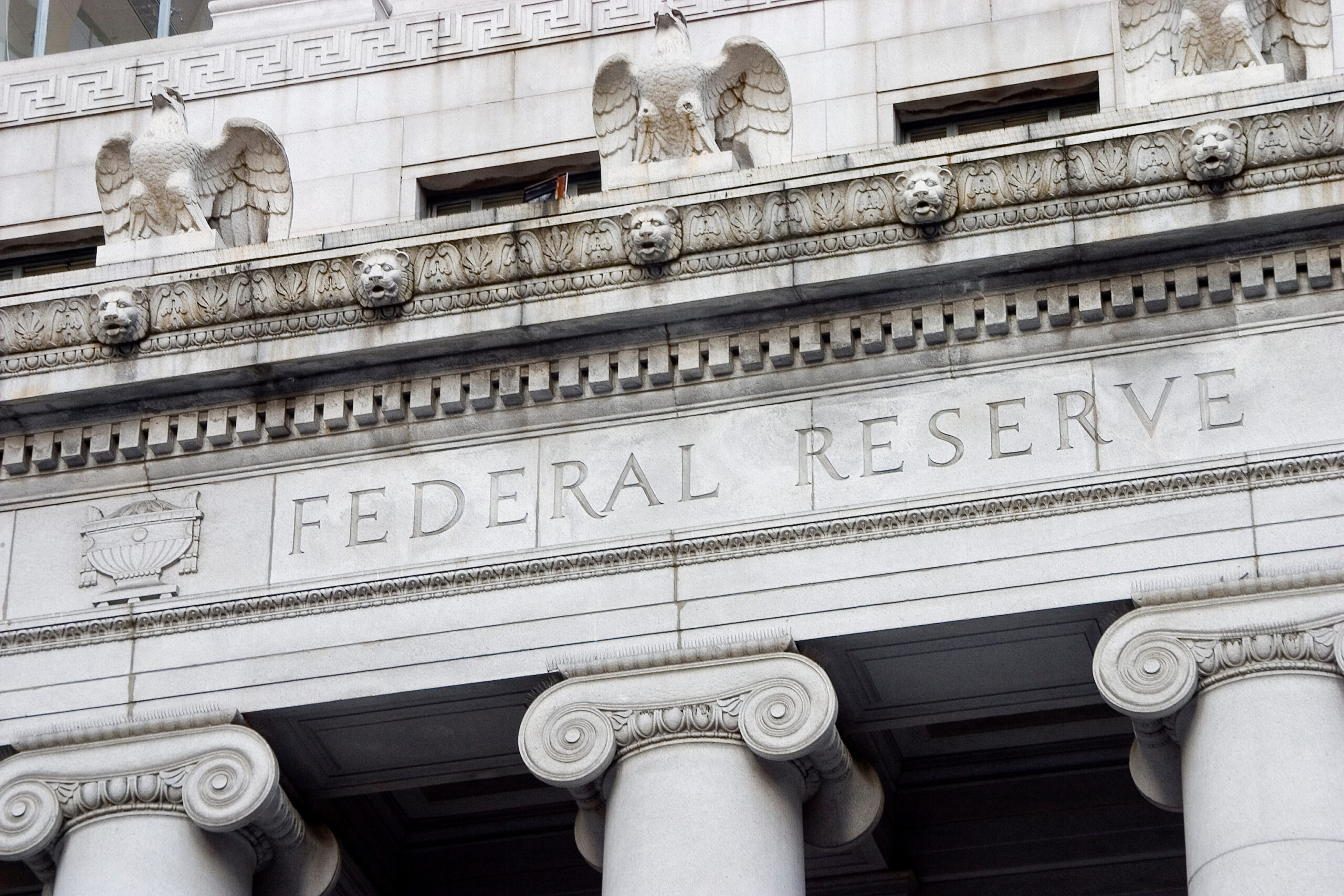
Consumer spending delivered an upside surprise again, even as consumer confidence continues to slip in both major surveys and inflation remains stubbornly above the Federal Reserve’s target 2% rate. The Commerce Department said spending rose 0.6% in August after a gain of 0.5% the previous month. Consumers spent freely on travel in a busy month during the traditional summer vacation season. Personal income rose by a sturdy 0.4% in August, the same as in July.
The August spending report calls into question whether the economy will need the stimulus of another cut in the Fed’s benchmark federal funds rate when the central bank’s policymaking committee next meets, Oct. 28-29. There will be plenty of other data for the Federal Open Market Committee to also sift through between now and then, including more consumer spending numbers.
“There is no support in this [consumer spending] report for [Fed governor] Stephen Miran’s suggestions that policy interest rates have to be cut right away, and by a lot,” Carl Weinberg, chief economist at High Frequency Economics, told Reuters. “Indeed, there is no recommendation in these numbers for any easing of monetary conditions at all.”
Inflation rose a bit more in August, climbing 0.3% as reported by the Fed’s preferred gauge, the Commerce Department’s Personal Consumption Expenditures Price Index. The PCE index rose 0.2% the previous month. During the 12-month period through August, the index rose 2.7%, the largest year-over-year increase since February.
Core PCE inflation, which strips out the volatile food and energy components, rose 0.2% in August, a rate that was equal to the July gain. During the 12-month period through August, core inflation rose 2.9%, again the same increase as in the previous month. Getting the rate of inflation to the Fed’s 2% target has proved elusive.
President Donald Trump’s tariffs continue to worry economists, who broadly believe that the levies will eventually drive up the price of consumer goods, leading to cuts in consumer spending. “The delayed implementation of tariffs and behavioral shifts that led businesses to stock up inventory [ahead of the tariffs] suggest the consumer inflation impact has not yet been fully realized,” Shannon Grein, an economist at Wells Fargo, told Reuters. “Still-high uncertainty, rising prices and sour jobs market sentiment are a worrying mix for spending.”
Indeed, the consumer’s mood has not improved. Both primary gauges of sentiment declined again in September. The Conference Board said its Consumer Confidence Index fell 3.6 points in September, to 94.2, from a slightly upwardly revised 97.8 in August. The think tank said consumers’ expectations about personal income, business and labor market conditions have been below the threshold of 80, which typically signals that a recession is ahead, since February.
“Consumer confidence weakened in September, declining to the lowest level since April 2025,” Stephanie Guichard, senior economist, global indicators, at The Conference Board, stated in a press release. “The present situation component registered its largest drop in a year. Consumers’ assessment of business conditions was much less positive than in recent months, while their appraisal of current job availability fell for the ninth straight month to reach a new multiyear low. This is consistent with the decline in job openings.
“Expectations also weakened in September, but to a lesser extent,” Guichard added. “Consumers were a bit more pessimistic about future job availability and future business conditions, but optimism about future income increased, mitigating the overall decline in the Expectations Index.”
The Conference Board said confidence rose among people younger than 35 but declined for everyone else. There was no clear pattern among income groups; confidence improved a little for both Republicans and Democrats, but “dropped substantially” among independents.
“Consumers’ write-in responses showed that references to prices and inflation rose in September, regaining its top position as the main topic influencing consumers’ views of the economy,” Guichard said. “References to tariffs declined [in September] but remained elevated and continued to be associated with concerns about higher prices. Nonetheless, consumers’ average 12-month inflation expectations inched down to 5.8% in September from 6.1% in August. This is still notably above 5%, the level at the end of 2024.”
The Conference Board said consumers’ views of their current financial situation “recorded the largest one-month drop since we started to collect this data in July 2022.” Purchasing plans for automobiles “weakened.”
The University of Michigan said its Consumer Sentiment Index fell to 55.1 from 58.2 in August. The continuing slide represents a 19-point drop from 74 at the end of 2024. “Consumer sentiment confirmed its early-month reading and eased about 5% from [August] but remains above the low readings seen in April and May of this year,” Joanne Hsu, director of the university’s Surveys of Consumers, stated in a press release. “Although September’s decline was relatively modest, it was still seen across a broad swath of the population, across groups by age, income and education, and all five index components.
“A key exception: Sentiment for consumers with larger stock holdings held steady in September, while for those with smaller or no holdings, sentiment decreased,” Hsu added.
She said sentiment fell about 9% in September for independents and 4% for Republicans, although it improved for Democrats. “Nationally, not only did macroeconomic expectations fall, particularly for labor markets and business conditions, but personal expectations did as well, with a softening outlook for their own incomes and personal finances,” Hsu said. “Consumers continue to express frustration over the persistence of high prices, with 44% spontaneously mentioning that high prices are eroding their personal finances, the highest reading in a year.”
Hsu added that interviews in September highlighted that consumers feel pressure from the prospect of higher inflation and the risk of weaker labor markets.
Another measure of the economy’s health also showed weakness in the report covering August. The Conference Board said its Leading Economic Index declined 0.5%, to 98.4, after a revision to a 0.1% advance in July from the previously announced 0.1% decline. The think tank said the index fell 2.8% during the six-month period between February and August, a faster rate of decline than its 0.9% contraction during the previous six-month period (August 2024 to February this year).
“In August, the U.S. LEI registered its largest monthly decline since April 2025, signaling more headwinds ahead,” Justyna Zabinska-La Monica, senior manager, business cycle indicators, at The Conference Board, stated in a press release. “Among its components, only stock prices and the Leading Credit Index supported the LEI in August and over the past six months. Meanwhile, the contribution of the yield spread turned slightly negative for the first time since April.
“Besides persistently weak manufacturing new orders and consumer expectation indicators, labor market developments also weighed on the index, with an increase in unemployment claims and a decline in average weekly hours in manufacturing,” she added.
“Overall, the LEI suggests that economic activity will continue to slow. A major driver of this slowdown has been higher tariffs, which already trimmed growth in [the first half of] 2025 and will continue to be a drag on GDP growth in the second half of this year and in [the first half of] 2026. The Conference Board, while not forecasting recession currently, expects GDP to grow by only 1.6% in 2025, a substantial slowdown from 2.8% in 2024.”
The mood at the nation’s small businesses continued to improve in August. The National Federation of Independent Business says its Small Business Optimism Index rose 0.5%, to 100.8, moving it a bit further above the trade group’s 52-year average of 98. The index had risen 1.7 points in July.
On another positive note, the NFIB’s Uncertainty Index declined 4 points, to 93, but the trade group cautioned that the measure remained well above its historical average. The NFIB said the improvement can be traced to a “decrease in uncertainty about financing expectations and planned capital expenditures.”
“Optimism increased slightly in August, with more owners reporting stronger sales expectations and improved earnings,” Bill Dunkelberg, the NFIB’s chief economist, stated in a press release. “While owners have cited an improvement in overall business health, labor quality remained the top issue on Main Street.”
Twenty-one percent of member business owners named labor quality as their main problem, the same share as in the previous month, making it the top problem again among NFIB members. NFIB said the net percentage of member owners who expect the economy to improve in the coming months fell 2%, to 34%, seasonally adjusted.
A seasonally adjusted 32% of member business owners reported job openings that they could not fill in August, down 1% from the previous month. A net 29% said they increased pay during the month, up 2% from July.
Confidence among the nation’s home builders remained steady at what their trade group said is a low level. The National Association of Home Builders said its NAHB/Wells Fargo Housing Market Index was flat at 32 in September. Builder sentiment has now been in what the NAHB calls negative territory — an index number below 50 — for 17 months, but the group said it believes that the Fed’s recent quarter-point reduction in its benchmark interest rate and the prospect of additional rate cuts should lead to higher sales expectations in the coming months.
“While builders continue to contend with rising construction costs, a recent drop in mortgage interest rates over the past month should help spur housing demand,” NAHB chairman Buddy Hughes, a home builder and developer from Lexington, N.C., stated in a press release.
The latest NAHB survey also showed that 39% of builders reported cutting prices in September, 2% more than in the previous month.
Results from the HMI’s three component indexes were slightly mixed in September but remained at low levels. The index that gauges current sales conditions was steady at 34; the component that measures future sales expectations rose 2 points, to 45; and the gauge that charts the traffic of prospective buyers fell by 1 point, to 21. Any number over 50 indicates that more builders view conditions as good than poor.
However, even against this pessimistic backdrop, new-home sales posted an unexpectedly large gain in August. The Commerce Department said sales jumped 20.5%, to a seasonally adjusted annual rate of 800,000, from an upwardly revised reading in July. The pace of new-home sales is now up 15.4% from the same time last year. “While [August’s] figure may be subject to downward revision, we do expect a general improvement in sales over the coming months, supported by the recent decline in mortgage rates,” Hughes, of the NAHB, stated in a press release.
“According to Freddie Mac, the average 30-year, fixed mortgage rate has declined by 32 basis points over the past four weeks and now sits at 6.26%, its lowest level since early October 2024,” Jing Fu, NAHB senior director of forecasting and analysis, stated in a late-September press release. “This downward trend in rates, combined with the recent Fed interest-rate cut, signals a positive outlook for future housing demand. If this momentum continues, we expect new-home sales to gain traction as more buyers reenter the market in the final quarter of 2025.”
The government said the median new-home sales price was $413,500 in August, up 1.9% from a year earlier. By contrast, the National Association of Realtors said existing-home sales declined in August, falling by 0.2% to a seasonally adjusted annual rate of 4 million.
“Home sales have been sluggish over the past few years due to elevated mortgage rates and limited inventory,” NAR chief economist Lawrence Yun stated in a press release. “However, mortgage rates are declining, and more inventory is coming to the market, which should boost sales in the coming months.
“Record-high housing wealth and a record-high stock market will help current homeowners trade up, and benefit the upper end of the market. However, sales of affordable homes are constrained by the lack of inventory,” Yun added. “The Midwest was the best-performing region [in August], primarily due to relatively affordable market conditions. The median home price in the Midwest is 22% below the national median price.”
The NAR said the median existing home sales price in August was $422,600, up 2% from the same month a year earlier. August marked the 26th consecutive month of year-over-year price increases.