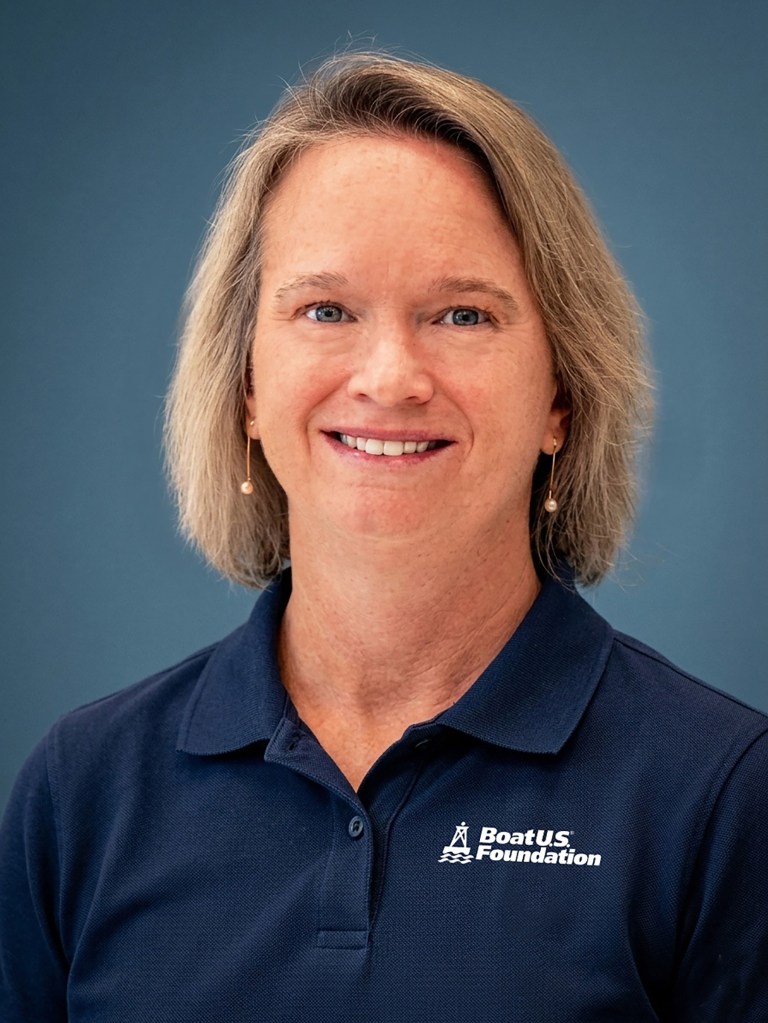
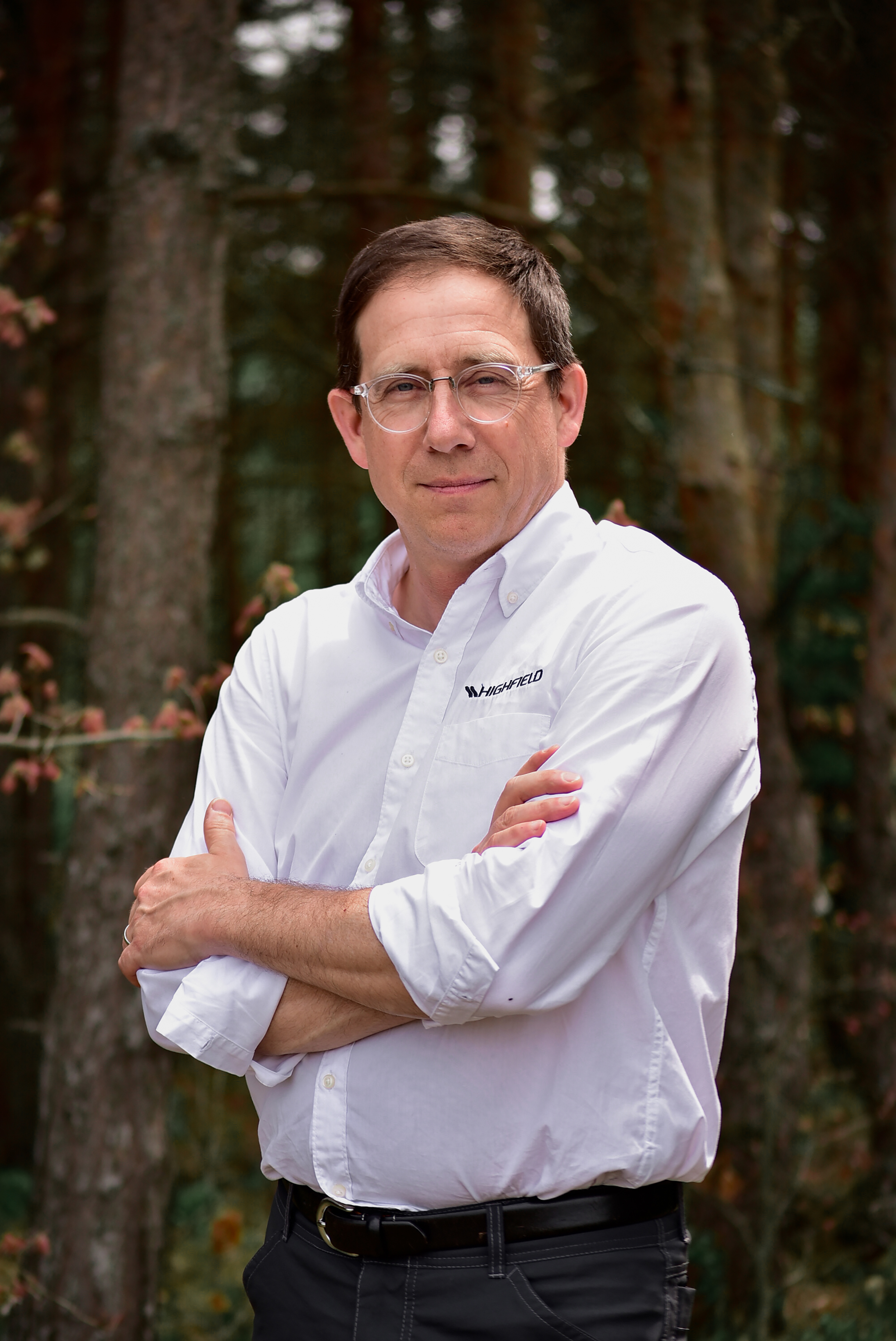
Christophe Lavigne, president of Highfield Boats USA, says he has loved boats from birth. He cemented that love at 5 years old with his first boat. He raced sailboats as a kid, and cruised around France with his father, a bridge engineer.
He studied engineering during his college years and was stationed in Canada while working through his mandatory military service, tasked with helping French boatbuilder Jeanneau with its North American presence. He met his future wife during this time, and eventually became a Canadian citizen.
Lavigne ended up in the United States in 2007 working for Four Winns in Cadillac, Mich. Groupe Beneteau later hired him to manage its Scarab, Wellcraft, Four Winns and Glastron brands there. After the pandemic, Lavigne was appointed president of U.S. operations at Highfield Boats. He was instrumental in setting up a manufacturing and rigging facility in Cadillac, where the company has a 55,000-square-foot operation.
Soundings Trade Only caught up with Lavigne in Cadillac a day after the RIB manufacturer’s annual dealer meeting, where Highfield announced new models, partnerships and a future product roadmap. This interview has been edited for length and clarity.
Tell us about growing up on boats.
I was born in France. I had my first boat at 5 years old. My dad was an architect and was building bridges, so all summer we were taking our sailboats and going under his bridges everywhere in France. I raced 420 and 470 Olympic sailboats when I was a kid. I was drawing boats on my math books.
When I was advanced enough in age at university, I had a choice to do either mechanical engineering and industrial design, or become a naval architect. I applied to university at Southampton in the U.K. to study naval architecture. I was accepted but didn’t go, and I ended up taking traditional mechanical engineering courses. I thought the marine industry was too small and I would never find a job there. I also have a master’s degree in industrial design, and I did a bit of math and physics.
How did you get into boatbuilding?
I enrolled in the military when I was 24 years old. In France, it was a mandatory one-year service, and I enrolled for two. I was deployed in Canada to work for the French boat company Jeanneau. It was part of an agreement with the French army to help the French industries. They were giving engineers or doctors, people that have some education, an opportunity to develop a relationship between the army and French companies. Eventually, I decided to stay in Canada. I was in charge of engineering for a boatbuilder, so I designed a lot of pocket cruisers — beautiful little boats. I enjoyed it very much, and I really enjoyed Canada. I became Canadian. My wife is from Montreal.
Next, I moved to the U.S. to work for Four Winns. I was hired by Irwin Jacobs. He was looking for an international director of engineering for developing Four Winns products. Four Winns had a great network, was very strong in Europe, and they wanted to have more European influence in the product design, so I moved to Cadillac, Mich., in 2007. I was director of engineering for Four Winns, and eventually we moved Wellcraft and Glastron there.
In 2010, Platinum Equity bought those brands out of bankruptcy. I was part of that process. I was the youngest director in the entire organization, but I think they recognized I could bring something else, so they kept me on board and involved me in the buying process. The goal for Platinum Equity was to reorganize the company and eventually to sell. Very early, I said, “I know who your buyer is: It’s Groupe Beneteau. I worked for them when I was a kid, and I have the connections. Let’s work together to make it happen.”
We sold Four Winns, Glastron, Wellcraft and Scarab Jet Boats to Beneteau in 2013. I stayed there after the buyout and was in charge of all the brands. I eventually became the president of this organization for the French group. We built a few Jeanneau and Beneteau boats there, too. Then Covid hit, and they eliminated my position. I decided to create my own company and became a consultant for Volvo Penta, MasterCraft and other brands.
How did you get involved with Highfield Boats?
They were one of my customers. I knew Julien Carussi, the founder of the company. He wanted to find out about the American market, and after a little while he asked me to grow the organization. He said, “What about taking the lead? Do you want to be more involved?”
We got going two years ago in May. First thing was to create a company and restructure it. We opened a corporation in Delaware and completely re-established the accounting department. Then we established relationships. We signed banks like Huntington and Northpointe, and got involved with Mercury, Suzuki, Tohatsu and Yamaha. The idea was if we wanted to be successful in the U.S., we must work like Americans, so we had to provide financial support, be in major boat shows and provide complete products that are ready to go. We knew that was the only way we would attract mainstream dealers.
How long has Highfield been around globally?
It’s a young company, started in 2011 in China with French ownership. Julien Carussi lives there. He created the company in Australia initially and then moved it to China to expand it. Highfield was exporting boats to the U.S. for a long time, but in the process, dealers were buying containers, which meant they had to put the boats together themselves. It’s OK for some people, but for most it’s not. It was a limiting factor to expand the brand to a mainstream dealer network.
Today, you’re rigging boats in Cadillac using hulls and components made in China. Tell us about that.
We get the boat components from a factory in Asia, and then we build them out. We build the boats, add electronics, install engines, and then we certify them to make sure that everything is correct. We also have customer service here, where American people answer the phone almost 24/7. We have a parts department; we can ship direct to customers, and we have a Shopify. We are putting together what the people expect you to have.
It’s logical for an American company, but it’s not in a global sense. If you build boats in Europe or if you build boats in Asia or in other places, it’s a commitment to have the staff that understand the product, and you have to have the right connection with the bank for your dealers to get floorplan financing. We did that a year ago, phase one, rigging, expansion, stocking to dealers that are willing to have showrooms to invest in a product, and we have retail and wholesale financing.
What else was involved in setting up in the United States?
The second step for us was we said, “OK, let’s also design boats by Americans for Americans.” We hired concept designers and began to design product for the U.S. customers. Through my relationships — I had a good connection at BRP and Rotax — we recently have agreed to start a jetboat series. The first one is the 420, and we have a 560 and a 660 in design.
It’s a super simple boat. The idea is, we are not targeting the rich and famous. We’re targeting American families in everything we do. It’s super easy to use. You don’t have trim. You can surf a little bit, wakeboard and tow. It’s not the fastest thing ever, but it has a $36,000 retail price. You can retail-finance it, and for $300 a month you have a boat for the family.
RIBs were an exotic type of boat 30 years ago, but in the past 10 to 15 years, people are gravitating in that direction. What happened?
Our distribution in the U.S., from the Northeast to Florida, has always had widespread RIB acceptance, especially small tenders for sailboats. What I’m seeing now is that the RIBs are becoming popular in the Midwest and in states such as Tennessee and Texas. We are moving inland for big lakes or small lakes. These boats have become a normal choice.
How does manufacturing in China fit into the organization?
We have a super modern factory in China, with robotics and welding robots, and everything is computer-controlled. The price of production is advantageous there. We are well-organized, but we also are having uncertainties in timing, how long it takes to get things here — it’s long. We have tariffs and the cost of shipping to consider. A year and a half ago, we were spending over $25,000 to bring one container from China. Today, it’s $5,000. It’s a very unstable situation.
What are your manufacturing capabilities in China compared with here in the United States?
Just before Covid, the owner decided to build a 250,000-square-foot modern facility in Weihai, China, and this year we are completing an expansion to 500,000 square feet. That’s where we do engineering, sales, shipping, production, welding, painting, treatment, upholstery, tubes, installation and fiberglass. It’s a complete factory. We also have 55,000 square feet here in Cadillac, which is mostly rigging facilities, with some stock-offer dealers.
Why not produce components in the United States? Wouldn’t that tighten up your supply chain?
One of my goals from the beginning was to find solutions for the long run. How do we set up production in the U.S. that we can rely on to develop certain products? The people that need product made in the U.S. are military, light military, police departments, municipalities, firefighters and charter operations that are obliged to operate under the Jones Act.
We are working toward that goal. We set up an agreement with Smokercraft, and they’re making an aluminum hull for Highfield. We have a great relationship, and we are starting to build American-made boats. We started that three, four months ago, and we have one boat now in production which is made in the U.S., the Patrol 540. The idea is to set up a supply chain where we have a choice. We get the product from Asia or we get the product from the U.S., and we balance that depending on timing, demand and other needs.
Highfield has always been perceived as a brand with a lot of baked-in value. How do you market that as a good thing?
There are different ways to establish value. You can be super inexpensive, but that’s not what we are. We are not the cheapest boats on the market. There are products less expensive than us, but they are not well-built. We are proud of what we do. We use a lot of European and American suppliers. The tubes, the fabrics are made in France or in Germany. Most accessories are American, such as Atwood and Perko. All engines are obviously made in Japan or in the U.S. We build boats that are well-engineered and have great protection against corrosion.
Highfield has leveraged social media ambassadors and influencers to a good effect. Can you talk about that?
In the U.S. alone, we have 55 ambassadors. An ambassador for us is somebody who comes to us and says, “I want to talk about what I’m doing, my life, my story. I have something interesting to say. I’m fixing lighthouses and I need help. Could you help me?”
Some ambassadors will have more help from us depending on their story. The other day, we helped a guy and his wife who are veterans. They’re going to South America to vaccinate dogs because there is a problem with disease on an island there. We provide the boats, and they provide services that people don’t have today. It’s not a commercial relationship. If you have a good story, we’re going to help. Naturally, our boat is part of the adventure.
What are your thoughts on electric propulsion in boats?
We are partnering now with Flux. I think there’s a place for electrification, but not in all boats. You would not want an offshore center console boat with only electric propulsion, for example. The battery tech is not there yet. So we’ll see.
I think we’re going to see consolidations of electrification brands, and in my opinion, Brunswick is going to lead, because Brunswick has everything needed to succeed. They have the brand, they have the club, they have the parts, they have the batteries, they have the intelligence, they have the dedications, and they have the size. Brunswick will be a big player.
What’s on the horizon for Highfield?
I think the next step is to develop the line for jetboats. Completing this line is my first objective. I’ve designed about 90 boats in my life. Some of them were great successes, and others, not so good. We’ll see. On the electric side, we have one boat with Flux and one boat with ZeroJet. I have an agreement with Northpointe to finance electric models. There is maturity to achieve, and then we have to launch training for the dealers. It’s a 400-volt system, which involves specialized training.
Within the next six to eight months, we’re going to launch different products that are not known today. We have some interesting things coming that will be new hybrid products with clever designs.
How are dealers responding to the electric models?
They were met with skepticism when we first started offering them, but then you run them, and all that goes away. The performance is impressive — the acceleration is good, and then there is quietness and reduced vibration.
Last year, we had E-Jet prototypes, and we had the Flux outboards on smaller boats and prototypes. The steps between last year and this year are amazing. Last year, we had a 6-kWh ePropulsion-rigged boat that didn’t plane. This year, we had the same boats, which were a little bit modified but with the same spec motors, and they planed. We were at 6 miles per hour, and now we are at 9 to 15 miles per hour, and in one year. That’s refinement in a short period of time.
Where do you see trends in the market emerging?
I think we are back in an era where Northern European companies are putting out intelligent products that are designed for specific functions. Axopar — everybody is inspired by Axopar. Brunswick just launched a brand like that. Beneteau just did the same. I think we’re in a cycle where the Northern European design may be a better connection to the water, to the Earth, to the environment. A purpose-driven product makes sense.