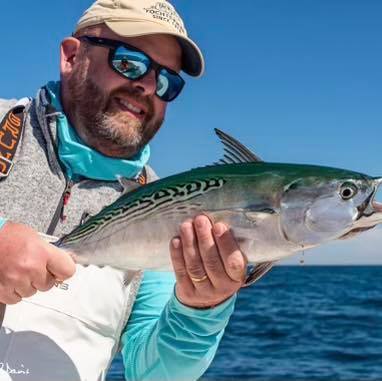

Ben Speciale, president of Yamaha’s U.S. Marine Business Unit and an inductee into the National Marine Manufacturers Hall of Fame, has been involved in the marine industry since working at his family’s marina and dealership during childhood.
He joined Yamaha Motor Corp. in 1987, leaving only for a four-year run at Fenwick Fishing Tackle. He returned in 1996 in strategic planning and operations, and he was promoted to vice president of the department in 2005.
Speciale was appointed president in 2010. He directs the U.S. Marine Business Unit, including all U.S.-based activities, and acts as chief sales and marketing officer of marine engines and boat power systems. Additionally, he oversees Yamaha’s boat companies and subsidiaries, including Skeeter bass boats, G3 aluminum fishing boats, Precision Propeller Industries, Bennett Marine, Kracor and Siren Marine.
An angler and outdoorsman, Speciale has always made it a priority to protect the environment and outdoor access. He’s overseen Yamaha’s efforts to reduce its carbon footprint, protect wild aquatic habitats, and utilize sustainable fuels and renewable energies.
Soundings Trade Only connected with him in late May to discuss the company’s sustainability efforts and other environmental initiatives. This interview has been edited for clarity and length.
Yamaha Motor Corp. has committed to achieving carbon neutrality by 2050. Some might say, “Wow, that’s a long time from now.”
Well, we have a global group, Yamaha Motor Corp., which globally has that as a target for 2050 and includes the entire product lines. That’s a heavy lift, if you think through the long-term view of switching out carbon neutrality throughout the entire product line of everything that Yamaha produces.
It’s an ongoing process. We’re looking at all sorts of technologies to accomplish it. Obviously, between the facilities and the physical product lines, the breadth of products that we have throughout the globe is quite large, so there are lots of potential solutions. There’s a lot of heavy research to find those solutions.
I think we’re a unique company, where we have land products and marine products in different markets around the globe. But to reach carbon neutrality, it’s going to take time, and it’s an ongoing process. Marine is part of that process, but not the only solution. There’s no technology today that says, “This is the single solution.” It’s going to take multiple solutions.
Which alternative energies and technologies are you employing to reduce Yamaha’s carbon footprint in the marine space?
In the marine space, what we’ve laid out so far is that we’re doing similar things that you see with the physical products. We look for different solutions, and obviously, the shortest-run solution is using things such as solar panels on our buildings, just like we installed on our Kennesaw, Ga., headquarters.
I think the numbers [for the solar arrays] are 13,000 tons, or almost 14,000 tons of carbon dioxide over the life of the array, or 15 million pounds of coal. You need to keep that in balance with what’s going on with the power grid. Georgia just announced, I think, two new nuclear plants in the state, but we’re using a company called Velo Solar in Atlanta that’s helping us implement those solutions. We’ll also be looking at that at our other facilities, and we’re rolling out that pipeline.
It sounds like solar is mainly what you’re doing at the facilities to peel back that carbon footprint?
Yeah, it’s one element. Then you go into the equipment in the facilities, and we’re using a different type of evaluation. We would typically do a return on investment for equipment. If we see equipment that can reduce our carbon footprint in being more efficient, then we’re starting to address those issues one by one.
Also, we’re looking at the materials that we’re using within those plants so we can operate those facilities on a consumption material side, like a propeller plant, where we could be using different materials that reduce the carbon footprint, too.
 COURTESY YAMAHA
You recently acquired Torqeedo. How does it fit into your carbon footprint reduction plans?
When we look at the future for products, we need to have multiple solutions. Electric is one of them. And when we look at Torqeedo, we’re able to leverage that technology into the portfolio where we think it’s applicable. They have pretty good R&D. They have mass production equipment and development resources. They’re in an area of the world that is really tight with that type of stuff, and the technology base in that area is strong, so we’re excited about that side.
But again, electric is one solution. Then there’s hybrids, sustainable marine fuels, and there’s different fuels that we can use for internal combustion engines. But electric provides a solution for some of the applications, we believe, long-term.
We also tend to think of electric more as a non-planing boat solution. That doesn’t mean it couldn’t be a planning-boat solution, but your battery energy density has to dramatically go up when you start getting into that. There are solutions in that area that can help us accomplish that idea, like the 2050 plan for carbon neutrality. So getting started with it, it kind of helps us accelerate it faster into our thinking and concepts by having that type of resource internally at Yamaha, at a much higher level.
Would it be fair to say electric outboards are an immediate solution for some of your lower-horsepower needs?
That’s very fair to say. As you look forward, you could see it being a solution for internal combustion on a smaller-horsepower side. Is it the only solution? The answer is no, because if you look at how often a small engine is used, and its true carbon footprint, it’s pretty light. It’s probably a larger carbon footprint of building some of those products than the actual output in use.
You introduced a hydrogen outboard prototype at the Miami International Boat Show. What can you tell us about that?
The combustion engine infrastructure is very, very large. If you could find a different solution for fuel, like hydrogen, you could keep the infrastructure that you built up with internal combustion engines. The Department of Energy, for example, believes that it’s a long-term solution for potentially reducing the carbon footprint.
When we look at a combustion engine, hydrogen is a solution. The question is the engine. We know we can make it run, and there’s some challenges with that, but it’s a normal engineering challenge. Unfortunately, there are no standards built around the fuel delivery system for hydrogen right now. So we need to work on designing the fuel delivery systems into those products in a marine environment.
 COURTESY YAMAHA
In Washington, D.C., prior to the American Boating Congress, we were showing a hydrogen golf cart — same thing, combustion engine. And the golf cart that we’re out driving around, there’s a little bit more standards around that side of it than there is in the marine environment. There simply aren’t any. So one of the challenges we have is, how do we design the hydrogen fuel delivery systems into the combustion engine inside a marine vessel? You ask people like me how to put a fuel tank in a boat, and we know how to do that. There are standards. We need to work on the process to develop the standards around hydrogen. That’s why we brought in a company like Roush, who’s been dealing with hydrogen for several decades. They’ve used it in many different applications in automotive and outer space.
Hopefully soon, we’ll be running that engine on the water, maybe this summer, and we’ll start seeing how those systems work together because it does have to be safe. And everybody talks about safety, and I always tell everybody this is a liquid fuel like propane, which has been on boats forever.
It’s actually very exciting, if you think long-term in our industry. One of the other things we’ve done, we’re working with an organization, the Fuel Cell & Hydrogen Energy Association, which works with companies like us who are saying, “OK, we’re looking to get into hydrogen.” But you also have the distributors and people who produce hydrogen. They don’t want to produce hydrogen unless there’s a place for it to be consumed.
For us to say, “Hydrogen can be a fuel,” you need fuel production and delivery infrastructure for that. And what is the government going to do, or what are the different companies going to do to allow that to happen? It’s cool. We have an organization here called the Hydrogen Energy Brain Trust, out of Georgia, which was quite surprising. We got to sit and talk to people who run fuel stations to delivery systems, and we compare notes and say, “Where’s it best to start and where is it best to go forward at?”
What are some of the engineering challenges with hydrogen? People scoff at the ultra-high-pressure tanks that hydrogen requires on board boats.
There are all sorts of things around it that we have to figure out. Propane is the same type of setup to hydrogen. We had to develop standards around that many years ago, and today we don’t even think about it. But I think it falls in that class of, how do you set those standards so it is safe? We do it with fuel. We do it with propane. We do it with other chemicals.
What is Yamaha planning with regard to sustainable fuels?
If we can replace ethanol with a better, cleaner, sustainable fuel, we can touch the fleet. If we can replace the fuels currently in use today with a cleaner fuel with a chemical like ETBE, that means the fuel in 12 million boats today could reduce our carbon footprint by 30%.
Long-term, you can look at all these different things, but short-term you can switch out the fuel to a clean fuel, which now you can see 20% and 30% clean fuel. That would be an insane reduction in carbon footprint. And it’s easy. The infrastructure is there. Getting it through each regulatory home at the federal, state and all the different things that require all that stuff, that’s one of the big challenges with it.
 PRICEM - STOCK.ADOBE.COM
The most important number in the recent ICOMIA and NMMA report was that 0.7% of transportation is the carbon footprint of the marine industry. So we’re less than 1%. And if you go to all emissions that they’re talking about, we’re 0.01%. As an industry, we’re irrelevant. You don’t realize how small we are. That doesn’t mean we don’t need to be doing things, but if we wipe out the marine industry tomorrow, you reduce the carbon footprint of the globe by 0.01%.
That’s why I like sustainable fuels. Long-term replacement could potentially be hydrogen. That’s where billions of dollars are being spent. Electrics will complement it. We’re experts in this industry about electrics because, you know, we call them trolling motors. We’ve been doing it for years, and there’s value in all of it. So once we find the value proposition, electrics will not be a problem to grow. It’s never been the issue. It’s getting the value proposition into it.
A few years ago, you developed a program for recycling the plastic protective covers that your outboards ship with. How is that program going?
I think we’ve brought back over 60,000 pounds through the organization that we’re using. It’s a reverse-logistics thing. We bring them back, and then they are taken to a company called Nexus Circular that turns it back into chemicals that can be used for other things and products.
They’ve recycled 68,000 pounds since we started that in 2021. It’s growing each year. More dealers and boatbuilders are joining.
It’s a pretty exciting project, if you think about it. If you can’t eliminate it, can you reuse it?
We see the same thing being done with fiberglass. We’re trying to figure out how to reuse the fiberglass into other materials. We’ve been working with a company to take the waste fiberglass and then turn it back into materials we and other companies can use. So those things are happening at a more rapid pace. Paying attention to it and trying to find the right solutions is always the challenge, but I think it’s starting to happen more and more at a rapid pace.
 SANJAYKHAN - STOCK.ADOBE.COM
End-of-life is a big talking point when it comes to sustainability. What happens to outboards when it comes time to repower?
That’s a great question. And on that side of it, if you think of an outboard, once you take the cover off, it’s aluminum; it’s steel; it’s copper. Those are easily recyclable in most parts of the country. One of the challenges with recyclability is reverse logistics and is there a place to take the outboard for recycling?
With automobiles, there’s so much infrastructure in place for that to recycle the steel, the core commodity materials. I don’t think that’s a long walk for us to do the same. Most communities around the country — and I say most because there are still some areas where it’s probably not readily available — but that’s a thing that we look at. But when I think through the list of items, aluminum and steel and copper are very easily recyclable today.
End-of-life for fiberglass boats is also an important discussion. Is Yamaha doing anything in that space?
I’ll say this: Think of an engine cowling. Instead of doing it with fiberglass, could you do it out of an organic material with some level of bonding agent in there that brings that stuff together? That’s a lot of the advanced research that we’re working on. I know we’re experimenting with some other items, and we have advanced teams working on that type of stuff.
How does Yamaha reduce its waste-to-landfill numbers from operations?
I mentioned earlier about the fiberglass. Can we recycle the fiberglass into some other material? I know that we’ve got a lot of numbers and materials that we track, and we’ve seen a lot of improvement in that area. Just like what we’re doing with covers on engines, recycling that plastic. But in each one of the plants, it’s slightly different. That’s one of our targets too, to get the waste out of it.
But you do it by eliminating it on the front side, finding a reusable use for the material. If it’s aluminum, you can recycle it, or can you convert it into something else that’s usable. That one, we’re making spacers for pontoon railings out of alternative materials. But we’re looking at each one of those areas. Obviously, we want to eliminate the waste. It’s just logical for two reasons: one, you’re filling up landfills, but the other one is you’re not dealing with it in your plant.
This article was originally published in the July 2024 issue.