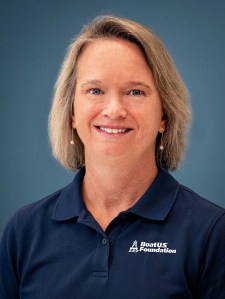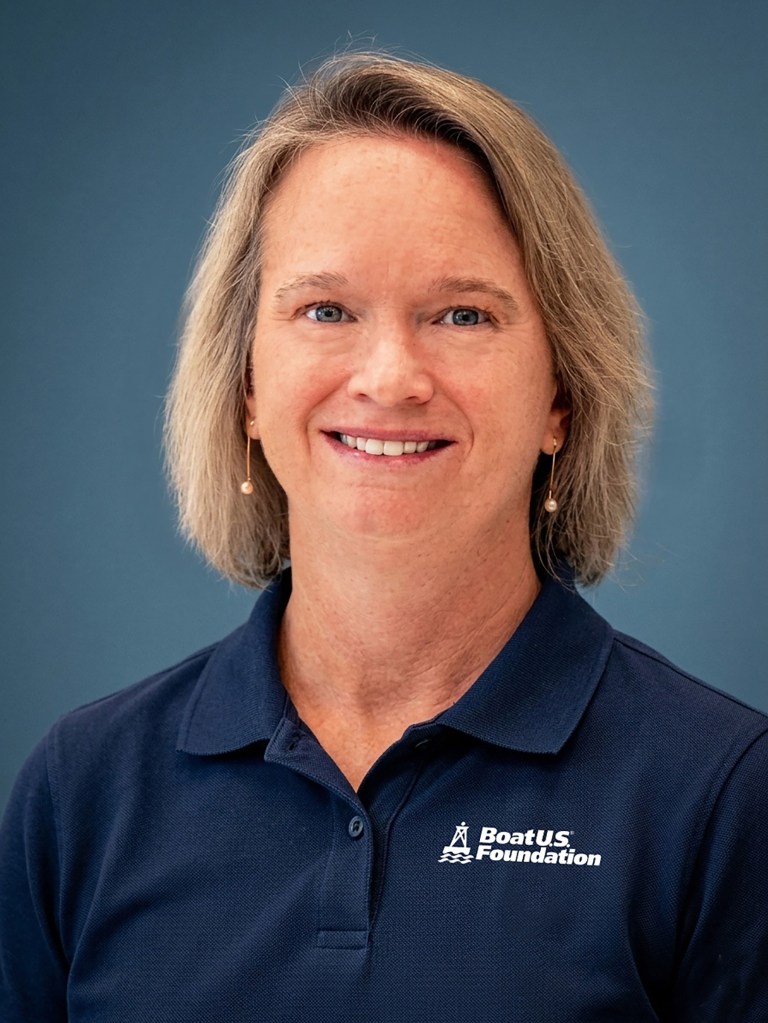

Courtney Chalmers is what you might call a unicorn in marine industry marketing. She’s been with the same group for 20 years, in a world that typically churns through talent every three to four years. Chalmers works from a unique vantage point in listing automobiles for sale and properties for rent, and in her wide-ranging role as vice president of marketing for Boats Group, which runs such well-known sites as Boat Trader, YachtWorld and Boats.com. Across the board, Boats Group leverages user data to drive better online experiences for consumers and sellers.
We sat down with Chalmers in late April to discuss her experiences as a woman in the industry, as well as how user data, artificial intelligence, search engine optimization, digital content creation and other technologies are changing the way marine marketers do business. She also shares what’s behind her love for boating, and how people in the industry keep her motivated and engaged. This interview has been edited for clarity and length.
What’s your background?
I grew up in a small town, a little water community in Virginia on the coast. It wasn’t an option whether or not we learned how to water ski — we were going to learn how, and were going to get thrown in to do it. So I grew up doing that, and often even getting from house to house in the summertime was by boat. It was a very good life, a good upbringing.
When I got into the industry, it wasn’t actually my original plan. I started in a different division within Trader Publishing Co. Over time, as I progressed in my career in marketing, I knew I wanted to be in the recreational boating side of things. I started in multifamily housing at ForRent.com and then moved into EmploymentGuide.com. I moved around the Trader business as I continued to progress my career. When I landed in the marine segment, I really liked it, and knew I wanted to stay and expand my career within that segment.
What drove you toward the boating side of Trader Group?
I think the industry itself is such a great place to work. I think also, especially at the time, it was ripe for growth, for innovation and more marketing. It was a sleepy industry, and there was so much opportunity to get involved and do new things. It didn’t hurt that it was in the boating industry, which I am familiar with and I always enjoy being a part of.
What is your day-to-day like running marketing for Boats Group?
My role has changed over the years, as digital marketing has become much more necessary. That’s what we do now. I think my role started more along the lines of brand management, which I really enjoy. I like doing brand marketing, and I like doing product marketing, but we also do quite a bit of content creation. It’s digital content — video and editorial.
My team’s job is to drive qualified traffic to the listings of our sellers. We have this two-sided network that must be fed. Marketing plays a big role in feeding the buyer side and the seller side quite a bit. A typical day, it’s across the board. It’s very diverse every day, but I spend most of my time right now doing product launches and communicating the value that we deliver to our customers.
I also spend a lot of time managing a team that builds our content for us, so we make sure that we’re driving qualified traffic through SEO and paid marketing. My biggest responsibility, I think, has come about over the last seven to 10 years: maximizing our data. We have a ton of data that we sit on, so we use it to tell a story in the right narrative around the type of visitors that we have, what they’re doing and what the industry can expect based on the behavior of our consumers. We have 18 million monthly visitors, so we have a ton of data about those consumers.
Does social media also play a large role?
Yes. Over the years, I think we’ve tried a bunch of the different social media channels. Instagram is a really strong social channel for us. It’s one that we’ve been able to grow because of the type of content we create. Facebook still is, as well. We mess around in TikTok. It’s not one of our strongest at this point, but I think it’s important that we’re there. YouTube is important for video.
The digital end of things has to be pretty satisfying, because you almost instantaneously see what works and what doesn’t.
It is. You think about Trader publications back in the day — we collected data, but it was data about how many people were in and out of those convenience stores, not how many eyeballs did we potentially catch. Now we know not only where those people are, but also in some case if they signed up for our communications. So we know if they own a boat, what kind of boat they have and a lot more information about our users, as well.
What is the most challenging aspect of your job?
I think it’s balancing the consumer expectations with what our customers want. Even though the industry has progressed a lot over the last 10 years, it is still an industry that is figuring out how to use data for digital marketing. What consumers want from an experience on our site isn’t always aligned with what customers want. So making sure that customers are educated about the impact of building a consumer-centric website and a consumer-centric experience is important. That’s going to deliver more leads and higher-quality leads, but some of our customers have been hesitant to get on board.
 ADOBE STOCK
What is the most rewarding part of your role?
I think it’s seeing the impact that our work has on the industry as a whole — not only getting more people into boating, but also helping brokers and dealers sell their boats, and hearing the feedback that our solutions and sites work. When I’m out and about, and people ask me what I do for work, and I tell them, and they’re users of the site, they often say, “I had no idea that there were people there who were building the sites. I love YachtWorld. I go on it every day.” Hearing people’s positive feedback about their experience in using our products is rewarding.
 ADOBE STOCK
Twenty years is a long run in this industry. What’s kept you at your job all this time?
I love the industry. If I think about why I haven’t left Boats Group/Trader, it’s because I love the company. The culture is great. I’ve had really, really good mentors both in the industry and within Boats Group. But I think, as I said before, it’s the people in the industry that have really made it special for me. I’ve built strong relationships with people in the industry. I just haven’t ever really wanted to leave. And I still think there’s so much opportunity for professional growth in the industry, as well.
You’re also the president of the Marine Marketers of America. What keeps you busy in that role?
We’ve grown that organization significantly over the last several years. Wanda Kenton Smith started it, and I was one of the first people to join the board with her. As she transitioned out and wanted to focus on other things, I stepped in as president. We’ve focused on growing the membership over the last several years and making the Neptune Awards the biggest event that we do.
Two or three years ago, we looked at our road map and mission statement and said, “OK, what do we want to be good at?” It’s a small organization, so we can’t be everything to everybody. As a board, we decided to focus on professionalism, and provide more mentorship and guidance to marketers, and encourage networking in the industry. The networking piece is aligned with recognition, as well. At the Neptune Awards, we try to have a networking activity where people can connect, meet people, socialize and be part of the marketing community in the marine space.
The Neptune Awards program has really grown in size and scale since it debuted more than a decade ago. We have two people, Alisdair Martin and Katy Fairman, who have taken it on the last two years and really run with it. They are totally committed to making it its own event and something that people would talk about and want to attend. It gets bigger and bigger every year.
For the latest awards, we got away from the Miami convention center just to have something a bit different. We went to Miami Beach Botanical Gardens, and it was beautiful and people enjoyed themselves. I think what makes that event so special is that marketing is usually involved in a lot of the different campaigns and initiatives that companies do, but it’s not always recognized as the sole driver for the success. So we play a part, and we have a big role to play, but it’s not always celebrated in that way. I think it gives marketers the recognition that sometimes, behind the scenes, people don’t get.
Does the Marine Marketers association do anything to attract new talent to the industry?
That’s on our road map. One of the things that we want to do is help recruit more people into the industry. And not just marketing, but recruiting more people into the industry, more young talent. I think our focus right now is to raise the bar in the professionalism of the marketers in the marine space — the creativity, the professionalism, the innovation and just the overall education, as well. Because in a lot of the smaller dealerships and brokerages, they don’t have the budgets to do a lot of paid marketing, for instance, or paid search marketing. So that’s a skill set that we can help mentor.
Men still outpace women when it comes to industry leadership roles. What advice would you give to someone getting started in the industry?
For me, it doesn’t matter if you’re a male or a female. You just work hard and build strong networks with people. I’ve been fortunate to have a number of strong females in the industry whom I stay in touch with, and it’s a mutual relationship. I support them whenever I can, and I hope that they can do the same for me. I think it’s just about hard work and perseverance for me, though.
I would tell anybody who wants to come into any industry, but the boating industry specifically, that there’s not always a clear career path. Once you know what you’re good at and what you want to do and how you want to impact the industry, carve out your career path and meet people along the way and share your plans with other people. You just don’t know who knows somebody who can get you in the door or who knows about a role that maybe you had no idea even existed. It’s all about relationships and networking.
What could the industry do to better attract talented women?
It’s not just about targeting or empowering women. It’s empowering everybody to feel like they have a place and having great mentors — men and women. It’s not always about having the best female mentors. I think it comes down to promoting the industry as a fun and inclusive industry to be a part of. You just have to build relationships and network, because that’s what this industry is about.
Artificial intelligence is a hot topic in marketing and content creation. Are you using AI or looking at the technology for the future?
We see a ton of potential with AI, and we have different groups within the organization who are working with it for their particular roles. Within marketing, we use it for copy to get some ideas and then tweak it from there. If you don’t tweak it from there, everybody knows you use AI. You’ve got to personalize it and make it appropriate for your brand’s voice and tone. But we use it on a pretty basic level on the marketing side.
When it comes to content development and building video, our director of content has dabbled in AI to build really cool videos that are not realistic but do get attention on social. I think that’s one of the key pieces for social, to get attention and get engagement, and AI has helped with that. We also use AI from a product standpoint. We’ve been testing different ways of integrating AI into our website experience, so searching by voice and things like that. There’s so much opportunity with AI. We see it as a lever that we want to pull at the right time and place.
How challenging is it creating and continually adding fresh content to all of your websites?
It’s definitely a large part of my role and my team’s role. We have a very talented director of content, Ryan McVinney. His passion is really in video, but he also has a great network of freelancers, and they’re terrific writers, and they always have been amazing content creators.
Over the last couple of years, we’ve really branched out and started working more with different influencers and industry partners to generate different types of content. I think that content development has become more competitive. There are more startups and small businesses out there doing it, and they can be scrappy, whereas sometimes we can’t be as scrappy. But I think the quality that we can produce is pretty tough to beat. I think the other piece of it is that we have so much data that we’ve been able to leverage data analytics to understand the audience preferences and tailor our content accordingly. That’s helped quite a bit too.
Is the goal that content drives people to your websites, not necessarily monetizing YouTube or Instagram or Facebook, or is it a little of both?
It’s not as much about monetization. For us, the social aspect is about engagement and filling the top of the funnel. If someone is in that decision phase, we can help influence that decision by simply sharing more knowledge. Our social platforms are about engagement. We have users who like to just visit our sites, so we want to engage them outside of just buying and selling.
The online boat- and yacht-listing space is crowded. What do you do as a company to keep people coming back to your sites?
Because of the data we harvest, we know what our consumers and users are looking for. We have a full team of people working on SEO to make sure that our sites are ranking prominently. We’re also constantly looking at consumer behavior on our sites. That way, we can determine what their path is and how to make it seamless to submit a lead or to get information about that boat, or to find what they’re looking for.
 ADOBE STOCK
We’re always trying to optimize that user’s experience. The better we get at that, the more traffic we know that we will retain. Still, it’s very competitive. There are lots of horizontal marketplaces out there that people enjoy going to, and there are boats for sale. Our sites are trusted. They’re respected. They’re credible. They have quality content, and I think that’s really what sets us apart from other competitors.
Do you see the group expanding into different countries like it did in the mid-2010s?
I think we’re always interested in expanding when it’s appropriate. In Europe, that was a focus to expand our footprint so that we could offer our members more exposure through other countries. I think if there is a product or a company that fits our strategy, then yes, we would certainly be open to it. But in Europe, I think we are satisfied in the position we have there now. We’ve given our network of customers more exposure as a result.
What has changed most in the past 20 years when it comes to your role and marketing in general?
I think it’s probably the data and the way that companies are using it. That data is driving all the digital channels. You also have to stay so on top of the changing algorithms for SEO. All of that is, for me, rooted in data because we have a lot more information about the people we’re trying to attract to our sites. That’s been the biggest piece of it, having access to even more data and then being able to segment that data to build out the right campaigns by channel.
Email is still a really big channel for us, but it’s not the way it used to be, which was to send out an email blast and hope that people click on it. Now we send very specific emails to specific users based on the search that they conducted, based on their income, whatever it is. We have information about them now that we can target them in a completely different way.
This article was originally published in the June 2024 issue.