Forty years ago, an aeronautical engineer developed radar mounts for sailboats and set the foundation for a new company. Ever since, England-based Scanstrut has addressed the practical challenges of installing tech and electronics securely in the marine environment. The company’s name combined “scan,” a reference to radar technology, and “strut,” the structural support required to mount it.
These days, Scanstrut pursues the same design-led, problem-solving approach that defined its earliest days. “From the very beginning, Scanstrut focused on solving real user problems, making marine electronics easier to install, integrate and trust on board,” says Grant Fox, head of marketing.
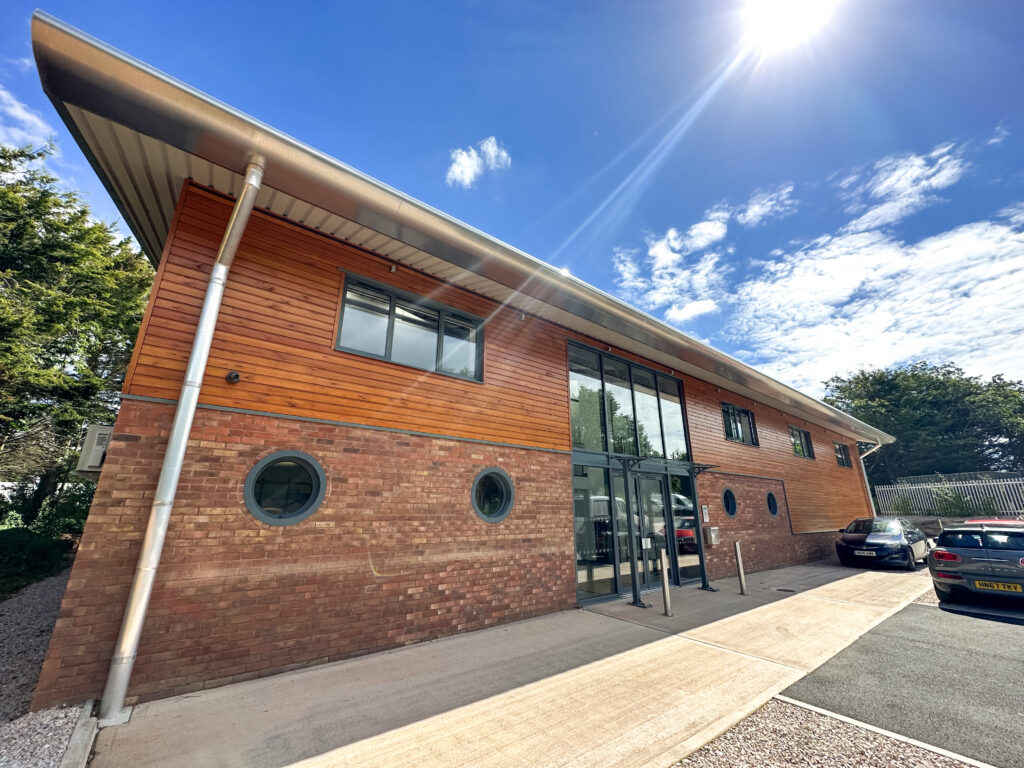
Today, Scanstrut operates from headquarters in Devon, U.K., and a U.S. base in Westbrook, Conn. The company supplies OEMs across the sail and power segments worldwide, including Grady-White, Alera Marine, Sportsman Boats and Godfrey Marine.
“SCA testing ensures products thrive in the harshest outdoor conditions.”

George Bowles
Head of DesignAccording to George Bowles, head of design, Scanstrut’s earliest products established an engineering mindset that continues to guide development across categories. “Our first radar mast mounts became the foundation of our engineering approach,” Bowles says. “They were born from a genuine need. Sailboats require strong, reliable, corrosion-resistant mounting systems.”
Innovation continues to be about solving real challenges with smarter, simpler ideas. “We don’t innovate for novelty,” he says. “We innovate with purpose. Every new concept must enhance the user experience, elevate performance and set a new standard for its product category.”
In-House Standards
In-house design and development are central to Scanstrut’s business model and international growth. The approach, according to Bowles, allows the company to control timelines, materials and engineering decisions while remaining responsive to OEM requirements.
The company’s marine portfolio includes radar mounts, multifunction display housings, cable seals, waterproof USB and AC charging systems, wireless chargers and on-board air systems. Scanstrut also has expanded into RV and overland markets. “Marine remains the larger of our markets, but the RV and overland categories are growing rapidly due to crossover technologies and shared 12-volt requirements,” Fox says.
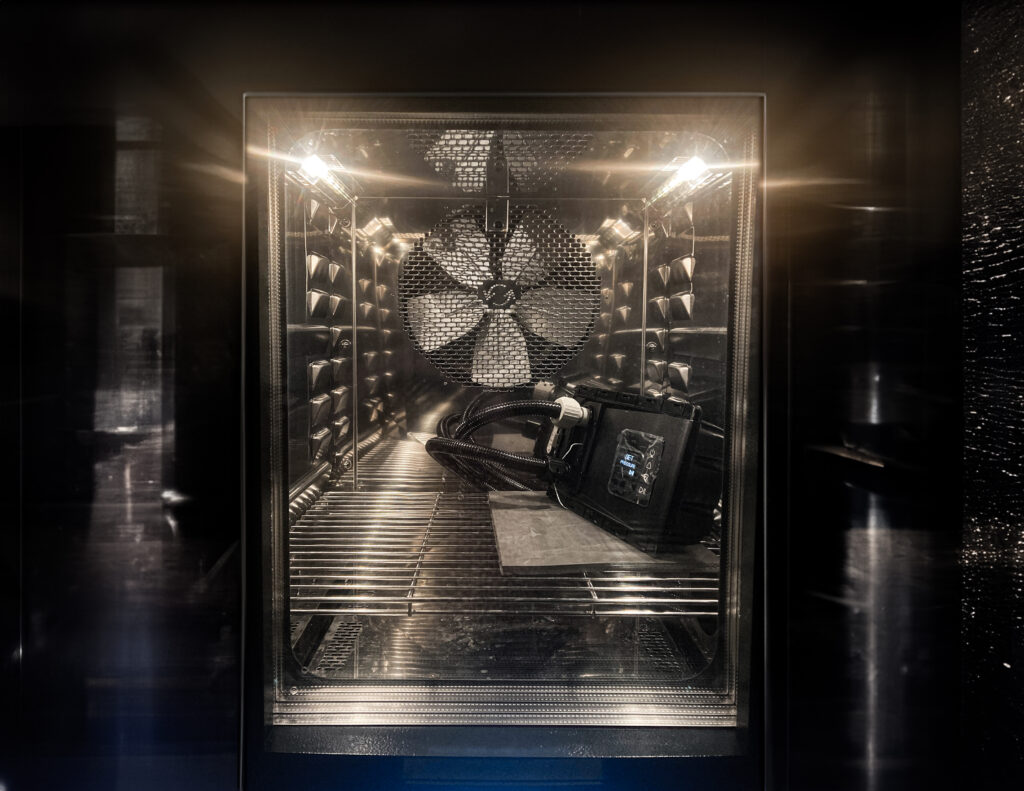
One area where Scanstrut has differentiated itself is product testing. The company developed an internal standard known as SCA — safe, certified and approved — to validate products beyond conventional compliance requirements. “With 40 years of designing outdoor products, we know marine environments exceed normal certification criteria,” Bowles says. “SCA testing ensures products thrive in the harshest outdoor conditions.”
The SCA process includes dynamic on-water testing, shaker-table shock testing up to 30 Gs, extended salt-spray corrosion exposure, IPX testing, UV aging cycles, cable fatigue testing, thermal chamber testing from minus 40 to 85 degrees Celsius, drop testing, and structural finite element analysis. “Traditional certification is often about ticking regulatory boxes,” Bowles says. “SCA is customer-driven — testing for real-world durability, longevity and performance.”

OEM partners, he adds, conduct their own validation testing before adopting new components. “So our samples must arrive proven and reliable,” Bowles says.
The testing protocol has also influenced Scanstrut’s warranty strategy. The company offers a five-year warranty on waterproof wireless chargers because materials and electronics have already been subjected to extreme stress testing.
Based on all of this, the company has earned multiple DAME Design Awards, including an overall win, as well as category awards, special mentions and nominations. Scanstrut took home a Queen’s Award for International Trade in the U.K., as well as an IBEX Innovation Award for its Atmos Air Station. “Culturally, these awards validate our design-first approach,” Bowles says. “Commercially, they reinforce trust. Builders know we deliver cutting-edge, reliable solutions.”
Partnerships
Collaboration among companies has become increasingly important as on-board systems grow more integrated. “Scanstrut remains proudly independent,” Bowles says, “but strategic partnerships unlock opportunities for breakthrough products.”
One example is Scanstrut’s partnership with Perko for wireless lighting systems. Bowles says Scanstrut had been developing its SystemOne wireless power technology for years (to be introduced to market this year) and identified lighting as an ideal application, while Perko contributed regulatory and lighting expertise.
“Wireless power transfer is ideal for on-board lighting systems, eliminating corroded terminals and failed electrical contacts,” Bowles says. “No terminals means no corrosion, no maintenance and fewer service issues. It also simplifies installation.”
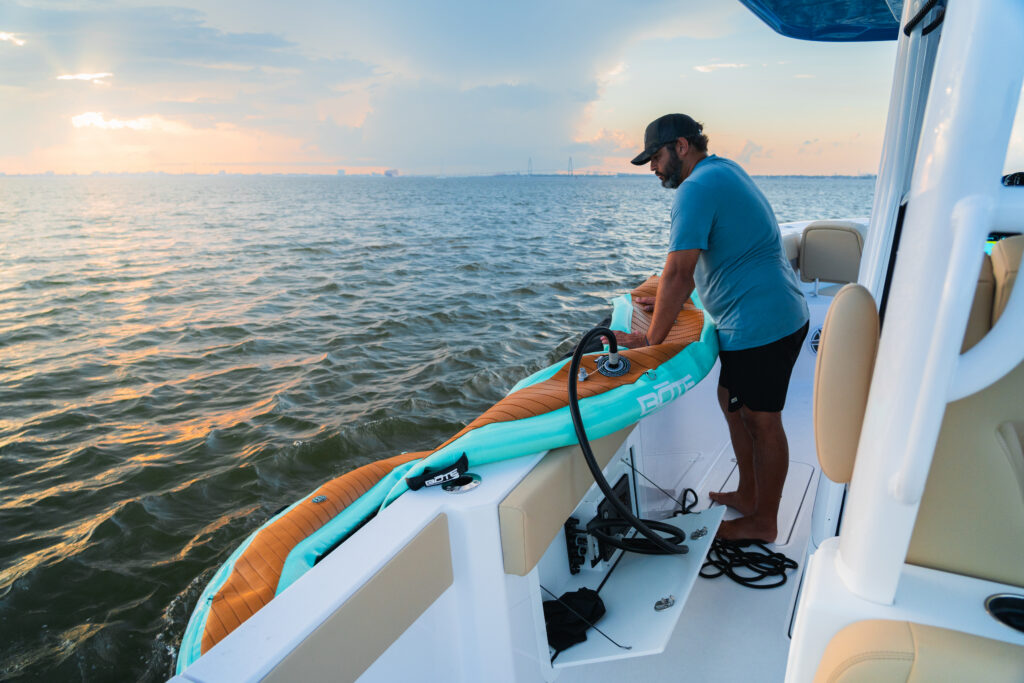
Scanstrut’s Atmos Air Station illustrates the company’s efforts to reimagine on-board conveniences. The permanently installed system replaces portable inflators for paddleboards, towables and other gear. “Whenever we see a genuine problem on board that no one has solved yet, the team becomes energized,” Bowles says. “Storing half-inflated pads, towables or paddleboards is messy and painful on board. Atmos eliminates that problem completely.”
Markets and Outlook
Scanstrut’s sales are balanced across markets in Europe, the Middle East, Africa, the Asia-Pacific region and the United States, according to Fox. “APAC has shown major strength recently, but the U.S. remains our largest opportunity for further growing our business and brand,” Fox says.
“With some of Scanstrut’s largest global customers based in the U.S., our market has a large influence on future product development.”

Chris Beaudry
Vice President and General ManagerScanstrut opened a U.S. corporation in 2018. Chris Beaudry, vice president and general manager, has managed North American operations from day one. The Connecticut outpost has grown to approximately 50% of global sales, Beaudry says. “We have expanded our office and warehouse locations three times since 2018,” Beaudry says. “We have undertaken several custom projects with multiple OEMs, both inside and outside of our marine market, due in part to our direct presence in the United States.”
The U.S. office and distribution center also help Scanstrut provide timely service to OEMs, aftermarket customers and end users. There’s increasing product stock in the U.S. warehouse, and expedited shipments when needed. “Providing our customers with a direct line to the manufacturer has increased our service levels, shortened lead times and strengthened relationships,” Beaudry says. “With some of Scanstrut’s largest global customers based in the U.S., our market has a large influence on future product development. Our newest product category, Air, has been largely buoyed by our success with U.S. marine OEMs and distributors.”
The company’s core leadership team has remained stable for more than five years, a factor Fox says has helped Scanstrut navigate challenging global conditions. “That stability has allowed us to grow, adapt and bring products to market effectively,” he says, adding that as with many companies, Scanstrut is facing macro headwinds.
In the U.S., Beaudry says, “with manufacturing operations all based overseas, the implementation of tariffs in 2025 has made importing goods into the U.S. more costly and complicated.”
Prioritizing the product pipeline remains one of the company’s most complex and thrilling challenges. Beaudry adds: “Scanstrut will continue to be an international leader in the design and manufacture of high-quality, innovative products that are designed and manufactured for use in the toughest environments.”
This story originally appeared in the February, 2026 issue of Soundings Trade Only.