Calling a company a “category killer” used to be a compliment with no strings attached. Back in the 1980s and ’90s, having big-box stores at dominant scale meant a retailer could offer more products than anyone else at the lowest possible prices. A brand could dominate a sector with wild success. Think of The Home Depot for all things that need fixing around the house, Best Buy for consumer electronics that end up in every room, and Dick’s Sporting Goods for whatever equipment the kids need to play baseball, soccer and just about anything else.
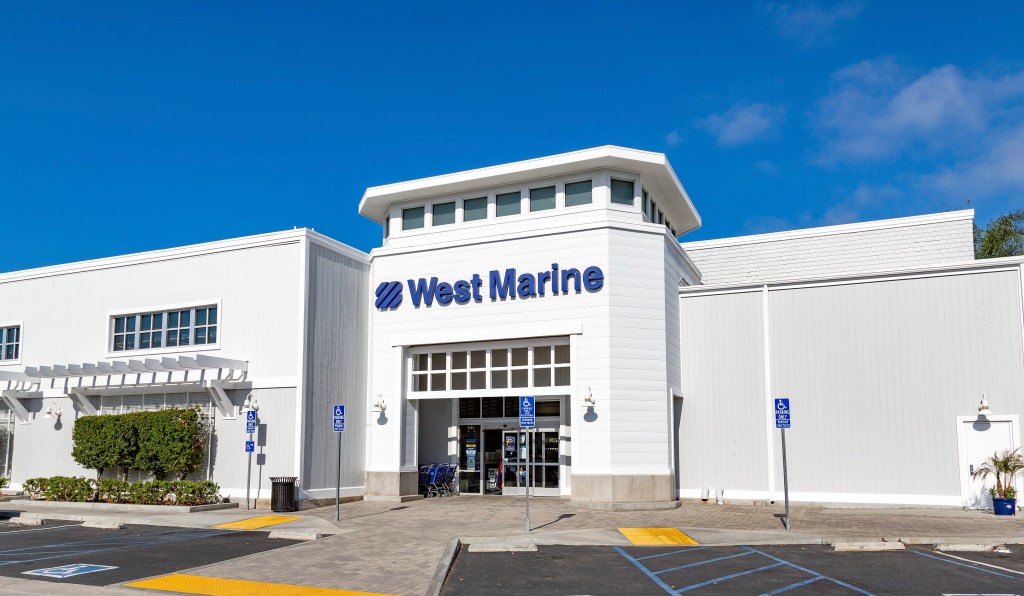
In the boating market, that kind of category killer was West Marine. The business evolved from its start in the 1960s to become ubiquitous with shelves full of all kinds of boating supplies. As of this past spring, the company said its array of about 200 locations spanned 34 states and Puerto Rico, with distribution centers in California and South Carolina. The brick-and-mortar positioning means that within about a half-hour of 85% of marinas, a West Marine is there.
But it’s no longer the 1980s and ’90s, and experts say that for big-box retailers, the business model needs to evolve. Significantly. According to documents filed as part of West Marine’s Chapter 11 bankruptcy in May, numerous challenges resulted from failing to do just that.
“One thing that I always say is diversify or die,” says retail strategist Carol Spieckerman. “These category killers are structurally vulnerable. West Marine operates almost entirely in discretionary territory, and they don’t really have any hedges against that. So when boating and fishing slow down — almost entirely discretionary categories — there really is nothing for them to fall back on.”
Mark Mathews, chief economist and executive director of research for the National Retail Federation, also says the way the retail marketplace works today is dramatically different from what helped many big-box stores succeed in the past. “Evolve is the keyword,” Mathews says. “The speed of evolution has changed dramatically. If you think about it, 20 or 30 years ago, look at Walmart and how long it took to build that business — decades and decades and decades. You can go from zero to a billion dollars in less than a year now based on your ability to reach customers, and you don’t need stores to do it.”
Declaration of Paulee Day
West Marine’s bankruptcy documents include the 111-page declaration of CEO Paulee Day. It tells the story of what went wrong from the perspective of current company leadership — and makes clear how much, or how little, the company’s thinking has evolved from decades past.
The declaration begins with how West Marine’s founder started out at a time when boating supply stores were “usually dark, disorganized places staffed by a couple of salty but indifferent clerks who preferred swapping sea stories with one another to helping customers find what they came in to buy.” That’s the problem the brand was built to solve, and it worked. Within a few decades, on Nov. 19, 1993, the company launched an initial public offering on the NASDAQ exchange. The additional liquidity let West Marine increase its retail footprint, including opening a 50,000-square-foot-store in Fort Lauderdale, Fla., in 2011 and opening a 20,000-square-foot store in New York City in 2013.
In 2017, the company went private “to improve West Marine’s sourcing, operations and merchandizing while refocusing the business on its core customer base and revitalizing the West Marine brand,” the declaration states. But just a few years later, during the pandemic, West Marine added lifestyle and discretionary products such as apparel and footwear. “This expanded assortment marked a
divergence from the core marine focus on which the Company was founded,” Day’s declaration states.
It was one of numerous decisions and challenges that would lead to this year’s bankruptcy, according to the declaration. As consumer demand contracted after the pandemic, in March and September 2023, West Marine undertook two balance-sheet restructurings that “equitized approximately $660 million of its existing term loan debt as of that time and provided $275 million of new liquidity in the aggregate.”
In addition, the company’s retail footprint required approximately $55 million of annual lease payments per year. Those leases, according to Day’s statement, “have depleted liquidity and proved an insurmountable obstacle that could not be adequately addressed absent this Chapter 11 filing.”
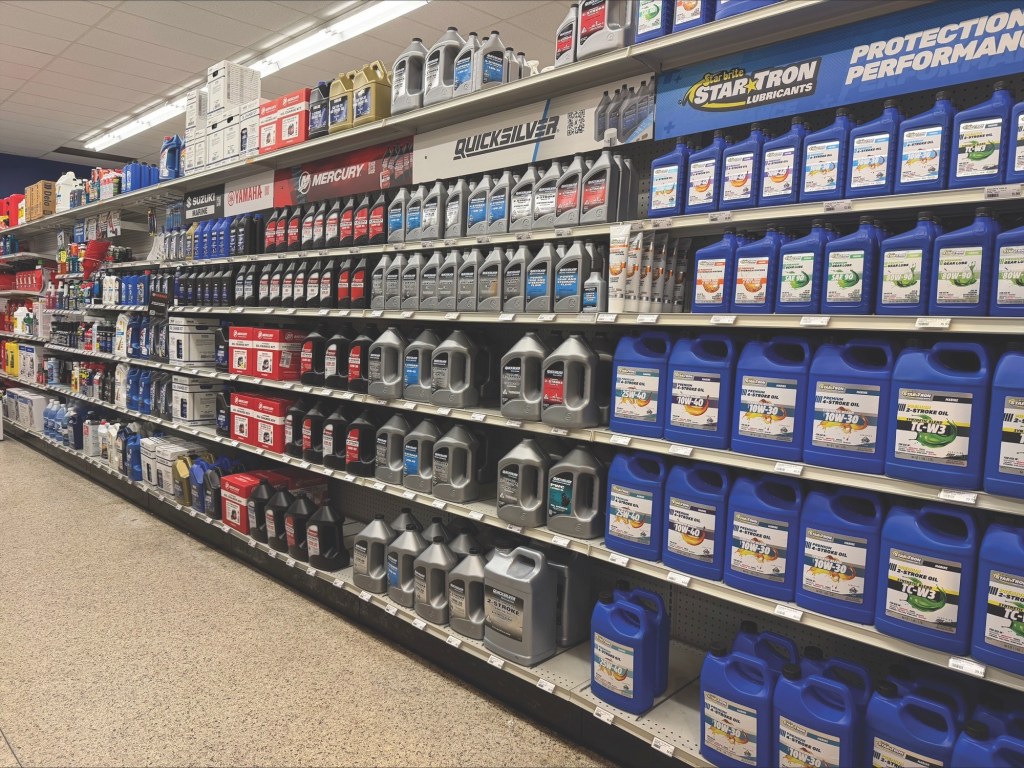
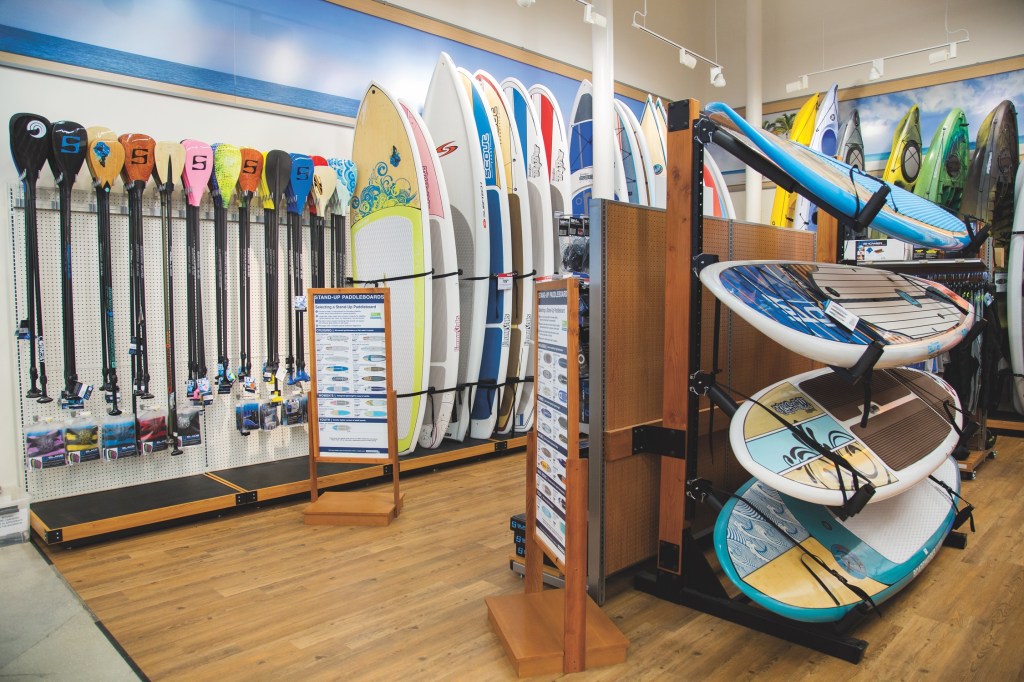
positions certain SKUs farther forward for pro customers. PHOTO COURTESY WEST MARINE
The declaration also cites other challenges: “Supply-chain issues coupled with underperforming sales, increased costs, inflationary pressures and long-term leases in undesirable locations resulted in strained liquidity. These issues were compounded by several seasons of colder than average weather, leading to late starts to several boating seasons, which decreased the number of boating days and negatively impacted demand for the Company’s products.”
And in the age of competition from such online behemoths as Amazon, the declaration states that West Marine’s largest distribution center was using “stale technology for tracking inventory.” That contributed to problems such as a customer buying an item online when the distribution center did not have the item in stock. “An unreliable distribution center also resulted in greater lag times with respect to getting a product from the distribution center to the stores,” the declaration states, adding, “the Company could not stock the right products on the shelves quickly enough to satisfy consumer demand.”
Overall, the declaration and other bankruptcy documents paint a portrait of a company relying on retail product sales whose mix West Marine couldn’t seem to quite get right, with most sales still happening in brick-and-mortar stores. Today, 59 of those stores are on the list to be shuttered, and just 8% of West Marine’s revenue comes from e-commerce. The CEO describes West Marine’s turnaround plan as a return to basic principles, including having the right product, making sure the products are on the shelves, providing competitive pricing, offering expertise and providing an easier, more reliable shopping experience for customers.
Beyond the Basics
Spieckerman says all companies are dealing with macroeconomic headwinds, including inflation and increased costs. But not every company is dealing with the kind of private-equity debt that West Marine carried, or with the lack of diversification the company has across channels, categories and its overall business model. Ultimately, she says, the combination of factors lays bare a company with a weak operational foundation.
“With West Marine, when you talk about the e-commerce snafus and those types of things, that’s unforgivable,” Spieckerman says. “[And] debt doesn’t care about macroeconomic cycles or whether retail discretionary spending is booming or busting. … The growth that needed to happen to make that a good investment, that’s where all of those headwinds hitting; they just couldn’t outrun the clock. These private-equity deals can be really good and pay off when you have short-term challenges, but when you have all of these factors hitting from all different sides and you’re not operating from a strong operational foundation, it has a cascading effect.”
She describes the thinking at West Marine as being different from the thinking at larger retailers, such as Amazon and Walmart, which she sees as hyper-diversifying, including into services that are highly profitable, to offset product-based headwinds. Amazon, for instance, has an entertainment business and Amazon Web Services. Walmart has added retail media advertising to its portfolio.
“Retailers are no longer just places that sell stuff. They’re platforms,” Spieckerman says. “And Walmart is the ultimate example of a traditional retailer that understood diversification was going to be the key to its future. When you talk about AI and all these other things that are the shiny objects in retail, it’s really just part of that diversification story.”

Mathews says he sees similar trends, along with other ways for retailers to succeed: “There’s definitely diversification — there’s no doubt about it — but we’ve also seen the opposite happen. We’ve seen retailers come in that are a pure play online. We’ve seen CEOs say they’ll never open a shop, and two years later they’re opening a shop.”
The key, he says, is a company being able to resonate with consumers across formats. “This whole idea that stores are dying? Absolutely not. A lot of younger consumers like to go out and shop for the experience,” he says. “Retailers see the stores as more than a place where they transact. The store does so much more than that. It’s a fulfillment center. It’s a place where people experience the brand. I’ve never been inside a West Marine shop, but I’ve driven past them and wondered what they sold and Googled them.”
That reality is why plans like West Marine’s for post-bankruptcy, to shutter dozens of stores, can be double-edged, according to Spieckerman. “For a hot minute, all the pundits were going so far as to say that stores were a liability and digital was going to take over the world,” she says. “Walmart is the retailer that turned the tables and said stores are digital assets. When you have stores, that’s how you can do bricks-to-clicks fulfillment. They showed everyone that stores are not a liability. They are a digital asset if you play it right.
“I think retailers like Macy’s have learned that the hard way,” she adds. “It’s why shutting down stores can be perilous. It’s not just that you don’t have revenue from those stores, but you lose brand awareness. When you’re closing a quarter of your stores, like West Marine, they no longer have a presence in those communities, and when you have limited e-commerce, that’s a double whammy.”
Boating also faces the inherent challenge of being an expensive activity compared with other options, especially with fuel prices spiking because of the recent unrest in the Middle East. Mathews says the big-box stores that are doing well, especially at supercenter size, are the ones that are playing to the needs of what has become an incredibly cost-conscious consumer.
“Inflation is on everybody’s mind. Everyone is trying to stretch their dollar,” he says. “The people that are doing well are the ones that are able to convince consumers that they’ll get the best price, or they’re in the higher end of goods. If you’re in either of those spaces, you’re probably going to be OK if you are successful in convincing them that you are where they should be.”
CEO Day states in the bankruptcy documents that the company’s reorganization plans include finding ways to have the right product, provide competitive pricing and offer an easier, more reliable shopping experience. But those are only the basics, experts say, when it comes to succeeding today, let alone planning for the future.
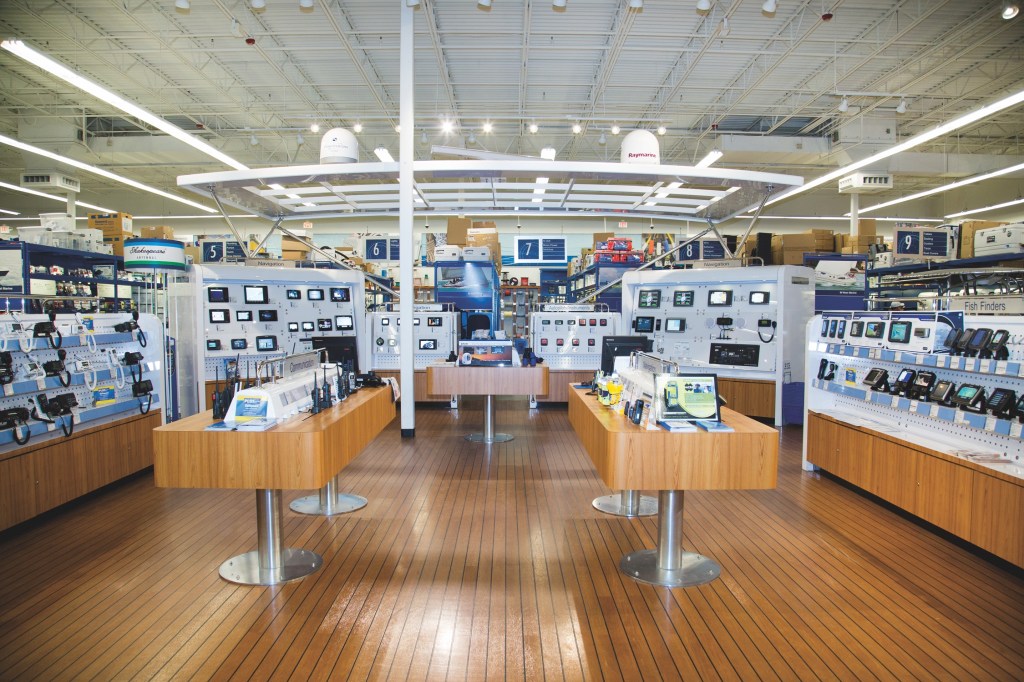
“If you haven’t secured the foundation, the headwinds will blow you off the foundation. That’s really just the baseline,” Spieckerman says. “That’s why you see so many retailers right now like Target, and in a more proactive and offensive way Walmart, making bigger investments than they’ve ever made in thinking long-term.”
As for West Marine’s future, she adds: “I guess the good news is that Chapter 11 will help them to renegotiate leases and shut unprofitable locations. Maybe they’ll be ripe for another acquisition. They have a lot of brand recognition, but it’s hard to see how they’re going to pull out of this.”
This story originally appeared in the August 2026 issue of Soundings Trade Only.