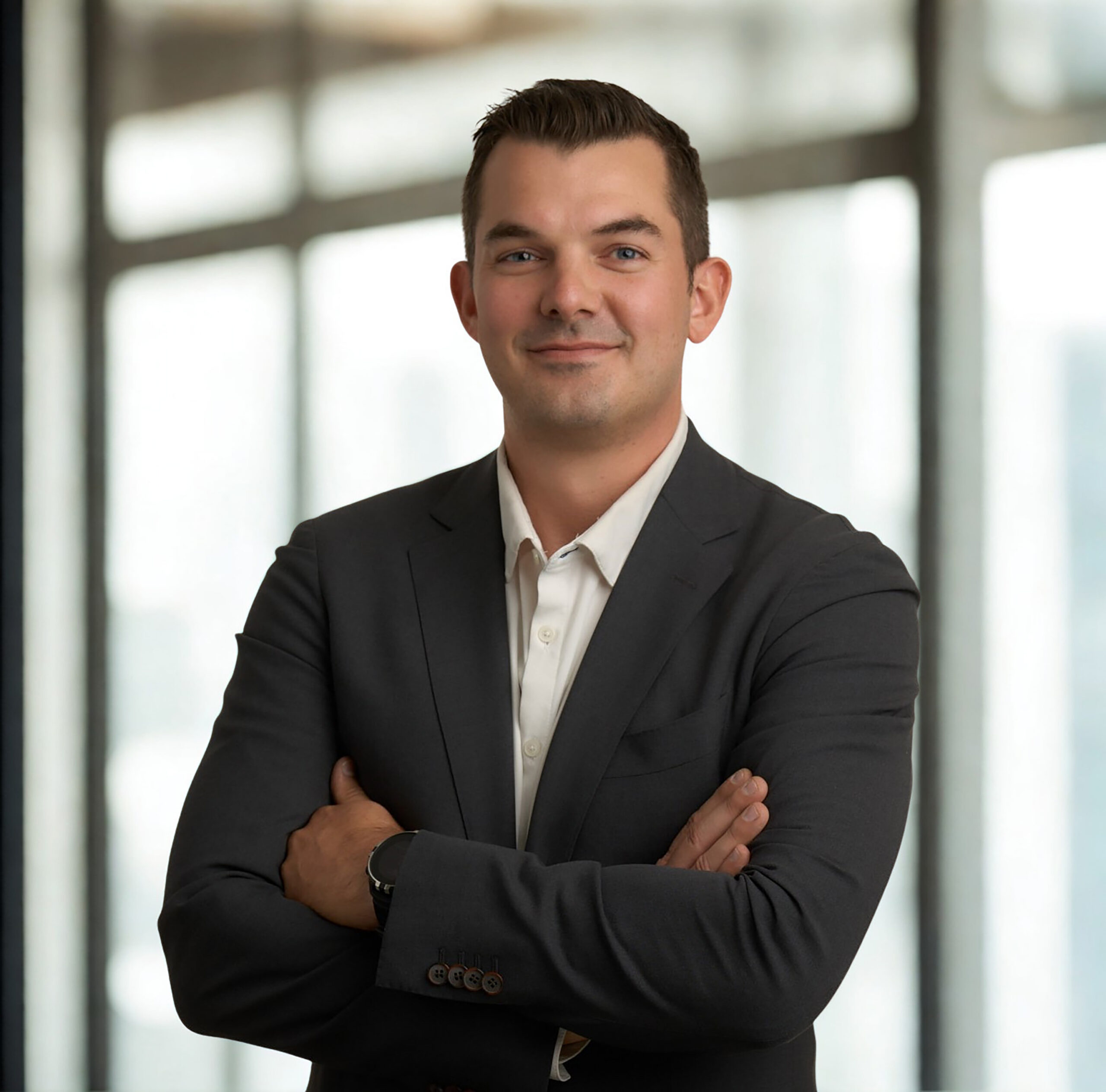
Growing up in West Virginia, Clay Crabtree and his family were always on or around the water. Sometimes it was a visit to a local lake or river. Other times it was bigger bodies of water and oceans. On summer vacations, Crabtree and his father would rent or charter boats and sail around the Florida Keys and other destinations, fishing their way from place to place.
From a young age, Crabtree says, he was obsessed with boats, often picking up free boating classified pamphlets and publications from newsstands and convenience stores so he could dream about which boat he would buy one day. After college, Crabtree did not go into an area related to his biology and chemistry education. He took an entry-level position in the office of U.S. Senator Joe Manchin, D-W.V. That decision led to positions at the Association of American Medical Colleges, American Sportfishing Association and, now, the National Marine Manufacturers Association. He is the NMMA’s interim vice president of public policy and government affairs. (This interview has been lightly edited for clarity and length.)
Please tell us about your personal and professional backgrounds.
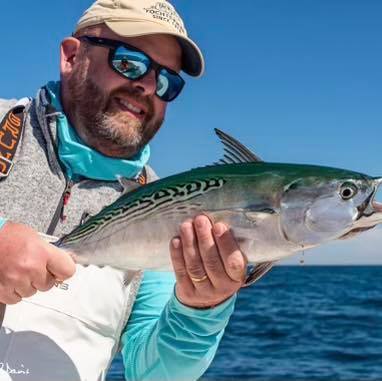
I grew up in a small town, in Kenova, W.V., which obviously is not the biggest boating state or place, and there are not a lot of oceans to go visit. I went to Marshall University, located right there. Growing up, anything that our family did was about fishing, especially with my dad. Whether it was going to our family’s pond or fishing in local rivers, when we were doing something together, it always had something to do with angling.
The boating part didn’t start until we began going to the beach on our family vacations. On one of the days of vacation week, we would always charter a boat or rent one for the day to go out and fish and play. And then, as it ended up, my dad and I really got into sailing. In middle school, we would go down to the Florida Keys, and he and I would charter a sailboat and stay on it for the week, just sailing around, going from place to place, doing a lot of fishing. Those experiences really just stuck with me. That really was my introduction to boating.
Anytime we were at the beach, I would go to all the little newsstands and pick up the boats-for-sale classified booklets and pamphlets. I’d take them home and then look through them just to see the different brands, the type of boats for sale, kind of pick out in my mind what I would get someday. And then whenever we would go out to dinner, be it around a marina or anything, I was just wanting to tell everyone my knowledge of boats when we would walk around. Then I would get online, look at boats and dream. I had no expectation that I would end up in the boating industry, but it was just something I had this passion for.
Your college education was completely unrelated to policymaking, is that right?
I got a degree in biological sciences and also chemistry, and I was pretty set on going to medical school after graduating from college. But it just so happened that in the summer prior, I had a friend who lived in Washington, D.C. They had been trying to hire a staff assistant, someone to answer the phones at the front office. It was an introductory-level position.
I was always interested in politics and policy in general, and my friend knew that. So they reached out. And when we were talking, I was having second thoughts of wanting to continue down that medical school path. I ended up applying and did a few Skype interviews, which were really a new kind of tech thing in 2012. I got the job and moved to Washington, D.C., all within a couple of weeks. I thought I would only do it for a year as a staff assistant and then go back to school. But I just fell in love with how bills are made, how folks representing so many different organizations or advocacy groups or causes come to Capitol Hill to help try to educate members of Congress and congressional staff about their issue. I got a grad-school level, Ph.D. understanding of how bills are made and how Congress operates while I worked in that position.
What happened next?
When I was working in Sen. Joe Manchin’s office, I was doing a lot of work in health-care policy. I eventually left Manchin’s office to work for the Association of American Medical Colleges, which represents all medical schools and hospitals.
Once I had worked there for a while, I left to work at the Department of Health and Human Services as a congressional liaison. I wanted to understand how the private sector and associations worked, and then I wanted to understand how federal agencies worked.
After doing that kind of work for several years, I realized that I had all this background with policy, legislation and regulations. Along the way, I discovered there are these associations and groups that work in the outdoor recreation space. An opportunity to work for the American Sportfishing Association came up that felt perfect for me. It’s an organization that represents all of the tackle and fishing equipment from manufacturers that I use all the time. That sounded like a pretty sweet gig, to be able to work for the industry — combine my background and experience with fishing.
Please talk about your experience at the National Marine Manufacturers Association.
The NMMA has such a presence on Capitol Hill and with the administration, and represents the entire boating industry. At the NMMA, I felt that I would be able to combine my passion and love for those things with my background in policy and experience in coalition-building and policy development.
I always admired the NMMA. They’re involved with everything from infrastructure to access to trade to tariffs to conservation, as well as boating safety policy. And the NMMA was always front and center at those meetings and conversations. I wanted to be a part of that team and be able to help that industry any way I could. An opportunity arose within the organization, and I took it.
Can you tell us what the policy team at the NMMA looks like today?
Robyn Boerstling heads up the group. We have roughly 15 folks working on policy when it comes to the federal affairs team, state team, and then our PAC side and communications, as well.
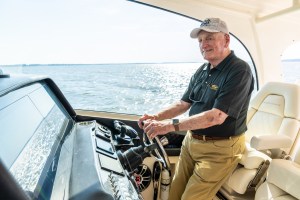
Right now, I’m the interim vice president of public policy and government affairs. I co-lead with Jeff Wasil on the regulatory affairs and public policy team. I also lead our state and federal government relations team, so I work with our lobbyists that are out in the field in states and various regions. We also work with the federal lobbyists that are in D.C. Our PAC team is led by Erica Crocker, and she does a lot of great work in advancing a lot of our industry’s initiatives and priorities, and also with her work at the federal level.
And then we have our communications shop led by Molly Drenkard. That team does a lot of the great work to get our message out. The whole team is filled with a lot of professionals who are subject-matter experts on many different things pertaining to the industry and policy.
The NMMA consists of so many different experts, whether it be certification, business intelligence, the shows team and the broader communications group. It’s a collaborative effort across the organization. We have strong input from our members because we have such a range of issues to consider, from trade and manufacturing to infrastructure to emissions, boating, safety and conservation. We operate, and I work, so much with other departments and teams within the NMMA, and that’s what we always try to get across, is that if there is an advocacy win or when we’re pushing these top priorities, it’s a team effort — very collaborative. It is all very connected, which I really like about the organization.
Maybe I reach out to the certification team because these people are such experts when it comes to engineering or boat design, and they talk to so many different members about the designs of their vessels, and they have so much experience and knowledge. I am not afraid to ask for help. And I think that’s also part of the culture here, trying to bust down different silos and making sure everyone feels like they are included and a part of the different priorities that we have in the organization.
The American Boating Congress is coming up. What are the biggest agenda items you’ll be addressing?
I would say probably the most important policy issue for the industry is access to the water and the infrastructure that supports it. That continues to be one of our top-priority issues. We also have the Sport Fish Restoration and Boating Trust Fund up for reauthorization. You have the Water Resources Development Act that is being negotiated right now, and then you have the Legacy Restoration Fund that came forward and the passage of the Great American Outdoors Act. A lot of these are up right now for negotiation and reauthorization. Because of that, a lot of our priorities are focused on getting those bills across the finish line.
The Water Resources Development Act seems like a big one.
The Water Resource Development Act, also known as WRDA, is a biennial piece of legislation focused on authorizing projects for the U.S. Army Corps of Engineers. Historically, we were never too much involved in it because a lot of it was always focused on the commercial side: ports and dredging major shipping channels.
But the U.S. Army Corps of Engineers has an office of boaters and anglers. And not too many people are familiar with that when it comes to Army Corps access sites. Over the past several years, we’ve been spending a lot of time trying to shine a light on this and especially to get them the resources and funding that they need. And this year is no different with us.
We have four different policy priorities that we have been pushing to get included in the WRDA bill. All of them are related to aligning and modernizing the Army Corps with other federal agencies that manage recreational access. It could be anything, including ensuring that the Army Corps keeps the recreation fees that they receive at their sites, because as of now, that money goes back into the general fund. They should be able to keep those fees and their other appropriations and use them at those recreation sites. Whenever they get their appropriations, those recreation fees stop. They have to send it back to the general treasury fund.
Other agencies don’t have to do that, like the National Park Service, Fish and Wildlife Service, and others. So we’re just asking, “Hey, Army Corps gets this money. Let’s let them keep it because there’s such a need for addressing some of the deferred maintenance, improving different boat ramp access, et cetera.”
The other area that we’re really focused on with the Army Corps is modernizing the permitting and leasing process for marinas. When facilities lease on Army Corps lands right now, the leases are very short-term, so it doesn’t incentivize those businesses to make large investments to improve their facilities, to expand access, things like that. We’re asking Congress to change that, to allow the Army Corps to look for longer leases with these marinas so that they have the understanding and the trust that they can make these longer-term investments to the community.
How is the NMMA able to help manufacturing businesses in the industry deal with import tariffs?
With tariffs, we’ve certainly seen the impacts just like any other manufacturing industry or sector of the economy. Luckily for us, this is how we’ve explained to policymakers that we’re home to the largest recreational boating market in the world, and it’s a very proudly and uniquely American-made industry. One of the stats that we always like to tell them — and it’s one that we’re very proud of — is that 95% of all boats that are sold in the United States were built here.
The current economic conditions, whether it would be interest rates or tariffs, they’re certainly creating uncertainty for our industry’s ability to plan, to invest, to hire new workers with competence. But we continue to engage with the administration, with Congress, staying focused on looking at a more balanced approach when it comes to tariffs.
There’s a new comment period that is ongoing that we’re engaged in, as well. There are a lot of opportunities on the horizon where we’ll just continue that same message. But I think it’s also a reflection that it’s not just our industry; it’s every industry and sector that’s impacted by the headwinds from tariffs.
How much of your job and the team’s work is focused on educating legislators? Is there a misconception that boating is only a luxury sport?
For boating, especially in access, there’s often a need for some education with lawmakers. I think a lot of them are surprised to learn, and I keep coming back to that 95% statistic, but they’re certainly surprised to learn that 95% of the boats that are sold in the United States are made here, and that our industry is filled with small businesses.So it’s explaining that economic impact to them, to their state, to their district, and the role that it plays. It really helps that conversation with them. Because when you go in the office and they hear “boating industry,” for the most part, they just think “boating,” and they think about being on their local lake or river with their family and friends. What they don’t think about is the huge economy that is behind it.
Once you mention that and talk with them and show them the stats, such as the number of jobs that the industry creates, it really helps open up lot of lines of communication with members of Congress and allows us to build some different and strong relationships.
On your other point regarding the connotation from legislators that boating is a luxury sport, I can’t speak necessarily for all legislators. But that perception does come up, and we certainly reframe it in the sense of the economic impact that the industry has in their states, in their districts, and that we support over 800,000 jobs.
We also have about 36,000 businesses that depend on the industry and our waterways. It’s not just this fun recreational activity. There also is a large economic driver and job creator that is behind this, and it’s all dependent on being able to access our public waterways.
In which policy area do you think you’ll find the most success this year, and where do you see challenges?
I think when it comes to the policies with the most potential, there’s strong momentum behind infrastructure and permitting reform. There’s constant recognition in D.C. with policymakers that modernizing some of these processes can help unlock a lot of economic activity while still protecting the environmental standards that they seek to protect. And at the beginning we talked about the WRDA trust fund. A lot of that legislation is certainly infrastructure-heavy. That’s why we’re very excited and those are top priorities for us, getting those over the finish lines.
In terms of most challenging, I would probably just go back to trade policy. It’s one of the most challenging areas because it’s not just obviously the United States, but there are also global dynamics. There are multiple layers of the policy when it comes to trade.
There are tariffs, different frameworks, agreements. As we’ve seen over the past year, those changes can happen quickly, and new tariffs can be announced as quickly as they’re rescinded. They often have unintended consequences for the manufacturers and supply chains. So I think trade policy especially is going to continue to be one of the more challenging areas that we have to deal with.
What would you say to a small Midwestern dealership owner who feels like he doesn’t have a voice in advocacy and policymaking in Washington, D.C.?
I think reading and subscribing to the NMMA’s Currents newsletter and subscribing to the member emails and webinars that the NMMA hosts is important. I think especially at the local level, these smaller businesses are some of the best advocates in the industry.
Our advocacy in D.C. can only go so far, so I think participating in those different advocacy events when they’re back home in their districts, responding to any sort of calls for input or building relationships with different elected officials in their respective districts or states, is always important because the policymakers only want to hear from us so much, but they want to hear from the people who are actually affected by the decisions that they make at the federal level and state level.
It’s about getting in touch and building those relationships in their local area, their state and their district, because those folks can continue to climb up through offices, whether it’s at the state level or at their local council level.
What is the most challenging part of your job, and what is the most rewarding?
One of the biggest challenges with our job is that there’s so many different issues that can impact our industry, and that’s from components and materials that get shipped to the facility, to the factory floor, to the product itself, to the users, to the bodies of water where the products are operated. All of these things can be impacted by policy that we have to pay attention to. We have to be able to ensure that our industry, the marine manufacturer’s voice, is consistently represented. That’s from the international level to the local mayor’s office. Being consistent on all of those different components is certainly challenging, but it’s something that we are constantly focused on and is our job every single day.
On the rewarding side, I love to learn and educate people about something that I’m personally passionate about. I’m still learning every single day about this industry and the community. When you get to see the direct impact of those advocacy efforts, whether it’s improving access to a local lake or a better policy outcome for a small business, I find that incredibly rewarding.
This story originally appeared in the May 2026 issue of Soundings Trade Only.