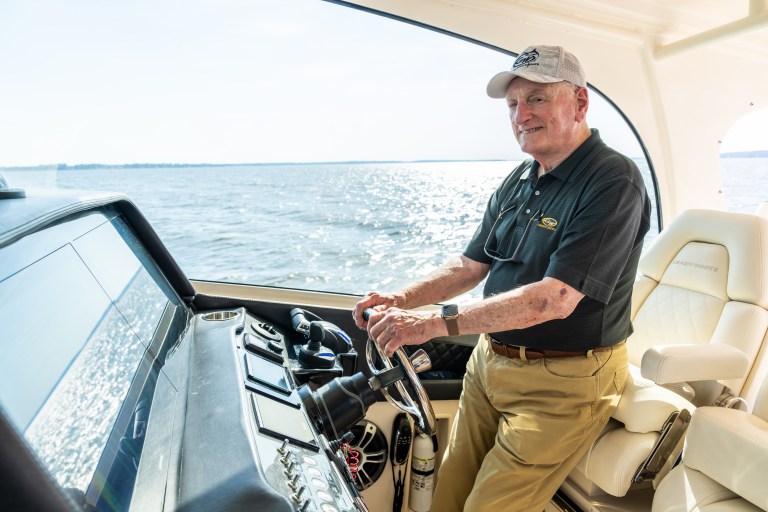
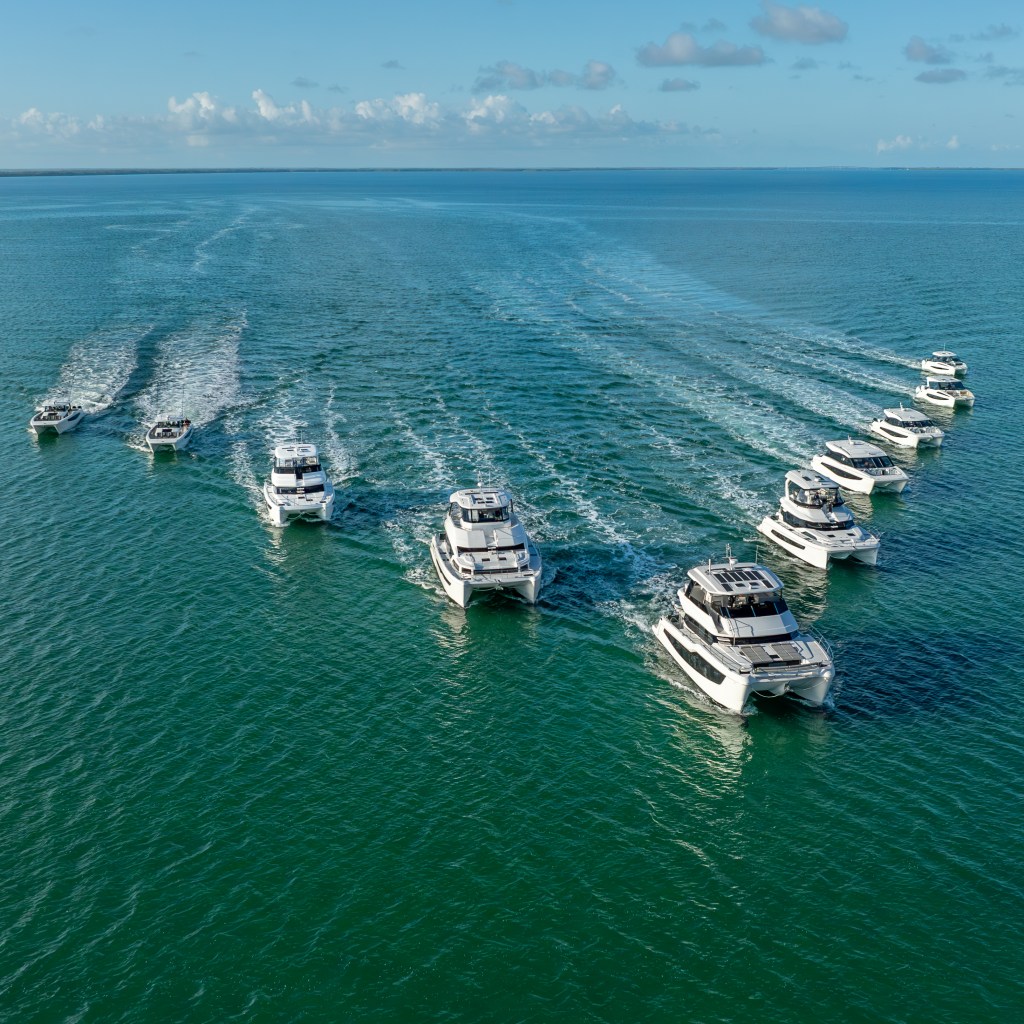
Lex Raas remembers the moment the vision for Aquila Yachts turned real. He was standing on an empty piece of land in China. “From that moment, the conversations had a quality I had not experienced before,” he says. “They were constructive, respectful and genuinely fun, and underneath all of it was a sense of urgency that pushed everything forward.”
That empty land became the Sino Eagle Group factory in Hangzhou. The conversation led to the creation of Aquila, the power catamaran brand Raas founded in 2012 with MarineMax, then led by CEO Bill McGill, and the Xiong family’s Sino Eagle Group.
More than a decade later, that three-way structure is now passing to a second generation. Raas’ sons, Jean and Alain, run Aquila’s product and brand operations; Frank Xiong, son of Sino Eagle founder John Xiong, leads the factory that builds every boat; and Brett McGill, son of Bill, now runs MarineMax. “There is a lot of trust because the relationship is generational,” Brett McGill says. “Our fathers built something together, but Jean, Alain and I have to make today’s decisions in today’s market.”
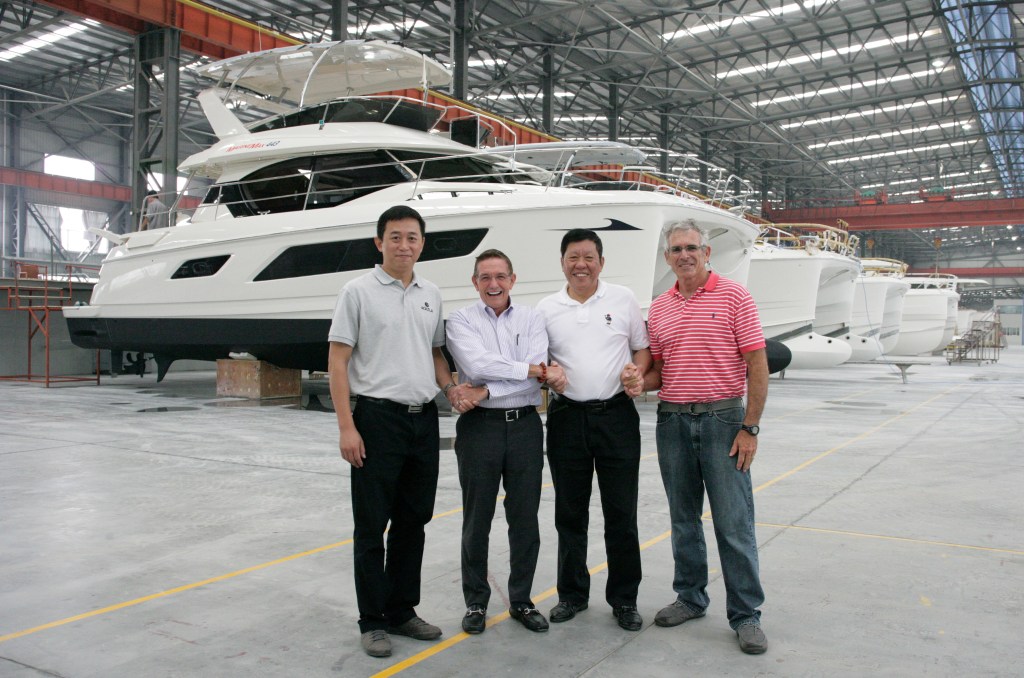
International Origins
Raas had a head start most new ventures don’t get. He already knew both partners well through his work at Leopard Catamarans. “So,” he says, “when the chance to build something new came along, it was close to a no-brainer.”
The roles, he says, split along natural lines: “I brought the innovation and a deep belief in power catamarans. The Xiong family brought the manufacturing strength. Bill and MarineMax brought the distribution power.”
The first boat wasn’t built to launch a brand; it was built to fill a charter fleet. Sino Eagle produced the Aquila 38 for MarineMax’s then-new charter operation, proving the concept before McGill and Raas committed to building a real brand around it.
“The Aquila 38 was simply the fastest way to get boats into the MarineMax Vacations fleet and establish the brand,” Raas says. “Even then, our team was already working in tandem on the design of the Aquila 48, and the moment that was finished, we started on the Aquila 44. We have not stopped designing new models since.”
For Brett McGill, who watched the deal take shape as a younger executive at MarineMax, the appeal was about timing. “Waiting is usually how you miss the best opportunities,” he says. “Power cats were not fully proven in the U.S., but the customer logic was clear: stability, space, efficiency, comfort and a better platform for family boating.”
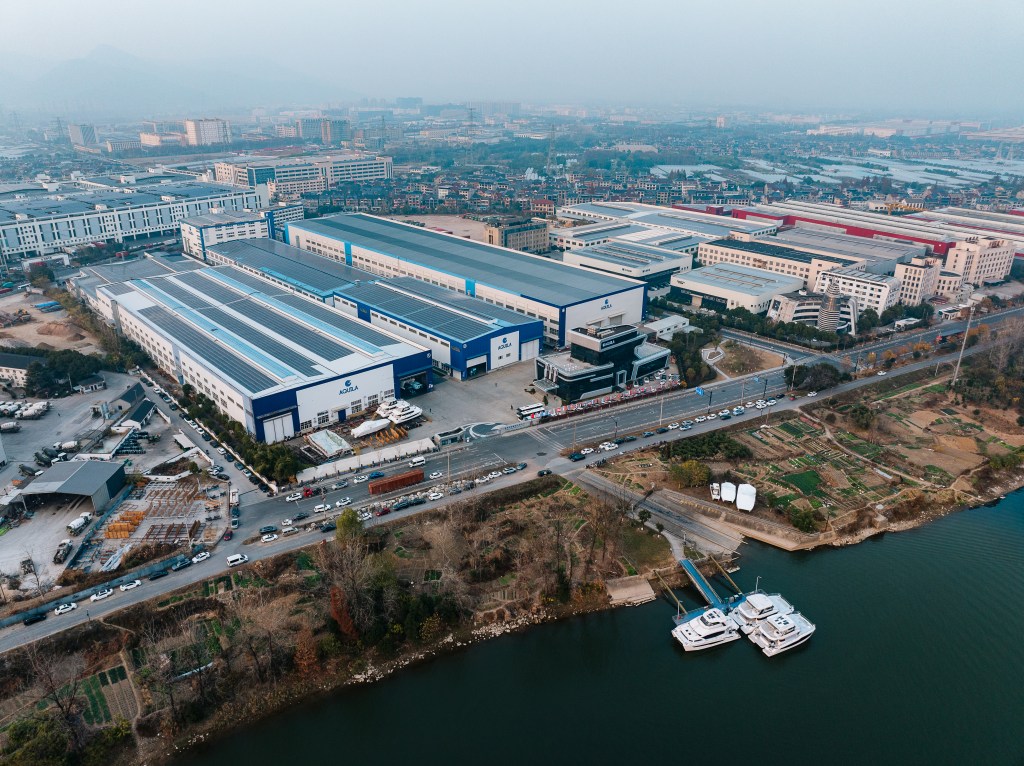
On the manufacturing side, the financial commitment was high. Frank Xiong says his family put roughly $35 million, much of it bank-financed, into land and the first buildings of the Hangzhou yard between 2011 and 2013 — before Aquila had sold a single production boat. “That was the single biggest risk — putting that much capital, much of it borrowed, into a dedicated facility for a brand that did not yet exist,” he says.
He traces some of that willingness to a phrase his father had repeated for years: There is no tomorrow. “He doesn’t mean it darkly. He means the opposite,” Xiong says. “Don’t wait for the perfect moment; don’t put off the thing you believe in. Commit to it now, and give it everything you have.”
The Power Cat
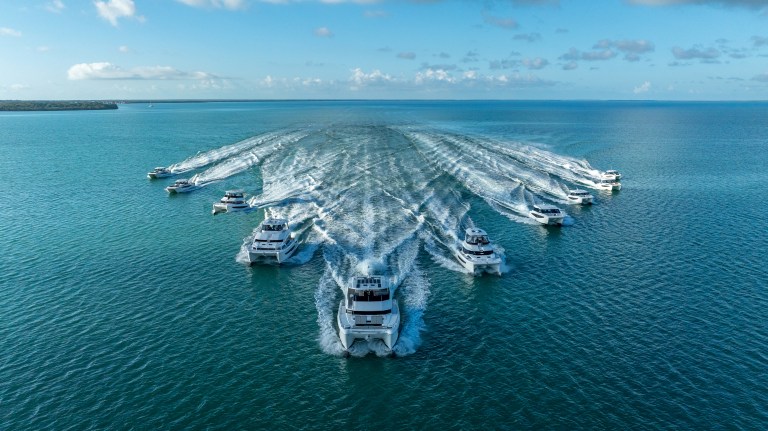
Even with the partnership in place, Aquila had a perception problem to solve, according to Jean Raas, now Aquila’s CEO and chief product officer. “When we started, the power catamaran was a niche idea, and it had an image problem,” he says. “Most people still pictured a catamaran as a sailboat, and the power cats that did exist were seen as boxy and utilitarian, more of a floating box on the water than a real yacht. The biggest thing Aquila did was change that perception and take the power catamaran mainstream.”
MarineMax’s distribution network was central to making that shift stick. “My father has often said that a successful boat brand needs three things working in conjunction: innovation, scalable manufacturing and world-class distribution,” Jean Raas says. “MarineMax brought a sales reach and customer base that no new brand could build on its own.”
By Lex Raas’ account, proof that the bet had paid off came later, with a single model. “The real turning point was the Aquila 36 Sport with outboards,” he says. “When buyers embraced that boat the way they did, I knew we had made the breakthrough. The market had arrived, and Aquila was there to meet it.”
Manufacturing Prowess
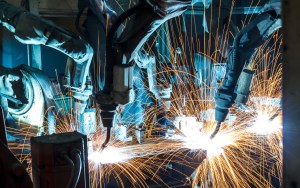
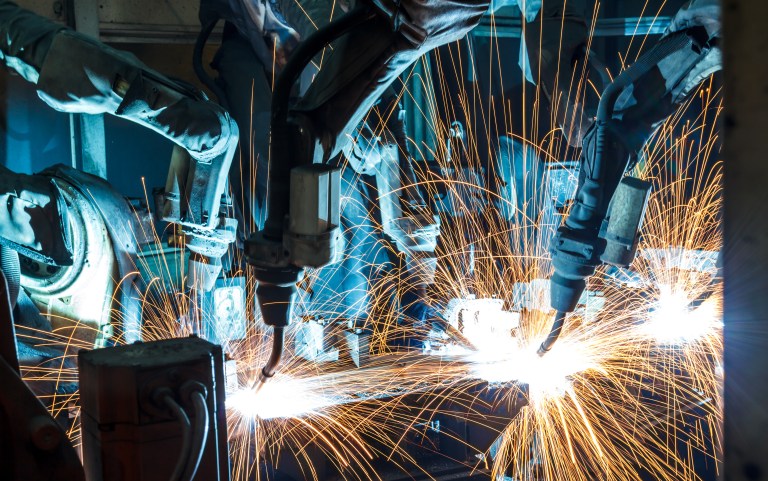
Every Aquila is still built at the Sino Eagle yard in Hangzhou, “one of the largest and most modern composite yacht facilities in the world,” Jean Raas says.
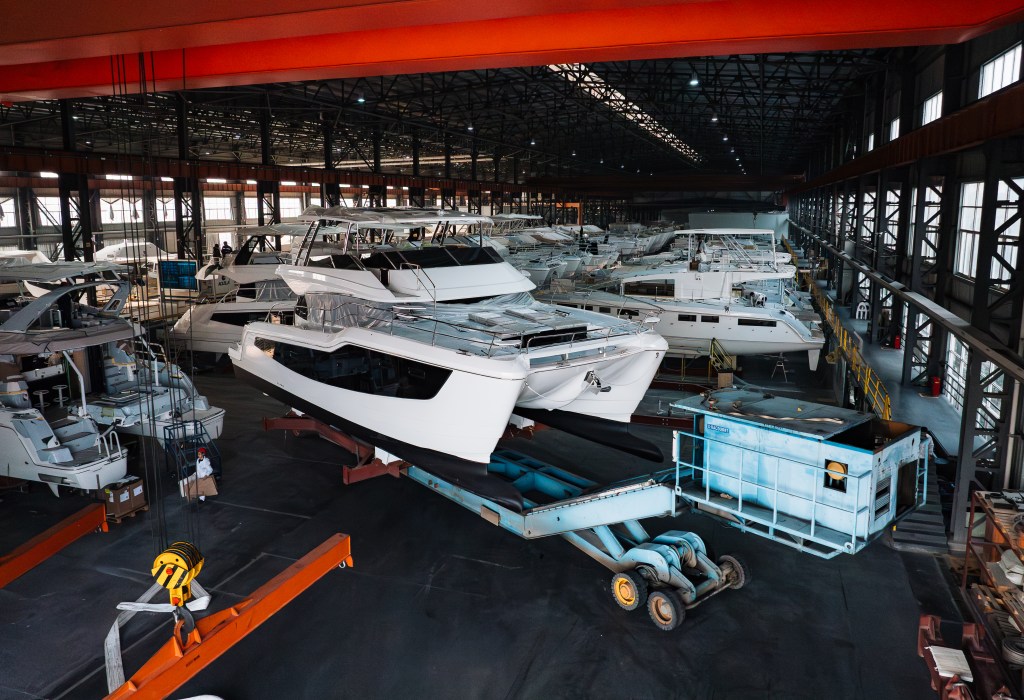
That facility has grown substantially under Frank Xiong’s leadership. “As of May 2026, we are around 690 people across Sino Eagle Yachts and Aquila, and the team is still growing,” Xiong says.
Scaling that fast carries its own risk, in his telling. They don’t want to lose the family character the brand was built on. “Our answer has been to think bigger about what family means,” he says. “Rather than keeping a small, individual family culture at the center while everyone else works around it, we are building one large family that everyone belongs to.”
The engineering has become a selling point in its own right. Aquila hulls are cored with high-density PVC foam and built using a one-shot vinylester vacuum infusion process to produce what Jean Raas calls a lighter, stronger, more durable hull. The brand’s Hydro Glide semifoiling system — developed with California-based Morrelli & Melvin, known for foiling work on America’s Cup boats, together with VPLP in France — lifts roughly 40% of the hull at cruise speed for a lift-to-drag ratio of about 25-to-1, versus roughly 4-to-1 for a conventional hull. “The idea was to take everything the sailing world has learned about foils over the decades and bring it to a production powerboat,” Jean Raas says.
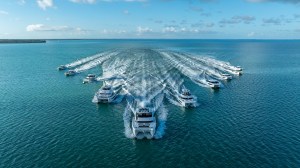
The lineup has grown from the original 38 and 48 to a current range spanning roughly 28 to 70 feet across multiple model lines, including Offshore, Sport, Yacht and Luxury, plus this year’s first entry into sailing catamarans. The dealer network now reaches 88 countries, and more than 1,000 boats have been delivered, by Alain Raas’ count.
Two Roles, One Family
Jean Raas’ own path runs through competitive sailing. He was part of the US Sailing Team and raced in the U.S. Olympic trials in Mistral One Design boardsailing, finishing fifth. “Sailing and racing have been central to my life and to how I think about boats,” he says, a perspective that fed into Aquila’s recent move into sailing catamarans alongside its power lineup.
His brother, Alain, Aquila’s global brand director, came up through MarineMax’s marketing and sales side before joining Aquila USA directly. “My time at MarineMax gave me a front-row seat to the customer journey,” he says. “Someone who comes exclusively from the manufacturing or design side may naturally focus first on engineering, features or production efficiencies. My experience taught me to start with the customer and work backward.”
The brothers describe their working relationship as complementary by design, and not without friction. “We absolutely challenge each other at times, but I view that as a positive,” Alain Raas says. “We have healthy debates and can get frustrated with each other, just like siblings do, but at the end of the day, we were raised by our father that no matter what happens — good, bad or ugly — you must be able to have a beer with each other after work, figure it out and move forward. We hold that true to this day.”
Jean Raas says balancing market demand against long-term product vision is the hardest part of the job. “If you only listen to the market, you become reactive,” he says. “A boat takes anywhere from two to four years to go from concept to launch, so you cannot design for today. You have to stay ahead of the trends.”
Jean Raas points to regular travel between the United States and China — Aquila staff visiting Hangzhou, Sino Eagle colleagues visiting America — as the mechanism that turned cultural differences into a working asset. “The U.S. side brings a close read on customers and the market, whilst the China side brings deep manufacturing and engineering discipline,” he says.
What’s Next
All three families describe the same challenge today: protecting Aquila’s identity while it keeps growing. “Aquila has moved from being an entrepreneurial bet to being a meaningful, strategic brand inside MarineMax,” Brett McGill says. “But we still try to treat it with that same founder mentality: move fast, listen to customers, keep innovating and do not let a larger corporate structure slow down good product decisions.”
Alain Raas sees the next phase as less about the boats than what surrounds them. “One of the biggest opportunities the industry is still underestimating is the shift from product ownership to experience-driven ownership,” he says. “Customers, particularly younger buyers and globally minded consumers, are placing greater value on versatility, ease of use and how a boat integrates into their lifestyle. The opportunity isn’t simply building another boat. It’s creating a complete ecosystem around their boating lifestyle.”
McGill sees room for the category itself to keep expanding. “Aquila and power cats still have a lot of runway,” he says. “The next opportunity is broader customer adoption — more private owners, more global reach, and models that serve both cruising and recreational day use.”
A Third Generation
Lex Raas says the succession from founders to sons was not formally engineered. “There was never a specific plan for it,” he says. “It happened naturally, and I could not be prouder of what Jean and Alain have accomplished. They have had to earn their roles in Aquila, and if anything, I have probably challenged them harder than I would have challenged anyone else.”
It’s already happening again, one generation later. “My wife, Carol, and I have a grandson, Ryan, working in China on the Aquila factory floor, learning every part of how an Aquila comes together, from preparing the mold right through to quality control and testing,” Raas says. “After an intensive six-month training period, he will join the service team in Florida. And on the Xiong side, Timmy Xiong, also third generation, will be training at the factory in China this year, as well.
“So we now have a third generation of both families coming up through the business,” he says, “learning it the right way, from the floor up.”
This story first appeared in the August 2026 issue of Soundings Trade Only.