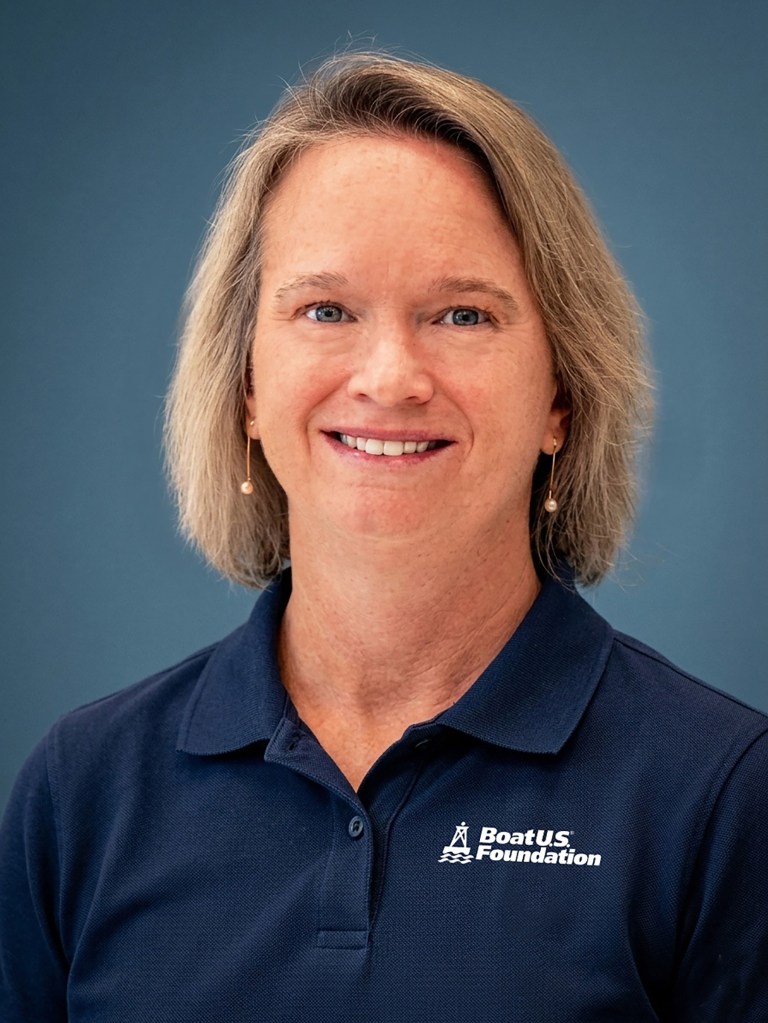
Heather Lougheed grew up around and on the Potomac River, windsurfing with her family. She learned to water-ski from an uncle who lived in Merritt Island, Fla. Since then, she has owned powerboats, kayaks, canoes, stand-up paddleboards and sailboats.
Lougheed attended the College of Charleston in South Carolina and received bachelor of arts and bachelor of science degrees in business administration. Her professional journey began at the BoatUS membership department nearly 26 years ago. Over time, she was elevated to vice president of membership.
She assumed the role of president of the BoatUS Foundation two and a half years ago. Lougheed oversees a staff of eight who work on everything from abandoned and derelict vessel cleanup to boating safety, clean water and other related initiatives.
(This interview has been lightly edited for length and clarity.)
Please tell us about your upbringing.
I grew up in Alexandria, Va., where BoatUS was founded. There are only a few of us here who can say that. My parents were both in this area for work. My dad worked for the federal government, and my mom was a schoolteacher.
My family were windsurfers, which I like to call a boating-adjacent activity. My dad felt that as kids in high school, we needed a family activity, something we could do together on weekends. And so that was kind of our family thing.
What about after high school?
I went to the College of Charleston in South Carolina. I spent four and a half great years there. I wasn’t on the sailing team, but I had a lot of sailing-team friends and a lot of time on the water there, and also on the beach.
After graduation, I got my business administration and corporate communication degrees. I was looking for a career in event marketing, public relations, corporate communications, those sorts of disciplines. I had an uncle who lived in Merritt Island, Fla., at the time. He worked for NASA, and I spent a lot of summers with him boating and learning how to water-ski. He was a huge BoatUS fan and member.
Luck would have it that I was doing research over the summer with him, and he’s like, “Hey, there’s a job opening at BoatUS. You should go work for them.” So I applied straight out of college and was hired to work in the membership department. Almost 26 years later, well, I’m still here.
What is involved for someone who works in BoatUS membership?
It’s all about telling our story. Richard Schwartz founded BoatUS in 1966 to create an association of boat owners who would have representation on critical boating issues like government regulations, clean water, safety standards and more. That’s a mission that continues today. Advocacy is the focus on the association side.
Then there’s the towing operation, TowBoatUS. If you’re a member and break down on the water, we have a trusted partner to come get you 24/7. There are also member discounts at West Marine and at select marinas nationwide. Around the office we like to call ourselves AAA for boating.
What was rewarding, and challenging, about your position in membership?
What was rewarding was every time we heard a member testimonial that said we made their day better after they had a breakdown on the water and used our towing service. I still receive member testimonials all the time. It’s very rewarding because most people think breaking down on the water is like breaking down on the road, but you can’t just walk to the nearest service station to get help.
I think the challenging part about membership is, how do we find new boaters? How do we tell our story? We tend to think, you know, that everybody should know about us after 60 years, but we still have to remind folks why it’s important to be a member and why it’s important to support the association’s initiatives. The larger we are, the stronger we are on Capitol Hill.
What makes the BoatUS Foundation different from BoatUS, and what are some of its missions?
The BoatUS Foundation is a 501(c)(3) nonprofit dedicated to promoting safe, clean, responsible boating. We’ve been a standalone nonprofit for 50 years. Our whole mission is reaching boaters with outreach and education.
It’s about things like providing free online boating safety courses, educating people to reduce accidents and fatalities, and helping people enjoy their pastime and be better, cleaner boaters. A lot of new boaters don’t think about how every time they fuel up, those little drops in the water add up. Sometimes they don’t think about storing their trash or recycling things like their fishing lines. We put a lot of effort into showing boaters how to impart clean and safe boating habits to their outings.
How many work within the foundation?
We have eight full-time staff, including myself. We’re kind of broken up into little groups, whether we’re working on boating safety or the clean-water initiatives. There’s a lot of overlap with all of our staff. We like to say we’re small but mighty.
What larger initiatives have you and your staff been working on recently?
For the last two years, we’ve had a big focus on our abandoned and derelict vessel program. Back in 2024, we were awarded a $10 million grant from the National Oceanic and Atmospheric Administration to administer a program for the removal of abandoned and derelict vessels from U.S. waterways. We have two full-time people just working on that program, to talk about responsible disposal of boating-related waste streams.
Our other teams are focused on the education aspect of the foundation. Those initiatives include our free online boating safety course, our life jacket loaner programs and others. We all work together collaboratively, but everybody owns a specific program.
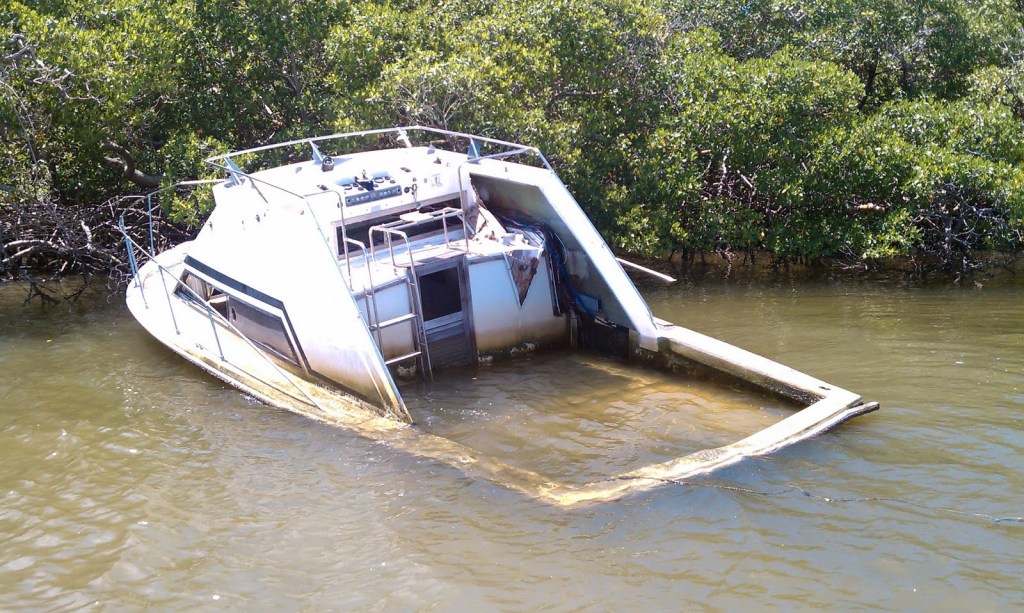
are a top priority for the foundation, having received a $10 million
NOAA grant in 2024. PHOTO COURTESY BOATUS
What more can you tell us about the other programs the foundation administers?
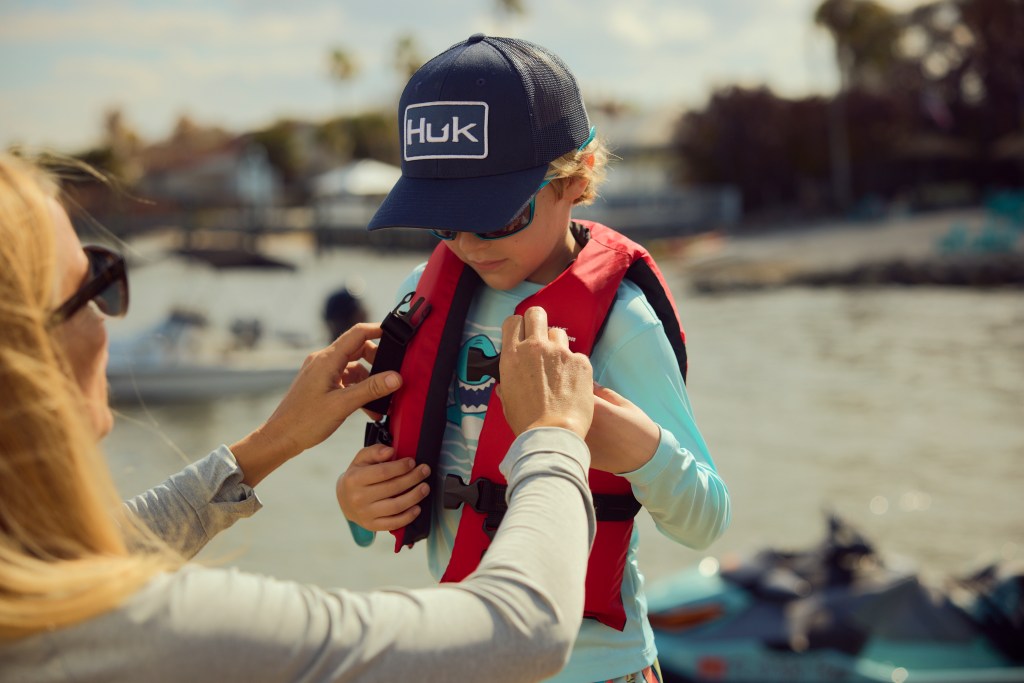
The life jacket loaner program started in 1997 to make sure that children were wearing life jackets properly while they’re around the water. The foundation noticed that kids were either not wearing life jackets at all, were wearing the ones they had incorrectly, or were using life jackets made for adults. We wanted to make sure that there were accessible jackets that could be borrowed for the day when folks had those unexpected guests.
We’ve created more than 600 loaner sites since we started in 1997, and lend more than 100,000 life jackets each year. We were just awarded a $375,000 grant through the Sport Fish Restoration and Boating Trust Fund, which is administered through the Coast Guard. What we’re going to do with the grant money is pilot some new loaner sites. We will do some unmanned ones, which we’re not always a fan of, because a lot of times people go, they borrow them, and then they don’t return them, which obviously ramps up the cost of administering the program. But we’re going to try QR codes and have people check them in and out so we can follow up with the people if they don’t return them.
We’re also going to try some digital lockers like the ones that Amazon uses, where you buy your product, then go to a grocery store or 7-Eleven and pick up your order. We’re going to try some digital lockers like that with electronic locks to store the life jackets so they can be unmanned. Our main interest is just making sure when people show up to borrow and use them that they’re readily available for anyone.
We’re really excited about the grant that we received to try out some of these new unmanned locations because all of the rest of ours require someone to physically check you in and check out. And that’s not feasible in all of the locations that could be desirable.
Speaking of grants, what effects have the federal government’s cost-cutting measures had?
It’s certainly a concern. Most of our money comes from the Sport Fish Restoration and Boating Trust Fund, which is a user-pay system. The government has to distribute those funds, which is a great thing.
The delays in when they distribute the funds affect a lot of people in our community. We are funded, thankfully, in other areas, by BoatUS members that donate and people who take our online courses that pay. For us, we’ve been asking: How do we become independent to the grants or supplement them in creative ways?
What are some priorities for the foundation in terms of boating safety?
You know, it’s still education. It still shocks me that in many states you don’t have to have training to operate a boat.When I came into boating, you’d just borrow a boat, drive a boat. The government didn’t have any requirements. As more states are requiring education, we always hope people will take our free online boating safety course approved in 37 states.
For a small four- to eight-hour investment, a new boater can take that course, and then hopefully move on to something like a boat-handling course, because you really have to put into practice what you learned online and physically drive the boat with wind, tides and other factors that can be challenging to newcomers to the sport.
When someone is a safer boater, it makes it more pleasurable too, because you’re not nervous about making mistakes and you have the confidence to make meaningful days on the water with your family.
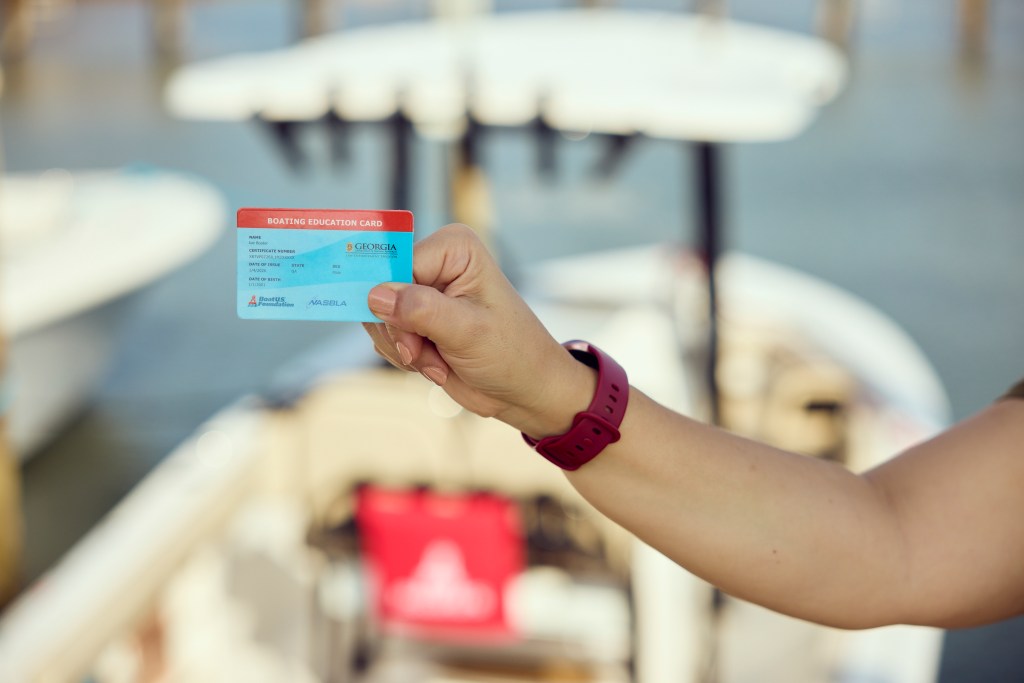
requirements. PHOTO COURTESY BOATUS
What areas are you feeling good about right now with the foundation?
I think people are hearing how pollution affects our waterways, and I believe that creates more education opportunities. And I hope that our youth are more dialed in about these problems thanks to social media and other ways they get their information and news these days.
On the positive side, we see more people volunteering for waterway cleanups than we have in the past. We see more people wanting to be involved.
We’re optimistic that clean water initiatives can get more steam as people talk about plastics that end up in our waterways and the potential for different kinds of recyclable plastics and other recyclable materials. I think people are being more educated on what they can do to prevent plastics going into the water and then recycling.
We have a shared commitment that progress is being made, but it’s slow, and it can be difficult to get people to adapt. It’s going to take a long time, but as leaders, we are talking about different funds, sources and grants that we get both from federal and state and local governments and philanthropically.
We see lots of philanthropic funds for clean water and the environment outside of government that are a positive trend.
What about advocacy? Is that something the foundation has to rely on BoatUS to accomplish?
As a 501(c)(3) nonprofit, the foundation does not do any advocacy or regulatory policy. All of those initiatives are handled by BoatUS under our manager of government affairs. We work together thinking about issues that impact boaters, but everything that involves advocacy, BoatUS handles that.
What future initiatives is the foundation working on?
We’re holding our Turning the Tide Summit from Dec. 6-9 in New Orleans. We’re trying to bring together environmental groups, government agencies, marine salvage professionals, recycling experts and all kinds of other folks to come together and share best practices, ideas about emerging technology and innovative solutions to the problems we’re facing collectively in and around our waterways.
Fiberglass is an easy thing to remove from the environment but almost impossible to dispose of. We want to bring in people from different industries and talk about how they are working with some of the same materials and what we could do together, for the responsible removal and disposal of fiberglass boats at end of life.
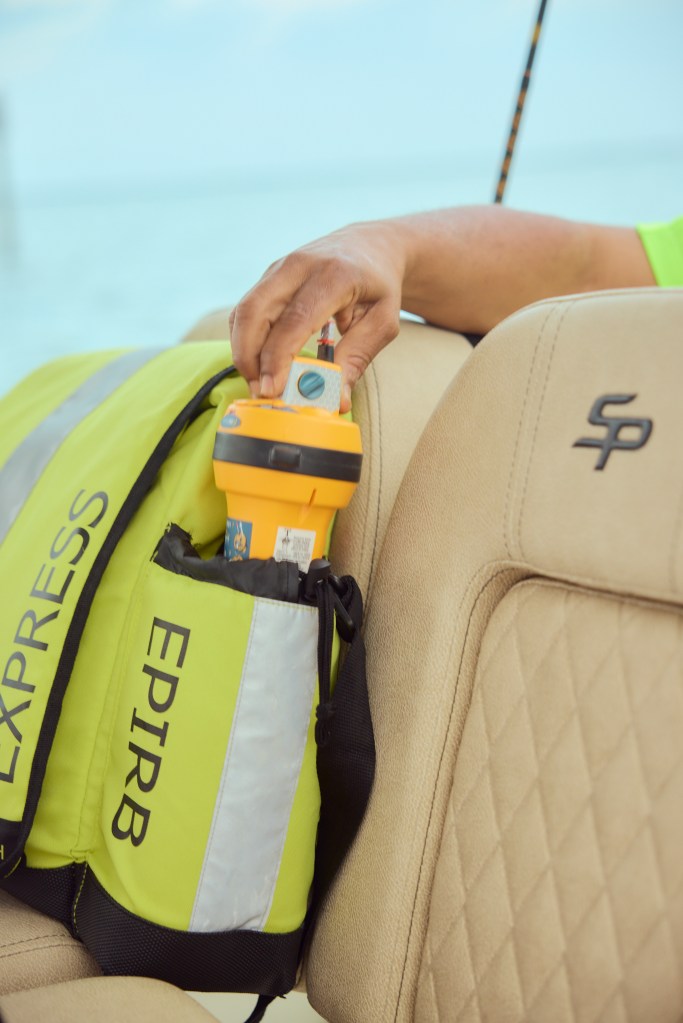
I’ve always thought your EPIRB rental program is a good way to protect boaters. Is that still popular?
We rent out EPIRBs and personal locator beacons online for weekly, daily or monthly rates. We believe that for a lot of people, the cost of buying these devices has been prohibitive. So when people get ready to go offshore only one time or for a sailing race, a lot of them don’t purchase an EPIRB. We’ve been renting them since 1997 so people have the locators, which are lifesavers. We’ve seen these devices save lives many times firsthand when otherwise disaster may have happened.