
You’ve probably benefited from a gyroscope in more than one way today, likely before you even sat down for lunch. These days, you can find electronic gyroscopes in phones, computer tablets, smartwatches, automobile systems and other products. Gyroscopes aid software that does everything from displaying which direction is up, down and sideways to preventing stability loss in cars and helping planes navigate around the world.
Or course, gyros aren’t new. The understanding of the basic physics behind how a gyroscope works goes back thousands of years, to when the first toy tops and dreidels were made. Léon Foucault designed and built the first operational mechanical gyroscope in 1852. His unit consisted of a rapidly spinning rotor mounted on gimbals that resisted changes to its axis of rotation, providing stability and measuring rotational velocity.
Gyroscope technology at sea is also a known entity. In 1917, two gyroscopic stabilizers designed by American inventor Elmer Ambrose Sperry were installed on the 483-foot transport ship USS Henderson. Each unit contained an AC-powered, 25-ton, 9-foot flywheel that spun in opposing directions at 1,100 rpm and could maintain the ship’s stability within 3 degrees.
Despite the effectiveness of the technology on a large-scale vessel like the Henderson, gyroscopic stabilization would not work its way into recreational boats at scale until 91 years later. That’s when a marine industry startup called Seakeeper introduced the M7000 gyroscopic stabilizer.
Seakeeper gyrostabilizers, assembled in Leesport, Pa., are now on more than 30,000 vessels from 23 to more than 110 feet, according to the company. Its products enjoy brand-name recognition like the way people call facial tissue Kleenex. Most folks on the docks don’t ask if a boat has a gyrostabilizer; they say, “Has it got a Seakeeper?”
The Seakeeper story began in Maryland 25 years ago when Shep McKenney, a serial entrepreneur who once owned Hinckley Yachts, and John Adams, a naval architect who had a knack for vessel stability and control, decided to develop a way to make boats more stable and enjoyable. By 2006, McKenny and Adams had cooked up the first Seakeeper gyrostabilizer prototype, which was installed in a 43-foot Viking sportfisherman for testing.
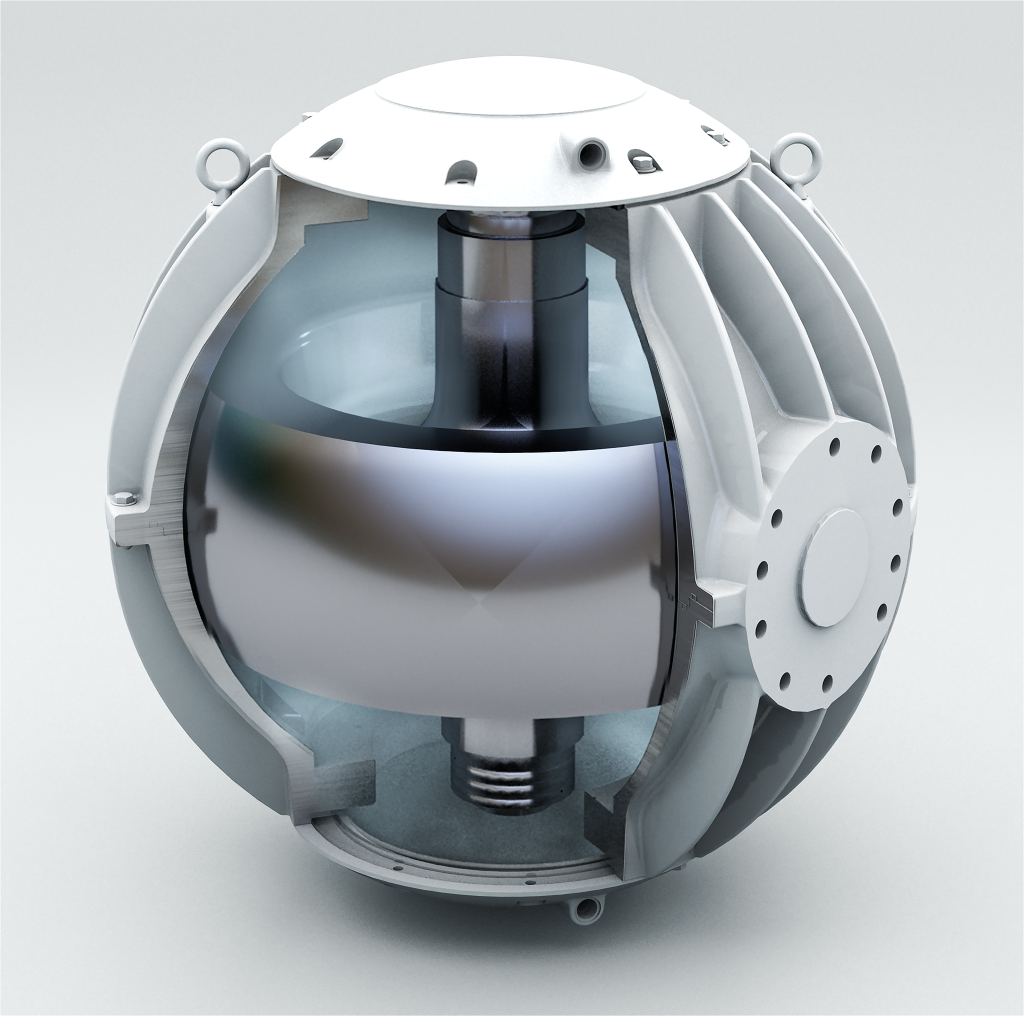
The prototype included an aluminum sphere that housed a precision-machined hemispherical steel flywheel mounted on a vertical, bearing-supported shaft. It was run at nearly 10,000 rpm in a vacuum that reduced drag and improved efficiency. The sphere/flywheel setup was mounted to an aluminum frame bolted to the hull’s structural stringers. The prototype also included an internal measurement computer that dampened the sphere with hydraulic brake arms that were constantly adjusted depending on sea conditions. Seawater was used to cool the resultant friction heat of the unit in an exhanger with a mixture of fresh water and glycol.
Because Seakeeper gyrostabilizers produce thousands of pounds of righting torque, the installation location has to be robust. Today, the gyrostabilizers are so popular in certain boat segments that many models are marketed as “Seakeeper ready,” with prebuilt mounting locations in the hulls.
Into the Wild
Seakeeper’s first production unit and builder contract came in 2008 with Azimut and the introduction of the Seakeeper M7000, which was engineered for boats in the 50- to 65-foot range. Maritimo adopted the technology into its model line in 2009, and the rest, so to speak, is history.
When those first Seakeeper gyros began appearing in production boats, many in the boating industry press — myself among them — laughed out loud. “No one is going to spend six figures on these things,” one of my colleagues said at a show.
It was kind of like when the iPhone was introduced in 2007 and then Microsoft CEO Steve Ballmer famously cackled on camera and said: “$500, fully subsidized, with a plan? That is the most expensive phone in the world, and it doesn’t appeal to business customers because it doesn’t have a keyboard.”
Boy, were we all wrong. Seakeeper gyrostabilizers are one of those marine industry innovations that shape the way people enjoy their boats and the way builders put boats together. The company is an unabashed success story, demonstrating the power of the intersection of innovation and technology.
In the Making
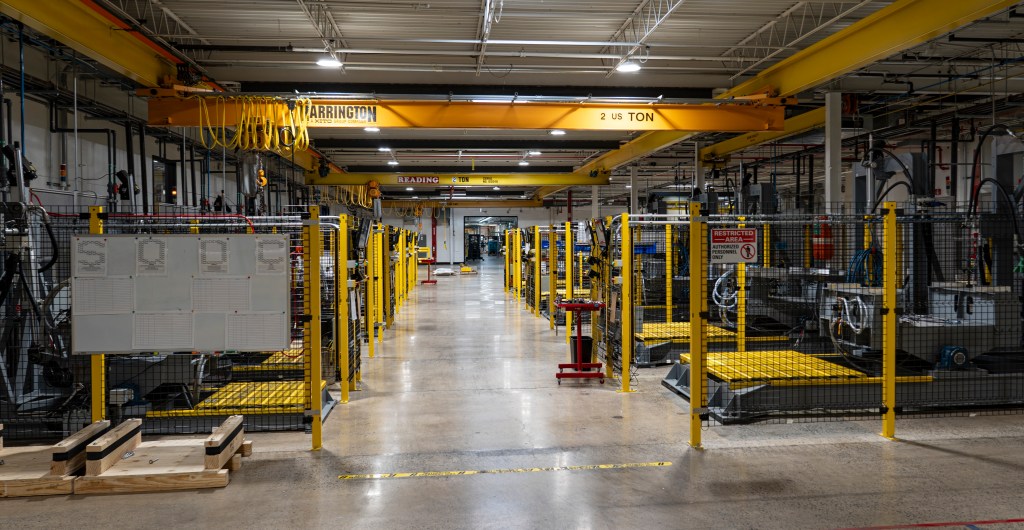
Set on the south side of Pottsville Pike in Pennsylvania between a precast concrete company and a construction equipment dealer, the Seakeeper assembly facility is difficult to miss thanks to a lighted blue-and-white sign out front. Approximately 4,000 gyrostabilizer units are assembled and shipped from the facility each year.
“We started out in Mohnton, Pa., about a half hour south of here, but outgrew it and purchased this 250,000-square-foot facility in 2021,” Seakeeper chief commercial officer Will Cimino says. “It’s about twice the size of our old facility, and we went online in 2022. We do all of our assembly here, ship to our distribution center in Maryland, receive all parts and components, warehouse parts and much more. It was a good move.”
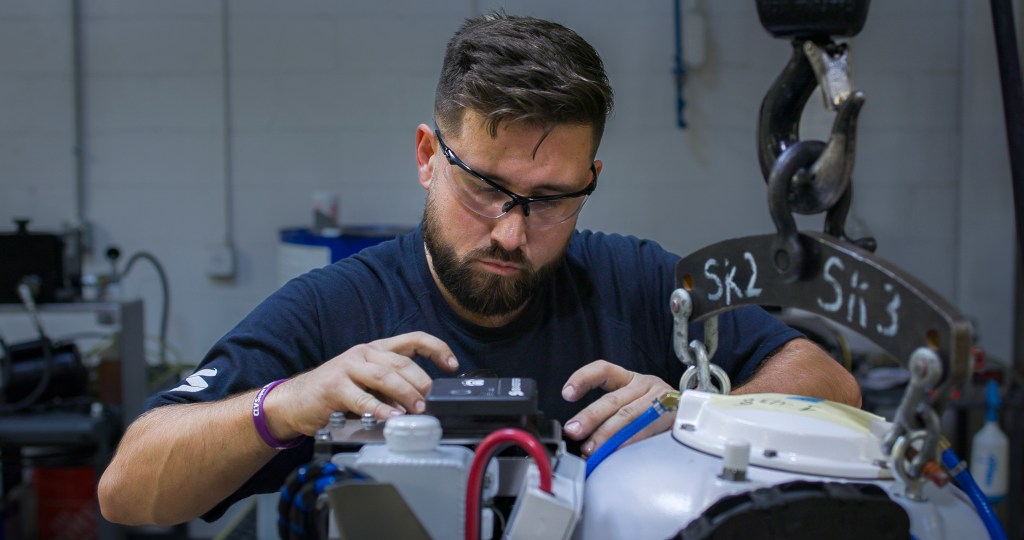
Cimino says Seakeeper products are on 44% of new production boats and 65% of boats larger than 35 feet. “We’ve grown at a compound rate of 30% each year since the business started, so eventually we’ll need to expand here,” he says. “Thankfully, there’s room to do it.”
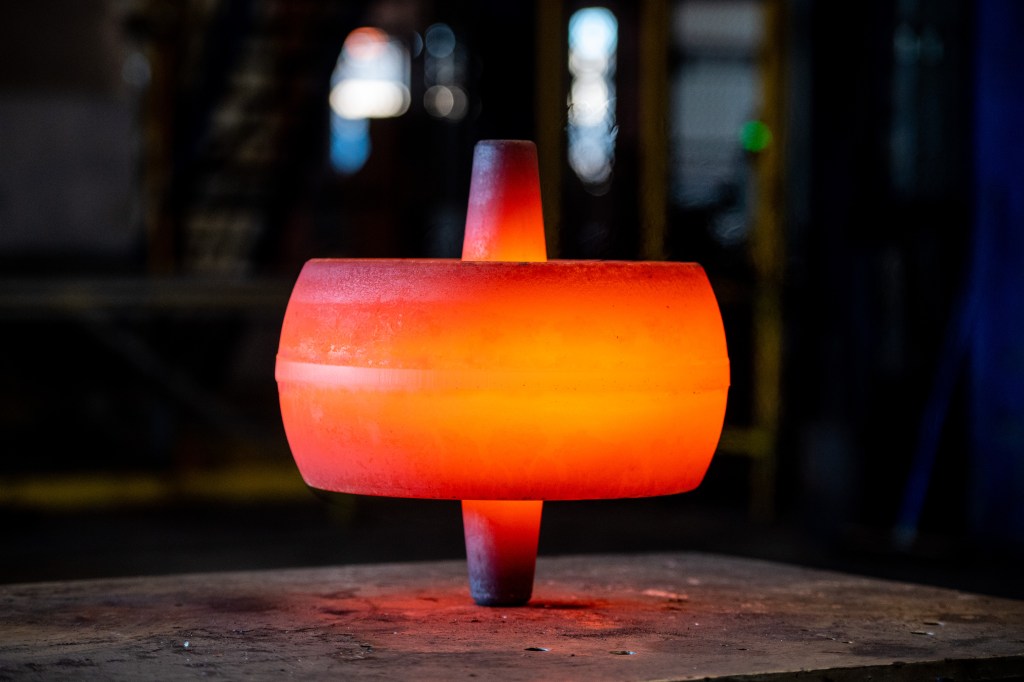
Seakeeper does not do foundry work here; instead, a foundry in Texas manufacturers the flywheels. “But we do all the balancing, fine-tuning and finish work here,” Cimino says.
He shows me a large flywheel been balanced and finished, ready to install inside the frame. “As you can imagine, the tolerances are precise when you’re spinning a several-hundred-pound piece of steel at nearly 10,000 rpm,” Cimino says. “It has to be perfect, so the flywheel goes on a machine, and a computer lets the technician know where and how much material to remove.”
At a line of receiving bays, semi-trucks pull in and offload components. The rest of the operation is like an automotive assembly line. There are pallets of flywheels. Rows of white aluminum spheres in all sorts of sizes. Then, aluminum frames and enclosures.
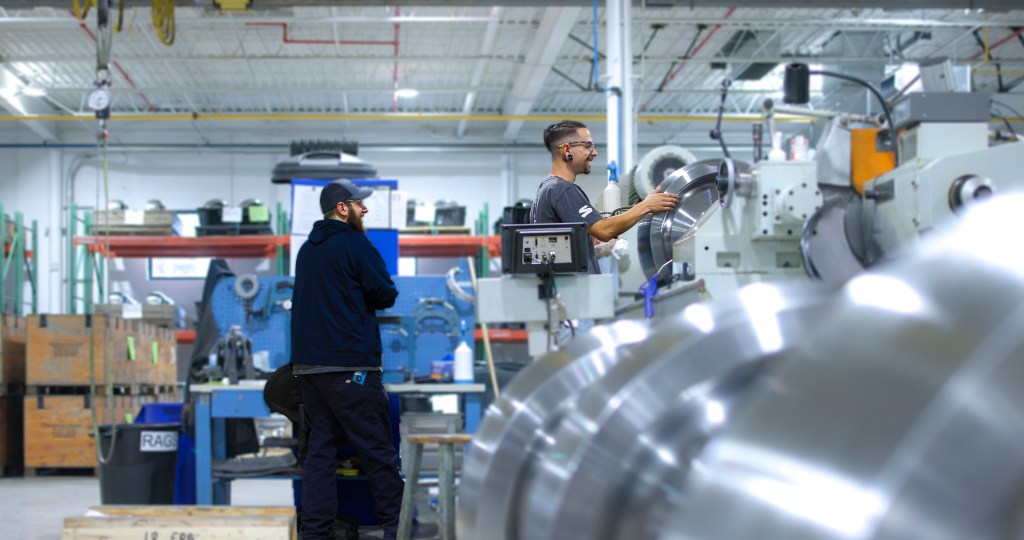
Build-out of each unit begins with an order that triggers the gathering of all the components from an in-facility warehouse. Everything from fasteners and thread adhesive to spheres and hydraulic brakes is put into a kit that moves down the assembly line so techs have everything they need to build and tune each unit.
I ask Cimino why the company doesn’t manufacture more of the components. “The foundry thing is pretty obvious,” he says. “That’s a massive operation that is better left to specialists. It turns out that’s true for many of our components. We figure leaving that manufacturing to the experts and doing what we’re good at — innovation, engineering, assembly and testing — makes the most sense.”
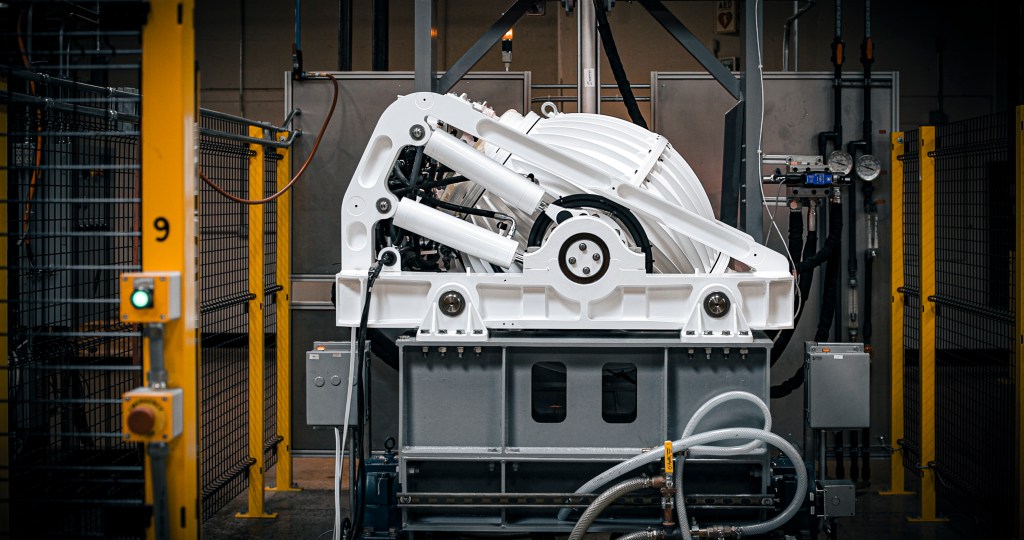
Once each unit is fully assembled, it goes into a testing cell for certification. There are many rows of these cells in the facility. We stop at one where a fully assembled Seakeeper 1 is undergoing simulated sea-condition testing as its sphere jostles back and forth with surprising speed.
“The simulation program we use is from data we gathered on a North Sea run in a variety of conditions — bad ones and good ones,” Cimino says. “Each unit will run on this program for many hours before we ship it to ensure everything is operating correctly and there are no manufacturing defects or issues.”
Distribution Model
Cimino also takes me through an area filled with Pelican transport cases that contain parts-replacement kits for authorized dealers to use in the field. “Maintenance on our units occurs at 200, 1,000 and 2,000 hours,” Cimino says. “Most preventative maintenance is an inspection process, though certain components require replacement at certain intervals.”
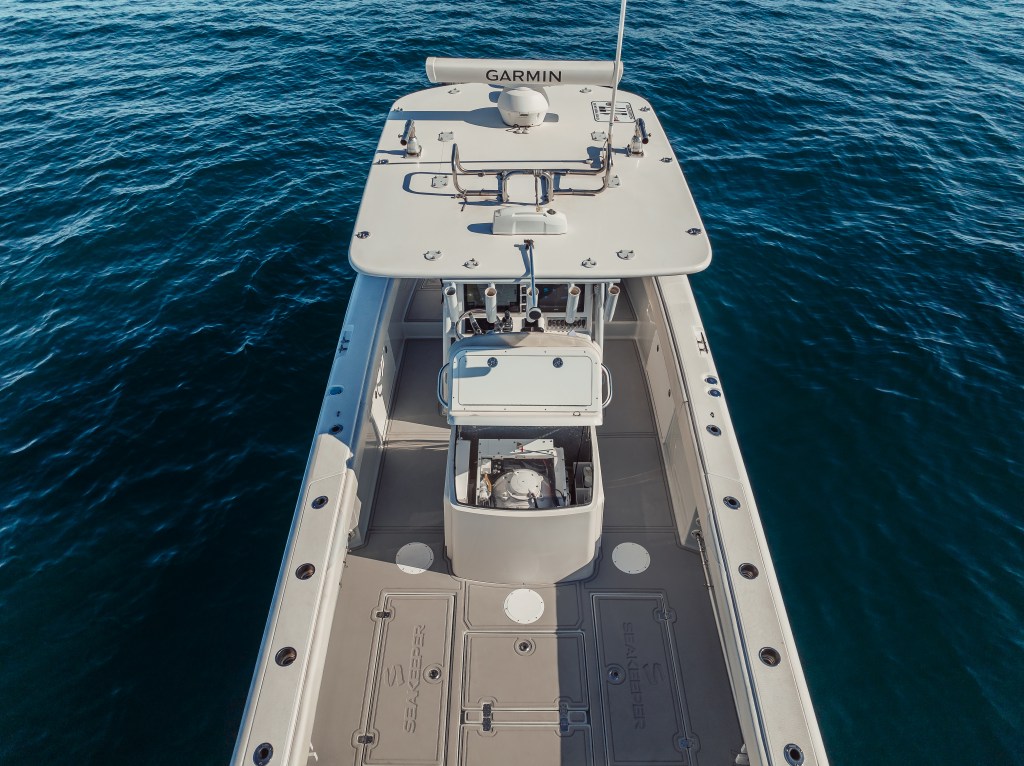
Seakeeper gyrostabilizers and the company’s Ride system, which is assembled in Charlotte, N.C., are sold through a worldwide network of authorized distributors, or direct to authorized OEM builders. Each entity and its employees must pass mandatory training at Seakeeper’s Tampa facility or at its Lavagna, Italy, location. Twin Disc Pacific also does training in Australia.
“We have about 300 aftermarket distributors around the globe,” Cimino says. “They are essential to making sure parts and service are available to our end-users whenever they need help. The Americas are about 60% of our total market, followed by the worldwide market at 40%. Obviously, a big part of that is Europe. Seventy percent of our products go to OEM builders, and 30% are aftermarket.”
As we approach the end of the gyro assembly line, Cimino takes me to a research-and-development section, but requests that I not photograph or report any specifics of what I see. “The way we keep growing, improving our products and coming up with new ones is from the work that gets done here,” Cimino says.
That kind of work led to Seakeeper Ride, which is Seakeeper’s newest line of products. It uses a set of control surfaces to eliminate 70% of pitch and roll for boats between 19 and 55 feet. “Ride products are manufactured and distributed through a third-party logistics company in Charlotte, N.C.,” he says. “That’s a product line that has grown exponentially since it was introduced in 2022, and now it’s a very big, very competitive segment.”
Competition on today’s level is not something that Seakeeper had to deal with in its earlier years, but Cimino says the company has no intention of giving up its strong market position.“We obviously enjoyed a long period when others were not making products in the gyro category,” Cimino says. “But as you saw in the research area, we are constantly adding new features and improving our entire line with products that are better in so many ways. Not everyone can keep up with that sort of innovation. We’re really good at it.”
What’s next is anyone’s guess, with Cimino staying mum on any details. “I can’t talk about any of it, but we have some amazing things in the design pipeline that will no doubt continue to make boating a more pleasurable experience,” he says. “This is why we do what we do.”