
The marine industry’s relationship with technology is shifting fast. Buyers now expect the kind of digital experience they get when shopping for a car or a house, and OEMs are under growing pressure to electrify, modernize and sell smarter — without losing the craftsmanship and trust that built the industry in the first place.
At Yachting Ventures, we work with early- and growth-stage companies building the next generation of marine tech. We identify founders solving genuine problems in the industry, help them navigate the nuances of the marine market, and connect them with the builders, dealers, operators and distributors who can accelerate their growth.
For this column, we are highlighting two start-ups that caught our attention for the clarity of the problems they are solving and the traction they have already built: Mirari and Flux Marine.
Mirari
Boat buyers are increasingly behaving like automotive buyers: They want to see exactly what they’re getting, configure it to their taste and do most of that work before they ever set foot on a dealer lot. The trouble is that most OEMs in the boating industry still rely on physical prototypes and static photography to sell vessels that are, by definition, built to order.
Mirari aims to close that gap. The company combines computer-aided design, computer-generated imagery and artificial intelligence to generate ultra-realistic 2D and 3D digital twins, reducing manufacturers’ reliance on physical prototypes across marketing, sales and service. By integrating CAD data and metadata directly into its AI-driven pipeline, the company can scale digital asset production by more than 200%, while cutting creation costs by up to half.
That matters because the build-to-order model is no longer a niche strategy in this industry, and is instead becoming the standard. Customers want it, but it creates real friction for OEMs — more sales complexity, more configuration variables and persistent inventory constraints that physical showrooms can’t solve.
Mirari’s answer is a suite of tools borrowed directly from the automotive configurator playbook. It includes Explor3D for immersive three-dimensional virtual tours and showcases; Configur3D as a “build and price” experience; and Launch3D for high-quality visual assets, web-based configurators and in-person kiosk systems.Mirari supported the digital prelaunch of the Hinckley Picnic Boat 45 at this year’s Palm Beach International Boat Show, and launched a 3D configurator for MB Sports’ line of wakesport boats, alongside generative AI tools that turn existing photo shoots and drone footage into usable digital assets.
During the next 12 months, Mirari plans to build out expandable digital packages for dealers and OEMs, and is partnering with yacht designers and naval architects responsible for more than 1,500 vessel designs over the past 25 years. The company is also working on a strategic integration with DealersCircle, embedding its 3D Boat Builder into that platform’s dealer and manufacturer operations hub to streamline the purchasing experience.
Flux Marine
The push toward electrification has touched nearly every transportation category, and marine is no exception. Marinas and municipalities face mounting regulatory and environmental pressure, while boaters are increasingly drawn to quieter, cleaner alternatives, provided performance doesn’t suffer.
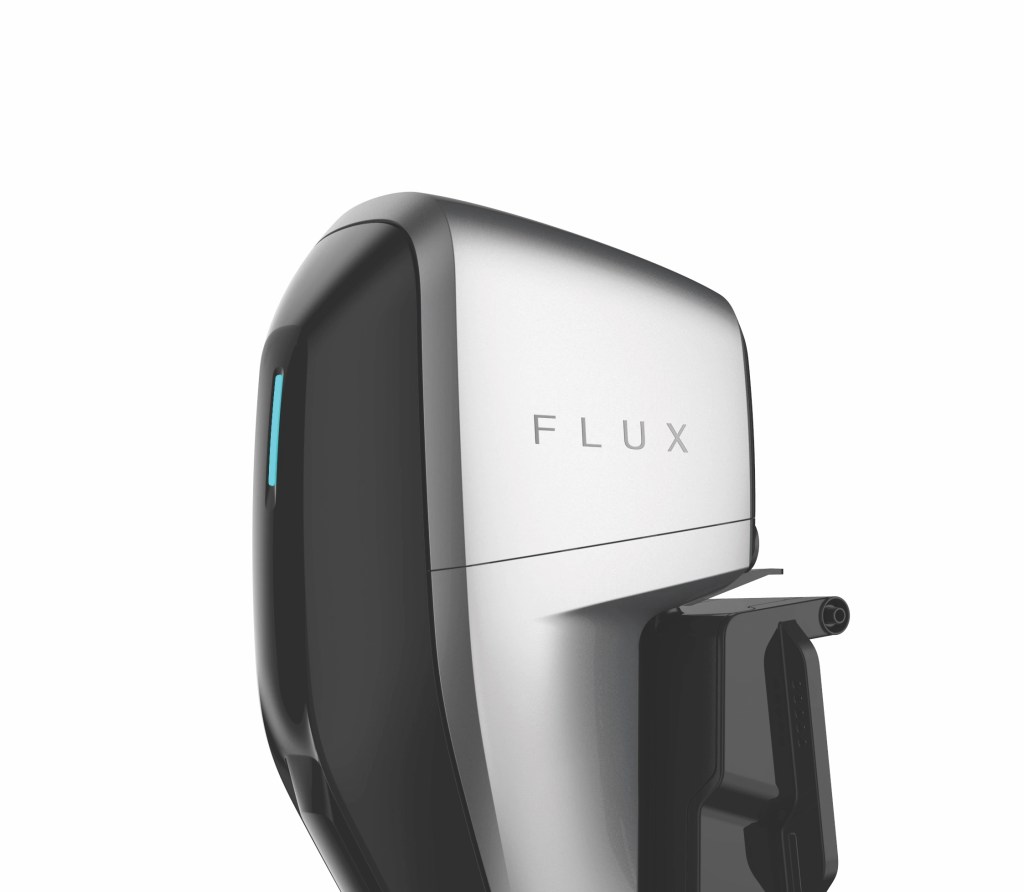
Flux Marine, based in Bristol, R.I., designs and builds high-performance electric outboards and integrated battery systems, serving boaters, commercial operators and the military. The company also offers curated boat packages through OEM partnerships with leading builders, aiming to make the switch to electric as seamless as buying a conventional boat.
The premise is straightforward: Sustainable boating and a premium on-water experience don’t have to be a trade-off. Flux’s bet is that the market is ready for a system that delivers both, rather than asking boaters to sacrifice performance for the sake of going electric.
Flux delivered more high-voltage electric outboards than any other company in North America in the past two years, building its own motor, battery pack and telematics platform in-house to keep boaters connected on the water. The company has raised more than $35 million in venture capital and has established OEM partnerships with Highfield Boats, Flagship Pontoons, Zodiac Boats and Scout Boats, running small-batch production and delivering integrated electric packages to customers and dealers nationwide, including its first system shipped to Europe.
In the next 12 months, Flux is focused on scaling: moving rigging and installation directly into OEM factories to improve production efficiency, deepening its dealer and marina network across the United States, and continuing to push the performance ceiling of its outboard and battery platform. As the company puts it, the goal is to make electric the obvious choice for more boaters — and make buying one as easy as buying anything else on the water.
Meet Our Start-Ups at IBEX
This year, Yachting Ventures is again partnering with the International BoatBuilders’ Exhibition and Conference to present a dedicated Startup Pavilion. The pavilion is designed to give innovative early-stage companies a platform at one of the marine industry’s most important trade events, and to create a focused space where builders, suppliers and investors can meet the founders developing technology relevant to their businesses.
If you’ll be attending IBEX, the Startup Pavilion is worth some time on your schedule. The companies showing there represent a cross-section of where marine technology is heading, and conversations with founders at this stage tend to be considerably more direct and substantive than what you would find at a standard trade stand.
In the meantime, if you are building something for the marine industry and want to explore whether Yachting Ventures might be a useful partner, we would be glad to hear from you.
Gabriella Richardson is the founder of Yachting Ventures.
This story originally appeared in the August 2026 issue of Soundings Trade Only.