
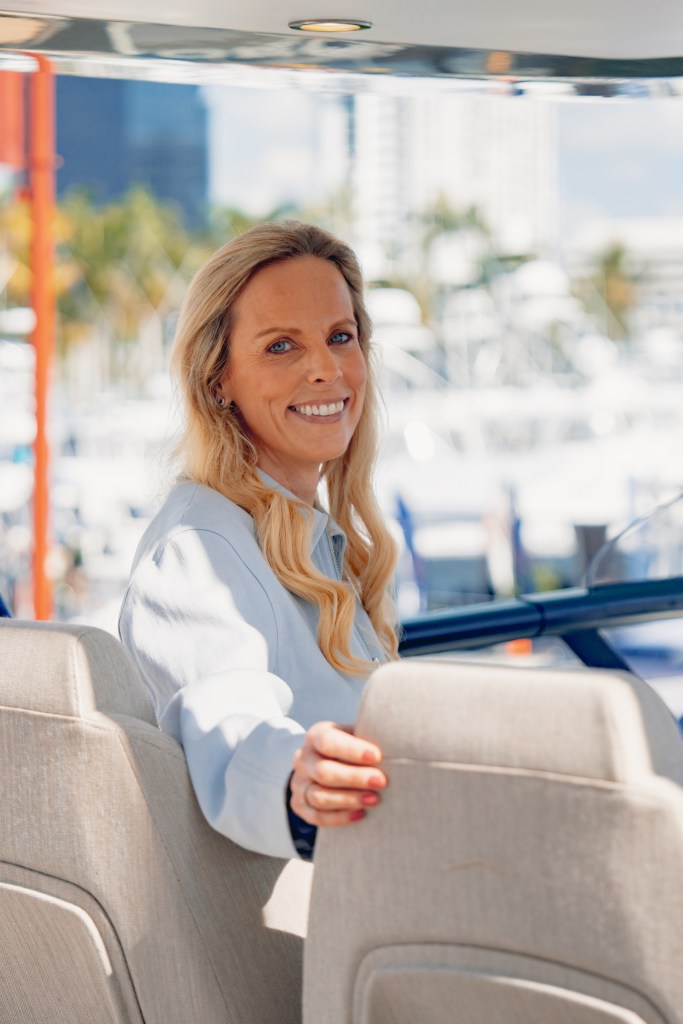
Michelle Hildyard grew up on the South Coast of England and spent much of her childhood on or around the water. Her parents owned a sailboat, and she started dinghy sailing at around 8 years old; then she raced competitively for many years. Most family holidays revolved around boating, so the marine industry has always been a natural part of her life.
In those years, she wasn’t thinking about a career in marine electronics, but she was fascinated by boats, navigation and the technology that helped people enjoy the water safely. This past July, Teledyne Raymarine promoted Hildyard to general manager of the Raymarine and FLIR Marine brands.
You earned a degree from the University of Reading before an MBA at Southampton — was there anything in your early life, on the water or otherwise, that pointed you toward a technical or engineering path?
I’ve always been curious about how things work. While I didn’t pursue a traditional engineering degree, I enjoyed science and problem solving from an early age.
Boating also encourages a practical mindset. You’re constantly learning about navigation, weather, boat systems and making decisions based on the information available to you. That curiosity, combined with a love of learning, has stayed with me throughout my career and continues to be one of the things I enjoy most about working in technology.
How did you first land at Teledyne Raymarine, and what was your entry point into the marine industry — was it a deliberate choice or something you fell into?
A bit of both. I was working in the telecommunications industry in London, and my future husband lived on the South Coast. I decided to relocate back to the South Coast and was exploring opportunities when I saw a supply chain role at Raymarine.
What attracted me was the chance to combine my professional career with a personal passion. I had other options available to me, but the opportunity to work in an industry I genuinely loved was a very easy decision. More than 20 years later, I’ve never regretted it.
You’ve spent more than two decades across Raymarine and FLIR Marine in a range of senior roles before this promotion. Looking back, which role taught you the most about how this business actually works?
Every role taught me something new and valuable, which is one of the reasons I’ve stayed with the business so long. If I had to pick one, I’d say business development. It not only helped me understand how our own business operated, but also to learn more about other companies, technologies and markets. Working on acquisitions and integrations gave me a greater view of how all the different parts of a business need to come together to create value for customers. It broadened my perspective and allowed me to bring new ideas back into the organization.
Most recently, you led operations — supply chain, engineering and product management — for both brands. How does that operational background shape the way you’re approaching the general manager role now?
Operations is an excellent preparation for becoming a general manager because it touches almost every part of the business.You learn how customer demand, product development, engineering, manufacturing, supply chain and financial performance all interact. It gives you a practical understanding of the trade-offs and decisions required to run a business successfully. Most importantly, it teaches you that great results come from great teams. My role is not to have all the answers. It’s to create an environment where talented people can do their best work and align around a common goal.
What did Teledyne signal it wanted from you by moving you into this GM position at this particular moment for Raymarine and FLIR Marine?
I believe Teledyne was looking for someone who could continue driving growth across the Raymarine and FLIR Marine portfolio, while helping the business adapt to changing market conditions. While the leisure marine market has faced challenges in recent years, we also see significant opportunities in the commercial and first-responder sectors, where advanced sensing, situational awareness and decision-support technologies are becoming increasingly important.
My focus is on innovation, customer experience and operational excellence, while leveraging the combined strengths of Raymarine and FLIR Marine. Whether we’re helping a family navigate safely at night, supporting commercial operators or enabling organizations such as the United States Coast Guard and Royal National Lifeboat Institution to carry out lifesaving missions, our technology plays an important role in improving safety and confidence on the water.
What do you see as the most pressing technical challenges facing marine electronics right now — is it more about sensor and imaging capability, software and connectivity, integration across brands, or something else entirely?
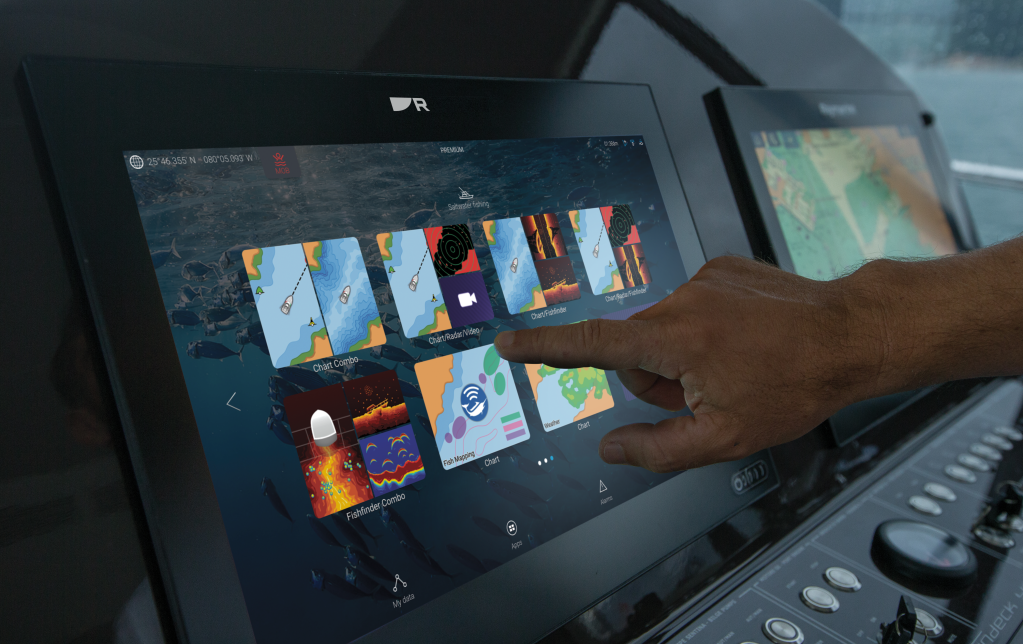
For me, the biggest challenge and opportunity is connectivity and integration. Consumers are accustomed to technology that simply works. Whether it’s their smartphone, car or smart home, they expect devices to connect seamlessly and present information in an intuitive way.
Marine electronics have become incredibly advanced, but the industry still has work to do in making that technology simpler and easier to use. The winners will be the companies that hide complexity from the user while delivering more capability behind the scenes.
Thermal imaging and traditional electronics have historically been somewhat separate disciplines. Now that you’re overseeing both Raymarine and FLIR Marine together, what’s the biggest opportunity — or challenge — in bringing those product lines closer together?
The opportunity is that both technologies ultimately solve the same problem — helping people make better decisions on the water. Whether it’s radar, sonar, chart plotters or thermal imaging, they all contribute to situational awareness and safer boating. I don’t view thermal as a separate category. I see it as another sensor that can work alongside radar and sonar to provide a richer understanding of the environment around the vessel. The more seamlessly we can integrate those technologies, the greater the benefit for the customer.
What’s new at Raymarine and FLIR Marine right now that you’re most excited to talk about — new products, platforms or strategic initiatives you’re rolling out under your leadership?
I’m excited by the progress we’re making in intelligent navigation, automation and integrated sensing technologies. Across both brands, we’re focused on making boating simpler, safer and more enjoyable. That includes advancements in connectivity, AI-enabled capabilities, and bringing together technologies from across the Teledyne portfolio to deliver more value to customers.
One of the advantages of being part of Teledyne is the breadth of technology expertise we can draw upon, from imaging and sensing through to software and analytics.
How is artificial intelligence or machine learning showing up in your product roadmap, whether in thermal imaging, radar, autopilot systems or elsewhere?
Artificial intelligence is already present in many of our products today. FLIR thermal cameras, for example, use neural-network-based object recognition to identify vessels, navigation markers and other potential hazards. More broadly, AI has tremendous potential to help users interpret data, reduce workload and make better decisions on the water.
The goal isn’t simply to add AI because it’s the latest trend. The goal is to use it where it genuinely improves safety, awareness and ease of use.
Where do you see the biggest gap between what boaters actually want from their electronics and what the industry is delivering?
I think boaters want simplicity. The industry has delivered incredible functionality, but sometimes at the cost of complexity. Customers don’t necessarily want more features. They want their systems to communicate seamlessly and present information in a way that’s intuitive and easy to understand.
The expectation today is the same experience people receive from their car or home technology. Bridging that gap is one of the biggest opportunities for our industry over the next few years.
Looking three to five years out, what do you think the marine electronics and imaging space will look like — and how is Teledyne positioning Raymarine and FLIR Marine to lead rather than react to those changes?
I believe marine electronics will become significantly more connected, intelligent and automated. Users will expect systems to work together seamlessly, provide meaningful insights rather than just data, and proactively support decision making. AI will play an increasing role, but equally important will be how different sensors and technologies are integrated into one cohesive experience.
Our focus is on leading that transition through innovation, customer understanding and leveraging the breadth of technologies available across Teledyne. The future isn’t about adding complexity. It’s about making advanced technology feel effortless.
As one of the more prominent women leading a major marine electronics business, do you think about that visibility, and is there anything you hope changes about representation in marine tech leadership over the next few years?
I do think about it because representation matters. Throughout my career, I’ve benefited from excellent mentors, colleagues and leaders who supported my development. If my journey helps others believe they can pursue leadership roles in marine technology, then that’s a positive thing. My hope is that over the next few years we continue to see greater diversity across leadership teams and technical disciplines. The marine industry benefits when it attracts the widest possible range of talent, perspectives and experiences.
Ultimately, I want people to be recognized for their capability, contribution and potential, and for leadership opportunities to be accessible to everyone.
This article first appeared in the October 2026 issue of Soundings Trade Only.