
 PHOTO COURTESY DISCOVER BOATING
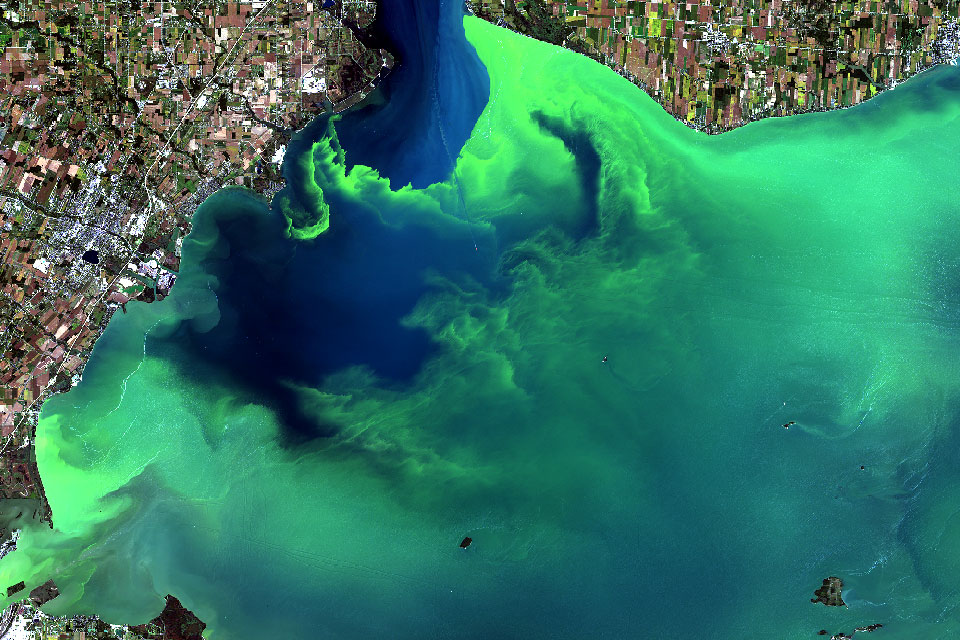
 “With that as your plan, this TMDL is doomed to failure and we should not even waste the money to do it,” Dr. Jeff Reutter has informed the Ohio Environmental Protection Agency about its proposed total maximum daily load (TMDL) plan for addressing Lake Erie’s perpetual algal blooms under a court-ordered consent decree that could have national ramifications.
More specifically, boating and environmental organizations led by the Lake Erie Marine Trades Association are cheering the formal input from Dr. Reutter, who is considered the preeminent expert on Lake Erie environmental issues.
I had the pleasure of working with Dr. Reutter on various Sea Grant programs in Ohio for many years. He has responded to a landmark consent decree that will serve as a roadmap for federal and state regulators to finally get serious about addressing western Lake Erie’s chronic summer algal blooms.
This court case was brought against the U.S. Environmental Protection Agency by the Environmental Law Policy Center on the grounds that the federal agency has failed to live up to the intent of the 1972 Clean Water Act by going soft on Ohio. U.S. District Judge James Carr has been hearing the case that was filed back in February 2019.
Moreover, in calling Ohio EPA’s plan estimates of total phosphorus reduction ‘deceiving and disingenuous,’ Dr. Reutter stated, “One of the most important annual negative changes to the watershed is the addition of more animals and more manure. If animal operations are allowed to apply several times the amount of manure [phosphorus] needed for crop production, we will continue to create and build legacy fields that bleed [dissolved reactive phosphorus] at concentrations that trigger the algal blooms.”
The non-profit Environmental Working Group recently identified and mapped more than 2,500 animal feeding operations in or around the Western Lake Erie Basin. It’s the first such mapping and, shockingly, it reveals 90 percent aren’t monitored by any government agencies.
The result is the disposal of massive amounts of manure by applying it to cropland as a fertilizer. But there’s likely not enough cropland nearby to absorb the nitrogen and phosphorus in the manure. So, substantial amounts of the algae-bloom-feeding nutrients wash off the farm fields into nearby waterways that reach Lake Erie.
“[Our] groundbreaking report and map enable everyone — the public, policymakers and regulators —to finally see the locations of all animal feeding operations in the Western Lake Erie Basin,” said Environmental Working Group Midwest director, Anne Schechinger.
Until now, no one has known the locations of all the animal facilities in the basin, or what’s happening to the massive amounts of manure they generate. That’s because states like Ohio and the federal government track only the largest factory farms, called Confined Animal Feeding Operations, that require a permit to be built. Operations falling below a threshold are not required to get any state or federal permits. Moreover, once they’re running their owners don’t need to account for how much waste their animals generate, or where it ends up.
EWG found more than 2,200 unpermitted facilities in the Western Lake Erie Basin, or 90 percent of all 2,500 animal operations in the watershed. And though these operations are smaller than the permitted CAFOs, collectively they produce most of the manure in the basin. Ironically, Ohio is reportedly considering permits for even more confined animal feeding operations.
In addition, according to a study led by the Alliance For The Great Lakes and the Ohio Environmental Council, Ohio and Michigan are behind their goals of reducing phosphorus runoff into Lake Erie. In 2015, these states committed to a 40% reduction in total phosphorus inputs into the lake by 2025. Experts say the goal can’t be met without real action.
Since 1995, when summer algae blooms began appearing, the Ohio EPA has balked at aggressively dealing with phosphorus runoff from farms. Even Michigan, pushed by the Michigan Boating Industries Association, declared its portion of western Lake Erie as “impaired” back in 2016, a first step in justifying a TMDL plan. However, then Ohio Gov. John Kasich’s administration failed to declare it so until the Environmental Law Policy Center filed its lawsuit. Even then it took Ohio two more years to finally join Michigan!
“We fully support Judge Carr’s actions” says Michelle Burke, Lake Erie Marine Trade Association president. “Lake Erie is a hub of recreational boating and fishing activity for our members and customers. And we especially salute Dr. Reutter who is always willing to call out the elephant in the room. [Harmful algae blooms] consist of cyanobacteria or blue-green algae which can produce toxins posing a risk to human and animal health, foul our shorelines, impact communities, and clearly hurt our businesses that depend on the lake,” Burke adds.
According to Judge Carr’s orders, if the Ohio EPA’s plans are found inadequate, the federal government will be required to write and impose a TMDL plan by later this year. We’ll be watching.