
Boatyards are a place of wonder. Go ahead, try to change my mind. Some folks consider them dirty, loud, dusty places, and while some certainly are those things, I’ve spent countless joyful hours during the past 40 years wandering around yards from Maine to Mississippi for work, and when I’ve hauled out my own boats for service.
Boatyard characters are the best. Virtually every yard has one, whether it’s the shop dog or someone who works there. One of my favorites was a guy known as “Budweiser Dave.” He looked craggly — and did, indeed, have a penchant for downing cheap beer at local watering holes — but he was a wildly funny conversationalist. He’d run the Travelift in front of my Waterway Guide office in Annapolis, Md., wearing knock-off aviator sunglasses and a failing baseball cap. A lit cigarette always hung out of his mouth. Most people were afraid of him, but I loved the guy, as did many people who got to know him.
Boatyards are also a great place to learn how the running surfaces of boats are designed. I once nerded out so hard in this regard that I could tell a Catalina 27 from a Swan 36 just by looking at the hull. Eventually, I could do the same with powerboats. Regulators had a distinctive reverse chine, while Boston Whalers had their trademark shapes. There were obviously many others to learn.
I was reminded of the happiness this activity brings me when I read contributor Eric Colby’s interview with boat and yacht designer Michael Peters. Peters, who is a wizard at his craft, was also obsessed with hull shapes and running surfaces from a young age, wandering around boatyards. It was an obsession he turned into a wildly successful career without formal design training. Today, his speedy, efficient hull designs can be found around the world.
Another place where people take boats seriously is Maine. Dozens of builders and boatyards pepper the region, some fancy and modern, while others have a more bucolic vibe. One such builder is Peter Kass, who has spent the past 40 years crafting some of the most distinguished and beautiful lobster boats ever made from wood at his John’s Bay Boat Co. Pim Van Hemmen, one of my favorite writers, visited Kass earlier this year to document his career, which is ending in retirement. Though no more of Kass’ boats will be built at the location, the yard is in good hands for refits and repairs.
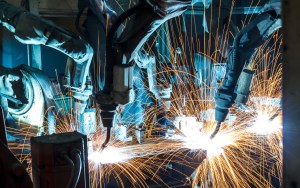
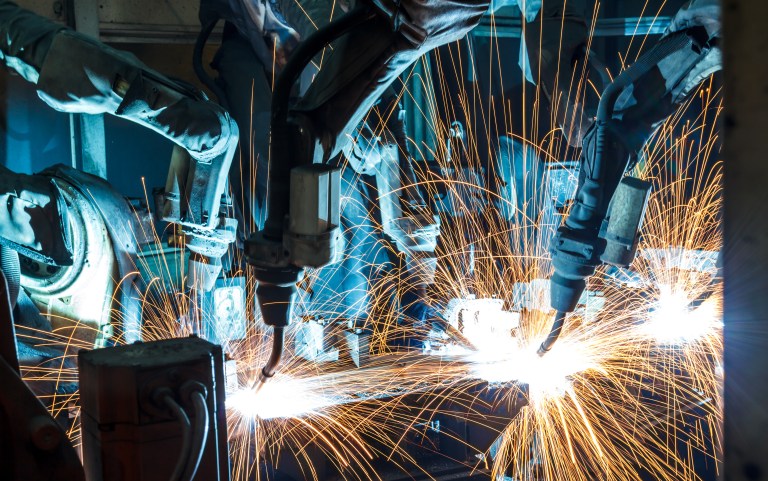
And at any boatyard, a piece of equipment that often goes unnoticed but serves a critical role is the metal boat stand. Back before David “Fred” Brownell invented it in 1954, boatyards simply jammed a few pieces of timber into the ground and wedged them against boats to keep them steady. Today, hardly any boatyard (not to mention dealerships and boat shows) operates without adjustable metal boat stands. I visited Brownell Boat Stands to see how the OG manufacturer builds them by the thousands every year. It’s a “sparky” operation, as you may have noticed on this month’s cover. The way the company brings in raw materials like steel tubing and angle iron and transforms the bits and pieces into stands was wildly interesting to watch. Learn about the process starting on Page 58.
Also in this issue, senior editor David Conway looks at new and forward-looking technology and processes at Smoker Craft, Twin Vee, MJM and MasterCraft. Read all about the robotics, infused hulls, composite materials and waterjet technology in this issue.
As I write this, I am looking forward to a trip to Maine, where I will no doubt spend some time poking around boatyards and builders. Budweiser Dave, sadly, died several years ago, so I will be on the lookout for a new salty character to befriend. I’ll also ogle some hull shapes and no doubt will have a different perspective on the boat stands scattered around the yards.