
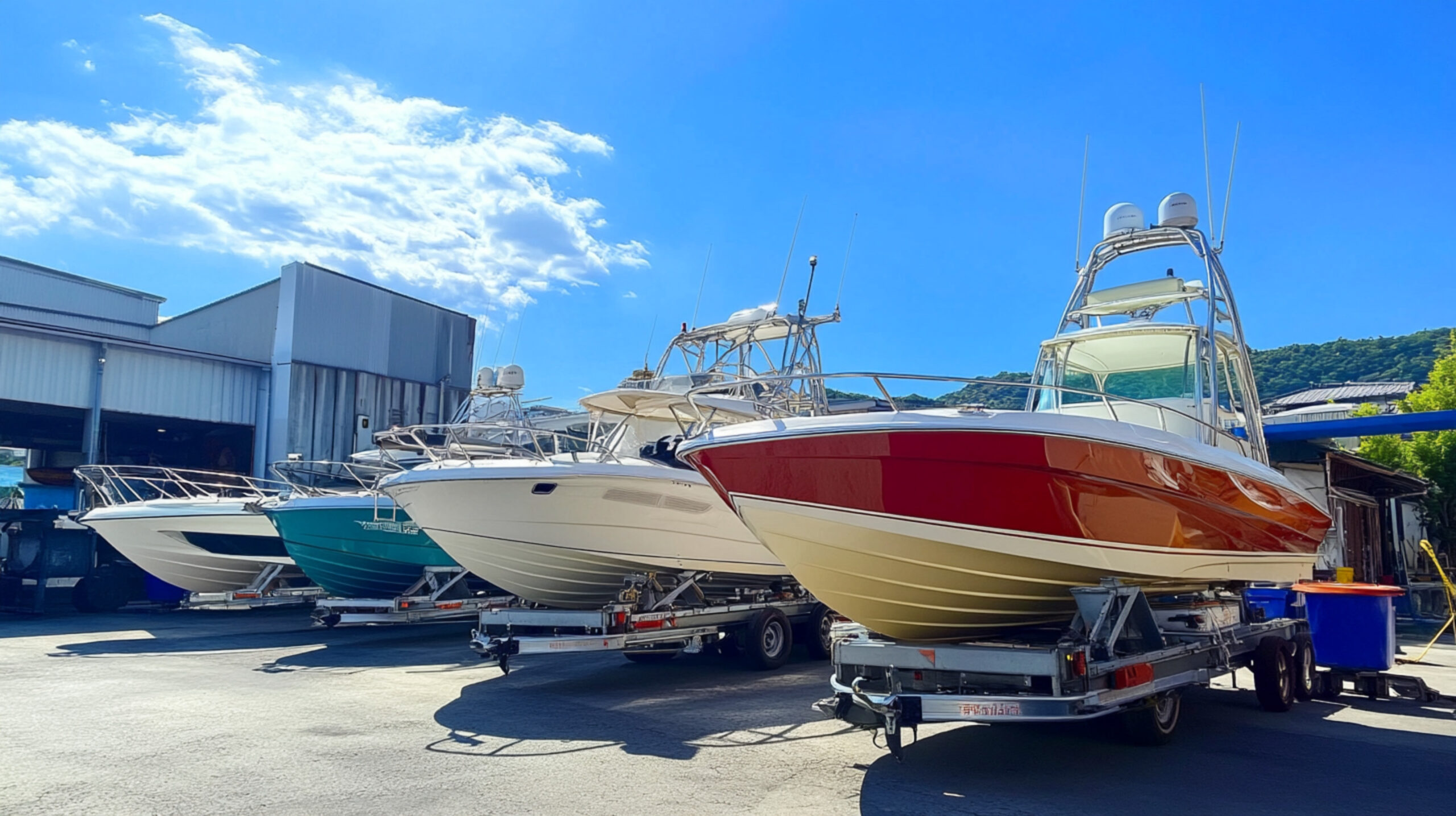
A dealer I spoke with amid this summer’s competitive boating market told me he feels fortunate. His inventory is in a solid position. His manufacturer worked closely with him throughout the spring to make sure he had the right mix and volume for the season ahead — not just for sales targets, but for what the market could actually support.
It wasn’t always easy. They had some tough conversations. But in the end, they made decisions together, and now he’s set up to weather what has become a persistently challenging retail climate.
However, two of his local competitors aren’t in the same position. Their manufacturers haven’t responded to the market softness. They already have too much inventory on hand, and they’re being asked to take more. Those dealerships will have no choice but to start discounting more aggressively just to keep the floorplan costs from eating them alive.
The problem is, when those discounts hit the market, they don’t live in a vacuum. The dealer who was careful with his inventory — who made the right calls and collaborated with his manufacturer — now faces an entirely new set of pressures. To compete, he’ll have to match those price drops. His margins, which are already under strain, will erode further. And all the smart decisions he made in partnership with his manufacturer will be undermined by manufacturers that weren’t working more closely with their own dealers to understand the realities of today’s marketplace.
That’s how it happens. Quietly, at first. Then suddenly, the entire market feels the impact. And while the initial impact hits hardest at retail, it inevitably finds its way upstream. If you’ve been in this industry long enough, you’ve seen how quickly inventory pressure can turn from a manageable problem into an existential threat. Floorplans become a burden rather than a tool. Margins shrink. Confidence drops. Even the most experienced dealers find themselves being reactive instead of strategic.
Now is the time, particularly as dealer-meeting season gets into full swing, to get the inventory conversation right — for the sake of every distribution network and brand. Having too much inventory is the No. 1 culprit for putting dealers out of business, a real risk in today’s environment.
We all know that inventory conversations are ultimately based on the trust that exists (or doesn’t exist) in the dealer-manufacturer relationship. With retail demand largely dried up, consumer confidence continuing to waver, inflation cutting into discretionary spending, and interest rates still a deterrent, it is absolutely critical that dealers and manufacturers deepen the trust by having real conversations about retail challenges. Manufacturers must not cling to an old playbook, pushing inventory that threatens to put their dealers and their own brands at risk.
At the Marine Retailers Association of the Americas, we’ve built a tool to help manufacturers and dealers foster such a conversation. It’s called the MRAA Dealer-Manufacturer Scorecard Program. It’s a standardized, structured and turnkey platform that lets dealers share insights with manufacturers (and vice versa) in a way that fosters productive, trust-building conversations.
This program isn’t about finger-pointing; it’s about alignment. It’s about seeing the same picture of the market, at the same time, and using that shared understanding to make better decisions together.
Manufacturers have long relied on customer satisfaction surveys to gauge how their end users feel about the product and the experience. They’ve used those insights to improve quality, refine policies and even shape brand identity. But very few are giving the same weight to the voice of their real customers — the dealers who sell, deliver and service their products day in and day out.
Dealers are the front lines. They feel the market changes first. They see the slowdowns in foot traffic, the pullback in financing approvals, the hesitations in buyer behavior. And when those insights go unnoticed, manufacturers ignore their most valuable source of real-time market intelligence.
MRAA’s Scorecard Program captures those insights in a format that’s easy to digest, consistent across networks and designed for action. It reveals blind spots that can lead to inventory misalignment. Leading manufacturers are already using it to gain a better view of how their decisions are playing out at retail. And it’s starting to spark more honest, constructive conversations about what success looks like — not just for the factory, but for the dealer and the customer, too.
Make no mistake: Success in today’s market is not just about moving units. It’s also about protecting brand equity. It’s about preserving dealer health. It’s about ensuring the customer experience doesn’t get compromised by desperation pricing or overloaded showrooms.
If you’re a manufacturer reading this, and you’re preparing for dealer meetings, I urge you to ask a simple question: Do you truly know what your dealers are facing in today’s marketplace? Do you really have your finger on the pulse of retail?
Now is the time to learn. The decisions made throughout our industry this dealer-meeting season — about inventory, about support programs, about who listens and who doesn’t — could be make-or-break for the health of distribution networks.
For manufacturers who choose to listen, who choose to use tools like the scorecard to build stronger partnerships, there is real opportunity ahead. For those who don’t, the cost of not listening will be paid in broken trust, shrinking margins and, yes, lost market access due to dealer attrition. We’re already seeing this play out.
Now is the time to listen, learn and build deeper trust. And there’s no better way to do that than by using a structured survey platform like MRAA’s scorecard program.
Matt Gruhn is president of the Marine Retailers Association of the Americas.