For many boaters, time on the water is about relaxation, family and recreation. But on gasoline-powered boats, there’s a risk of neglected hoses, loose fittings, aging tank components and poorly maintained ventilation systems that can lead to pollution, engine damage, fire or explosion.
It’s why fuel-system safety deserves continued attention from boat owners, technicians, manufacturers and safety advocates alike.
Any service technician will tell you that with fuel systems, problems often develop gradually. Over time, exposure to vibration, heat, fuel, moisture and normal use can degrade fuel lines, clamps, filters, seals and tank surfaces. Components near the engine may deteriorate faster because of heat and constant movement. If these warning signs are ignored, leaks or vapor buildup may occur.
Annual inspection is not just a recommendation. It’s a practical safety measure that helps identify wear before it turns into an emergency. Dealerships and service providers should push owners toward regular fuel-system service inspections to verify that components and exhaust features are functioning.
Gasoline vapors are heavier than air and can settle in the bilge or other low, enclosed spaces. If those vapors meet an ignition source, such as a spark, the result can be catastrophic. Dealerships should educate owners of gas-powered inboard boats that before starting the engine, they should sniff for fuel odors and operate the bilge blower for at least four minutes. They should also know that if fumes remain present, the engine should not be started until the source is identified and corrected.
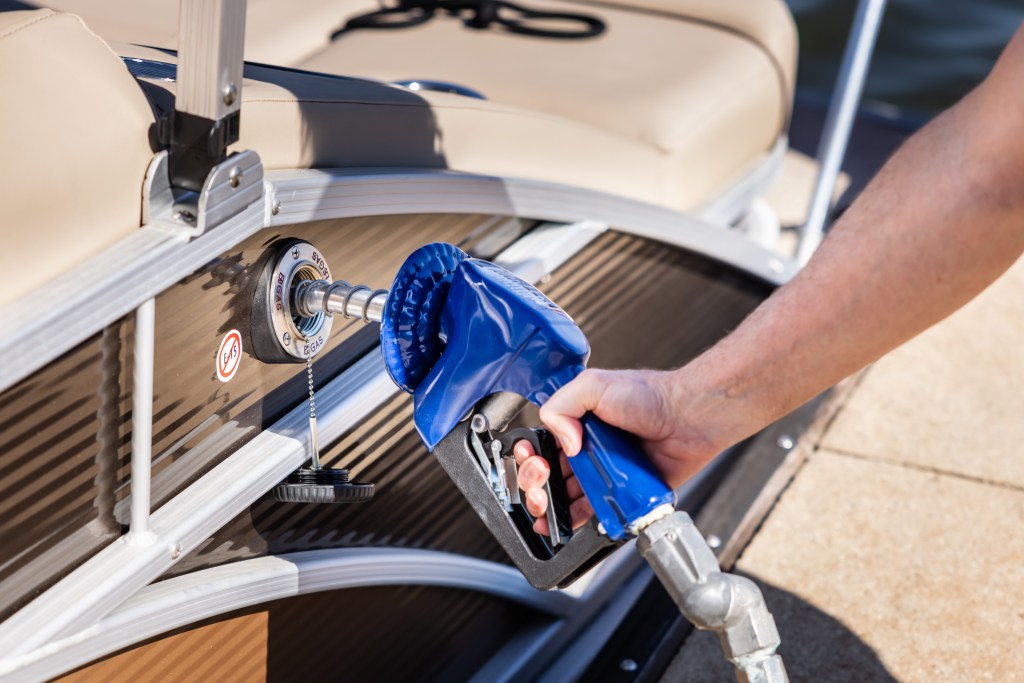
Safe refueling practices are equally important. Fuel-dock owners have an opportunity to educate boaters. Before fueling, boat owners should turn off engines, motors, pumps, blowers and electrical equipment. Hatches, ports and doors should be closed to help prevent fumes from entering occupied spaces. Portable fuel tanks should be filled on the dock rather than inside the boat. During fueling, the operator should remain at the pump, avoid distractions and never top off after the nozzle shuts off. Overfilling can lead to spills, wasted fuel, dangerous vapors and environmental harm.
After refueling, any spilled fuel should be cleaned up immediately. The boat should be ventilated, and the bilge should be checked again for odors before startup. These simple steps significantly reduce the chances of an accident.
Education is a powerful tool in reducing these risks. The National Marine Manufacturers Association has updated its Marine Fuel Systems Safety brochure, which is available as a free download online. The brochure gives boaters practical guidance on inspection, maintenance, hazard recognition and predeparture safety checks.
At the same time, the Coast Guard is developing an educational video focused on safe refueling practices and proper blower use. This combined effort with the NMMA, boatbuilders and the American Boat & Yacht Council reflects a shared commitment to improving awareness and encouraging safer habits across the recreational boating community.
As industry stakeholders, there are seven things you can do today to help educate your customers and boater networks. Download the updated NMMA Marine Fuel Systems Safety brochure and share it with customers as part of every service visit or boat delivery. Promote safe refueling education at fuel docks and in dealership showrooms. Use digital and social media channels to share seasonal boating safety tips and reminders. Host customer education events and maintenance clinics focused on fuel-system safety. Equip sales and service teams to serve as safety ambassadors and reinforce best practices with customers. Develop QR code-based “safety walkthroughs” on boats that link to educational resources and predeparture safety checks. And offer technician-led webinars about fuel-system maintenance, ventilation, blower use and safe refueling procedures.
Ultimately, fuel-system safety is an ongoing responsibility. Boaters should treat every season and every outing as an opportunity to confirm that their vessel is ready to operate safely. That means inspecting components, correcting signs of wear, following safe refueling procedures, and understanding how and when to use ventilation systems. It also means taking advantage of educational resources and sharing that knowledge with family members, crew, dealers and service technicians.
By combining sound maintenance practices with clear, consistent, industrywide education, the boating community can help prevent injuries, protect property and strengthen the trust that boat buyers place in the dealers, technicians and manufacturers who serve them. n
Scott Berry is vice president, engineering standards, for the National Marine Manufacturers Association.
This story originally appeared in the July 2026 issue of Soundings Trade Only.