
VoltSafe Marine in Vancouver, British Columbia, proudly proclaims, “The future of marine shore power is here.” At first glance, its solution appears similar to the improved connectors that Seattle-based SmartPlug has been offering for more than a decade. A little more digging shows VoltSafe has much more than just a new plug arrangement. In fact, there’s a full suite of electronics monitoring shore power parameters, an entire-marina management portal, and an app for boaters to see their shore power status in real time, as well as view accumulated power usage.
VoltSafe’s initial solution utilizes a standard 30-amp shore power cord with a magnetic puck adapter attached to the pedestal end of the cord. The puck has large, flat-mounted contacts on its face.
That cord end, with the puck attached, mates to VoltSafe’s pedestal-mounted unit. The puck attaches to the pedestal via a powerful magnet. The cord easily disconnects from the pedestal with a twisting motion. If a boater forgets to disconnect it, 40 pounds of force pulls it cleanly off without damage to the boat or pedestal.
 Courtesy VoltSafe
With current shore power connections, yanking a shore power cord apart likely means either an energized receptacle or cord, depending on where it comes apart. That same situation would be a little more concerning with VoltSafe’s flat, relatively exposed conductors on the puck and receiver, but they negotiate with each other to ensure that electricity isn’t allowed to flow until a good connection has been made. The negotiation mirrors the process used by electric vehicles when their chargers are connected.
The large, surface-mounted contacts combined with VoltSafe’s intelligence should all but eliminate meltdowns. Typically, these occur as a result of resistance at the small points of contact employed by current connections. One potential concern with those big, relatively easily accessed connections is accidental contact and shock. Because VoltSafe is only sending power after a connection has been established, and is ceasing to send power immediately if that connection is interrupted, the risk is mitigated. Also, the visible contacts mean that if there’s a problem, such as resistance causing corrosion, a boater can easily see it. That’s not the case with traditional receptacles in use today.
VoltSafe utilizes a temperature sensor in the outlet of its unit. So if resistance builds in the connection between the puck and receptacle or the shore power cord and the puck, the system will detect increased heat. An alert generated before the connection gets too hot provides an opportunity to fix the problem before damage occurs.
Current Leakage
At newer marinas, equipment leakage circuit interrupter breakers can cause problems for boaters and marina management. ELCI breakers typically don’t display any information about how much current leakage they’re measuring. Instead, they just trip when the value goes out of range.
Often, these breakers are fitted at distribution points, so tripping a breaker results in a group of boats losing power.
 Courtesy VoltSafe
VoltSafe’s shore power electronics monitor ELCI, among quite a few other parameters, and allow real-time viewing of the data. Plus, a marina can set the trip threshold lower on a per-slip basis than the distribution point, so that one boat with an issue doesn’t affect others.
VoltSafe’s system also watches for over- and under-voltage situations, as well as overcurrent protection. This monitoring helps reduce the risk of damage to the boat and increases the safety of those on and around it.
Centralized Management
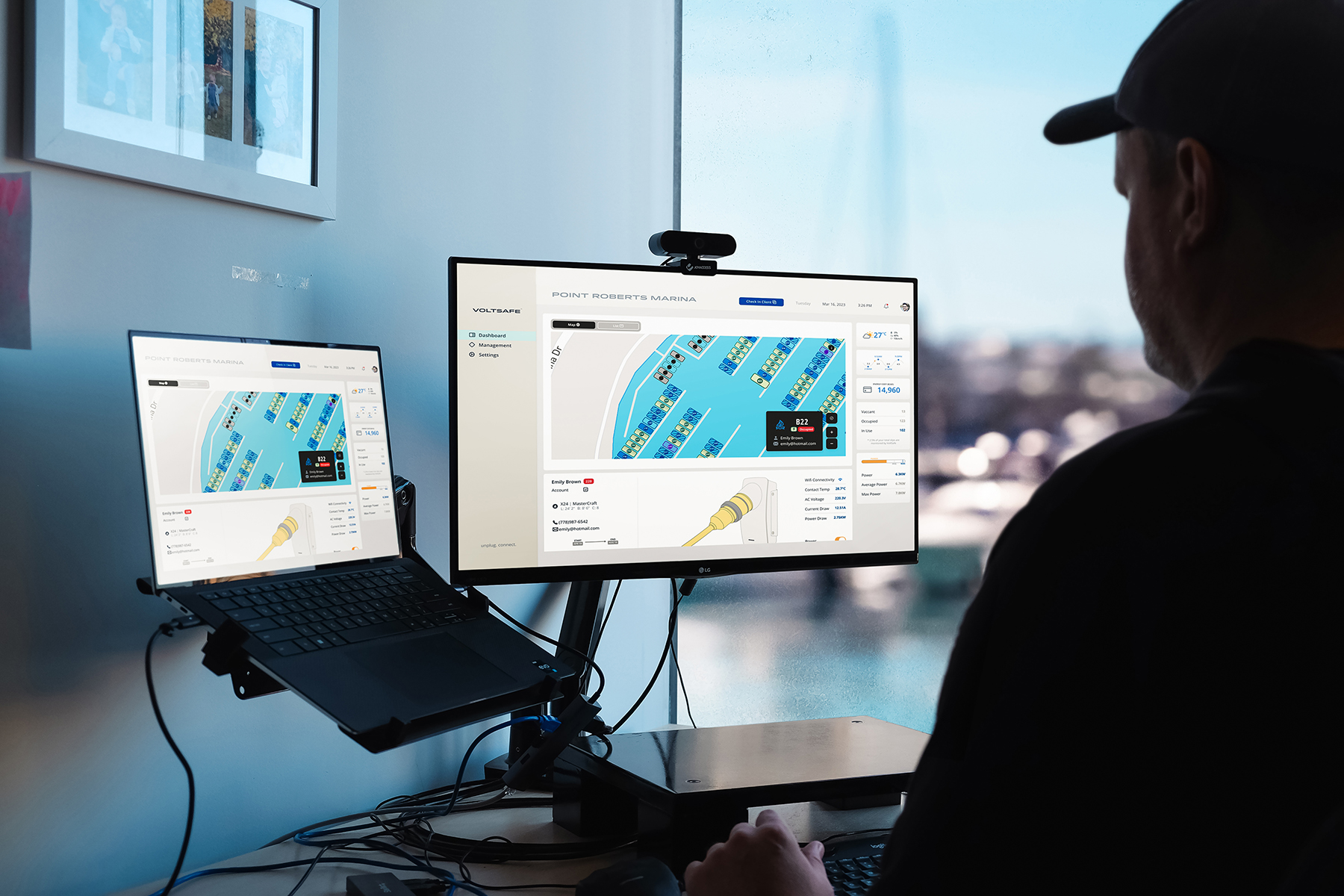
VoltSafe’s actively managed power outlets, combined with a Wi-Fi-connected pedestal, enable a new level of monitoring and management. These benefits most directly affect marina operators, but will also trickle down to individual boaters.
In a typical marina today, pedestals remain energized all the time. Often, individual outlets are turned off by a breaker in the pedestal. This approach means that visiting boats without a reservation are able to plug in and draw power. The always-on pedestal means a boat that arrives after the office closes and departs before it opens may not pay for dockage, and the marina may lose the cost of the electricity. VoltSafe can help with that problem by disabling pedestals for unoccupied slips.
Accurately metering power consumption is another frequent pain point for marina operators. The manual collection of that data represents a staffing cost. VoltSafe’s centralized management platform will output accurate and timely consumption data.
The VoltSafe marina app allows marina staff to monitor and track the occupancy of the marina. At a glance, a marina operator can determine if any boats have come unplugged, are receiving low voltage, are drawing too much current, or have any other concerns.
Slip Holder’s App
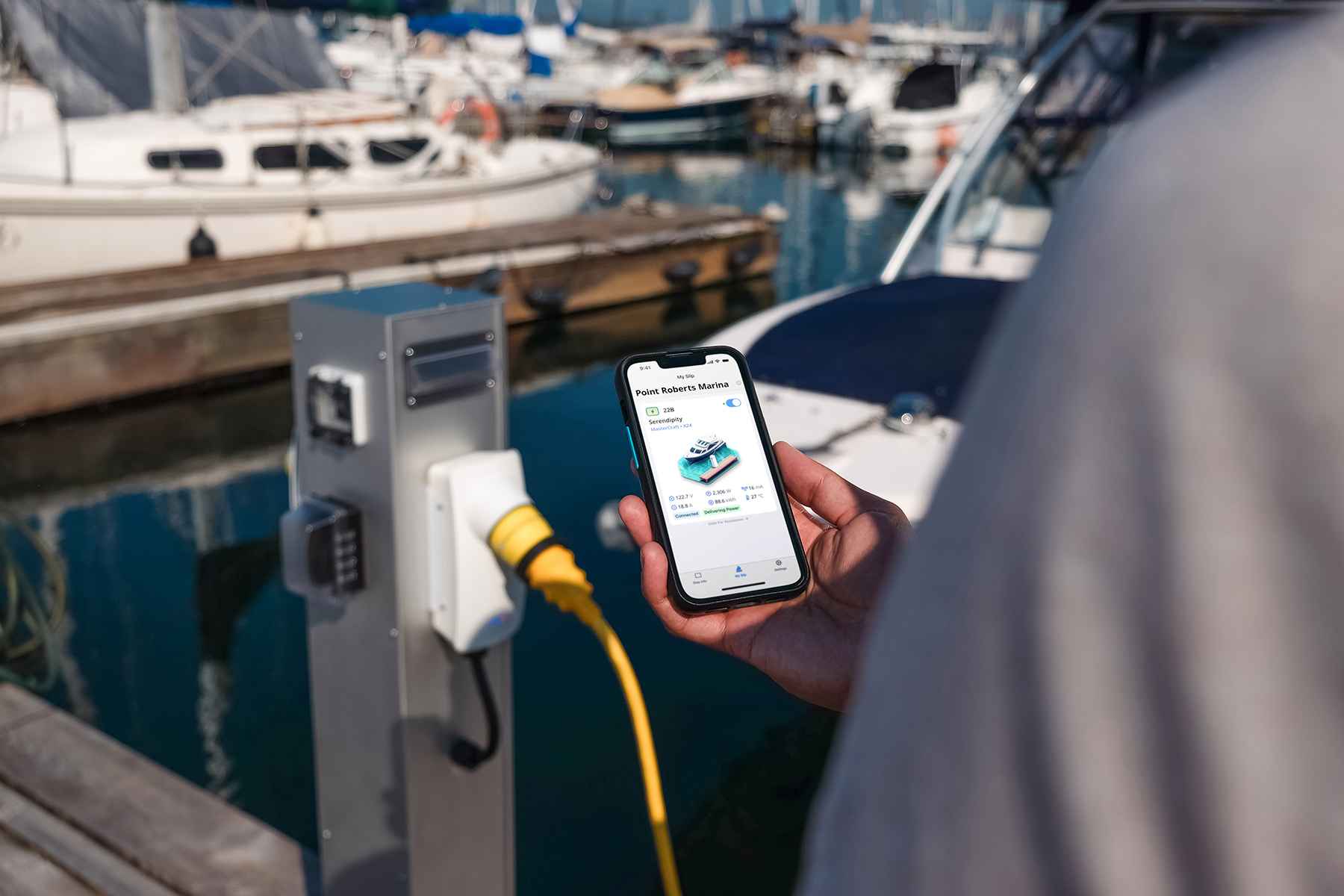
Most of the information available to marina staff will also be available to individual slip holders inside the app. Many boaters, especially those in warm weather and climates that require air conditioning, have experienced the sticker shock of a month-end power bill. VoltSafe helps to eliminate that shock by allowing boaters to see their real-time power consumption as well as cumulative monthly usage.
The app also alerts a slip holder of a shore power disconnect. That alone can eliminate spoiled food and flat batteries when appliances don’t have the supply they need. The app also helps the boater and the marina track down low-voltage issues. It’s not unusual during periods of heavy consumption for on-board appliances to struggle with low voltage. It can be difficult to know if that’s due to on-board wiring or the marina supplying low voltage. VoltSafe makes the problem clear at a glance.
VoltSafe hasn’t finalized pricing yet, but it is aiming for price parity with traditional pedestal and outlet packages. The company is also working on expanding its offerings beyond its current focus with marina operators. The launch product is for 30-amp, 120-volt connections, and VoltSafe plans to expand to 50-amp, 240-volt systems. The pedestal hardware is already sized to handle the higher power connections, with plans to add control of pedestal water and include water-consumption metering.
This article was originally published in the January 2024 issue.