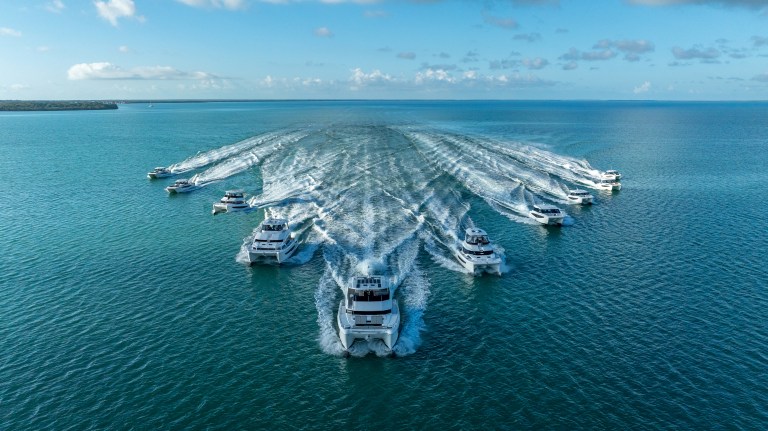
Few traditions are more deeply rooted in the American experience than time spent on the water. From our nation’s earliest days, boating and fishing have connected generations of citizens to our natural resources, our communities and one another. Today, more than 85 million Americans participate in boating and fishing each year, drawn by the same sense of freedom, opportunity and connection that are hallmarks of the American dream.
Access is the foundation of boating. It is the ramp at a local lake, the marina that supports a coastal town, the dredged channel that allows safe navigation, and the healthy and plentiful fishery that draws families and anglers out for a day together. Without these essentials, the promise of the water becomes out of reach.
At a time when demand for outdoor recreation is growing, that foundation is under strain. Across the country, aging infrastructure, deferred maintenance and outdated policies are limiting access to our waterways. Boat ramps are overcrowded. Parking is insufficient. Marinas face barriers to investment. And in too many places, access is shrinking rather than expanding.
The consequences go far beyond recreation. Boating generates $230 billion in annual economic impact and supports more than 812,000 U.S. jobs. Ninety-five percent of boats sold in the United States are made in America, and 93% of boatbuilders are small businesses. These businesses, and the communities they support, depend on access. When access is restricted, participation declines. When participation declines, small businesses feel it first. And when those businesses struggle, local economies — from coast to coast — feel the ripple effects.
The good news is that this challenge is solvable, starting with policymakers in Washington, D.C., and state capitals prioritizing open and accessible pathways to public waters. At the National Marine Manufacturers Association, we are working alongside members, industry partners and policymakers to advance practical, bipartisan solutions that protect and expand access for current and future generations.
A cornerstone of that effort is the Sport Fish Restoration and Boating Trust Fund. For more than 75 years, this user-pay, public-benefit program has funded conservation and infrastructure projects in all 50 states. Supported by excise taxes paid by boaters and anglers, the trust fund generates more than $750 million annually to improve access, enhance safety and sustain healthy fisheries.
As its expiration draws near, the path forward is clear: Congress must reauthorize the program while modernizing it to meet today’s needs, including investments in marina infrastructure and emerging technologies. This is one of the most effective conservation and access programs in the country, and it must continue.
We are also calling for renewed investment in public lands and waters through reauthorization of the Legacy Restoration Fund. Created under the Great American Outdoors Act, this program has helped address maintenance backlogs across federal lands and waters to improve access, safety and the recreational experience. With billions in unmet maintenance needs still facing our national parks and waterways, reauthorization is essential. Maintaining access and our high quality of life requires a sustained commitment.
Equally important is the Water Resources Development Act, which governs how the U.S. Army Corps of Engineers manages the nation’s water infrastructure. Corps-managed recreation sites see roughly 260 million visits each year and are among the leading providers of public boating access. Yet many sites are constrained by outdated policies that limit investment and slow improvements.
Through the Water Resources Development Act, Congress can modernize lease terms, streamline approvals for marina upgrades, and ensure that user fees are reinvested into improving facilities — commonsense reforms that will unlock private investment, strengthen local economies and expand access.
Access also depends on smart, balanced fisheries management. Boating and fishing rely on healthy ecosystems, and our industry is committed to conservation. At the same time, regulations must reflect the best available science and consider real-world impacts on communities and small businesses. We are working with policymakers to advance approaches that leverage new technology, improve data collection and empower state-led management where appropriate. By aligning conservation goals with access and economic realities, we can ensure sustainable fisheries and vibrant recreational opportunities.
As our nation approaches its 250th anniversary, we have an opportunity — and a responsibility — to ensure that access to the water remains a defining part of the American experience. At the NMMA, we are proud to lead that effort alongside our members and partners, working to keep America’s waterways open, accessible and thriving for generations to come.
Frank Hugelmeyer is president and CEO of the National Marine Manufacturers Association.
This story originally appeared in the May 2026 issue of Soundings Trade Only.