
Across nearly all industries that utilize batteries for energy storage, we have been hearing about technology advancements that might unlock huge improvements in the volume and weight of energy stored. In an electric car, that means longer range. For industrial equipment, it means more hours of work before charging. In a boat, that means more time away from shore without running engines or generators.
Currently, the most promising and immediate potential improvement comes from solid-state, lithium-ion batteries. With these batteries, the term “solid state” means the batteries are constructed using a solid electrolyte, rather than the liquid electrolyte in traditional lithium-ion batteries. Why? The simple answer is the promise of improvements in four main areas.
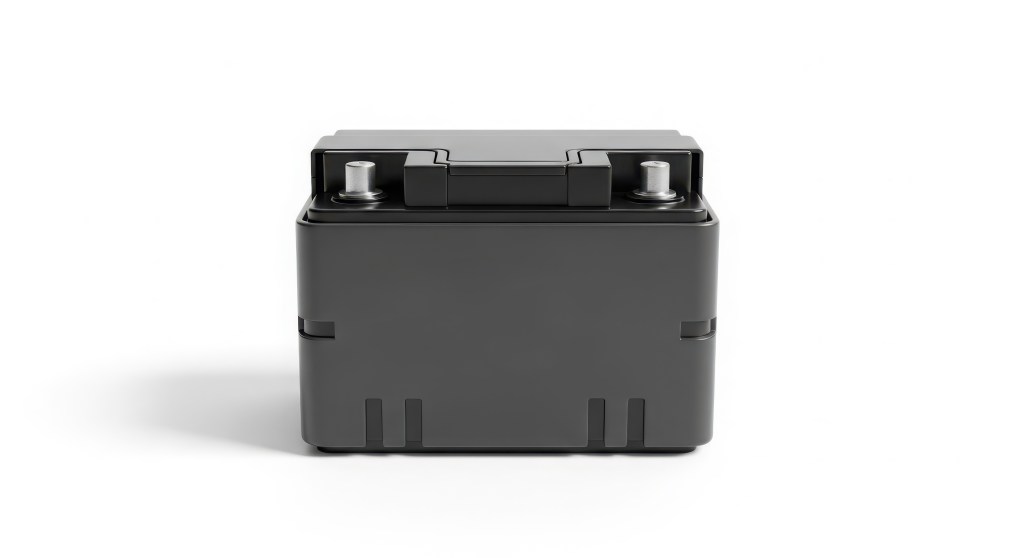
density over traditional lithium-ion technology. PHOTO: HAKIL – STOCK.ADOBE.COM
First is significantly higher energy density. The main increase comes from swapping graphite or silicon-graphite anodes for pure lithium-metal anodes. That swap could offer up to 60% greater energy density on a watt-per-weight basis. That gain is on top of the already dramatic increase in energy density for traditional lithium batteries compared with lead-acid batteries.
Next is safety. Removing the flammable organic solvents used in traditional lithium-ion batteries dramatically reduces the fire and thermal runaway risks. There’s also the theory that solid electrolytes should enable dramatically faster charging. The promise exists of charging from 10% to 80% in 15 minutes, although for now, that sort of performance remains in testing labs, not in cells offered for sale.
Another benefit is longer cycle life. With liquid electrolytes, parasitic reactions in the electrolyte cause life-shortening side effects. Solid electrolytes will slow or eliminate those reactions and cause the cells to last longer.
The Big ‘But’
However, not all “solid-state” batteries are truly solid-state. What is it with new-battery technology and terminology? First, we had a whole class of batteries described as “drop-in,” despite the fact they can’t prudently be dropped in. Now we have batteries marketed as “solid state” that are, in reality, not fully solid state.
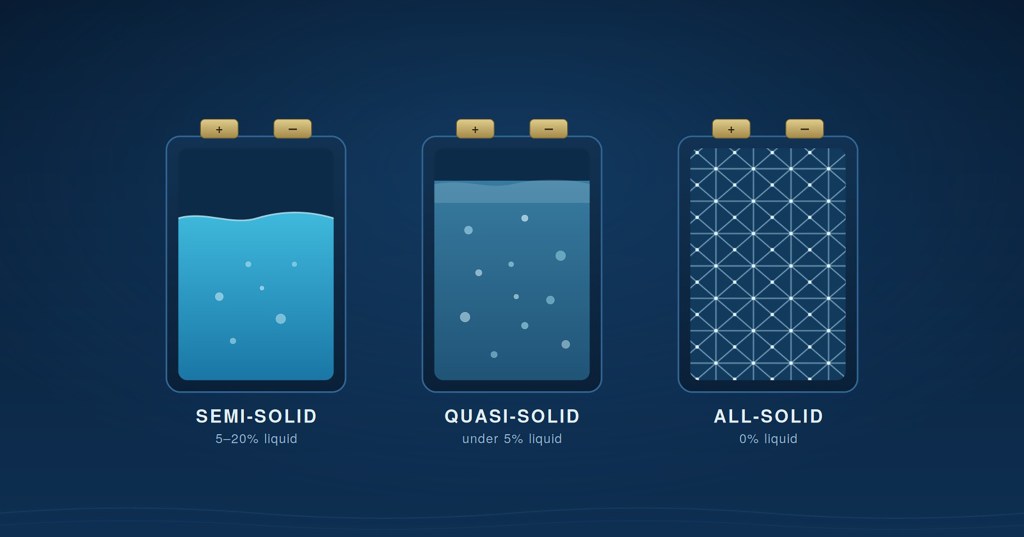
In fact, there are three classes of solid-state batteries ranging from “kind of solid” to “honest-to-goodness solid.” Going in order of least to most solid, the three start with semi-solid-state. These cells still contain a meaningful amount of liquid: from 5% to 20% liquid. These cells are essentially conventional with much of the liquid replaced with solids and gels, and modified separators. The safety and energy density benefits are more modest than with true solid-state cells. Semi-solid-state cells are currently available and likely underpin all batteries marketed and sold as solid-state today.
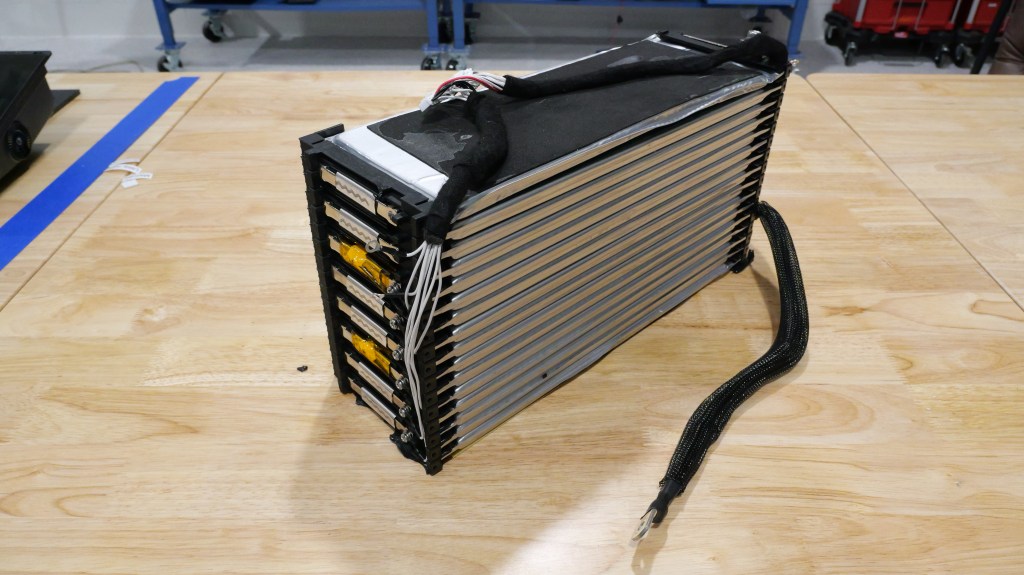
Next in the progression is quasi-solid state, which range from 95% to nearly fully solid. They will deliver more of the promises of density, safety, charging and cell life. But quasi will also likely continue to leverage traditional manufacturing processes, making it the next step in the journey to fully solid-state electrolyte.
Finally, there is all-solid-state: the goal everyone is trying to achieve. These cells will fully deliver on the promises discussed here and attain 100% solid electrolyte.
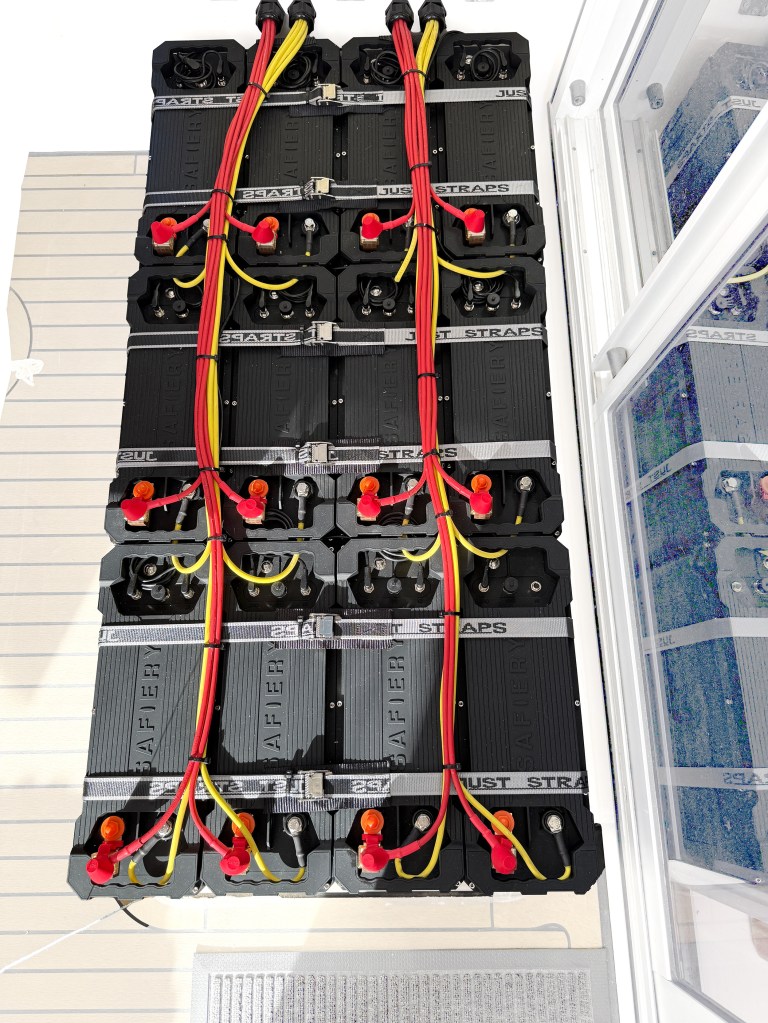
Of the three companies marketing solid-state batteries for the marine marketplace — Renogy, Solid State Marine and Safiery — only Renogy explicitly states the percentage of liquid in its cells. Renogy documents that while typical lithium iron phosphate cells contain 25% to 35% liquid electrolyte, Renogy cells contain 10%. Despite the lack of clarity from some battery companies, since no all-solid or quasi-solid cells are commercially available in any format relevant to the marine market, any battery a marine company can source and sell today is almost certainly semi-solid.
NMC vs. LFP batteries
One interesting contrast between Solid State Marine’s batteries and the ones that Renogy and Safiery offer is the underlying chemistry. All three appear to use conventional manufacturing processes with reduced liquid electrolyte. But Solid State Marine’s batteries are based on nickel manganese cobalt (NMC) cells, while Renogy and Safiery batteries use LFP cells.
LFP has greater thermal stability, longer cycle lives and a voltage range that more closely follows traditional lead acid. That’s why LFP has become the chemistry of choice for energy storage on boats.
Fortunately, marine storage applications are often less focused on weight, so NMC’s greater energy density is less of an advantage than in some other applications. However, that difference plays larger on high-performance boats and when the batteries supply propulsion energy.
In moving toward solid-state batteries on the water, the biggest single change is in safety. The liquid electrolyte contributes flammability to a conventional lithium cell. Replacing or reducing it with a solid or semi-solid material raises the temperature at which a cell will run away, and reduces or removes fuel. A failure becomes less energetic and less likely to cascade. For NMC, the oxide cathode remains volatile, but the solvent that feeds the flames is reduced.
Cycle life improves, too. Much of the wear in a lithium cell comes from side reactions at the boundary between the electrode and the liquid electrolyte. Reducing the liquid reduces those reactions, so the cell survives more cycles. Fast charging should follow, though reports indicate that is among the most difficult promises to harness.
It isn’t all upside, though. Solid and semi-solid electrolytes shuttle lithium ions more sluggishly than liquids do, and that gap widens in the cold. Thus, the move toward solid can actually hurt cold-weather performance rather than help it. Additionally, at least initially, the manufacturing processes are less mature and result in lower yield. That reduced yield will keep the cost of all types of solid-state cells higher than traditional ones for the near future.
Energy density is where things get really interesting, and where true solid-state cells excel far beyond semi-solid ones. A semi-solid cell delivers a modest density gain, and that’s about it. The dramatic numbers are delivered when we change the anode material. Only a fully solid electrolyte can safely be combined with a lithium-metal anode to unlock the huge energy density gains. No semi-solid battery you can buy today has made that leap, which is exactly why the weight savings, for now, stay incremental.
Although the full benefit of solid state isn’t available yet, improvements can already be realized with semi-solid-state batteries. A cell that’s harder to ignite and less volatile once ignited is a huge benefit. Plus, the longer cycle life is a welcome bonus.
What semi-solid is not is the drastic weight reduction and energy-density increase that fully solid-state promises. The dramatic energy-density numbers are stuck behind a change of anode material. And that change of material waits on a truly solid electrolyte.
The progression from semi-solid to quasi-solid to all-solid is real, and the battery industry is pouring billions of dollars into closing the gap. Even as the United States has stepped back from electric vehicles, the rest of the world continues to embrace them. Solid-state batteries stand to provide huge benefits to those vehicles and will pay back the R&D investment.
From my reading, it appears most cell manufacturers are targeting the back half of this decade for commercial viability of all-solid-state batteries, and those will surely show up in electric vehicles long before boats.
This article first appeared in the October 2026 issue of Soundings Trade Only.