![Cliff Pemble_IMG_2525-HiRes[1]](https://s3.amazonaws.com/media.tradeonlytoday.com/wp-content/uploads/2025/02/29202930/cliff-pemble_img_2525-hires1.jpg?w=731 "Cliff Pemble_IMG_2525-HiRes[1]")
In the marine world, Garmin is instantly recognizable. From chart plotters and radar to trolling motors and stereos, the company’s marine segment in 2023 drove $917 million in revenue toward its bottom line. But the company is as diverse as it is big. Garmin is made up of five segments — fitness, outdoor, aviation, marine and automotive OEM — all of which contain products that are well-respected in their fields. These segments drove consolidated revenue of $5.23 billion in 2023.
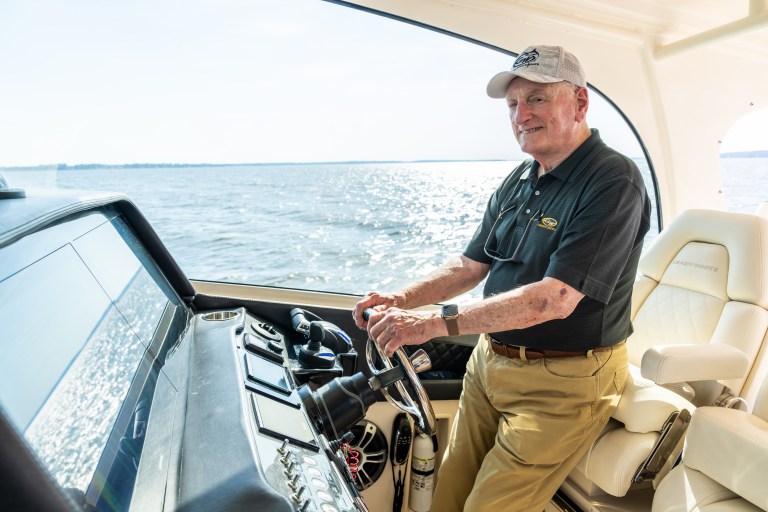
Soundings Trade Only connected with Pemble in early September to learn more about the electronics company, how it drives innovation, its financials and more. This interview has been lightly edited for length and clarity.
Please tell us about your professional career.
I went to college and earned degrees in computer science and mathematics here in Olathe, Kan. After college, I got a job at a local company called King Radio. They did avionics product design and manufacturing. That’s where I met Garmin’s founders, Gary Burrell and Min Kao. They both worked there. Gary Burrell was the vice president of engineering. Min was a group leader in charge of, among other things, GPS technology development for King Radio. He also led our IT group. I was only there three years before I came over to Garmin.
About the time that they were deciding to start the company, I was feeling underutilized and felt like there was much more that I wanted to learn and contribute, and so I started looking for another job. Gary Burrell called me late one night and said, “Gee, I heard you might be thinking about another job. Min and I are starting this company. Would you like to talk to us about it?” That’s what got the ball rolling. I was able to join Garmin as one of the first employees. That was 1989, when Garmin started actually, almost exactly 35 years ago.
What makes your job enjoyable?
Everything Garmin does are things that I love to do, too. The only one that probably needs more attention is golf.
I don’t do enough of that. I really haven’t learned as much as I should.
I grew up in a boating and fishing family. I was fascinated by flight when I was a kid. I got a pilot’s license when I got out of college, worked on avionics before Garmin, and then transitioned to avionics at Garmin. To me, that’s just so incredibly stimulating, to be able to see everything that goes on at Garmin, and also with confidence to be able to tell people who work here and who join us that there’s something for everyone at Garmin. It’s a household name. People are generally familiar with the company and love the products.
On the flip side of that, what is challenging about leading such a big company?
Certainly there’s a lot going on around Garmin, with five business segments. It’s got a lot of diversity and things that cross my desk, and problems that have to be handled. But I think growing up in Garmin as a startup organization, I’m accustomed to a fast-paced environment and multitasking a lot. So while it could seem overwhelming — and a lot of people sometimes say, “Well, how do you do all of that?” — to be honest with you, I thrive on the problem-solving aspect of my job and also the intensity. It just is energizing to me.
How many employees does Garmin have worldwide these days?
Nearly 21,000 associates worldwide. That consists of about 6,000 engineers alone, with a very strong emphasis on R&D. We have our own factory facilities that build all our products and employ approximately 9,000 associates. We have a presence in 35 countries, with 87 office locations. It’s a very, very significant global footprint.
Does that global footprint mean you need to travel extensively?
I probably travel for business less than what people think. The key places I go are to our major markets, like Europe. We do a lot of interactions with our country offices. We have offices in every country in Europe, for example, and we talk a lot about products and sales plans. So Europe is a common destination, as well as Asia for our factory. Also, we have some R&D presence in Asia as well, so we do a lot of coordination with our product development and technology development. Most of my travel is focused around driving the sales, and driving the products and technology.
In this challenging business environment, Garmin has shown growth the past two years.
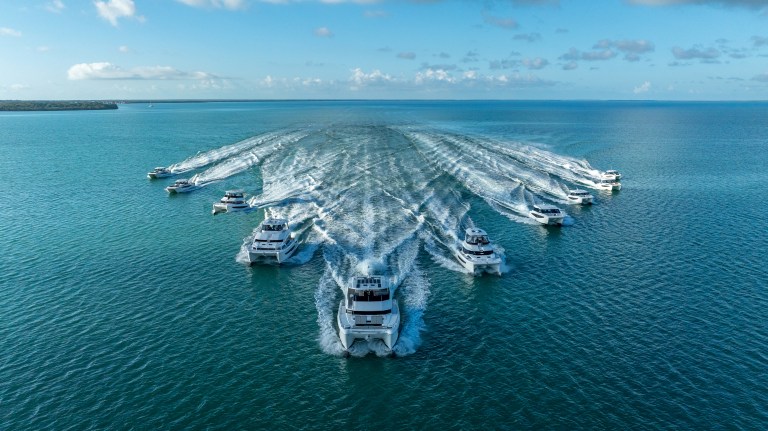
We’ve been fortunate with growth in marine for a long time. I think we’ve counted 11 consecutive years of growth in the marine business, starting in the $200 million range and now projecting for 2024 to be over $1 billion in sales. I would credit that to a great product line, a heavy investment in the R&D that it takes to build a broad product line.
When we started in this growth streak 11 years ago, our product line wasn’t very broad. We didn’t have some of the key components that we needed. But we’ve developed those systematically over time, and it positioned us well to be a full-service supplier across the industry. We have something for everyone in the marine market, from the consumers buying at retail to the installers in the aftermarket and the boatbuilders at OEM. Our product line is strong enough that people are choosing us, so we are taking market share. We’re happy about that. That allows us to do better when the overall market hasn’t been as good.
Over the broad expanse of categories you are involved in, which one has the most potential for growth?
Every segment, I feel, has growth opportunities. Some of our segments participate in really huge markets. For example, the smartwatch market is like a 75-million-piece-a-year market. Whenever you participate in a market like that, market growth can really move the needle for you, as well as market-share growth.
That’s definitely a big difference maker, but for us, we don’t focus on one market or one home run. Instead, we focus on expanding our markets, growing our share in every business segment, including marine. We’ve been able to do better in the marine market than the overall market has done.
How has Garmin enjoyed such smartwatch growth, given the market saturation by manufacturers like Apple and Samsung?
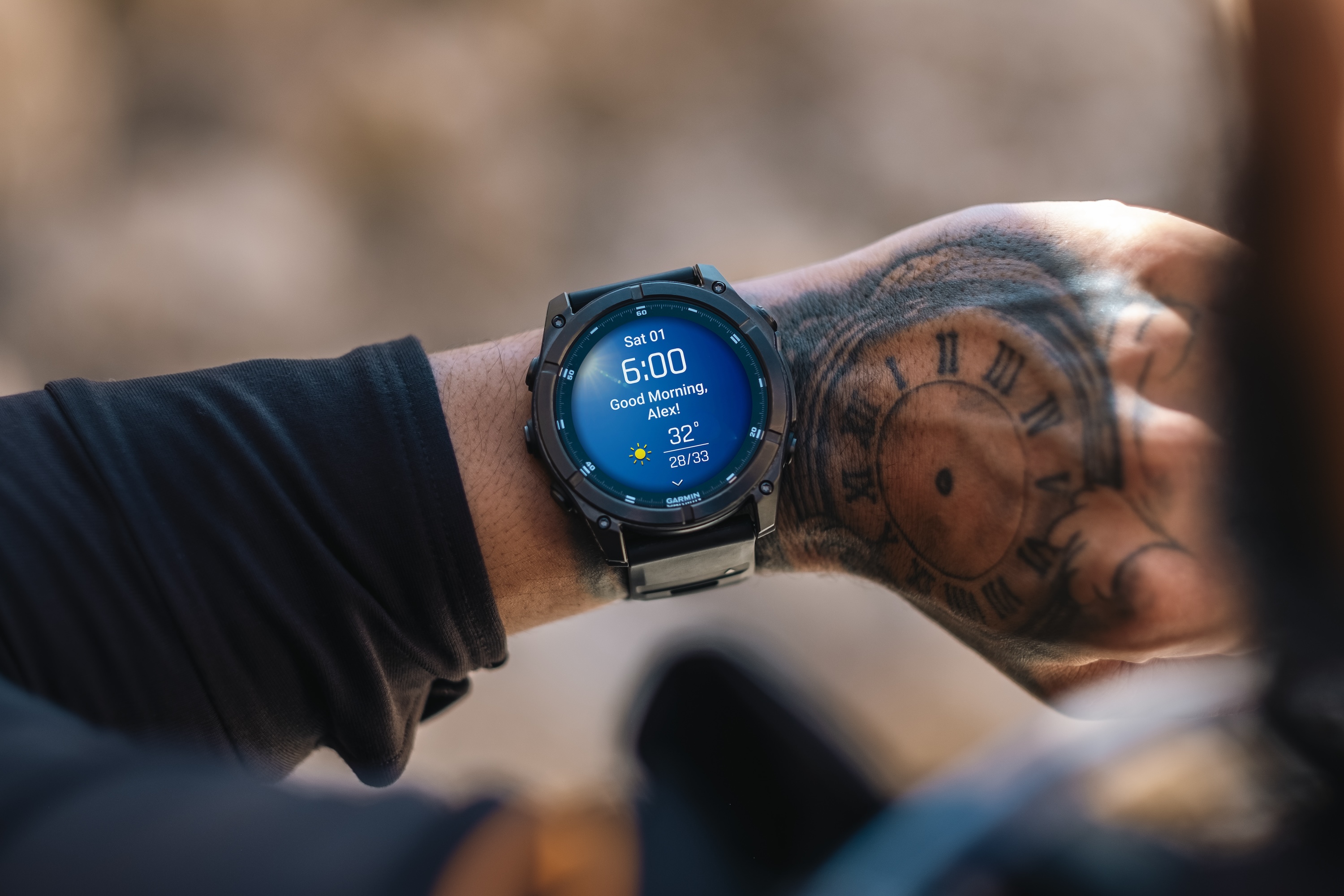
We’ve tried to grow our share in smartwatches by being authentic and serving markets with specialty products that people appreciate. We were one of the first movers in the overall smartwatch market. Back in 2003, we created the first running watch, a GPS device dedicated to running. That was way before its time because people hadn’t even thought about smartwatches yet. They called them just basic watches. We started from that entry point and helped define the market.
Meanwhile, big players like Apple and Samsung come into the market. There’s no doubt that they’re just huge players. I tell people around the company here that you can’t out-Apple Apple. So we’re not trying to be successful just imitating what they do, or trying to spend more money than they do because we’d run out before they do. Instead, we try to create great products. We offer a broad product line, something for everyone, not just one model. By doing that, we’ve been able to be successful and carve out our own niche, if you will. It’s gaining some traction because everywhere I go, I see Garmin on wrists more so now than ever.
 COURTESY GARMIN
You are also enjoying great success in aviation. How did that happen?
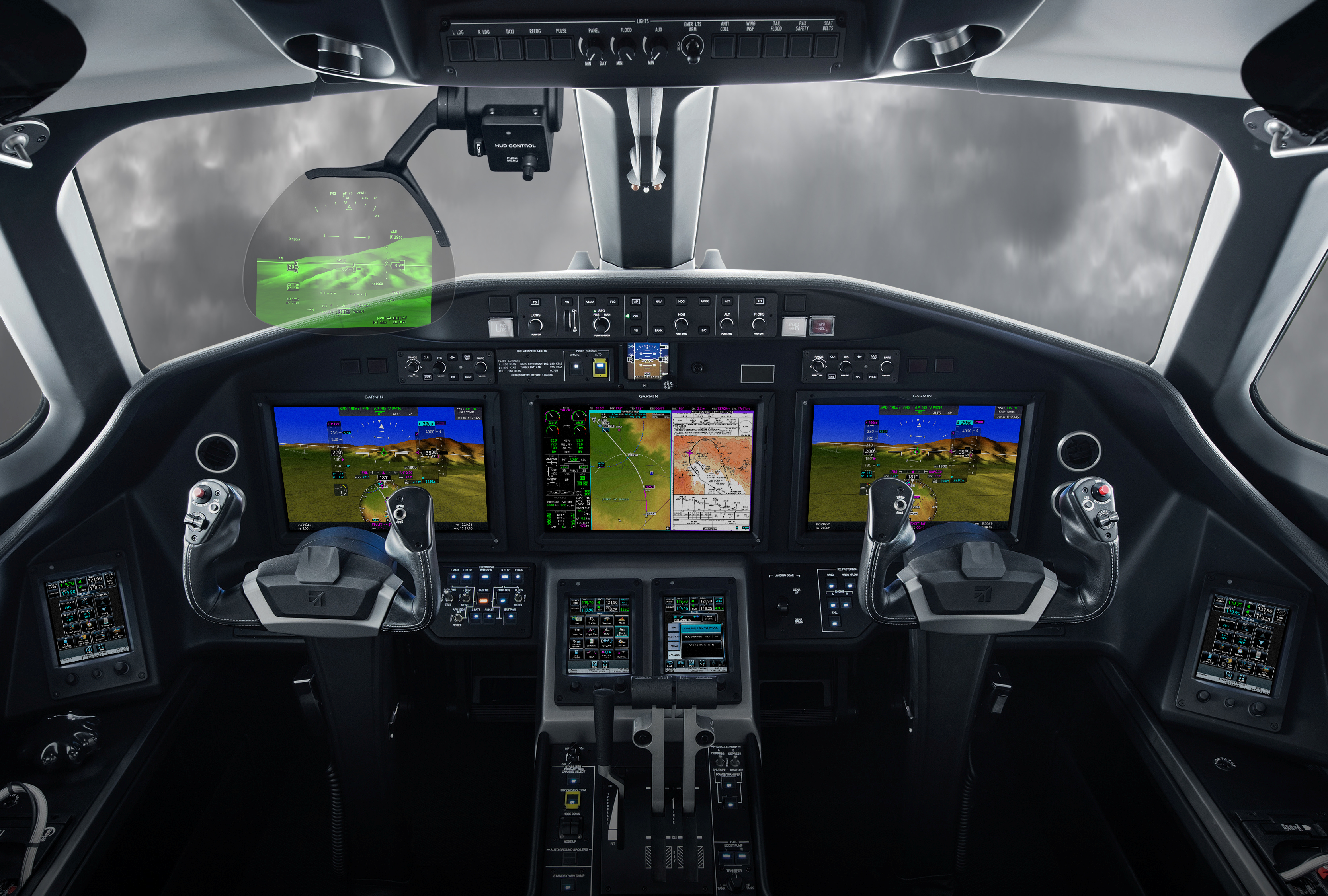
Aviation’s really interesting because, as I mentioned earlier, the first employees of Garmin, including myself, all came from an aviation background. So when GPS emerged as a new disruptive technology, we realized right away that it would have obvious application in aviation, and almost any kind of active lifestyle would want to have GPS capability. Aviation is what we knew, so it was an early target market for us. Our first product actually was in marine, but we quickly adapted that product to go into the panel of an aircraft. Then we separated teams and allowed people to run in parallel, so that we could create totally different product lines in aviation versus what we were doing for other markets.
Just through passion for the market — we’re active participants as pilots — we saw how to apply new technologies to the market, such as high levels of integration in the cockpit with communications and navigation and inertial systems. We were able to gather a lot of market share, moving ourselves from an aftermarket player to an OEM player, from propeller-driven airplanes, moving them into business jets. Ultimately in the future, we aspire to be on commercial aircraft, too. So we’ve been just building the business step by step. It’s been just part of our overall plan, really.
Which business segment represents the largest piece of the pie for Garmin?
So far in 2024, marine is about 21% of our revenues, just under $600 million. So a very substantial amount of money. If our marine business was a standalone company, it would be a nice small-cap, midcap stock. Profitwise, it accounts for about 23% of our profits. It’s actually contributing beyond its revenue contribution in terms of overall profits to the company.
How does Garmin view acquisitions?
We’re probably very similar to what you’ve said in terms of things that we look for.
We like to see some combination of a strong product line, and it has to be backed up by strong engineering innovation capability in the company. Something that complements us, but doesn’t necessarily overlap with us. We like to see vertically integrated companies. We rarely ever purchase a company that doesn’t make something themselves. We look for culture fits, leadership, compatibility, all of those things. Not everyone fits, for sure, but the ones that we’ve selected have mostly been very good successes.
How does your management team inspire people to innovate?
That’s a really good question. It’s something that I think about a lot. Innovation is not something you could just institute into an environment, say, if you do these steps, you’ll be innovative. It really goes back to a culture, to the leadership engagement, and involvement and encouragement in that.
I think for us, even though we’re a 35-year-old company, we still have the culture of innovation and excitement of a startup. Whenever we get involved in new product categories or see new opportunities in markets, it’s very much like you would see in a startup environment, where people get excited and they try to quickly innovate and create something really great in the market.
How does your supply chain look? It seems to have normalized in many industries.
The supply chain is mostly what I would call normal now. We did experience our share of challenges during the pandemic. Interestingly enough, I think we avoided most of the severe effects that a lot of people had because of our vertical integration. We carried higher amounts of safety stock. We quickly redesigned products when we ran out of components and couldn’t get components from certain suppliers. We tried to do everything we could to just keep the product flow steady and to be successful.
I think we still see challenges in finding talent. Everyone was hoarding, especially technical people, during the pandemic. In all our years at Garmin, we’ve never been able to hire all the talent that we wanted anyway, so that’s probably not the newest problem. There’s challenges everywhere, but they’re not unique in any way. In some ways, we probably look forward to seeing things get a little better if interest rates come down and inflation gets under control, which it seems to be.
What did you learn about your supply chain during the pandemic?
We especially reinforced some of the things that we already knew. It’s interesting. When there’s plentiful supply of everything, some of the practices that you would be a little more conscious about, especially as a tiny organization, like making sure that you have enough safety stock in case you can’t get parts, those are things you don’t worry about as much when times are good. But the pandemic really exposed the situation for a lot of companies that weren’t carrying enough stock.
Certainly, we always wish, at certain times, we had 10 times more of something than what we had, but we’ve applied that with some more discipline in certain areas.
We increased the levels of safety stock. On certain components, we add more second suppliers where they’re available. Basically we’re just trying to make sure we always have good supply of product.
Are all of your business segments able to share innovations or resources across groups?
We do have a fairly clean split in resources that go into each of our segments. For example, you wouldn’t see a lot of aviation engineers working on marine products. You probably wouldn’t see any. But the technology components that go into avionics systems, for example, some of them are very similar to what goes into many of our marine products. The big display systems, the computing platforms, the basic suppliers of memory and processors and all these things are fairly common. So our teams share. The display enhancement technologies that we’ve developed at Garmin are common between our aviation and marine segments so wer are able to leverage a lot of volume between the two that way.
No reasonably sized company, even really big companies, can afford to do their own chip fab. How does Garmin engineer and source chips?
At certain points in our history, we actually did do custom chip design, especially when GPS was a very new technology, and the levels of integration that you could have were much higher if you could integrate logic into microprocessors that was specific to GPS. Since then, there’s been a lot of players that have come on the market, and they’ve implemented a lot of things, so we can actually take advantage of more standard components.
 COURTESY GARMIN
One thing that’s unique about us is that we do have significant scale across our business when it comes to volume. We build about 16 million products a year.
When we’re talking about that kind of volume, we’re able to work with component suppliers to get custom elements in their designs that would be specific to us. So we’re now mostly relying on them, but because of our scale, we’re able to get their attention and actually get some unique things for us.
Of all your segments, where are you seeing the most growth?
In terms of just sheer growth rates, automotive has been probably the highest rates of growth right now, because we’re ramping up as a tier-one supplier to BMW for all of the major computing systems that go into their vehicles globally. So very high volume. It’s very specific, unique SKUs, so a narrow set of SKUs that we build for them, but we do it in high volume, and we do it globally.
The next is probably our fitness business with smartwatches. Last year, we introduced new families of running products and what we call advanced wellness products. Those have been very popular in driving growth, taking shares we talked about earlier.
Finally, the marine business has been great. Part of that is the acquisition of JL Audio, which boosted our growth for the last year. The organic growth in marine is also ahead of the market and has done well.
How do you find talented people, make sure they’re happy and help them do their best work at Garmin?
I think finding great people is really the starting point of success or failure for the future. I think it starts with talented leaders who are involved and engaged and excited about what the company is doing.
There’s something for everyone at Garmin. It doesn’t matter what activities you like; there’s some kind of product that Garmin does that addresses that. It allows people to get involved with their passions in the work that they do. That’s something that’s really helped us. From there, we have an intentional focus on being trustworthy as a company when it comes to our employees, treating our employees well, respecting them and taking care of them. That’s been a big part of keeping people here at Garmin, and happy and excited.
Is there anything else you’d like to add?
I feel like even though the marine market has taken some time to normalize after all the pandemic-driven ups and downs, it is an incredibly exciting market with a lot of opportunity ahead of us. We’re excited about what we’re doing. We’re excited for the new things that are coming and just, in general, seeing more people participate in boating and fishing.
This article was originally published in the October 2024 issue.