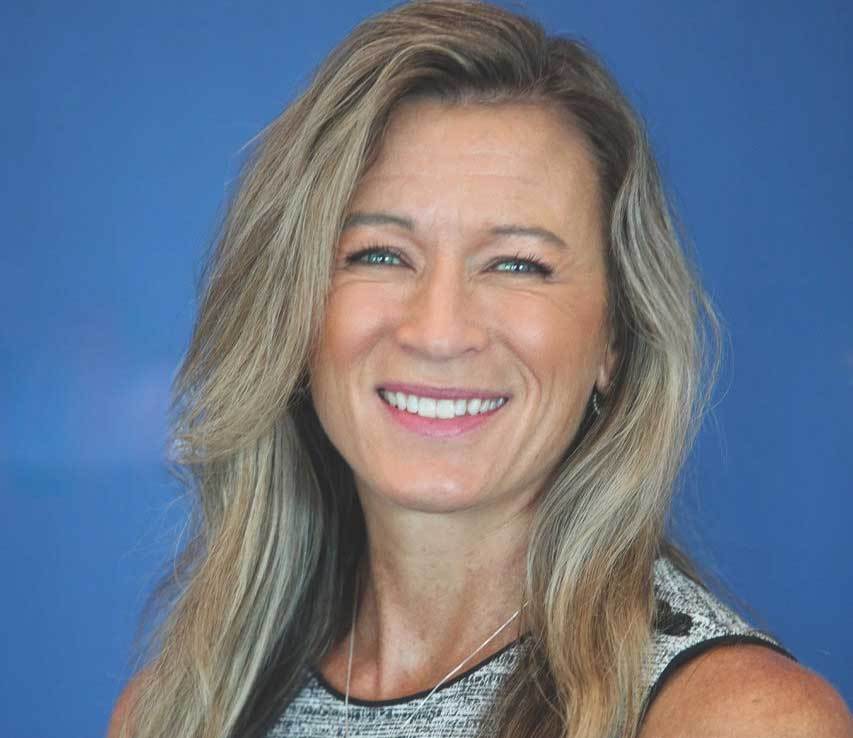
Mary Velline has spent the past 25 years in event management, organizing trade shows on the East and West coasts as well as in the Southern states. She spent 10 years with the Minnesota Automobile Dealers Association before joining the International BoatBuilders’ Exhibition & Conference as show director in July 2024. Today, she oversees seven full-time IBEX employees and shares staffing with the show’s ownership, including five or six people each who contribute regularly to IBEX from the National Marine Manufacturers Association and Metstrade.
“My work has been about centering on people, bringing people together, creating valuable environments for a community to move forward, to tackle big challenges, to meet new people and, of course, sell products,” she says.
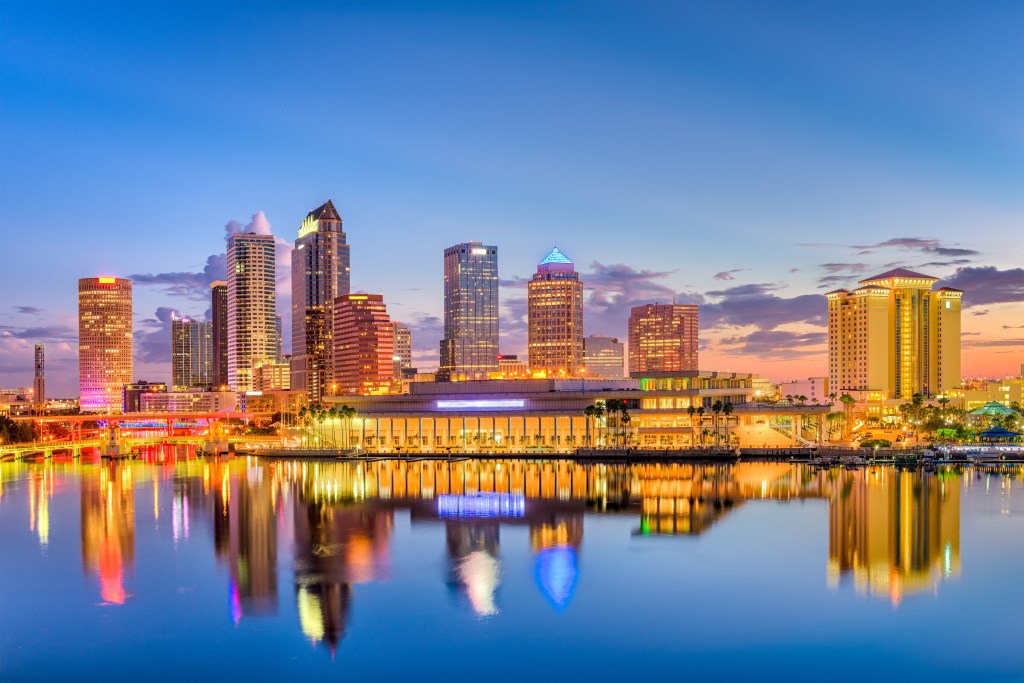
Velline spoke with Soundings Trade Only in late July, with preparations well underway for this year’s conference, scheduled to take place Oct. 6-8 at the Tampa Convention Center in Florida. (This interview has been lightly edited for clarity and space.)
You come from the automotive sector, but do you have a boating background?
As a kid, we always had a boat, and we spent a lot of time on a boat. Boats, to me, equal relaxation and family time. Automotive can be very practical, but there’s a whole lot of passion that goes into automotive, as well. So they’re very similar industries on that end. And I still boat regularly on the many lakes and rivers that we have here in Minnesota.
People draw parallels between automotive and boating. What similarities and differences do you see?
Right off the bat, the volume and the scale is different in automotive, but there are many of the same issues. Consumer expectations. How are you going to meet them? They’re changing very rapidly in both spaces. Affordability is a common denominator with both. New technology and how it integrates, and will it be successful or is it going to phase out in a couple years? How do we keep up with it as a manufacturer? And then, of course, very similar in both industries would be the workforce. There’s a shortage of labor in both industries. But the other similarity is just a passion that people have for their boats or their cars. So that brings the fun to my job, for sure.
A lot of boating technology comes from automotive, but not so much the other way around. And marine is often seen as a slow adopter compared with automotive. Do you see things that way?
There’s a lot of R&D in the auto business that, unfortunately, goes nowhere. I think we could look at electrification as one of the biggest investments I’ve ever seen that I don’t know that it has paid off. And then, similarly, both industries are challenged with AI. I mean, we’ve invested as a country, and it’s just starting to come to everybody’s surface, but how are we going to recruit for this? And when? And how much more do we need?
Do you find that you and your group are able to implement AI to streamline workflows?
We are using it. We’re a small team doing a big project, so I appreciate it. It’s almost like I have an assistant to some extent. The simplest things, you want to make sure you fully understand or don’t miss something. I think we’re using the office tools quite a bit.
And in the trade-show industry, there are some advancements like floor-plan marking, and there are some industry tools that are evolving. We’re not using too much of them now. They are still sort of in beta, or not 100%. But I was at the Marine Leaders Alliance conference earlier this month, and they had a speaker there about AI, and he said something that I’ve tried to use as kind of my guiding light: Don’t do AI just to do AI, but use it if you have a problem. So I’m trying to take that approach with my day-to-day to help me do my job more efficiently.
Let’s talk about IBEX. How do you think about it, big picture?
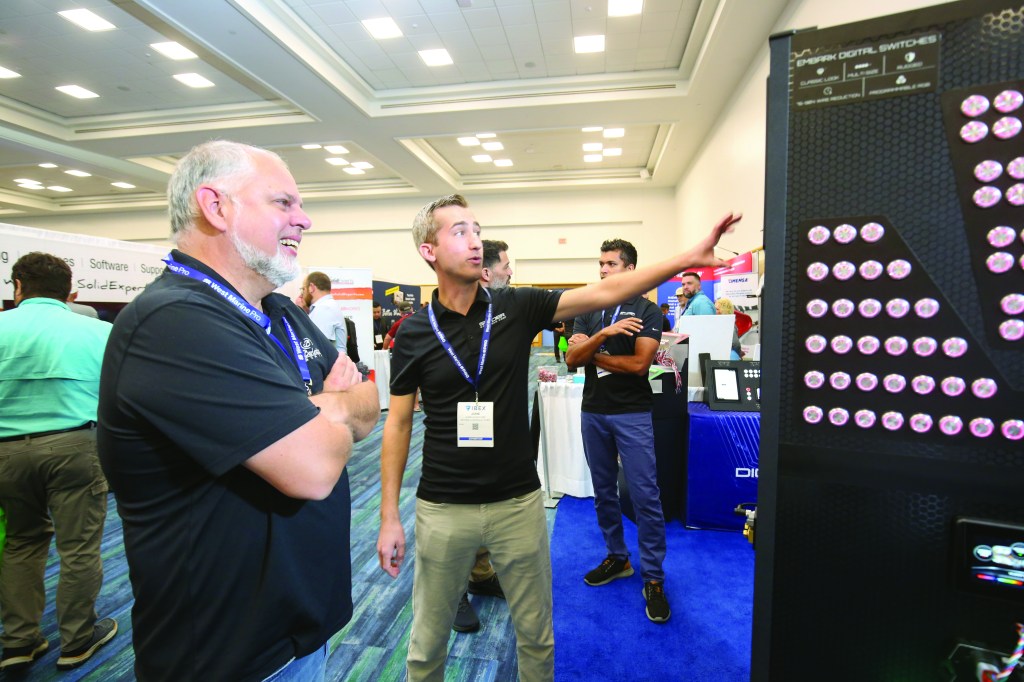
The elevator pitch is that IBEX is North America’s largest technical trade event for the recreational marine industry. It is where the builders, the designers, the engineers, the manufacturer suppliers and all professionals come together to see the new products. And it’s the place where you can touch those products. You can really evaluate them. It’s having those conversations. It’s understanding what you don’t know, what you weren’t even thinking about, but is definitely going to impact the industry in the very near future. I find that extremely invaluable, and I work in a remote environment, and I know a lot of people do, and the boating industry is very decentralized. I find it critical that you get together once in a while with other humans and discuss your work and move things forward and learn together.
IBEX pulled Professional BoatBuilder magazine into its portfolio in late 2024. How is that working out?
It’s good. We’re a small team, so we still have a lot of planning to continue integrating the technical journal into IBEX. But IBEX actually started Professional BoatBuilder. They used to be together, way back when. And though it’s been sold or traded or moved around a little bit, we’ve always maintained a tight relationship.
At IBEX, our seminar programs are unlike anything else that you can find around the world. You can go to Metstrade, but they don’t go quite as deep as we do on the technical side. Aaron Porter, the editorial director at Professional BoatBuilder, has always been very hands-on in the development of our technical program. He’s been on our education board. So now it’s great to have him on our staff and helping us guide that, because we never want to lose sight of that core technical mission.
This is your second show since becoming director. What challenges have you faced? What wins are you proud of?
When I started, IBEX was already a wonderful event. So my job in the last two years has largely been to listen and learn. I ask a lot of questions of people all the time. I wasn’t brought in to change things, but I was asked to build on a really, really strong foundation. My challenge has been trying to navigate the market in a very uncertain time. I’m trying to learn the past and still keep up with a future that’s different day to day. We did have a strong 2025. We’ve built a really strong offering for 2026. We’ve added to and rounded out our team in the direction that we want to go, so we’ve got some new employees on staff that are excited and have skills that IBEX can benefit from. Those have already led to an expanded leadership program. I see a really bright future with the things that we’re putting in place.
Next year, IBEX is moving to December. Did hurricane season drive that decision? Is there any concern about attendance, with the MRAA hosting Dealer Week around the same time?
It was a very hard decision because the trade show was well-suited in October. But as of 2025, we had been affected by hurricanes 50% of the time in the last 10 years. That doesn’t always mean a direct hit, although it was pretty darn close there [with Hurricane Ian] in 2022, and we had to cancel. If the whole state gets impacted, it affects travel plans. It impacts shipping and moving material. So even an indirect hit or a risk of a hurricane can cause some significant challenges for an event.
Our exhibitors and our visitors told us that they just couldn’t stomach it anymore. So as much as they loved that date, it had become a safety and a financial risk that they didn’t want to tolerate.
December does have some advantages. We can try to end the year strong as a marine industry. The weather will be more moderate, so we can enhance our outdoor activities, and we’re looking at some pretty good hands-on demos and live training that we’re excited about, that we can’t quite do when it’s 90 degrees outside. We’re making the most of it, and we do want to hear from people on how this is impacting them.
How are your exhibitor numbers looking so far this year?
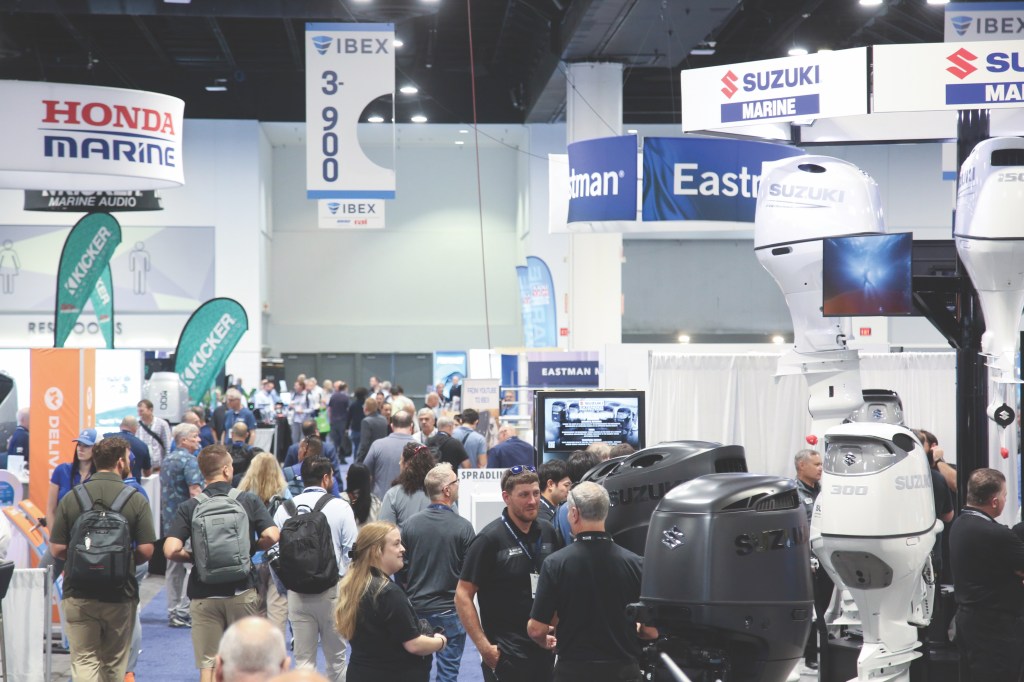
We are actually on a waiting list now. It’s come together really, really well. And our renewal rate is very similar year-over-year, too. While there have been some acquisitions and mergers and some unfortunate closures in our industry, we still maintained a really strong base and added some really high-quality exhibitors. It’s looking good, and we should have well over 730 exhibitors, like we did last year.
Are you also expecting more attendees?
Yes, that’s the goal. It’s a very challenging environment. My heart goes out to some of these businesses that are having to navigate the waters and make tough decisions. But yes, we are pacing well ahead, actually, of last year’s registration numbers. Anything can happen, but things are looking really good, and we have a really strong marketing program and a lot of new offerings that I hope excite people and bring people to the show. It’s expensive to come to a trade show, but it’s also such a great opportunity. If you’re sitting out there as the supply-chain manager, trying to change your spreadsheet on the daily, this is a time to get together with people and talk it through, and you get ideas and figure out how others are coping and managing.
It seems like the in-water component of IBEX continues to grow every year.
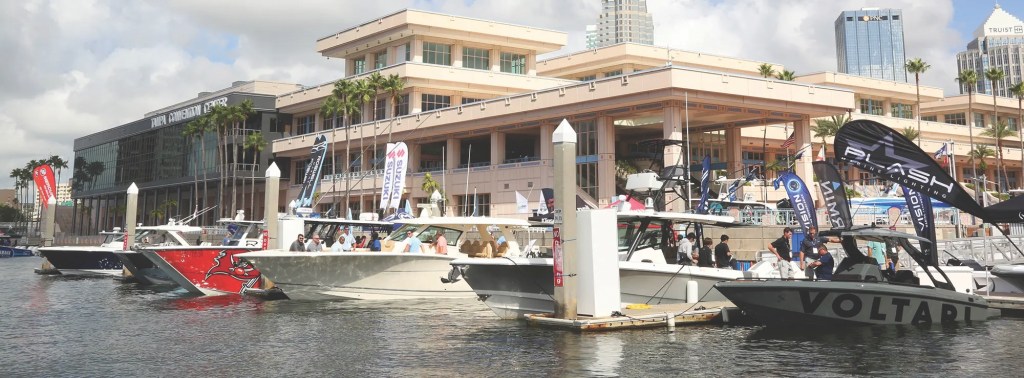
We have a sold-out dock situation at the Tampa Convention Center and at the Marriott. We encourage that, and I’m looking for even more activations. Last year, we did bring a foiling boat, and it was cool because foiling boats are so new, and that is technology, and that’s where IBEX needs to be. In 2027, we’re really doubling down on some of that.
How is the collaboration going with Metstrade?
This year marks 10 years, with the National Marine Manufacturers Association owning 50% of IBEX. Metstrade is wonderful. It’s our sister show, and we share all ideas. So if I say, “I would like to improve our emerging marine leaders experience,” they say, “We’ve got a young professional lounge, and here’s the business plan.” It’s sometimes that clear of a learning opportunity.
It’s a constant communication, a weekly communication, because it is a very global environment. What’s going on in America is often very different. So we learn, we stay in touch, and we know how to complement each other. We have different markets, and we serve different segments in unique ways.
How was the feedback from last year’s MIX event, which Soundings Trade Only collaborated on, and what sort of educational programming is new this year?
We’ve had a very strong technical program with 10 different tracks where we are getting into the hull, talking about electrical systems, talking about composites, talking about engines at a very micro level. That’s terrific, and we bring in speakers from South Africa and London and everywhere around the world to share their expertise. That’s the core of our programming at IBEX, and we never want to lose that.
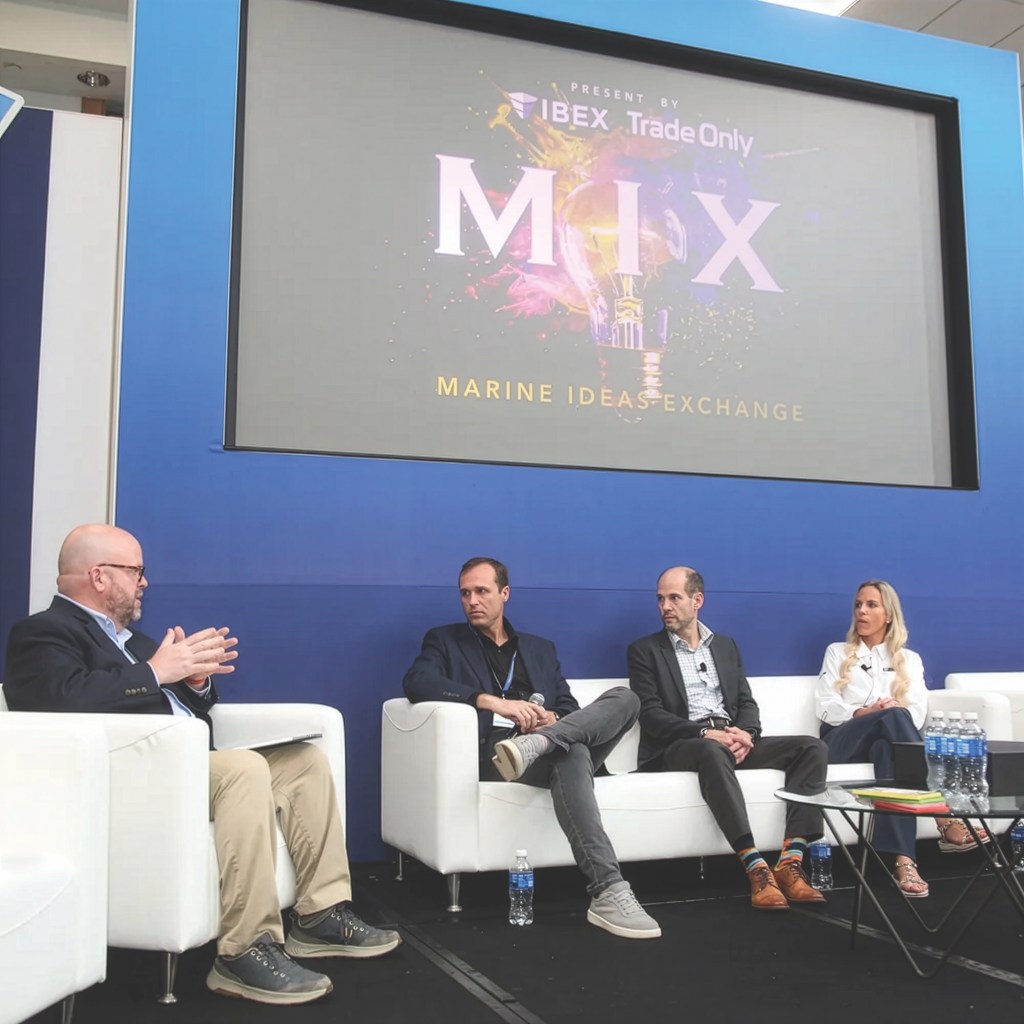
MIX was a huge home run for us. Marine Ideas Exchange complements us so nicely because it was more on the business of boatbuilding and all the retail challenges, culture challenges, a changing workforce. So it really helps round out our programming. The first year, it was sold out.
When we looked at the visitor list, it was super-high-quality presidents, industry leaders coming together. Not only did they get terrific education in the style that they want — fast, short — but then there’s structured networking, because that’s also key to that top-level thinker. We’re excited for it this year, and I fully expect it to sell out again.
This story appeared in the September 2026 issue of Soundings Trade Only.