
Michael Peters grew up in inner-city Los Angeles as the son of a professor at the University of Southern California. His dad ran a summer camp on Catalina Island, 26 miles off Long Beach. The youngster longed for summers there.
When Peters was 14, he took over the responsibility of keeping the camp’s ragtag fleet of donated boats operational. He learned how to patch fiberglass and wood hulls, and he immersed himself in understanding how boats worked. He designed and built a sailboat that wouldn’t sail, and then he switched his focus to powerboats.
Today, at 72, he owns Michael Peters Yacht Design. His boats have won countless championships in offshore powerboat racing and many design and innovation awards. Soundings Trade Only caught up with him after his company moved into a new office in Sarasota, Fla. This interview has been lightly edited for length and clarity.
No one likes to move, whether it’s a business or a home. What prompted your company’s move?
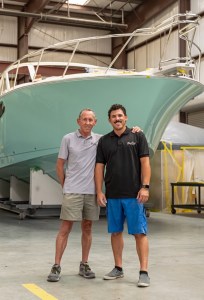
We had our previous office for 35 years. A developer bought our building and is planning to tear it down. We have 10 employees, mostly naval architects, mechanical engineers and a couple of designers. Our new office has two stories, and the upper floor is all work that we do for the U.S. Navy. The door has a code to enter, and I don’t even have the code.
What is your background in terms of training?
I’m not a naval architect, but I think I would get grandfathered in. I’ll use the term to describe what I do, but I’m careful not to say I’m a naval architect, especially around my office full of them. About 15 or 20 years ago, I was part of a panel discussion in New Zealand that was divided between designers and naval architects, and we found out that all the naval architects didn’t have degrees either. Small-boat design is kind of a niche of its own, and it’s something you rarely can learn in course study.
So how did you learn your craft?
I started off by going down to the L.A. County Public Library by bicycle and checking out every naval architecture book I could get my hands on. I scoured everything I could, from magazines to books. Also, down in San Pedro, there were lots of boatyards with boats chocked up for years, sitting on the hard. I used to just go down there looking at boats from the bottom up, and I had a fascination with hull shapes and drive systems. Curiosity drove my education.
Did you spend much time on the water?
After high school, I took a year off to be the caretaker at the summer camp. I lived there by myself, and I had a little 15-foot skiff with a 50-hp outboard that I used to cross the Catalina Channel in the middle of winter. I used to wear a wetsuit under my clothes because my theory was that hypothermia was going to get me. One time there were storm warnings, and I wanted to get back to the island. I headed across in swells that were too big for me to see another boat. I pulled into Avalon, and the lifeguards came down the dock and said, “We knew it was you. We got a call from the Coast Guard and they said, ‘Some nut in a little boat just headed across the channel in storm warnings.’ ” That’s where my fascination with running a planing boat in rough water was founded.
What role did your dad play in your education?
When he first got out of school, he worked in the wind tunnel at Moffett Field in Mountain View, Calif., in World War II. He knew low-speed aerodynamics, which are not that different from high-speed hydrodynamics — and my father never helped me a bit. He would watch me build something, finish it, and go out and try to run it. He never stepped in. He supported me through all my trial and error. As a mechanical engineering professor, that was how he chose to teach me.
Where did you wind up going to college?
The following year, I enrolled at USC in mechanical engineering, and in the middle of that year, I got my draft notice. I was in the last lottery for the Vietnam War. Right when it looked like I was going to get drafted, the draft was abolished, so I didn’t have to go. I didn’t like mechanical engineering, so I transferred to architecture. I did two years in architecture, and at the end of my third year at USC, I developed a stepped hull design that I later patented. So I went to my father, who was the dean of the university, and I told him I wanted to drop out of school.
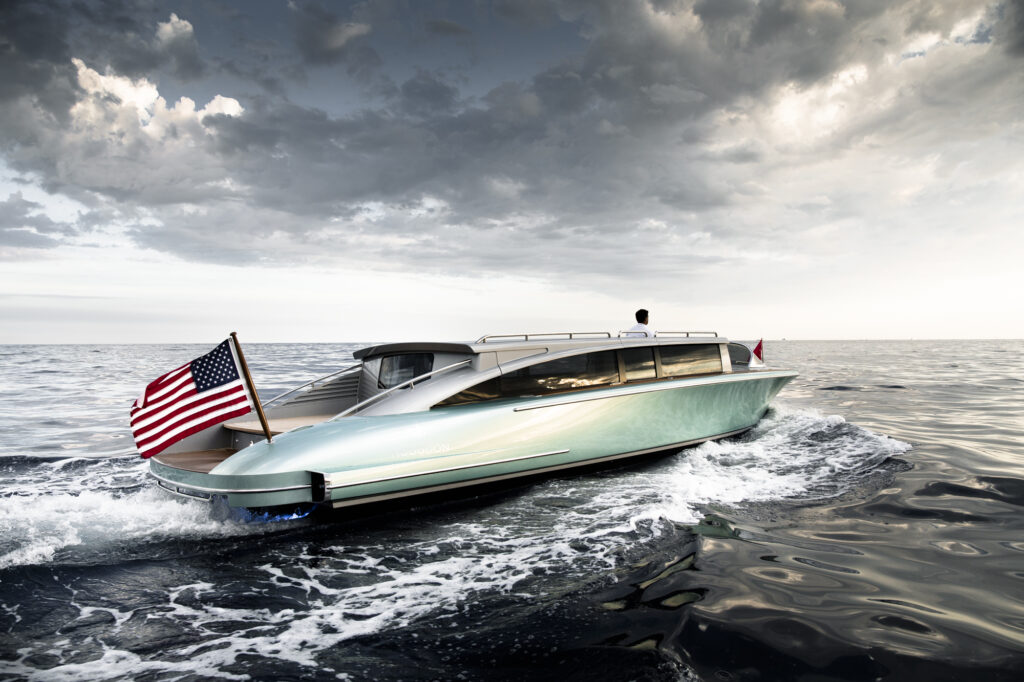
Hodgdon-built tender. PHOTO COURTESY MICHAEL PETERS YACHT DESIGN
Then what did you do?
At about the age of 21, I hired a patent attorney. I wrote all my arguments for the patent office. Over the course of the three years that it took to do that, I had to bone up on all the naval architecture theory and predict what I was going to do. It became a huge part of my education.
Were you successful with the patent?
By the 1970s, stepped hulls had fallen out of fashion. They were around in the early 1900s. My first real job was in New Orleans with Harold Halter at Halter Marine. I got him to take an option on the design and to pay all my patent bills. Halter had bought Cigarette Racing Team, and he built some prototypes based on my design. The person they brought in to evaluate the prototype was Don Aronow, founder of Cigarette Racing Team.
How did that go?
I grew up reading about him and offshore racing, and was excited to meet Don Aronow. He showed up to drive my prototype wearing a Speedo. He ran it on Lake Pontchartrain for five minutes and turns to me and says, “Nice boat kid, but don’t waste your time with this.” I was 25 years old, and I went from hero worship to hatred in a matter of seconds.
Did you ever work with Aronow again?
I did work for him the last nine years of his life. He said, “Mike, I worked with guys like Jim Wynne and Walt Walters and Harry Schoell, and I get along with you better than any of them.” Don was one of those guys who, as much as he could be a hard character, he liked the underdog. He was in my corner supporting me until the day he died. After my divorce, he asked me to go down to Miami to run his company, USA Racing Team, in 1987. I was there for a day, and he walked out of my office and then was shot dead.
Who were some other mentors who played a role in your development as a designer?
I was influenced more by C. Raymond Hunt and Sonny Levi than anybody. I had copied Sonny’s book, Dhows to Deltas, and kept it in a folder. When I went to visit him at his home in the Isle of Wight in England, he gave me two signed copies of his book. My approach to design and understanding of design is more closely related to Sonny’s than anybody.
What was your first big break in boat design?
Mike Drury was good friends with Halter, and he lived in a houseboat at the Halter dock. We became friends, and he asked me to design and build a catamaran for him. He got me to leave Halter and move to Sarasota to open my own shop. The wooden boat was 35 feet long, and it was branded as a Maelstrom. It had triple outboards, and within about two years, we set a world record of 131 mph.
How did you end up designing raceboats for Italian teams?
I built a couple more wood boats, including one for Apache, and then I stopped building boats. I switched to only designing them. In 1987, I got a telegram from this group in Italy called CUV that heard I was doing catamarans. I flew to Italy and designed a 37- and a 41-foot aluminum catamaran. I arrive and there’s this little old guy who speaks perfect English named Commander Attilio Petroni. He used to race offshore, and he said, “If you trust me, I’ll be your business advisor.” He worked for CUV and handled the negotiations.
What was CUV?
It’s an acronym for Cantiere Uniti Viareggio. The owners were Italian communists, and they were a super group of people. After a year or two, we started winning and being competitive with the Cougars, also aluminum hulls built in the United Kingdom. Then Norberto Ferretti of the Ferretti Group asked me to design a composite catamaran. The company was called Tencara, and the first boat was Iceberg. It was 39 feet and was built with preimpregnated carbon fiber and Nomex honeycomb, and it was built in an autoclave. The autoclave wasn’t wide enough for the boat, so it was built in two halves. When the boat first ran, it didn’t make speed, and I flew over to Italy, and we got it from about 105 mph up to about 130, and the boat outran everyone in Class 1. At that time in Europe, Class 1 was more than 30 boats. Iceberg was successful, but in the last race of the second season around 1992 in Marbella, Spain, it hit a wave and disintegrated.
What happened?
Because the boat was built in two halves in an autoclave, they would put the half in, put the pressure on it, and apply the heat. If anything went wrong while the boat’s in the autoclave, you can’t touch it. You must pull it out, mistakes and all. They put in one half and lost pressure. They lost hundreds of thousands of dollars and had to do it again. The failures were too expensive, and one hull had flaws they tried to fix by hand. That was the composite failure. We stopped building them in the autoclave and built them in a portable oven instead. We got it right, and some of them are still running 25 years later.
What made your racing designs game-changers?
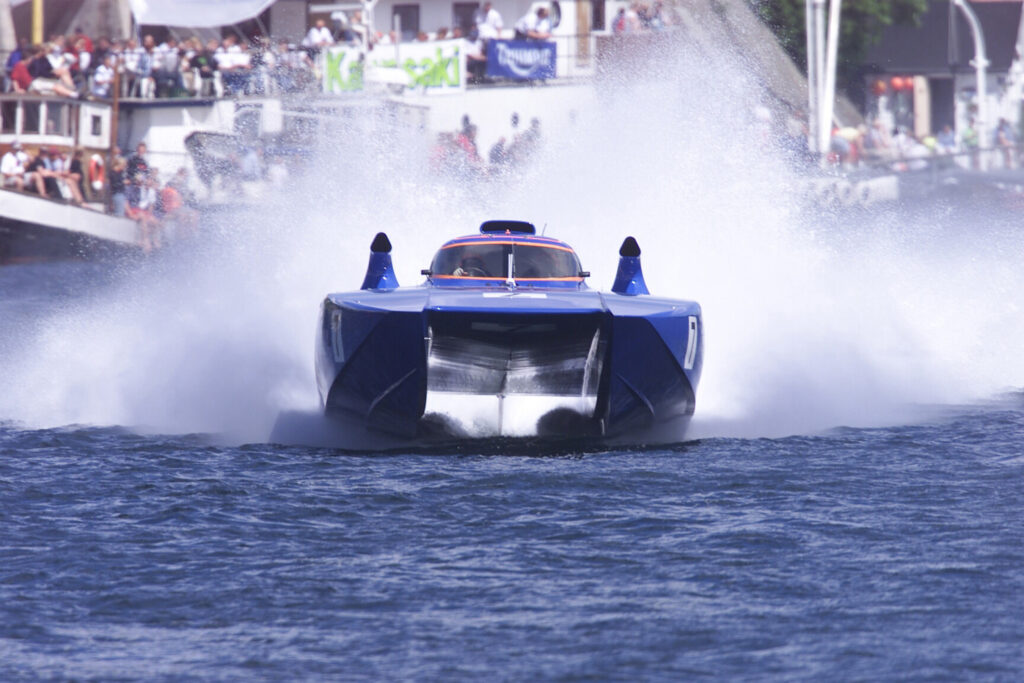
I had a radical approach. I was doing wider, lower tunnels. I had people sitting in the middle and the fuel up in the middle rather than in the sponsons. I realized that if we wanted to win races, we had to slow the boats down. We were fast, and when we slowed the boats down, we got consistency out of them. I learned to make a boat that could make it through the whole course and handle myriad conditions. The benefit I had was that I got to build so many, and they were all custom boats, so I could change them.
Out of all your racing designs, which ones stand out and why?
I consider Iceberg the most important raceboat. It was the end of the aluminum boats, the beginning of advance composite boats. The other was Joe Mach’s four-engine Superboat-class hull from CUV. I had to guarantee that the boat would run 135 mph full of fuel. The first day they ran the boat, the throttleman, Harold “Smitty” Smith, was so blown away by what he saw that he tested the speedometer. With 600 gallons of fuel on board, the boat ran 165 mph. Joe’s boat was the first one we saw running ground effect. Once it got to a certain speed, putting more horsepower in the boat made it take off. That’s when we learned the importance of ground effect on a catamaran.
How important was the choice of teams you worked with?
I realized that if I designed boats for guys who couldn’t go the distance with engines and a testing budget, the boats would have just sat. My first boat for Mike Drury was sponsored by Mercury. I wasn’t starting with teams who could barely make it from race to race.
When did you decide to get out of racing?
I won 20 world championships in 30 years and felt it was a good time to stop, but the transition wasn’t instant. I spent about 10 years trying to get away from racing. I would meet people for a project and they would say, “Aren’t you the raceboat designer?” and I would say, “No, we can do other things.”
Who was one of your early non-racing backers?
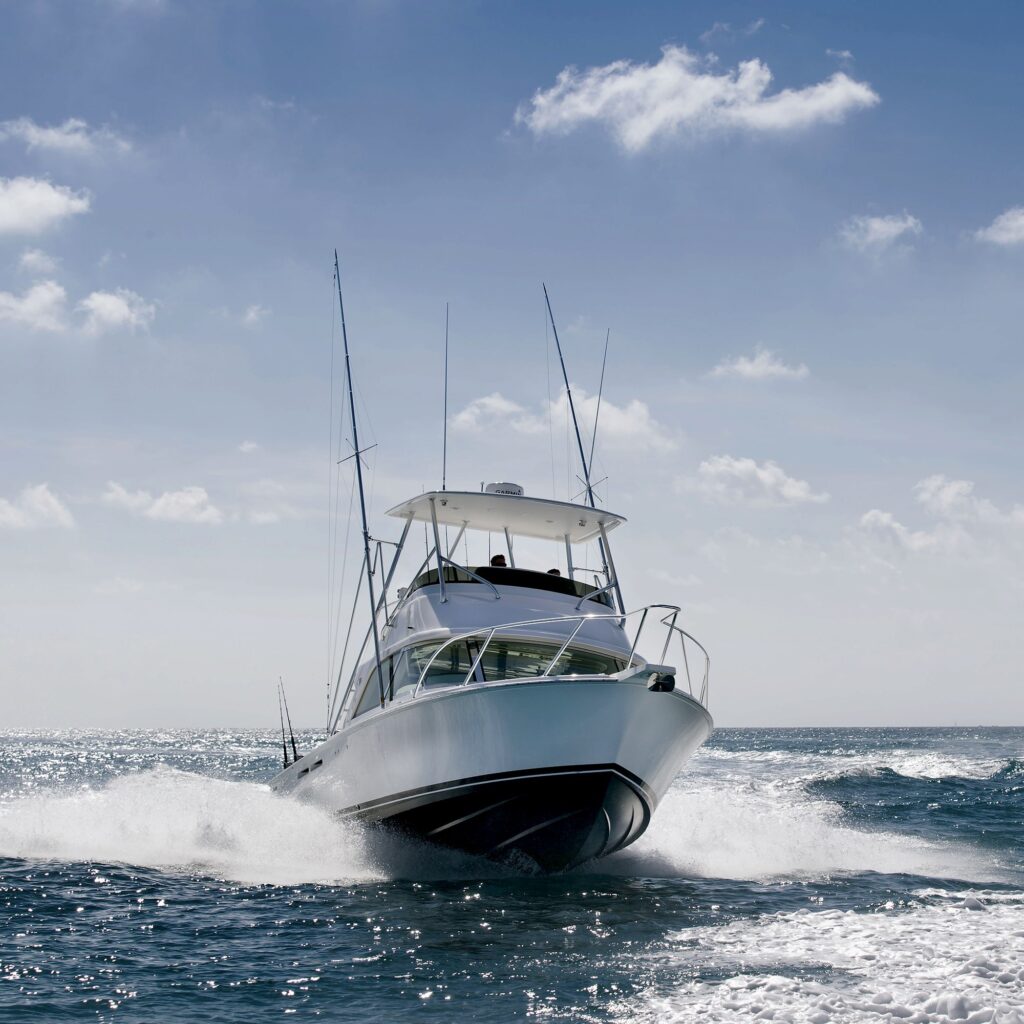
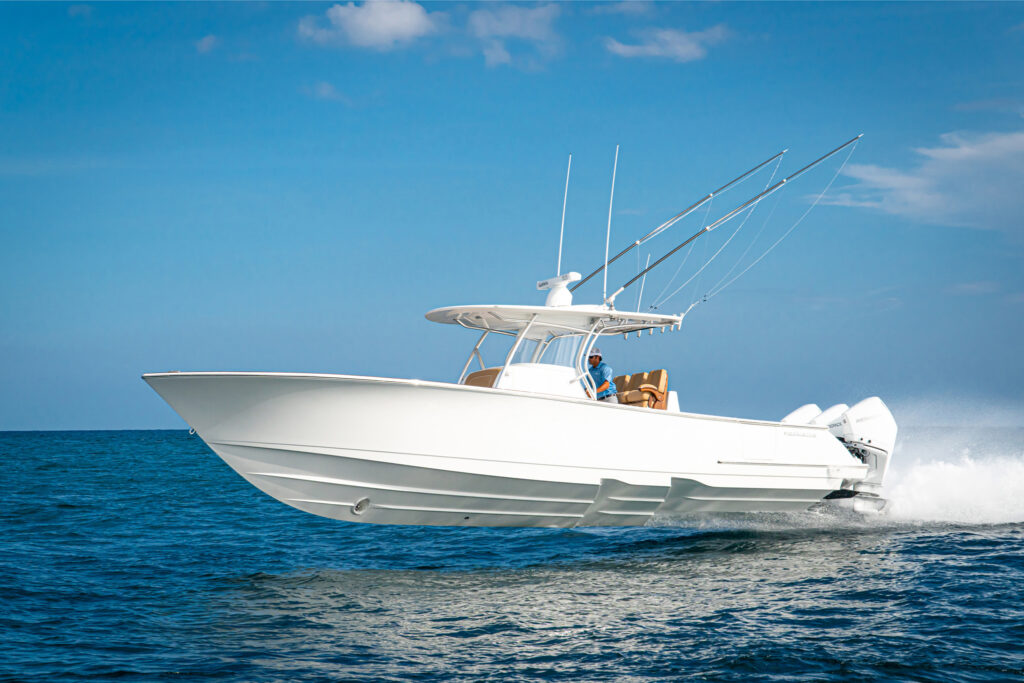
I had the patented stepped V-bottom hull design, and someone told me Intrepid Powerboats founder John Michel was looking for a new design. I brought him a model of the hull design, and he said, “OK, let’s build it.” We built a 37 with inboards, and that was the beginning of the stepped hulls with Intrepid. We eventually modified the design and made it much more conventional. Through the years, we designed a half-dozen different hulls for Intrepid.
What are some other boatbuilders you’ve worked with?
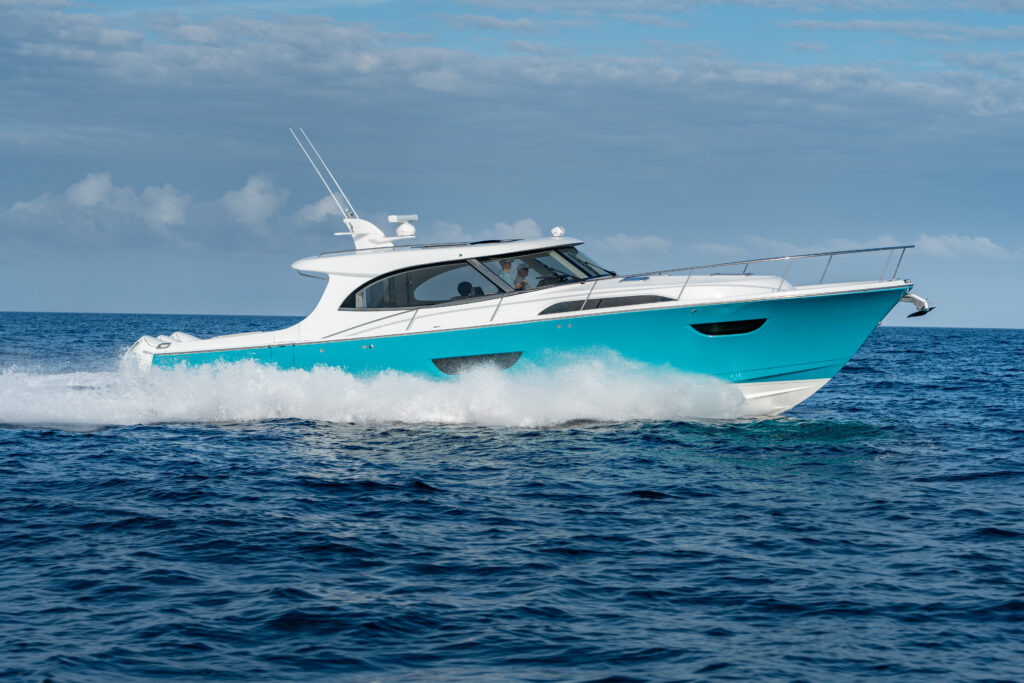
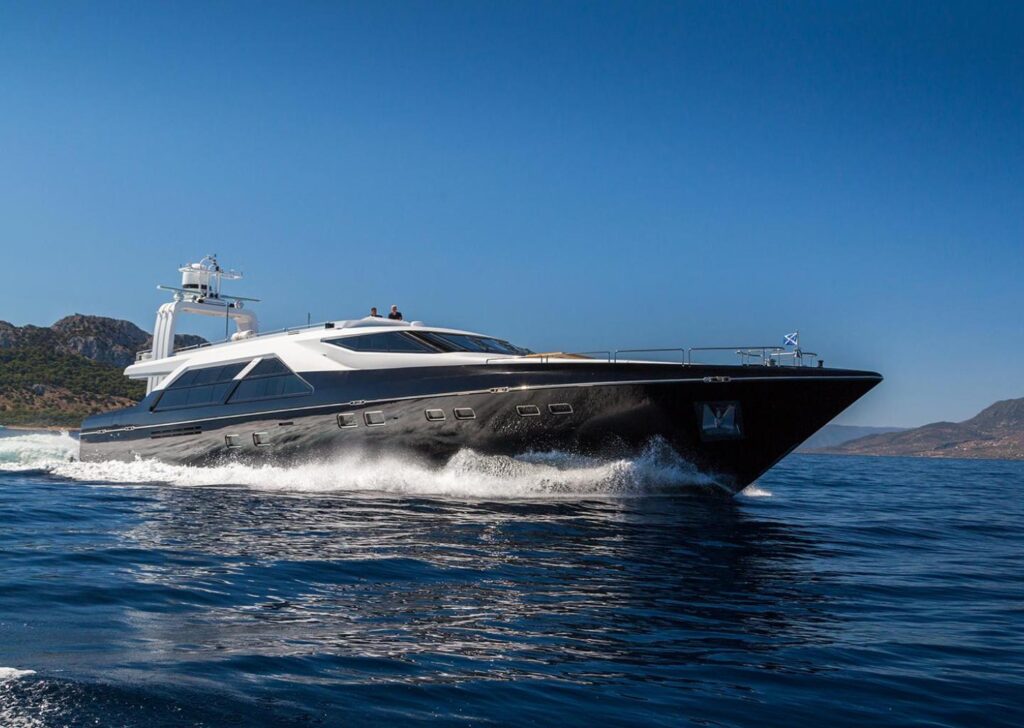
We had a good run with Contender. We started with Chris-Craft starting in 1999, and they still build some of our designs. We had years where much of what we were doing was with Invincible Boats, and then the same with Viking/Valhalla. We have a new program we’re starting with Hinckley. We’ve been with Groupe Beneteau almost 25 years now, doing many of their planing hulls. We’re working with Wellcraft and have ongoing stuff with Princess. I like to have projects that represent every sector we do boats in: the cruising market, fishing, yacht tenders, RIBs with Zodiac Hurricane, and the biggest thing we have is the U.S. Navy’s Mark 2 combatant craft. That will be the Navy’s design until 2050.
Is there a certain type of boat you enjoy designing more than others?
My favorite boat is a custom boat where I can go into a yard and have a hand-built boat. We can go in and design everything about the boat, and it’s under tight quality control. The boat that people would associate with us the most is the custom wooden boat we did, Alpha Z, for Van Dam Yachts. It’s gotten a lot of publicity through the years, and awards from magazines outside the boating industry.
hull design. PHOTO COURTESY MICHAEL PETERS YACHT DESIGN
What trends are you seeing that have potential to change the way boats are drawn and built?
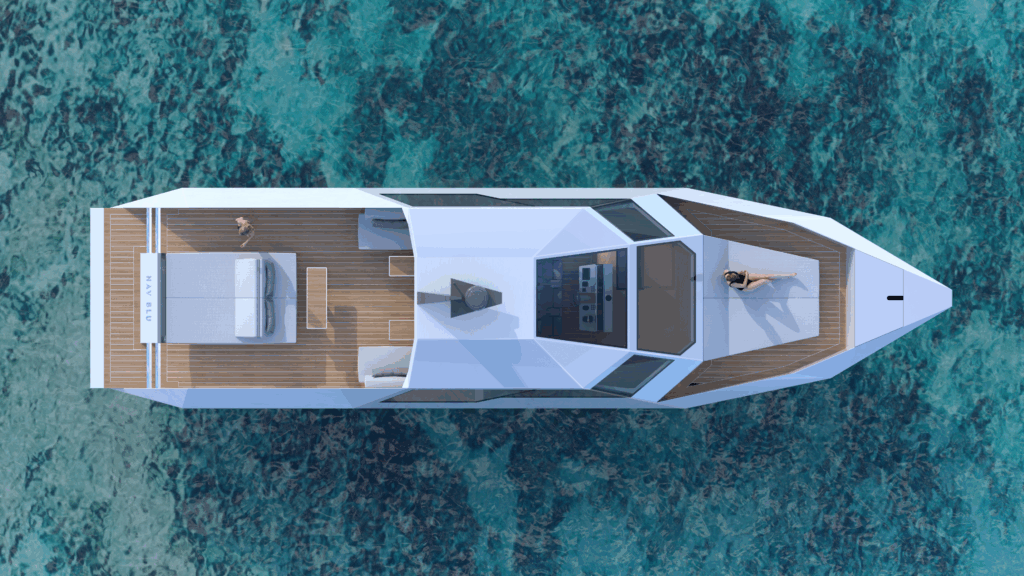
With larger boats in the 60-plus-foot range, there are two common themes: the floating villa and the beach. You take your beach with you, and in some cases those two themes are being combined. Understanding how people currently use boats is important because if you keep designing boats the old way, people won’t buy them. We’re doing a boat that’s 85 feet, and it’s specifically designed to be a dayboat.
What recent design trends make you shake your head?
One thing I fought for several years was a vertical bow on a fast boat. In the 1920s, all the fast boats had a vertical bow with deep forefoots. The vertical bow went away because a deep forefoot on a high-speed boat could trigger spinouts. Beneteau felt they were missing the market trends, and about five years ago, they had us do the vertical bow. I didn’t want to do it, but we figured out a way to make it so it doesn’t spin out.
The other thing is these huge hull-side windows. You look at it and ask, “When is someone going to approach a dock and punch the whole thing in?” In the 1960s or 1970s, there was a hideous boat called the Cargile Cutter, and when you looked at it, it was as tall as it was long, and it had these huge windows on the side and a little flybridge on top. You look at the 80- and 90-foot yachts of today, and they look like they started life as Cargile Cutters.
Have you seen a downturn in demand with all of today’s economic uncertainty?
The boating market was starting to feel a recession a year ago. I think the change in administration took what was left and put it on its ear. From our point of view, 2025 is the worst year of business we’ve had in 25 years, equal to the 2007 and 2008 recession. We’ve had builders sit on their plans, afraid to do anything. A venture in South Africa that was put together through a free-trade agreement is now on hold because by the time it was set to go into production, there would be a 30% tariff. It’s devastated business.
Which current and developing high-tech building techniques do you find exciting?
With computer-generated software that’s been used to design and mill the boats, the accuracy and complexity you can build in is amazing. The other thing is being able to 3D-print limited numbers of stainless-steel and titanium parts. In the past, you couldn’t afford to do that because there wasn’t enough production to back it up. We can do one-off hardware that you couldn’t think of before.
Can you speak to electric and hybrid propulsion systems?
About 15 years ago, I was asked to speak at a design symposium in New Zealand. My background with high-speed racing and green technology don’t mesh at all. I came to the conclusion that there’s nothing green about building a boat no matter how you slice it. You can build a wooden sailboat. No matter what you do, you’re using more natural resources than other people would use in a lifetime. The department of environmental studies at Duke University asked to use my paper as a core part of their studies. The biggest problem with electrical propulsion is the weight of the batteries.
What is the most challenging aspect of your job?
The answer is twofold. The first is if a boat doesn’t have a problem to solve. If you’re doing a big center console, how do you make it different from what everybody else has? Second is when a client comes to you with something unique. You need to understand the problem. What kind of propulsion should it have? What kind of material should it be built from? The secret to our success is listening to the client and not giving them a Michael Peters boat. When we go to Hinckley, we give them a Hinckley. When we go to Invincible, we give them an Invincible.
And what aspects of your work do you like the most?
My favorite project is the one that I’ve never done before, and it scares me half to death because I don’t know the answers. It makes me go back and pull my books off the shelf and say, “There’s a risk involved here, but we have the chance to do something special.”
Which designers or naval architects do you respect and admire?
In this country, we respect Morelli & Melvin. I’ve always emulated the Europeans more than Americans; Francesco Guida at Arcadia Yachts was the first that I thought understood how the current public uses a boat and just said, “They’re houses. Why don’t we admit they’re houses?” I admire the courage they had to do boats like that before anyone else did.
You’re at an age where some might consider retiring. Have you thought about it?
I’ve got guys who’ve been with me 35 years. We came to the conclusion that it works best with me still owning the company. We just had a client make it clear that if I wasn’t in the picture, we wouldn’t have gotten the project. I still like it. I like the problem-solving. I go to California, and it’s fun for a week or two, and then I get bored. I don’t like to stop doing stuff.