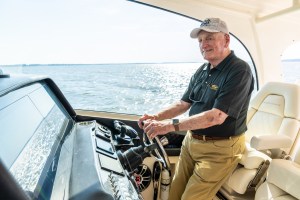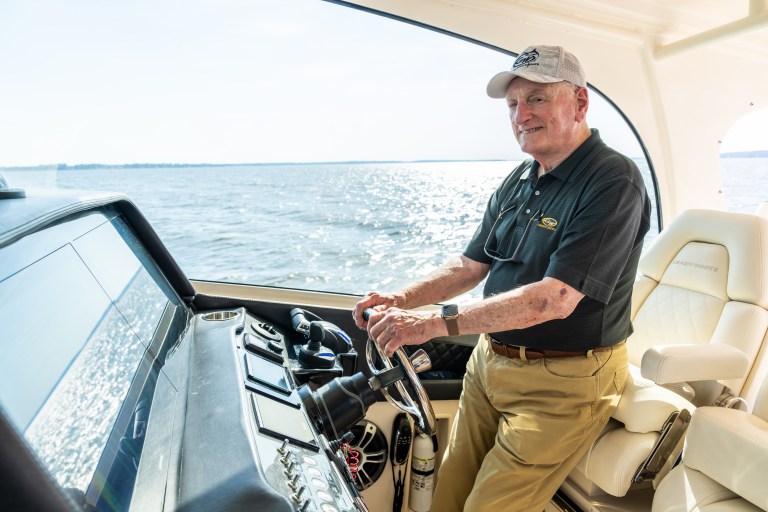
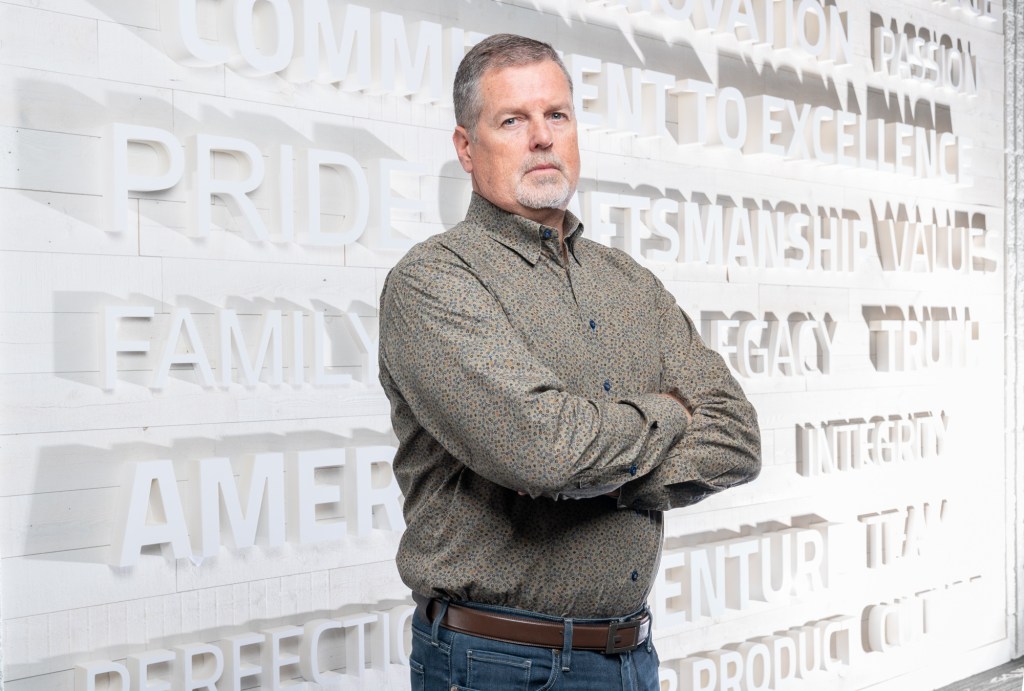
Tom Slikkers was born in Holland, Mich., straight into the business of boatbuilding. His father, Leon Slikkers, founded S2 Yachts and created the Tiara brand in 1974. Tom Slikkers started working with the business when he was 13, doing odd jobs, then moving through the accounting and sales departments before becoming president of Pursuit Boats, also under the S2 Yachts corporate umbrella. In 2012, he became CEO and president of S2 Yachts.
“I think we’ve enjoyed a great reputation. I’m going to give most of the credit to my dad and what he started,” Slikkers says. “My two older brothers and myself, we inherited that.”
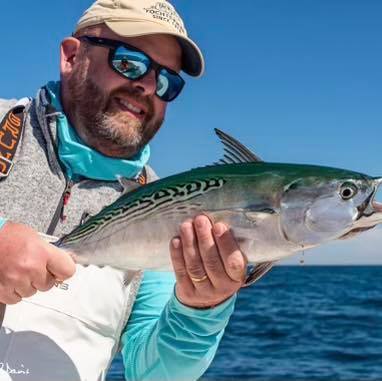
When he’s not running the company, Slikkers enjoys fly-fishing, golfing, snow skiing and biking. He still lives in Holland, now with his wife of more than 30 years, having raised a son and a daughter there. (This interview has been edited for space and clarity.)
Your family is known for powerboats, but the business actually started out building sailboats. What led to the shift?
The S2 sailboats earned a really great reputation both on the cruising side and the racing side. And 1987 was one of those watershed moments. We had invested in new models, but we just were not seeing any kind of real viable traction in the sailboat side of the industry. We had a pretty big dealer network. We had no lack of energy towards it. The market was kind of cascading away, faster than anybody could ever anticipate.
Today, it’s easy to look back and go, “Well, some of those things probably were predictable.” I think it was about time. A lot of things that people choose to do are centered first and foremost around how much time it takes. I think sailing is a very time-centric thing. You can’t go anywhere fast. You’re at the whims of the weather. I think some of those things began to work against the sailing industry.
And I think the other thing that the sailboat industry has not learned from is that they created their own language. So if you’re a lifelong boater, all of a sudden, you jump into a sailboat, you go to a yacht club, you hear guys talking about sailing. And even though you speak English, they’re using terms and phrases and things that don’t easily resonate. It does create a mental block. You just don’t find that in the powerboat circles.
Tiara is one of the best-known powerboat brands today. Did S2 create it while the company was still trying to build and sell sailboats?
For a period of time, from 1976 to 1987, there were 11 years where powerboats and sailboats were concurrently being built in our facility. We were one of only a few people in the world that was building both under the same roof. Once we pulled away from sailboats, we could put all the resources toward power, and I think that gave us the impetus to figure out how to spread our footprint.
We had already started Pursuit. We had some other forays with some sportboat products, but Tiara and Pursuit became our two primary lanes that we decided to play in.
What are some of the good things about working together as a family, and what are some of the challenges?
It’s always fun to achieve things together. My older brothers and my dad, we’re very hands-on. They wanted to be instrumental in almost everything and anything. I can do a lot of things, but I don’t have to be in the center of the wheel. I’ve probably brought a little bit more of a strategic thought process to our business, and a little bit better planning.
It’s a different type of responsibility at the senior team level and manager level, because I expect people to understand what we’re going to do as a corporate strategy. Everybody agrees, and then we go off and execute and win.
At the same time, I know that in order for me to keep peace in the valley, I have to spend an equal amount of time keeping my family up to speed about where we are in various aspects of our business. What kind of strategies are we pursuing? What are the ROIs? I still have to communicate to the family, because the family’s still the ownership piece.
Tiara turned 50 a few years ago. What do you think has allowed the company to grow all these decades?
We’re still pretty steadfast on the values by which we operate. That has not changed. The other thing that really has been a cornerstone is quality. A lot of people talk about quality, but I think our version of quality is a bigger spectrum. It’s quality in terms of performance, quality in terms of functionality, quality in terms of the actual durability of the product itself. Quality in terms of how you’re supported after the fact.
Now today, things have shifted and changed, not necessarily in the expectation of what that quality means, but in what we have to do on our side to deliver that. The boats have changed in their DNA, configuration, layouts, features. Things that we’re doing today weren’t even available to us back in those days.
One of those features was an aft-cockpit seating unit that swivels. You’ve introduced a number of clever features in the past 10 to 15 years. How do you make it inviting for employees and your designers to come up with ideas and feel like they’re being heard?
When I inherited my position in 2012, it was a pretty dark time for our company. And obviously, there’s a lot of history to look at and review, because you’re trying to figure things out going forward. What I found is that we did what a lot of our fellow boatbuilders were doing. We found a recipe, and then we essentially took an air hose to that recipe. But we didn’t really fundamentally adapt or adjust the recipe. What do I get when I go from a 39 to a 43? When I finally go to a 48, what is it that I get? That value proposition has to be complemented by what you are actually delivering in addition to additional square footage or size. Sometimes, the large distinguishing difference between those sizes was just the size of the power plant. Not more range, more interior, just a bigger platform.
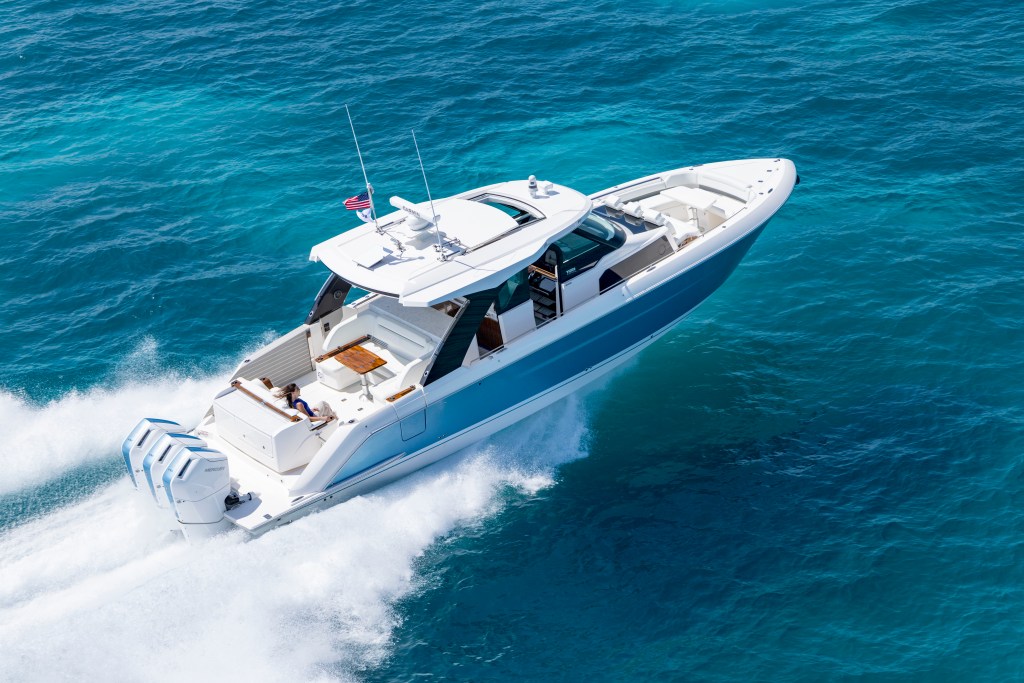
I think that financial decision, to make those jumps up to the next size boat, didn’t get sparked because there wasn’t enough innovation. So when I started the outboard side for Tiara in 2018 with that rotating lounge, that wasn’t my idea, but it was actually pretty cool. When I sat down with our designer, Andrew Bartlett, at that time, I said, “As we begin to build this lineup, you have to make sure that we’re intentional to make sure that there’s a justifiable reason, what you get in value, when you go from this size to this size.” I began to instill that in our design team, in our engineering team, so that as we went through that process of building new models, everyone began to understand.
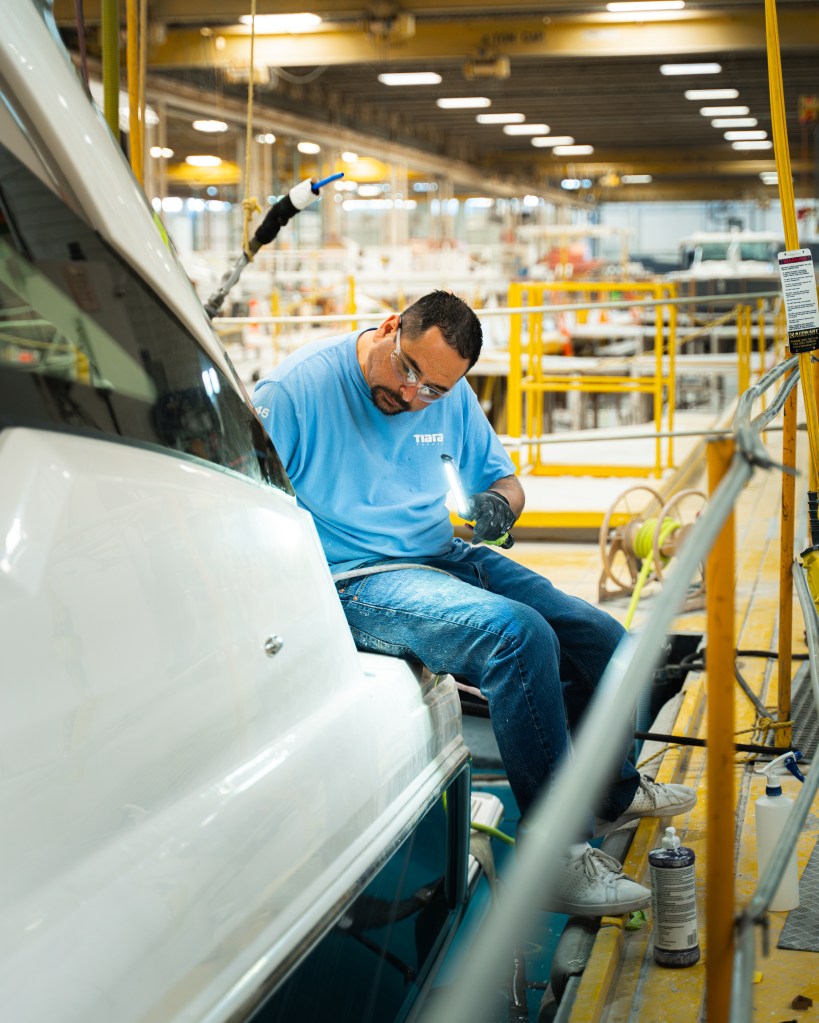
Was the modern outboard the element that allowed a lot of that innovation to take place?
Yes, when we got into the outboards, we quickly began to understand that the customer had kids and grandkids, and they’re coming over on Saturdays and Sundays, and even sometimes during the week, and jumping on the boat, throwing some food on the boat. People were going out to their favorite spots and dropping an anchor. So all of a sudden, the premise of having beds and living on board started to lower in terms of priority. Now the beds that we still provide, and the heads that we provide, are really to accommodate the people that want to be on there for a long weekend.
Today, that long weekend may be going all the way to the Bahamas and back. I think once the 600-hp outboard from Mercury came in, it was the death of the formal inboard product below 50 feet, for sure.
In terms of what’s going on in the economy right now, whether it be tariffs or fuel prices or other things, what are some of the macroeconomic challenges you’re facing?
Well, certainly, the cost of resin. We’re on a multiyear contract with the resin companies. They might pass along a surcharge here and there that we have to absorb. I think with oil going back down, we might have a short period where we’ll have a little bit of an upcharge, but I think it’s going to settle back down.
On tariffs, I took a path that wasn’t necessarily popular with my family. When the tariffs all got announced, everybody was in a little bit of a quandary. It was new territory for all of us. We didn’t know what the impact was going to be. In the absence of having concrete information, my job is to cut all the noise out and get to a plan. So I just made it easy. I told my chief financial officer, “Take the tariffs, pay them, park it off in a different account, and we’re not going to apply that to anything that we’re doing business with. I’m not going to cost-adjust the boats. I’m not going to surprise anybody as a consumer or dealer. We’re gonna suck it up.”
As an American boatbuilder, I could look in the eye of all my consumers, and the tariff was a non-discussion for me. If you’re looking at a Tiara, it’s zero. And that’s the way it should be.
What are you hearing from your dealers as far as the economy goes? Are financing and floorplan rates a concern?
Certainly, the interest rate as it relates to them is something that’s more notable than what they’ve had in the Covid years where everybody was buying anything that floated on the water. They’re having to pay more attention to the interest.
My view is, don’t make that an issue. You’re talking like it is an issue, but it isn’t an issue for the first six months that you’re holding on to product. So don’t hold product more than six months. I’m not forcing you to have a certain level of inventory. Have a level of inventory that gets you the market share that we agree on. Don’t overstretch yourself to the point where you’re having to pay extra interest. This is about managing.
I think it is more challenging for the dealers today to close sales because there’s limited access available to them on slips and places for people to put their boats. It’s a conversation I hear quite often at the boat shows. It doesn’t matter where the customer’s from, but he’s working with his dealer, he’s agreed on a boat, he’s agreed on a model, he’s agreed on the price. And then the last thing is, “I’ll sign this on the provision that you get me a new slip, because I can’t put it in my old slip.”
That’s a key point that we make with the National Marine Manufacturers Association, about needing more access for boaters. We work with them on the advocacy front. Even the launch ramps. When was the last time some of the launch ramps were actually updated or maintained?
In terms of boatbuilding technologies, do you see a future for robotics?
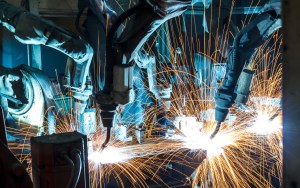
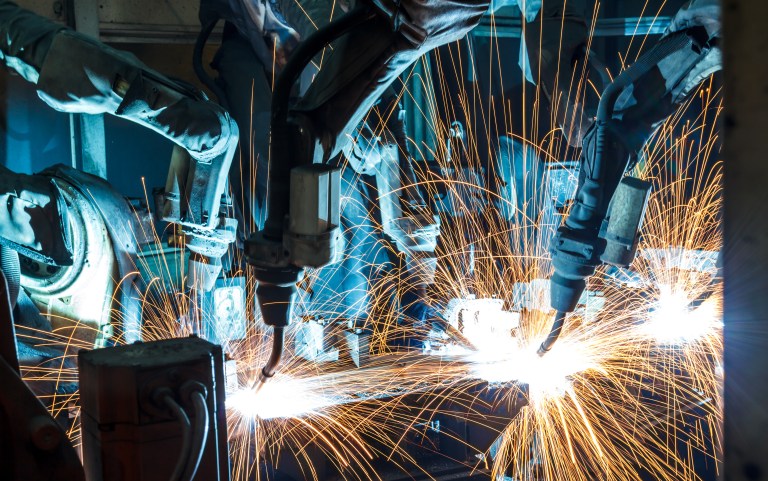
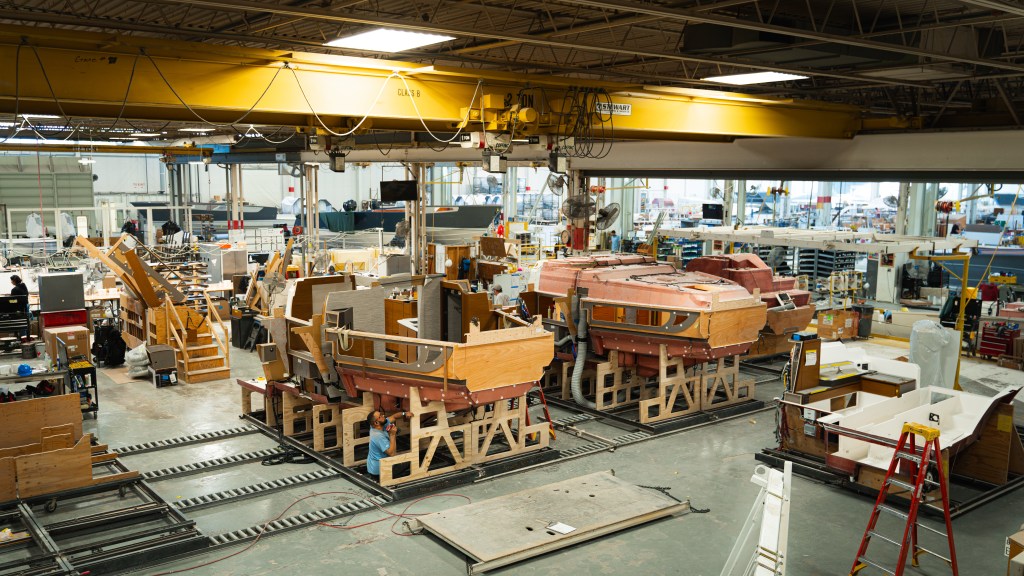
We’re actively using robots in our manufacturing process. It’s probably been five years now. We have a team here that’s doing our own development, not going to a robotic house to have them program stuff for us. We’re doing it internally. So whatever we do is proprietary to us. All the equipment is ours, all the programming is ours, and I’ve got nothing that I have to worry about anybody on the outside.
We started with the areas of our process that are the hardest for us to hire. Grinding fiberglass was not a fun job. By the end of this year, we won’t be at 100%, but we will be doing probably 70% to 80% of our fiberglass parts through automated grinding. The amount of money that we’ve invested in that, I wouldn’t want to have to sign up and do it again. Some of this is very, very laborious in terms of learning. It’s been a huge discovery for us to go through that process. The good news is that we have a great solution that we’re actually applying. It’s yielding us phenomenal outcomes.
I have a plan where I will continue to layer on automation as it makes sense. When I’m starting to run out of human bodies that either don’t have the talent or the desire to do that kind of work, I’ll find a robot that will do it.
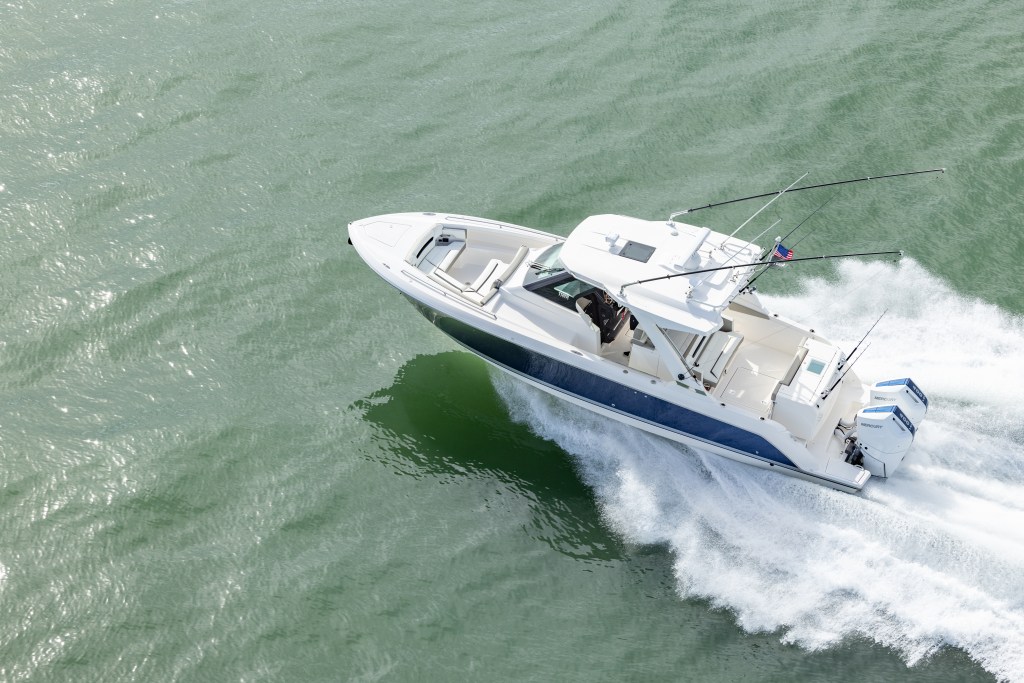
Other boatbuilders I’ve visited have bought things like robotic arms, but can’t seem to figure out what to do with them. You seem to have leaned into robotics pretty heavily.
Yeah, we’ve figured that out, and then about three years ago, one of our interns that became an employee said, “Hey, I really think that we ought to look at buying a couple 3D printers, because I actually think there’s an opportunity for us to print some parts.” He went through all the criteria, did a workup. So now I have a printing farm that prints parts for us to utilize.
All of it has to be centered around getting the same kind of quality, if not better. It puts a huge responsibility on us, but I feel like if we don’t do that, we lose who we are. I want us to have higher yields, higher expectations, higher outputs, higher quality, but I still want to have human beings be a part of it. So we’re trying to find that balance, and I’m happy to keep pushing the threshold.
What else do you think is important for readers to know?
I’m on the NMMA board, and I think our industry is facing a potential threat that we’ve got to focus on: the possible government action against styrene.
I was just in Washington, and I told people — without theater or drama — that our industry is made up of roughly 800,000 jobs. If styrene is no longer made available to the composite industry, you will see that industry shrink to about 2,000 jobs overnight. If you take styrene out, there’s not a replacement. I’ll have to offshore that work. And mathematics won’t allow that to work. It is the 100% truth.
There is no Plan B for us to replace styrene. Our company has tried things. My colleagues from Viking Yachts were there. They’ve tried stuff. The reality is that I can figure out what it takes to make a part in my plant, and I could even make a part using something that is an alternative, but I can’t tell you what’s going to happen to this once it’s in the environment. Once it’s in hot weather, once it’s in UV light. All of those things are chemical reactions to different inputs. I know what my parts are today. I have no idea if you’re asking me to sign up for the same liability and responsibility for the future. I’m not signing up for that, and I don’t know anybody else who would, either.
Our industry got put on this list largely because we were associated with plastic water bottles and all the plastics that none of us like, and we’re all tired of seeing them in our waterways. I’d like to see that taken care of as well, but we’re not the offenders. We need to preach this. We’ve got to push hard and make some headway in a big way there.
This story originally appeared in the August 2026 issue of Soundings Trade Only.