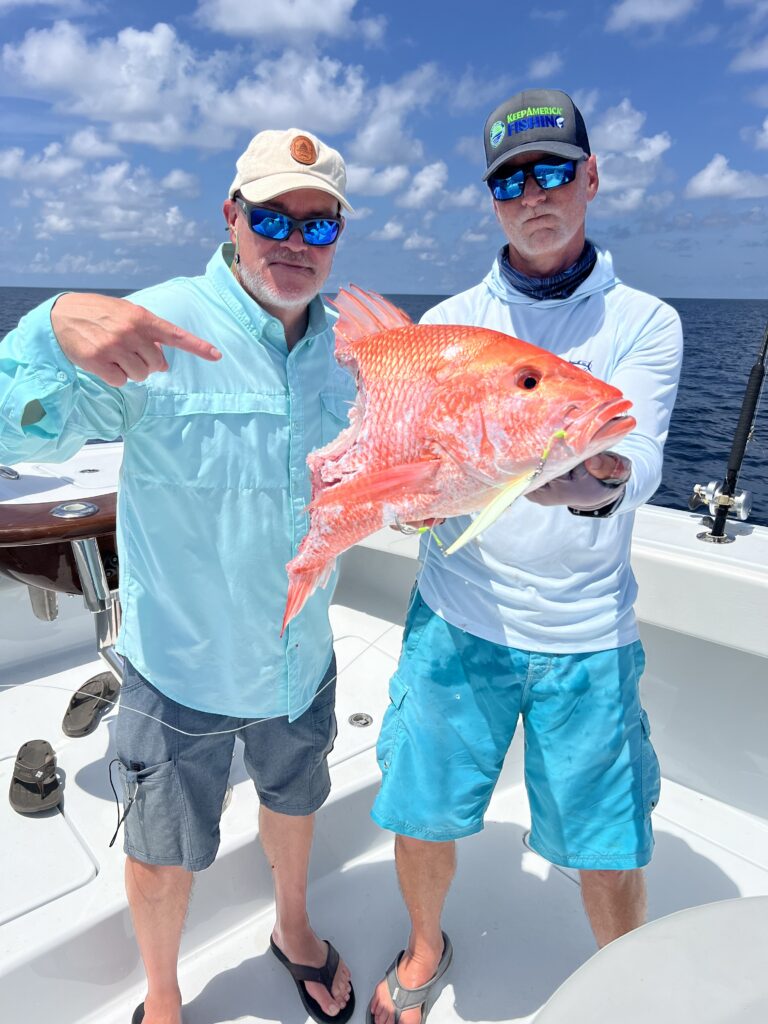
When it comes to advocacy work, Glenn Hughes knows not only how hard it is to affect policymaking, but also how much policy needs constant attention. “It’s never one issue. It’s 50 issues,” says Hughes, president of the American Sportfishing Association, which is working on everything from red snapper access to modernizing data. “We try to prioritize them not only as to what’s impacting anglers and our industry the most, but what we are actually capable of promoting or stopping.”
Prioritizing issues that affect the marine industry is also key to advocacy work at the National Marine Manufacturers Association, which will host its annual American Boating Congress from May 4-6 in Washington, D.C. The idea is to help lawmakers, staff aides and others understand the industry’s impact and needs, and to focus attention on legislation, regulations and more that have a significant impact on boating.
“Over the past year, a lot of the focus has been on tariffs and trade, which will certainly remain the case,” says Clay Crabtree, NMMA interim vice president of public policy and government affairs. “For the year ahead, our top priorities include access.”

Clay Crabtree
NMMA
On reauthorizing the Sport Fish Restoration and Boating Trust Fund: “Last year, close to $800 million came into the trust fund, and it goes to all 50 states. This trust fund is very, very important.”
Tariffs are also on the mind of Joseph A. Dargavage, founding partner at United Island & Yacht and chairman of the U.S. Superyacht Association. “It is affecting parts coming to America that the boatyards need to work on these large vessels,” Dargavage says. “We have Lauderdale Marine Center, Bradford Marine, Derecktor here in Florida. These are some of the best boatyards in the world, and the tariffs are affecting some of the decision-making. If a boatyard has to build that tariff into their quote, that’s an issue.”
The Big Three
Crabtree says the three top items on NMMA’s radar this year are reauthorization of the Sport Fish Restoration and Boating Trust Fund, which generates hundreds of millions of dollars for marine conservation, access and boater safety; the Water Resources Development Act, which authorizes U.S. Army Corps of Engineers projects that involve marine infrastructure; and the United States-Mexico-Canada Agreement, which involves trade, supply chains, imports and exports.
The Sport Fish Restoration and Boating Trust Fund is scheduled to expire Sept. 30. Created in 1950, it imposes excise taxes that form the backbone of funding for such projects as boat ramps, marinas, fisheries restoration, boating safety initiatives and more. “Last year, close to $800 million came into the trust fund, and it goes to all 50 states,” Crabtree says. “This trust fund is very, very important.”
A bill is already introduced in the U.S. House of Representatives to reauthorize the trust fund, with bipartisan sponsorship by U.S. Rep. Rob Wittman, R-Va., and U.S. Rep. Debbie Dingell, D-Mich. Crabtree says NMMA hoped to see a Senate version of that reauthorization bill introduced prior to the American Boating Congress in May. “I don’t see any changes on the horizon. We just have to get it done,” he says. “We’ve spent the past six months on it, and now we’re working on the need to get it over the finish line.”
The Water Resources Development Act, Crabtree says, is basically the infrastructure bill for water. With this legislation, NMMA is hoping to see changes that will ensure fees the Army Corps collects from boaters go back into boating uses. “The Army Corps is one of the biggest providers of boating access in the country,” he says. “We are looking to ensure that they have the flexibility to retain recreation fees, so when you’re going to a boat ramp or one of their facilities, they should be able to keep those fees and use that funding to improve boating access. Right now, they don’t have all of the flexibility that’s needed in the funding to do that, so we want to try to change that.”
When it comes to the United States-Mexico-Canada Agreement, Crabtree says, this year marks the timing for an official joint review of the language. “The countries have to say, Are things working well? Or is there anything that needs to be improved or renegotiated? Or can we renew this thing?”
Tariffs play into the thinking behind this joint review, he says: “The tariffs create uncertainty, and businesses want certainty for their supply chains going between borders. Right now, we’re in the process of the countries working through what they would like to see, and it all will come to a head in July when they sit down for an official joint review of USMCA. It will automatically renew for a year, or they can extend it for 16 years with little adjustments here and there.
“For us, it’s a big deal because Canada is the U.S.’s top export market for recreational boating,” he adds. “Forty percent of our exports go to Canada, and Mexico is an increasing market for our industry. We have been urging the administration to support the renewal of USMCA. We’ve communicated that to members of Congress, too.”
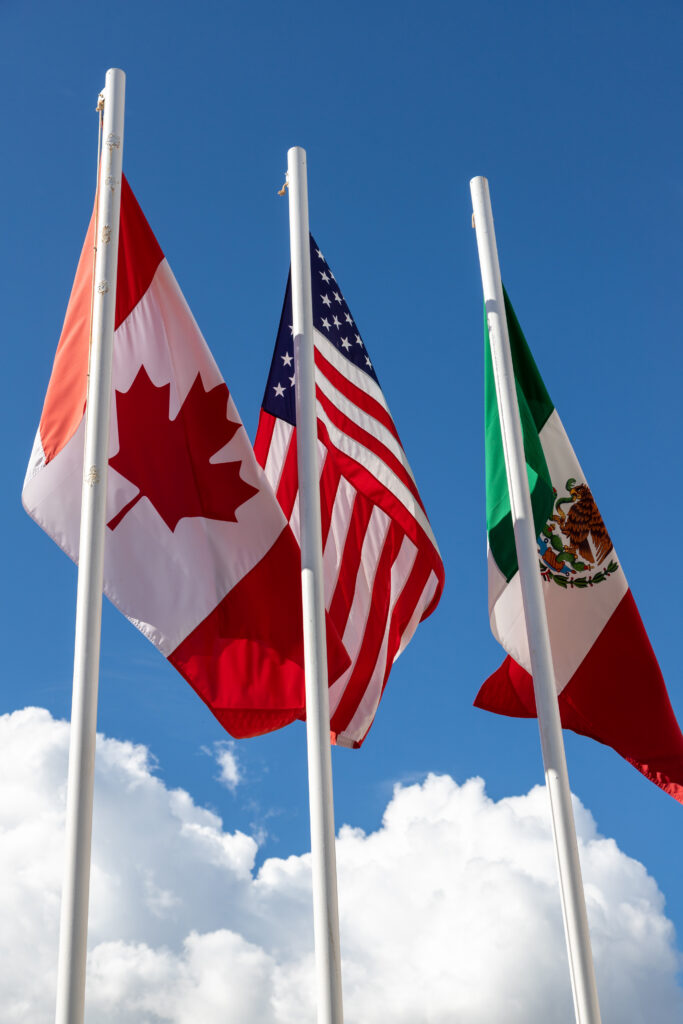
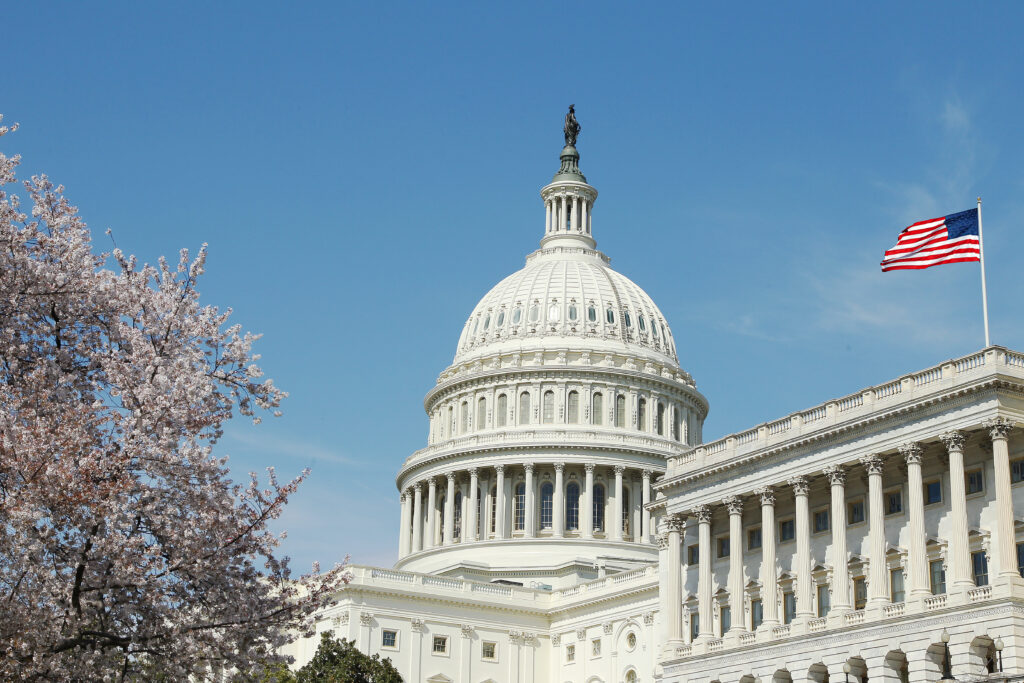
tariffs and exports. PHOTO: RONNIECHUA – STOCK.ADOBE.COM
The environment on Capitol Hill is uncertain for all kinds of legislation right now, Crabtree says, but NMMA’s three top issues are all bipartisan in nature, giving real cause for optimism. “We always work with both sides, Republicans and Democrats, to push forward our industry’s issues and educate the members of Congress,” he says. “Everyone loves being out on the water with their family and friends, but we have to educate them that there is a massive economy that creates the boat you’re on. A lot of that is educating members of Congress and the economic impact.”
Top of the Market
The U.S. Superyacht Association isn’t doing the same level of advocacy work that NMMA does, Dargavage says, but some of the same issues frustrating the smaller- and midrange-boat community are also affecting the megayacht segment. Tariffs driving up prices for refit work at South Florida yards are a major concern, he says, while the superyacht segment also has had to deal with worries related to immigration crackdowns.
Many crewmembers aboard megayachts hail from countries outside the United States, and what they were seeing about U.S. immigration policy on the news worldwide gave them pause about attempting to enter the country. “You hear the words ‘immigration’ and ‘crackdown’ and ‘stricter’ in the press, and a lot of people in our industry equated that with crews coming to America,” Dargavage says. “There became a misconception, especially last summer, that they were chasing people down the docks, and none of it was true.”
Concerns became so significant, he says, that press were invited to a meeting with local customs and immigration officers in Florida to try and get information out to the superyacht community about crews from other countries not having to deal with new U.S. immigration laws when attempting to bring a yacht into South Florida.
Significant economic impact is at stake with those types of fears, he adds, because a 100-foot yacht that docks for 30 days in South Florida will spend up to $100,000 that helps to support local businesses. And it’s not just money going into marine businesses; crews use rental cars, go to movie theaters, dine at restaurants and participate in all kinds of other activities that generate income for local businesses. “We always want to be supporting the superyachts,” he says.
Fishing Focus
The American Sportfishing Association has more than 800 members involving everything from helm electronics to fishing nets. Seven full-time government affairs people work in Washington, D.C., and at the state level on policy issues specific to clean water, abundant fisheries and access to fish, along with eight additional lobbyists and consultants who focus on trade, tariffs and tax issues.
Top of mind for several years now have been government attempts to restrict boat speeds along the East Coast, based on protections for the North Atlantic right whale. The ASA has worked in collaboration with the NMMA on that issue, and is following NMMA’s lead on current efforts to address speed rules related to boats 65 feet and larger. “There are opportunities to protect the whales through good common sense,” Hughes says. “We already have the technology to protect the whales. That’s what we’re going to continue to push for.”
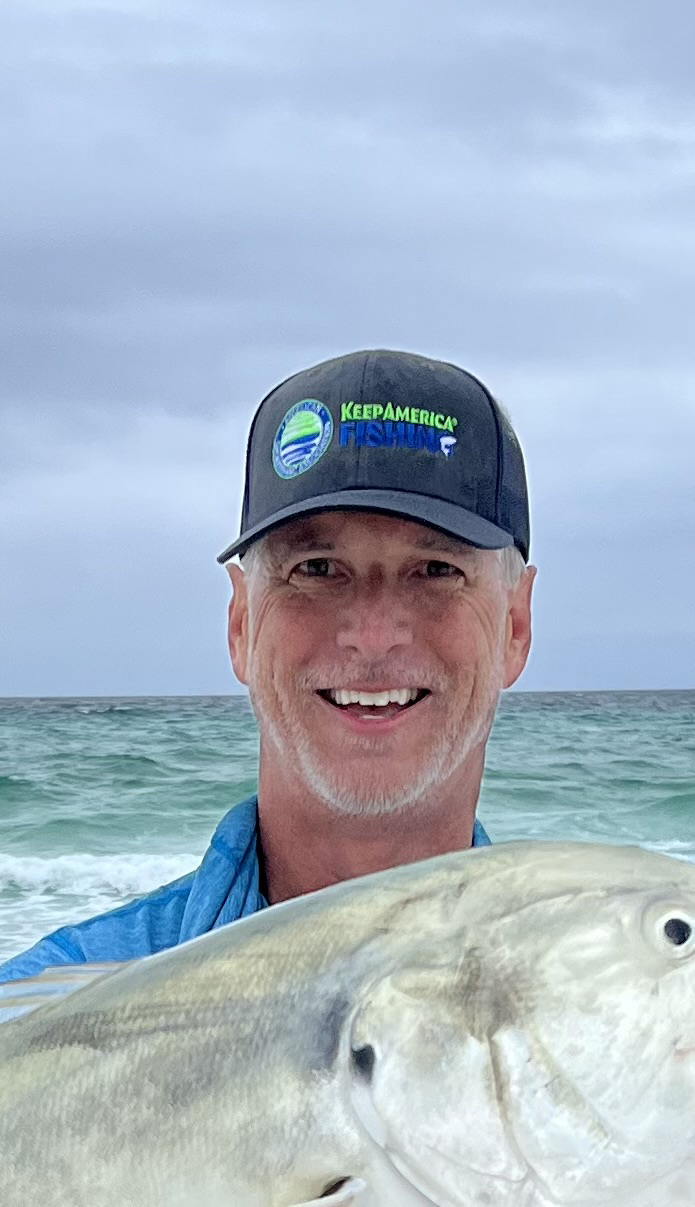
Glenn Hughes
ASA President
“Whenever you hear the government use the term ‘best available science,’ you know you’re dealing with outdated data. One of my goals is to improve on that.”
Hughes says trying to address all the state and federal policy issues surrounding fresh- and saltwater fishing is like playing a game of Whac-A-Mole. At the federal level, he agrees with Crabtree at the NMMA that reauthorization of the Sport Fish Restoration and Boating Trust Fund tops the priorities list. “A lot of people have no idea that they buy fishing tackle, and they’ve been paying this excise tax since the 1950s to support conservation,” Hughes says. “That, combined with the motorboat and fuel tax, we need to make sure we reauthorize it and modernize it.”
In terms of modernization, he says, he’d like to see the federal government make policy decisions based on real data and science, as opposed to assumptions about how many fish are caught, how many people are out on the water, and so forth. “We don’t have good science to start,” Hughes says. “It’s data that’s old and outdated.”
One example involves red snapper, which he says is a big issue for the ASA this year: “We’ve been able to push back on the federal government saying there’s not enough red snapper to catch, where we know they’re off by as much as 40% on the data. Whenever you hear the government use the term ‘best available science,’ you know you’re dealing with outdated data. One of my goals is to improve on that.”
Working with better information leads to more people getting out to fish, he says. With red snapper, there were only two days of fishing available last year. This year, that number is increasing to 39. “It’s a huge jump, and it’s a big increase in fishing tackle and sales,” Hughes says.
Another species the ASA is focused on is menhaden, he says. Certain commercial interests are taking significant quantities of menhaden out of Chesapeake Bay and the Gulf of Mexico, creating problems not only for catching menhaden but also affecting the whole food chain that involves them. “We’re working with the federal government to enforce what we’ve already done through federal commissions and councils,” Hughes says. “If you take 100 million pounds out of the mouth of the Chesapeake, you’re going to influence all kinds of things.”
Other regions face different issues. On the West Coast, challenges include environmental groups trying to close off certain areas to fishing. “We’re battling to maintain access,” he says. “This is a constant battle.” In the Northeast, the number-one fish that anglers target is striped bass. “We’re making sure there are still opportunities to fish for striped bass,” he says. And Minnesota is trying to ban the use of lead fishing tackle. “They want to change the law and say you can’t use lead. That means fishing becomes more expensive and less accessible. They think lead is bad and is impacting fish and wildlife, but there’s no good science that says those things.”
On top of all of that is the issue of tariffs, which affect fishing products and boats just the same as all kinds of other boating products. “With tariffs, it’s more of a navigation than being able to make changes,” Hughes says. “What we want is certainty. Last year was a lot of uncertainty. Right now, our industry is feeling pretty good about 2026. Even with everything they’ve been through, they’re still selling product. People are still going fishing.”
One key component of addressing these issues and others, Hughes says, is combining the power of the marine industry with other outdoor industries, such as recreational vehicles, motorcycles, archery and the like. Hughes’ work at ASA dovetails with his role as chairman of the board for the Outdoor Recreational Roundtable, which he says helps legislators to understand that outdoor recreation as a whole has a $1.3 trillion economic impact — with boating and fishing being the top contributors to that figure.
“That impact, that voice has opened doors,” Hughes says. “We think fishing and boating are big, but we are small relative to the entire world of outdoor recreation. Together, we are so much stronger. We have a greater impact.”
This story originally appeared in the May 2026 issue of Soundings Trade Only.