The marine industry has never been short of ambition. From the engineering precision of superyacht construction to the global logistics of fleet management, the sector demands constant evolution. Yet when it comes to tech, the industry has historically moved at its own pace: deliberate, relationship-driven and slow to adopt the digital tools transforming virtually every other sector.
That is changing. And we are watching it happen up close.
My company, Yachting Ventures, works with early- and growth-stage companies that are building the next generation of marine tech. We identify founders solving genuine industry problems, help them navigate the nuances of the marine market, and connect them with the builders, dealers, operators and distributors who can accelerate their growth.
Two marine startups, 3D Boats and TowPro, recently caught the team’s attention for the clarity of the problems they are solving and the traction they have already built.
3D Boats
Anyone who has tried to sell a boat online knows the limitations of a static photo gallery: A well-composed image can capture a vessel’s lines, but it cannot convey the scale of a salon, the quality of joinery up close, or the spatial relationship between the helm and cockpit.
For high-value purchases, where buyers are often making decisions across state lines or international borders, that gap between digital presentation and physical reality creates friction. It delays the sales cycle, and it costs dealerships and brokers real money.
3D Boats was founded to close that gap. The company uses high-precision 3D scanning to create interactive digital twins of vessels that are then embedded into listings on OEM websites, dealership platforms and brokerage portals. The result is a virtual walkthrough that does what photography cannot: It lets buyers move through a boat on their own terms, at their own pace, from wherever they are in the world.
The timing is well-judged. The automotive and real-estate industries have set consumer expectations around digital research, investing heavily in immersive online experiences. The marine sector has been slower to follow, but buyer behavior has not waited for it to catch up.
Today’s boat buyer is increasingly comfortable making high-consideration purchases with limited in-person interaction, provided the digital experience is rich enough to support the decision. 3D Boats is betting that infrastructure (smartphone processing power, browser capability and broadband penetration) has now matured to the point where immersive 3D experiences are accessible at scale, without requiring specialist apps or hardware.
The company has made early inroads with credible partners. Pursuit Boats, the National Marine Manufacturers Association and the Marine Retailers Association of the Americas have all engaged with the platform. During the next 12 months, 3D Boats plans to expand its regional scanning network across major U.S. boating hubs, deepen integrations with incumbent marine technology platforms and introduce a suite of AI-powered features.
That last initiative points to a broader ambition: not just to digitize the boat-viewing experience, but also to make the intelligence embedded in those 3D models useful throughout the sales process.
TowPro
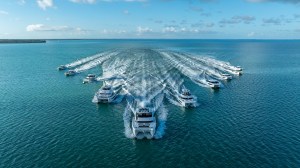
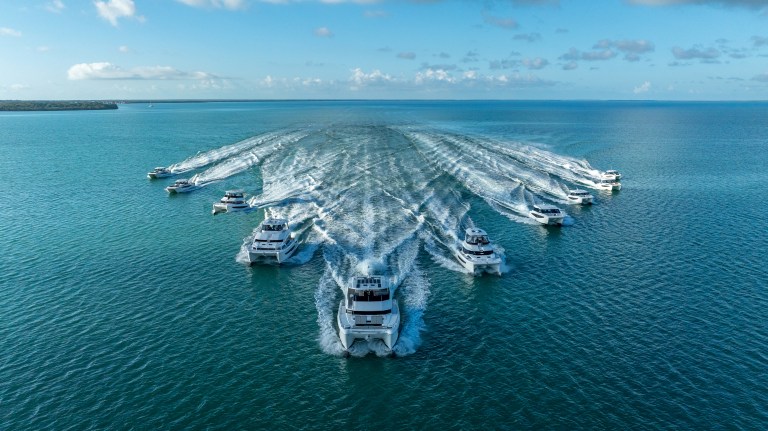
Superyacht operations have grown considerably more complex. Where a charter or private vessel once carried a tender and perhaps a personal watercraft, today’s charters routinely involve chase boats, multiple tenders, a fleet of PWC and an array of water toys. Managing that ecosystem — knowing where everything is, who is operating it and whether on-board systems are functioning correctly — has become a genuine challenge.
TowPro provides real-time monitoring, tracking and safety oversight for the full range of assets operating around a superyacht, giving captains and crew a single view from the bridge of where everything is and how it is being used. The platform also monitors critical on-board systems while towing, turning what has historically been a set of manual checks and radio calls into a connected, data-driven picture.
The safety dimension here is not incidental. As fleets grow in size and complexity, risk exposure grows with them. Incidents involving tenders or support craft have been difficult to anticipate or respond to quickly. That’s because visibility over those assets has been limited. TowPro keeps the mothership informed in real time, improving response capability when something goes wrong.
TowPro is already deployed across more than 100 superyachts globally, including such high-profile vessels as the 338-foot Feadship Ulysses, the 377-foot Lürssen Ahpo and the 290-foot Oceanco Barbara. In the next 12 months, TowPro plans to deepen its integrations with major marine hardware and navigation providers, with the goal of making the platform a seamless layer within existing on-board systems.
Meet the Startups at IBEX
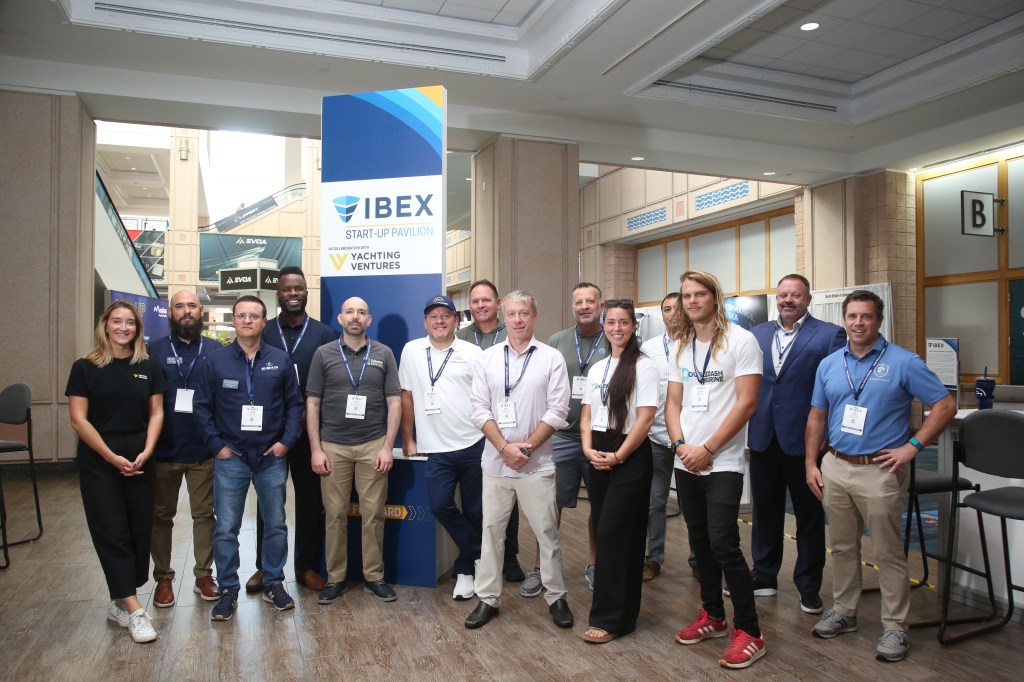
This year, Yachting Ventures is once again partnering with the International BoatBuilders’ Exhibition and Conference. Scheduled for Oct. 6-8 in Tampa, Fla., IBEX will include a dedicated Startup Pavilion to give innovative, early-stage companies a platform where builders, suppliers and investors can meet the founders who are developing technology relevant to their businesses. The companies will represent a cross-section of where marine technology is heading, and conversations with founders at this stage tend to be considerably more direct and substantive than at a standard trade stand.
If you are building something for the marine industry and want to explore whether Yachting Ventures might be a useful partner, we would be glad to hear from you.
Gabriella Richardson is the founder of Yachting Ventures.
This story originally appeared in the July 2026 issue of Soundings Trade Only.