

In recent years, there have been several memorable moments when the marine industry looked at what state or federal governments were attempting to do, and then wondered how on earth things could have gotten to this point. There was an idea to save North American right whales that could have all but ended the East Coast sportfishing industry. Lobstermen are currently trying in court to stop 24/7 GPS tracking of their boats when they’re out to dinner with their families.
And now, as Jeff Wasil, vice president of environmental compliance and marine technology for the National Marine Manufacturing Association, puts it: “They’re going to ban recreational boatbuilding because of plastic bottles? That’s basically what they’re saying.”
He’s talking about the way that styrene, a major component in polyester and vinylester resins, has come under scrutiny from the Environmental Protection Agency by way of the Toxic Substances Control Act. It’s one of several regulatory issues in play at the state and federal levels — including the reporting and labeling of “forever chemicals” and the consideration of new heat standards — that pose serious threats to the way boats are built and sold, and thus threaten business operations all across the boating industry.
Experts say these government efforts may be well-intentioned, but their practical effect goes far beyond anything reasonable. “There’s a ton of stuff that may be necessary for certain industries,” Wasil says, “but for other industries, it makes no sense at all.”

Styrene
What’s happening with the federal government’s interest in styrene, Wasil says, is “one of the biggest threats to our industry. If styrene gets banned in any way, then we’re ceding leadership to China and Mexico, and there’s absolutely no reason why styrene should have been added to that list.”
That list is the EPA’s Toxic Substances Control Act prioritization list, making styrene a candidate for designation as a high-priority substance for risk evaluation. That designation would trigger a process that could end with styrene being deemed unreasonable for certain uses, including in boatbuilding resins and composites. The EPA could then impose all kinds of possible scenarios ranging from emissions controls to outright bans.
None of that sounds right to Wasil based on what is actually happening with the use of styrene at U.S. boatbuilding facilities. “We’ve been building boats since the 1950s with styrene,” he says. “Honestly, there’s no data that supports it. If we had a legitimate issue in recreational boatbuilding with respect to styrene, we would see it. We’d have a workforce with issues. We’re not seeing that. And it’s been looked at for decades.”
Styrene is used in all kinds of things: resins, plastics, adhesives, sealants, paints, packaging, electronics, construction materials and more. Wasil says the bulk of what the government appears to be responding to has nothing to do with boatbuilding whatsoever.
“I think the EPA was getting a lot of pressure about disposable plastics, Styrofoam containers,” Wasil says. “If you look at the comments that led up to that determination, they were all heavily talking about the use of Styrofoam in plastic bottles and containers. There were pictures of those things on the side of the road. No one mentioned anything about recreational boatbuilding in any of those comments.” The NMMA, he adds, continues to work on this regulatory issue.
Forever Chemicals
Similarly challenging for the recreational marine industry is what’s happening with polyfluoroalkyl substances, also known as PFAS or “forever chemicals.” It’s a group of thousands of human-made synthetic chemicals that are known for being resistant to water, oil, grease, stains and heat. These forever chemicals have been used since the 1940s and ’50s to make everything from outdoor gear and firefighting foams to microwave popcorn bags and varnishes.
And now certain government entities are requiring companies to label products that contain these chemicals, report the use of these chemicals, or no longer use these chemicals at all — even when companies may not even realize they are using them.
“PFAS has been used for 50, 60, 70 years,” says Lynn Bergeson, managing partner at law firm Bergeson and Campbell in Washington, D.C. “People who make boats might have no earthly idea that this complex, durable good with more than 100 parts may have miniscule quantities of intentionally added PFAS. There are so many different parts and widgets and plugs and screws in a complex product like that, you can pretty much assume there’s some PFAS in there.”
In states like Minnesota, New Mexico and Maine, she says, that reality is increasingly becoming a problem. Boatbuilders and dealers alike may be required to report, publicly, that the product they make and distribute contains these chemicals. “For detractors of these chemicals, that can be the basis for a lawsuit,” she says, noting that environmentalists are testing novel legal theories around PFAS all the time. “They’re looking for companies with deep pockets to claim that they are contributing to environmental degradation.”
Bergeson says her firm’s clients have been querying their supply chains for years, trying to figure out if any of the components they’re buying contain these chemicals. “If yes, what is it? How much of it is there? What is it for?” she says. “Depending on those answers, you can make appropriate adjustments. Maybe you don’t buy that product anymore and find an alternative.”
Sometimes, she adds, the best way to attempt to comply is to take an educated guess when filing a report with the government. “You can say there’s PFAS, or I think it’s there, I don’t know why it’s there or how much is there, but I presume it’s there,” she says.
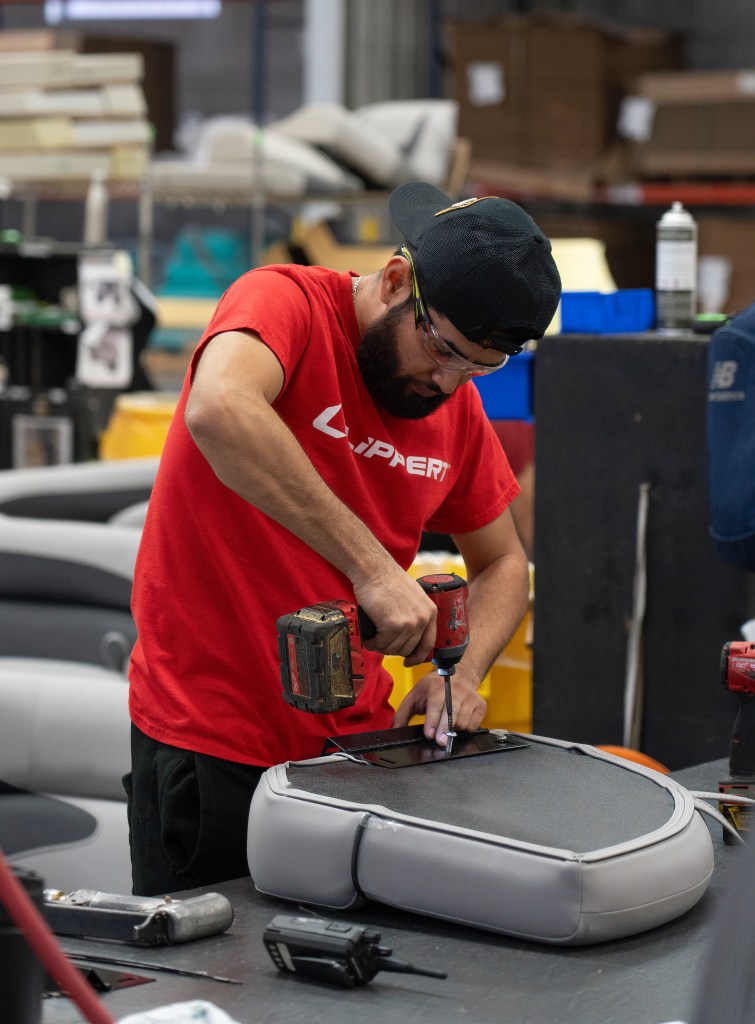
All of which, Bergeson adds, begs the question of how or even if this information is helping state regulators to make informed decisions. “I have yet to find any state agency that is threatening enforcement action for failure to submit,” she says. “I think the intention is to help the state figure out where PFAS is coming from and to encourage people not to use PFAS in a way that harms people or the environment. It’s almost like a shaming law.”
Still, companies need to comply — in Minnesota, she says, it’s a one-time reporting fee of $800. “You could say, perhaps, we have this boat fabric that is intended to resist fading or water. We’ve asked the supplier, we don’t know, but we think maybe PFAS could be in there. That’s a good-faith effort to report.”
Heat Regulations
Yet another regulatory concern, Wasil says, is that the federal Occupational Safety and Health Administration is considering ideas around heat standards that could create serious challenges for boatbuilders. “It started out as a proposal under the Biden administration to deal with some heat-related issues and fatalities in warehouses, with delivery drivers, stuff like that,” he says. “The problem with what they proposed is a one-size-fits-all solution.
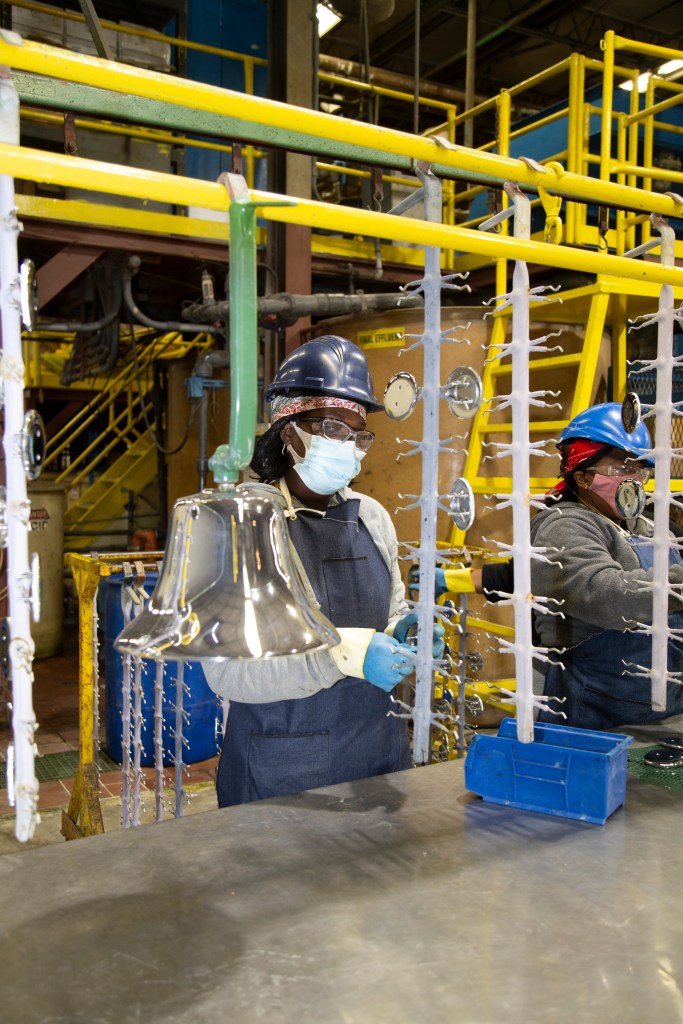
“If you work in a library or a foundry, you’re bound by the same conditions,” he says. “Those places are very different, and they require different management techniques. OSHA tried to swing a giant hammer and address every possible situation through this one rule, and there’s a lot of sectors and a lot of industries that don’t have a heat-related injury history.”
Wasil says that he and others did database searches but could not find any heat-related problems in boatbuilding. “Certainly, if there was an issue, it would be prolific after so many years of boats being built,” he says. “Most of the boatbuilders already have policies and procedures in place to protect their employees.”
Practically speaking, Wasil says, imagine that a Tennessee boatbuilder has an employee who goes on a two-week Alaskan cruise for vacation. He then returns to the boat plant, but now has to go through a process.
“He was in a cool climate for two weeks, so his body needs to reacclimate to the temperatures in the boat plant,” Wasil says. “So on the day he comes back, that Monday, he can only work two hours. On Tuesday, it’s four hours. By Friday, it’s his regular shift. You can imagine the logistics of trying to track where your employees go on vacation because they have to acclimate. That’s not going to work. And quite honestly, it’s none of the employer’s business where the employee is going on vacation.”
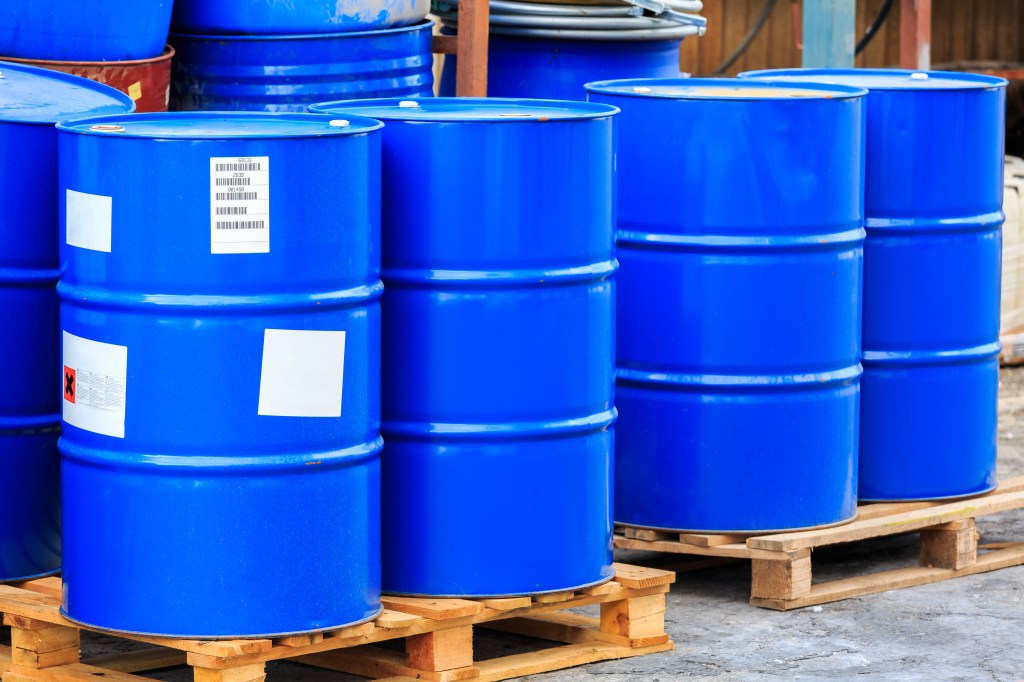
The Trump administration is continuing to look at the Biden-era proposal for a heat standard. Congress has held hearings, and OSHA is in the rulemaking process. “Some manufacturers want a national heat standard,” Wasil says. “It would preempt a lot of the states that are implementing their own requirements. Others do not want any type of federal heat standard. I think NMMA’s perspective is that if this is the heat standard OSHA is going to roll out, then we don’t want a heat standard. If they will roll out something that takes into account different industries, then a national heat standard would be a lot more palatable.”
The devil that’s in these details could be fatal to some companies, Wasil adds. “The way OSHA has proposed it right now is totally unworkable. It would kill manufacturers.”
This story originally appeared in the July 2026 issue of Soundings Trade Only.