

If you, your employees, your colleagues and your industry friends are experiencing something that feels more significant than typical stress — more like multiple, simultaneous stressors — you are not alone. Every year, the American Psychiatric Association polls Americans to learn how much anxiety is out there. In 2025, at least six in 10 Americans felt anxious about health, finances, safety and the general state of the world. In the marine industry, the past year’s stressors included struggling boat sales, high interest rates, stubborn inflation, tariff policies and the continuing upheaval of artificial intelligence.
“We have all of these forces externally that are coming at us, and then we have what I would consider internal industry issues, and it has all put us in a position where we’re now selling boats at the same rate that we were in 2013 — and we’re heading for 2012 numbers, probably next year,” says Matt Gruhn, president of the Marine Retailers Association of the Americas. “Those are the years when we were still trying to claw our way out of the Great Recession.”
Robyn Boerstling, senior vice president of government relations at the National Marine Manufacturers Association, says the past year also challenged industry advocates to think creatively. “It’s a tough time right now with our market conditions,” Boerstling says. “As the industry’s government relations realm, we’re looking at what’s possible.”
The good news, these and other experts say, is that even despite the past year’s challenges, the industry is poised to emerge with plenty of potential for a strong future. “We’ve been climbing, step by step, day by day, getting out of this hole,” says Russell Baqir Sr., vice president of business development at Northpoint Commercial Finance. “I’m not going to tell you that next year will be a banner year, but I think people are going to make more money than they made this year, and I know they’re making more money this year than they made the year before that.”
And, he says, future boat buyers are still in the pipeline. “When you talk to the boat club companies — we finance them, too — they have had an uptick through this downturn,” Baqir says. “That’s the fertile ground for the future buyer of a dealer’s inventory.”
Economic Headwinds
When 2025 began, boat prices were already at a level that made many consumers wary, Baqir says. The hope was for interest-rate cuts as Republicans took over in Washington, D.C., with expectations of overall improvement in business conditions. Instead, in the spring, the Trump administration announced its most expansive tariffs. “Everyone on TV was saying this was going to be bad,” Baqir says. “In April and May, consumer confidence was probably at one of the lowest points we’ve ever had in recent economic history.”
Normally, Baqir says, spring is when boat inventories start to turn because consumers want to be ready for summer. Instead, dealers were living with aged inventory that made up more than 20% of their floorplan, he says. “And once you get over 20%, that’s usually when dealers get in trouble.”
In addition, many customers who bought boats during the pandemic were underwater on their loans, so they couldn’t move to newer models. “So we also took away what would normally be the trade-in or new-boat cycle,” Baqir says. “We lost a lot of that.”
Sometime around mid-June, however, things started to change. By July, he says, the situation looked more solid, and trends have continued in the right direction. “It actually turned into a pretty good year when it comes to people paying off the floorplan boats and the inventory turning,” Baqir says. “There was probably some panic-selling, but expenses are in much better shape going into the winter than they were in 2024.”
The market overall is shrinking, but he says that’s a good thing. “Having less inventory on hand is a better place to be than having too much,” Baqir says. “When you go and talk to dealers at meetings, the sentiment — even with all these negative shocks that we’ve gone through — is very positive. If there’s a way out, it’s going to be innovation, technology and by God a positive attitude.”
Government Advocacy
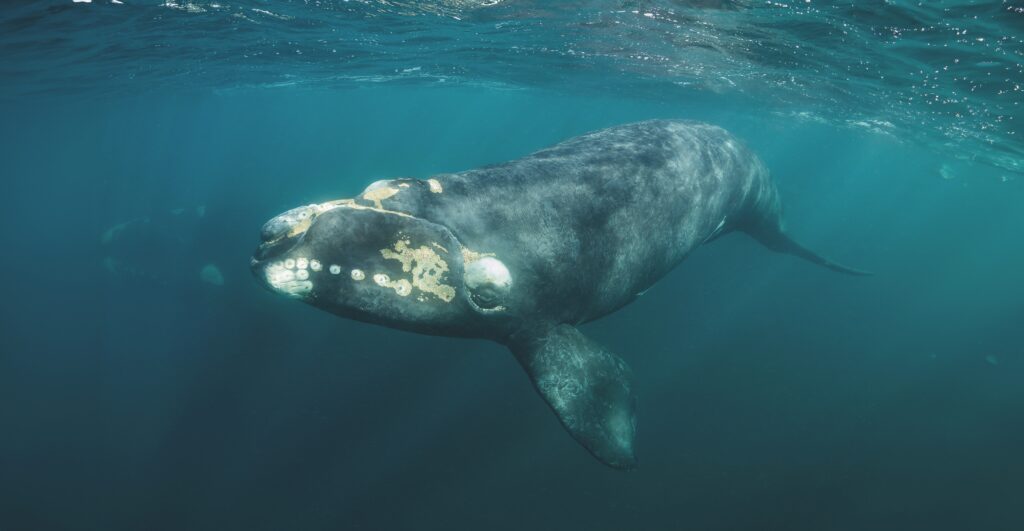
Similar optimism existed about industry advocacy at the year’s start, with post-election certainty about which party would be in control and an industry victory against the proposed vessel speed restriction rule to protect right whales. “That was a very strong start to the year,” Boerstling says, adding that another success is the certainty that came with the One Big Beautiful Bill being signed into law. Its provisions about R&D expenses and more should help the industry to be globally competitive, she says.
Washington’s legislative agenda, however, is much broader than the boating industry. A main challenge this past year was finding ways to fit the industry’s needs into the bigger picture. “We continue to tell that story, that 95% of the boats sold in the U.S. are made in the U.S.,” she says. “People in our industry — from top leadership to sales and marketing to people who work on the manufacturing floor — probably ask themselves the question, ‘Do our elected leaders know who we are?’ That’s really important for us as a team to be focused on that.”
NMMA was also involved with action in nearly 40 states this past year, taking more than 100 legislative meetings at statehouses. “We have to be focused on expanding boater access, defeating harmful reporting requirements, wakeboard regulations, boating infrastructure funding, strategic marine fuels and where we can build out some additional opportunities,” Boerstling says. “It’s a lot of things.”
When it comes to tariffs, NMMA has continued to work on education, creating webinars and documents related to frequently asked questions. “What we at NMMA have been working on is trying to thread the needle and keep everyone’s interests at heart,” she says. “We have to represent everybody.” And NMMA is integrating its state and federal teams to build an even stronger advocacy network for the coming year. “It’s an area of continued growth, but it’s an evolutionary shift, and I think it’s exciting.”
Dealership Pressures
Gruhn says dealers this past year not only had to navigate economic and policy challenges, but also saw immense shifts in potential customers and the type of experience they want. “The consumer is completely different than the consumer dealers have been accustomed to selling to,” he says. “They’ve been selling to baby boomers for the past four decades. They have largely purchased their last boat. The new generation is all different in the ways they shop and the way they buy. The difference is massive.”
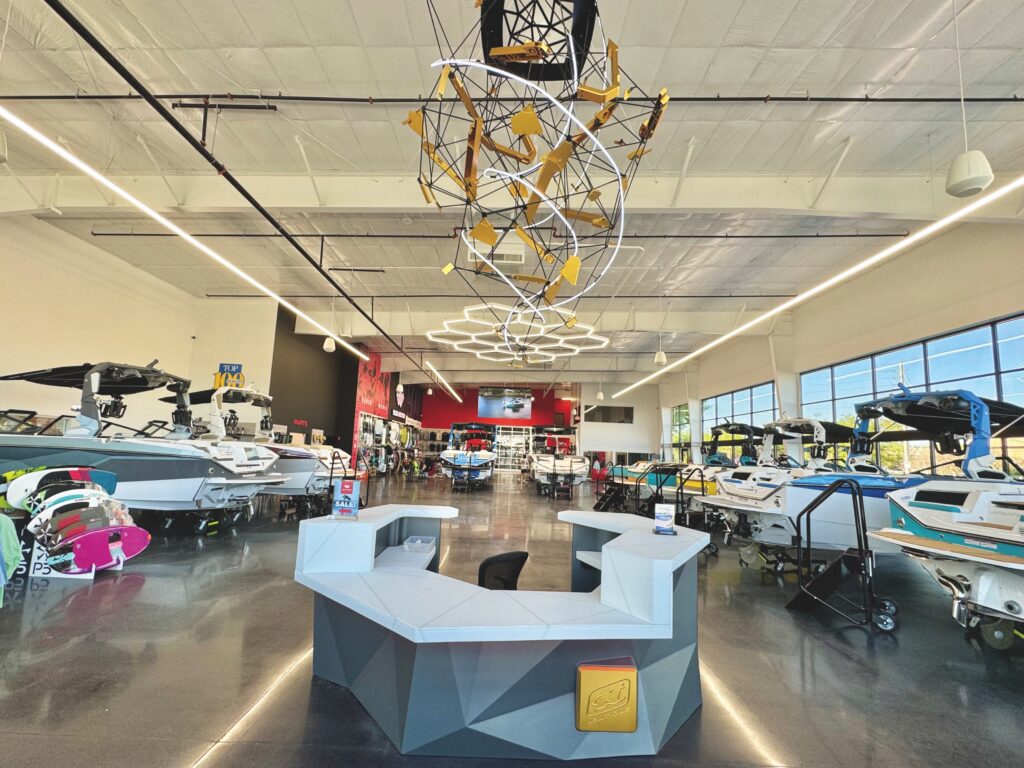
Today’s shoppers, he says, are used to having everything with ease. Hungry? Tap an app, and food shows up. Book a hotel room, and the key is in your phone. “The experiences in our retail dealerships need to evolve drastically,” Gruhn says. “I think we’re perfectly positioned for that. We can deliver incredible experiences, but we need to figure out the right methodology to do it because we’re not doing it today.”
Technology’s march is also happening so fast that it’s difficult to keep up, he says. Many dealers have customer-management tools and public-facing websites based on old templates at a time when more agility is required. “We’re behind the curve, and now we have AI,” Gruhn says. “There’s an AI agent that somebody built and released over the summer that will, for $40, contact every dealership that has the car you’re looking for and then negotiate for it.
“So you’ve got the consumer who hates the experience of negotiating, who is using technology to get around it,” he adds. “And then you layer on top of all of this that the price of boats is up 78% since 2018, and of course the cost to finance a boat is up. If you do the math, the average-price boat in 2018 at the average loan rate APR, compared to the average price of a boat in 2023 at the 2023 average APR, you would pay $100,000 more over the life of that loan for that boat.”
Gruhn says dealerships must evolve to meet consumers where they are, because some dealers have had a good year, even amid all the challenges. “We see dealers evolving in the way they’re providing experiences to customers,” he says. “We see dealers who are diversifying their business models. We see dealers who are overcoming the economic macro issues and are growing their businesses. It’s absolutely possible.”
MRAA is looking at what it will take to become a dealership of the future. The association is building a playbook with a task force whose work will be evident at the Dealer Week conference in December, Gruhn says. “We will springboard into next year with the roadmap and the playbook dealers can follow to evolve the business,” he says. “The reality is that tariffs or no tariffs, this is happening. High interest rates or no high interest rates, this is happening. It’s largely already here. I’m calling it transformational adaptation. It’s an evolution. We need to transform the way we go to market.”
Tech Advancements
AI also drove major industry shifts in other ways in 2025, says Mark Reedenauer, president and executive director of the National Marine Electronics Association. “We have several companies that have joined NMEA that are in that space, and it’s a mix of camera companies, vessel-control companies, and then other companies that take multiple sensors from devices on the boat and put it all together and output something that can be put onto a multifunction display,” Reedenauer says. “It’s a lot — and that’s just on the marine electronics side of the business.”
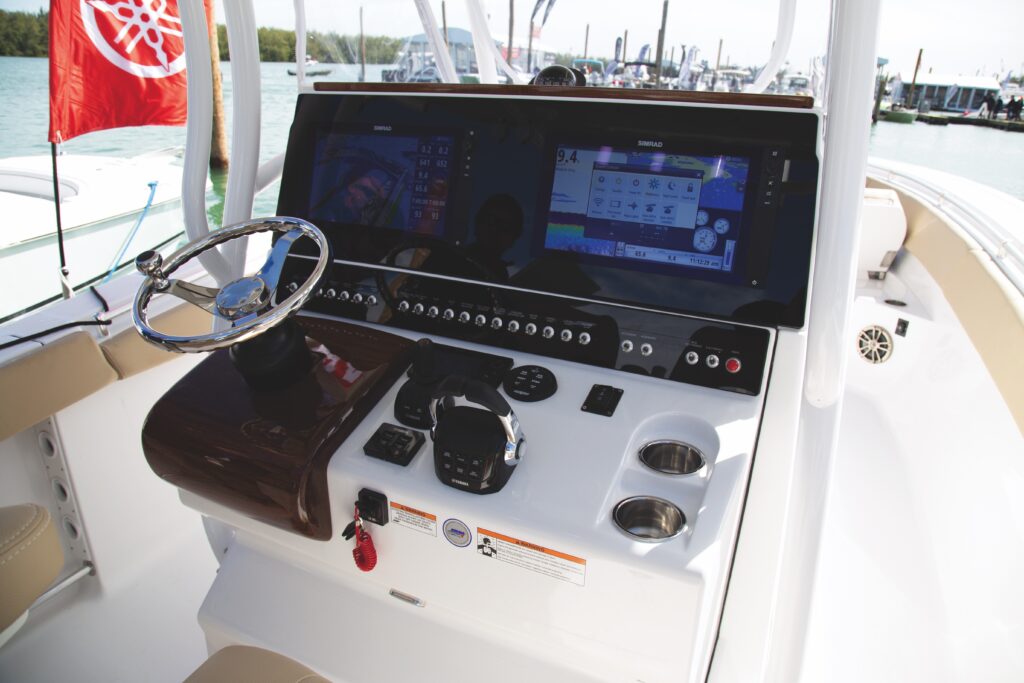
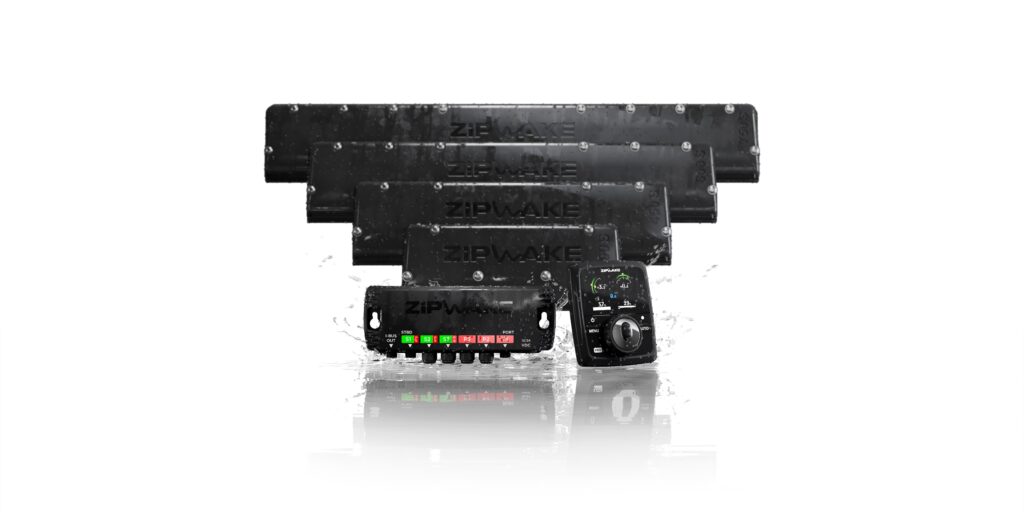
electronics to new ways to stabilize a boat’s ride. GARY REICH PHOTO (TOP); COURTESY ZIPWAKE (BELOW)
Tech advances are also affecting everything from front offices to service departments, he says. “We’re seeing members use AI to automate their phone systems and have a call-in center where you think you’re talking to someone, but you’re really not,” Reedenauer says, adding that the topic drew a lot of attention at the NMEA Conference & Expo in September. “We did a presentation called Automating Your Marine Business. That’s not the whizbang camera things. It’s more about how to keep your business up to speed with what’s going on with AI.”
In the crowd, he says, the eyes of old-school industry players grew wide as they heard all the ramifications and possibilities. Younger business owners found the information more intuitive. “But I do think that it’s getting to a point where even the more seasoned veteran business owners who started a business back in the ’80s are able to understand it, and they can adapt their business to some part of it,” Reedenauer says. “They’re getting their arms around it. They might not be as scared of it as they were.”
Generally speaking, he says, tech advancements are making boating better. AI can make fishfinder displays more specific. Radar targets can be overlayed with information for situational awareness. From the helm, skippers can turn on lights, look at charts, see engine-room video feeds — all kinds of things. “If there are tools that make this new boater have more fun on the water, or have more safety and awareness on the water, then it’s good,” Reedenauer says.
Adapting to what’s happening is a necessity, not an option, he adds. “It’s not going to go away if we complain about it or try to stop it,” he says. “It’s advancing whether we like it or not.”
Mergers & Acquisitions
Mergers and acquisitions took place across the industry this year. Soundings Trade Only reported on more than a dozen marina acquisitions alone, including Blackstone Infrastructure’s $5.65 billion acquisition of Safe Harbor Marinas. That deal was completed in April, with Safe Harbor CEO Baxter Underwood saying, “We are eager to pursue growth opportunities while maintaining our people-first culture and strong relationships with the local communities in which we operate.”
Other notable deals that happened this year included Bass Pro Shops acquiring Hobie, Tankoa Yachts acquiring Otam, Vision Marine acquiring Nautical Ventures, and Twin Vee acquiring Bahama Boat Works. Teledyne made several acquisitions, including Transponder Tech and Maretron. Vakaros, which makes small-boat instrumentation and race-management tech, acquired Sailmon Instruments. Mission Critical Electronics acquired Magnus Marine.
Hanse Yachts got a new majority stakeholder, and a Dutch entrepreneur took control at Heesen Yachts. Boston Marine Service acquired Boston Boatworks, and Bryton Marine acquired BRP’s Alumacraft brand as part of the manufacturing giant’s marine sell-off.
All of these companies and others are surviving, and in some cases thriving, which only adds to the message of the marine industry’s staying power and importance in peoples’ lives. Yes, it’s a tough time, Boerstling says, but all kinds of people can work together to help champion the industry’s message heading into the new year.
“It’s a lift that requires everyone, and we’re seeing some great champions step up, whether they’re involved in the American Boating Congress or in NMMA board leadership,” she says. “There’s a lot of opportunity to be involved at the state and local levels, and we’re excited to showcase what we have as an industry.”