

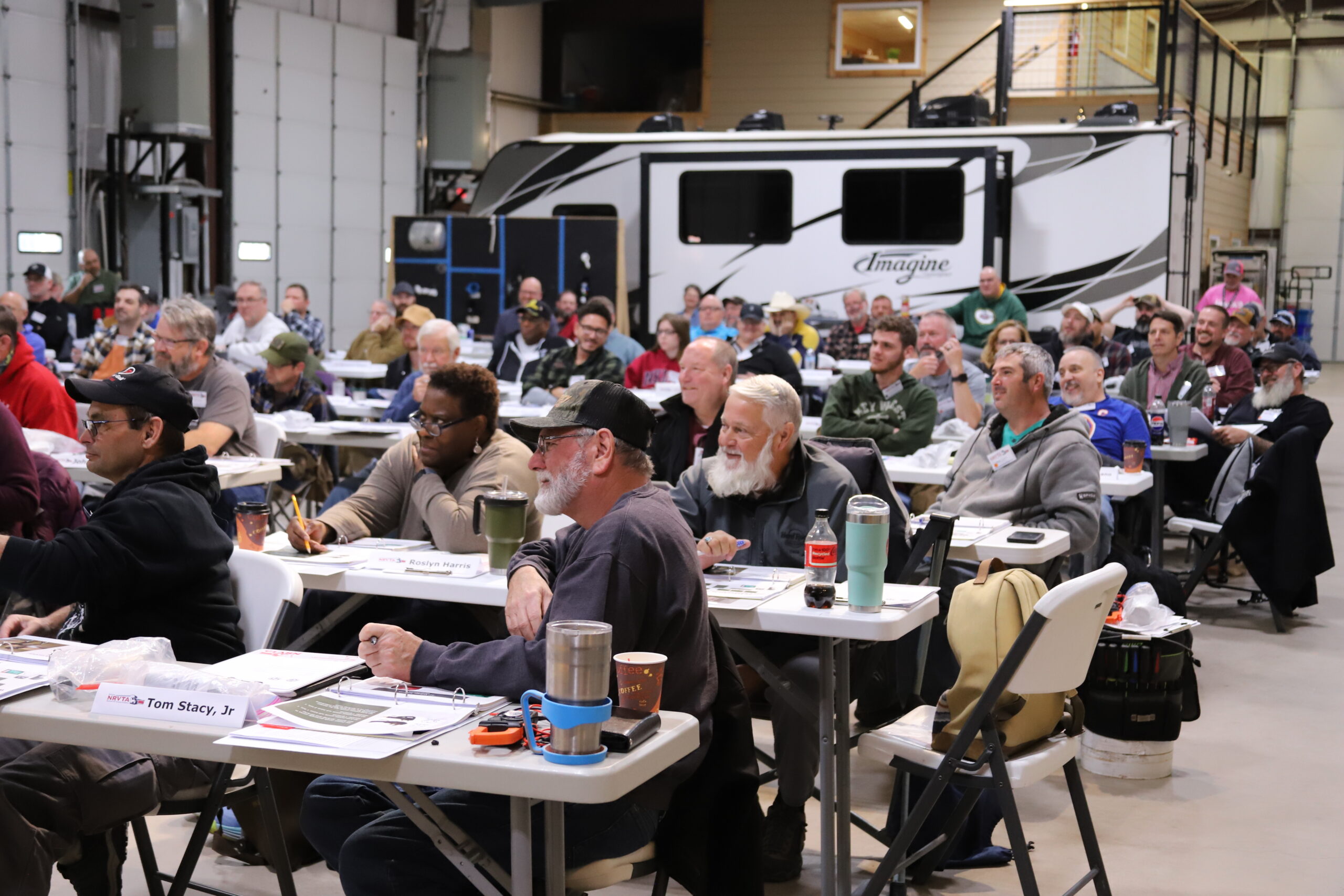
Leaders at top technician training facilities say the RV industry, like the marine industry, continues to face worker shortages. The RV Technical Institute, based in Elkhart, Ind., and the National RV Training Academy, based in Athens, Texas, are adapting their courses and recruiting students to prepare them for the many open positions in the field.
“There are 8.1 million American RV-owning households,” says Sharonne Lee, vice president of the RV Technical Institute. “According to the latest statistics from the U.S. Bureau of Labor Statistics, there are 17,360 RV service technicians. The industry estimates that there is a need for about 20% more RV technicians.”
The shortage reflects broader workforce challenges, says Tony Flammia, marketing director for the National RV Training Academy: “Training capacity across the entire skilled trades ecosystem can become a bottleneck if it doesn’t scale with demand. Not just in RVs, but in other technical trades, there are simply more units on the road than there are trained people to service them.”
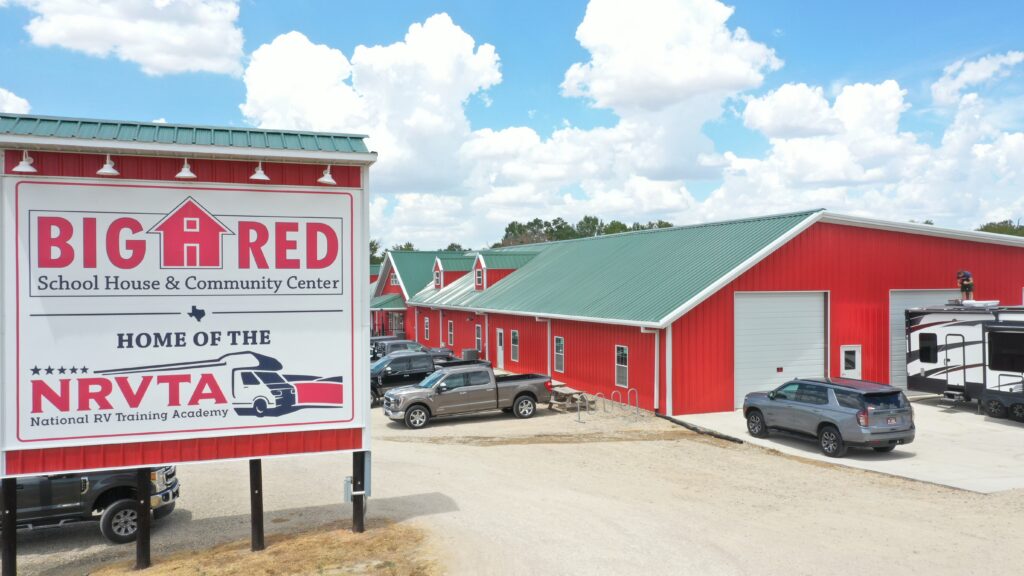
Flammia says the academy has a diverse student body, with many people who are changing careers and see RV service as a growing trade. “A lot of our students are RVers themselves,” he says. “They’ve experienced the technician shortage firsthand and come to us because they see the need and want to be part of the solution.”
The NRVTA is training people from trades like automotive, diesel, electrical, HVAC and, occasionally, marine, he says, “but we also see people coming from completely different careers — veterans, teachers, IT professionals, business owners, even doctors.
“Our focus isn’t on training for any one employer or business model,” Flammia adds. “It’s on making sure students understand systems, fundamentals, diagnostics and safety well enough to succeed whether they go into self-employment, work for a dealership, join an independent shop, or take another path within the industry.”
In the Field
Lee at RVTI says there are more than 7,000 RVTI-certified technicians, with approximately 70% holding Level 1 certification. About 15% hold Level 2 certification, another 4% hold Level 3 certification, and nearly 8% hold Level 4 master certification. Almost 70% of certified technicians work at RV dealerships, service centers or mobile repair businesses.
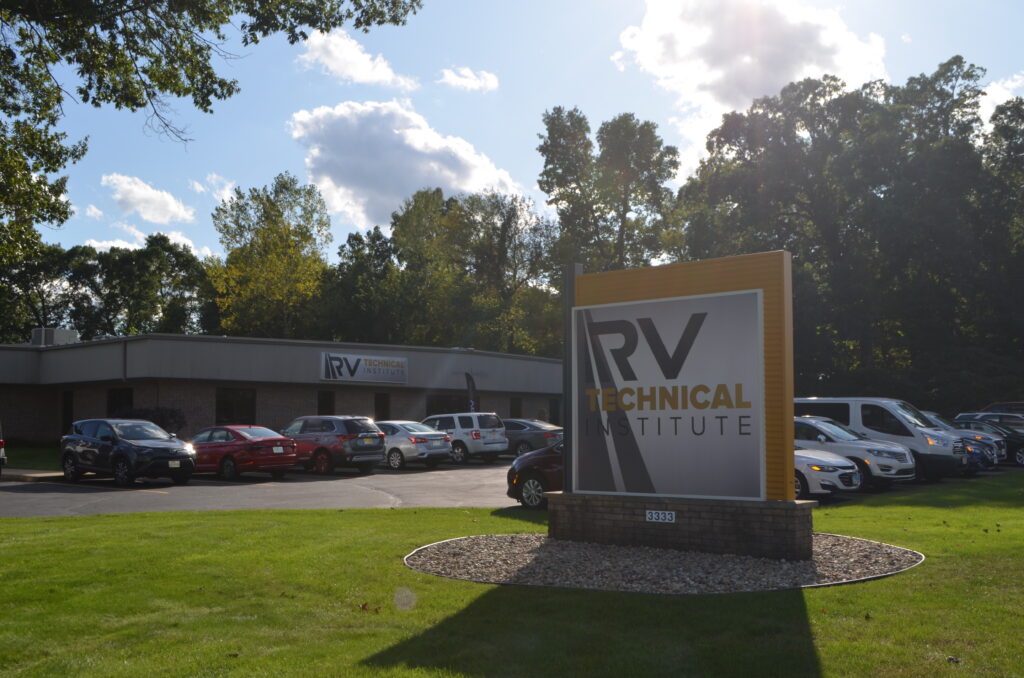
The vast majority of RVTI’s training is done at dealerships. And while recruiting new technicians is important, Lee says, it is critically important to train and certify existing RV technicians and move them to higher levels.
“This year, RVTI is building upon the strong base of Level 1 certifications and our strong partnerships with RV dealerships to move more of these Level 1 techs through to the more advanced levels,” Lee says. “We also work very closely with the RV Industry Association’s Standards Department and their technical subcommittees to stay abreast of the latest technologies and standards so that they can be incorporated into our training.”
Flammia says that as RV systems grow more sophisticated — similar to boat systems — technician training is shifting to include more diagnostics and integration. “Modern RVs aren’t just plumbing and propane anymore,” he says. “They’re rolling electrical systems.”
Lithium batteries, solar power, multiplex wiring, networking and smart monitoring are now common in new RVs, requiring expanded training in electrical theory, systems integration and diagnostics. “What we see the strongest demand for right now is around lithium battery systems, solar and electrical integration, and advanced systems diagnostics,” Flammia says.
Even so, foundational skills remain central to the academy’s curriculum. “We still focus heavily on fundamentals: understanding voltage, current, load, signal flow and system logic,” Flammia says. “If you teach strong fundamentals, real diagnostics and hands-on problem-solving, your graduates won’t just be ready for today’s technology. They’ll be ready for whatever comes next. The feedback we hear most consistently from employers is that the technicians who stand out are the ones who can actually diagnose problems instead of just replacing parts.”
The Pathways
Training partnerships with dealerships, suppliers and educational institutions are expanding technician pipelines. RVTI’s Authorized Learning Partners program allows dealerships, suppliers, campgrounds, trade schools and high schools to deliver RVTI curriculum locally. There are more than 760 Authorized Learning Partners across the country. Recruitment initiatives launched in the past year include a high school program in Colorado and a partnership with Navarro College in Texas supported by Fun Town RV.
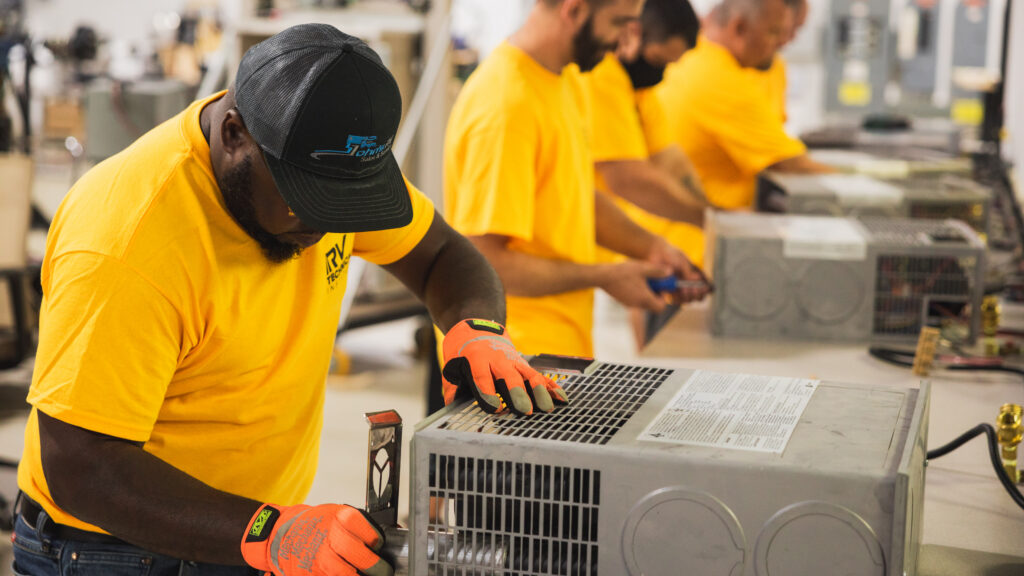
Matthew James, director of safety and employee development at General RV Center, a dealer with multiple U.S. locations, says RVTI’s structured certification programs help to ensure technician readiness and retention. “New technicians come to us with a variety of experience levels ranging from brand-new to industry to master technicians,” James says. “They will often come with related experience, but the systems are different. The solution is to have training programs that are consistent, systematic and trackable.”
He says RVTI certification helps dealerships understand technician skill levels, with ongoing training to support employee retention. “There is a strong correlation between new-hire training and employee turnover,” James says. “When employees know that there is a growth path ahead for them, they are far more likely to stay engaged.”
Median wages for RV service technicians are about $50,690 annually, comparable to automotive techs, according to the Bureau of Labor Statistics. Master-certified technicians can earn six-figure salaries, Lee says.
Job prospects are varied, but significant. “When students ask about job prospects after completing training, I give them a straightforward answer: The industry needs skilled technicians,” says Tonya Taylor, the National RV Training Academy’s director of student advisors. “Service departments across the country are operating at capacity. Many dealerships are booking service weeks, even months, out. At the same time, a significant portion of experienced technicians are nearing retirement. That gap between demand and skilled labor is real — and it’s not closing on its own.”
The growth of mobile RV service has created a viable business model for skilled technicians who want independence and flexibility, Taylor says.
“Many graduates launch mobile service operations within months of completing their training, filling critical service gaps in underserved markets,” she says. “In doing so, they aren’t just creating income for themselves; they’re expanding the industry’s overall service capacity.”
Because so many graduates go into business for themselves, entrepreneurship training is part of the NRVTA curriculum. “We make time available for them to understand what it actually looks like to run a mobile service or inspection business,” Flammia says.
Looking Ahead
Lee and Flammia say they expect workforce demand to continue rising as RV ownership grows and technology advances. “Today’s RV owners are younger, more diverse and using their RVs more than ever before,” Lee says, noting that the median owner age declined from 53 in 2021 to 49 in 2025.
Broader workforce trends also may benefit skilled trades, Lee says: “As we move toward 2030, the great reskilling is no longer a concept. It is our reality. Workers are seeking AI-proof careers that offer stability, tangible impact and high manual dexterity.”
Future RV technicians will need to combine mechanical skills with digital diagnostics as electric and smart RV systems become more common. Training organizations say continued collaboration among manufacturers, suppliers, dealerships and educators will be essential to meeting workforce demand. “Graduation isn’t the end of education,” Flammia says. “It’s the foundation.”
This story originally appeared in the March 2026 issue of Soundings Trade Only.