
The American Boat & Yacht Council recently undertook a skills assessment of sorts, in anticipation of our board of directors’ strategic-planning session. We looked at all the tasks we perform, the staff who perform them, and the frequency of different types of interactions with our members and other interested parties.
Our Standards and Compliance Department addresses the lion’s share of resources our members need. From OEM boatbuilders and accessory manufacturers to marine surveyors, insurance companies and attorneys, this department is the one that can answer real-world questions about the ABYC standards. In fact, our members have told us that access to the standards is the No. 1 member benefit.
Across our Standards and Compliance and our Education departments, electrical issues rise to the top of members’ priorities. From an Education Department perspective, the Electrical Certification and Basic Electrical continuing-education course are top draws. Likewise, a majority of the questions that go to our Standards and Compliance staff focus on electrical topics.
Based on the popularity of all things electrical, sometimes it’s good to take a look at the world of boating and electrical, and to take a walk through what’s out there and why it matters. When it comes to electrical safety, anyone in the recreational marine industry should be aware of essentially three bodies of knowledge. ABYC standards come first. That’s not just because I am writing this article, but because the ABYC has the most comprehensive set of standards for electrical safety aboard boats.
The second body of knowledge is the regulations that the Coast Guard administers under 33 CFR 183 Subpart I Electrical Systems. These federal regulations are basic (written in 1971 and largely unchanged) and apply to gasoline inboard boats.
The third body of knowledge is the National Fire Protection Association. The NFPA has a document titled “NFPA 303 Fire Protection Standard for Marinas and Boatyards,” which handles the power requirements up to the shore-power pedestal. The NFPA also publishes the 302 Fire Protection Standard for Pleasure and Commercial Motor Craft. From an electrical standpoint, this document is in sync with ABYC standards. In the bigger world beyond boats, NFPA 70 National Electrical Code (NEC) is unequivocally the source for electrical safety. ABYC standards are developed with the NEC in mind, ensuring that our requirements harmonize.
The hallmark of the ABYC’s existence has always been safety. For electrical matters, the backbone is ABYC E-11, AC & DC Electrical Systems on Boats. The best summary of E-11 can be expressed in two diagrams that my first instructor, Clyde Head, called the “walkin’ around diagrams.” In the current version of E-11 (2025), these are Diagram 1 for alternating current and Diagram 13 for direct current systems.
Though these diagrams have changed to reflect current products over the years — a perfect example is the deletion of twin inboards in favor of twin outboards — the safety measures are essentially the same. They include power source, proper conductors, proper terminations and overcurrent protection. These are the key elements to a safe system.
Everything else electrically in boating builds on these basic diagrams. All of the new and shiny things that make boating so awesome — digital switching systems, lithium-ion batteries, generator replacement, pitch and yaw control technology, and even electric propulsion — depend on these essential building blocks.
A firm “grounding” in basic electrical for boats is the first step to creating a safe and reliable electrical system. When we talk to technicians in the field, 90% of all problems come from a fault in diagrams 1 and 13. Faults include failure to connect a ground, improper terminations, improper or missing overcurrent protection, an improper wire used and the list goes on.
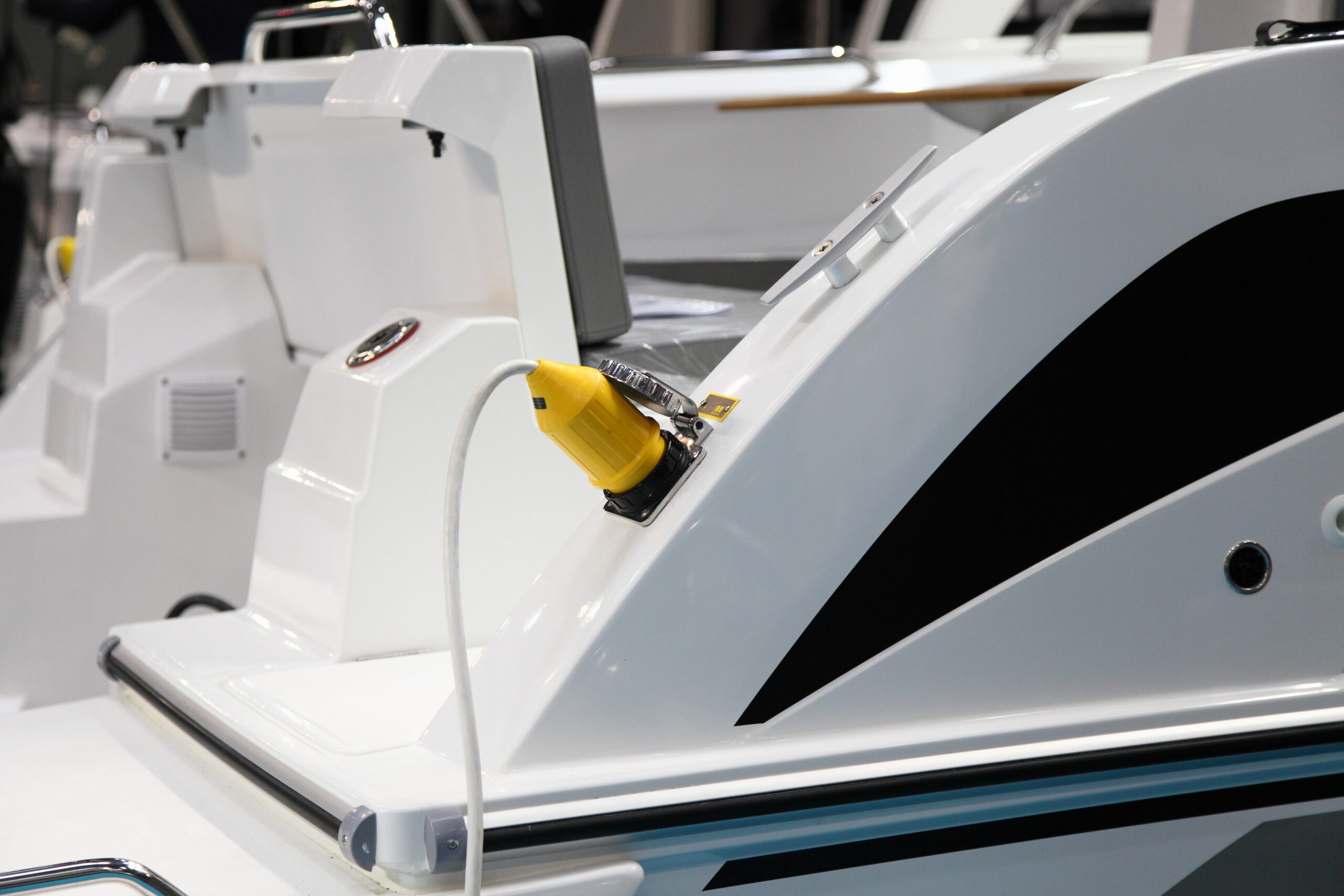
Issues manifest themselves in burned shore-power cord connections, constantly tripping breakers, melted terminations, shortened battery life and serious corrosion issues. Add to this the wide variety of electrical equipment that is available for boat-owner installation, and we have a never-ending customer base for the Certified Marine Technician.
The field of electrical is changing so rapidly that our E-11 standard is reviewed every three years instead of on the five-year cycle for other documents. A quick look back at the original version from 2003 shows some vast improvements. Subsequent additions include provisions for an equipment leakage circuit interrupter to prevent in-water shock, the addition of digital switching, a separate three-phase technical information report, an upgraded galvanic isolator standard, third-party certification of battery chargers, main overcurrent protection for larger battery banks, a new standard on lithium-ion batteries and one on electric propulsion, as well.
Electrical safety is essential for an enjoyable boating experience. With the 2025 publication of E-11, why not check out our update webinar? Annually, our Standards & Compliance Department walks through all of the changes from the last version; anyone working in electrical should not miss this one.
Today’s boats offer conveniences like never before. All of these extras need reliable power. A smart system anticipates upgrades and improvements while keeping the basic principles intact. While improving the customer experience, make sure the foundation you are building on is done by the book.