The year 2023 almost felt as if it was fighting against itself. On the one hand, economic headwinds persisted, with relentless inflation, flagging consumer and dealer confidence levels, and high interest rates. On the other hand, a steady march of technological advancements heralded a bright future for recreational boating, with electrification and artificial-intelligence applications becoming more fact than fiction.
In some cases, there were major wins, including strong pushback against federal whale-related regulations that policy experts say are an existential threat to the entire marine industry. In other cases, there were major losses, including the $85 million that a cyberattack cost Brunswick Corp. this past summer. All the while, top brands continued to expand operations, make key acquisitions and launch new products, showing just how adaptable and committed the industry is to success, no matter what challenges materialize.
 Ahturner - stock.adobe.com
Here’s a look at some of the key developments from the past 12 months, with an eye toward the industry’s major areas of discussion ahead of the new year.
A Challenging Economy
Few things were more top-of-mind this year than the economy, which challenged boatbuilders, dealers and the industry as a whole. Interest rates remained at their highest point in two decades, with expectations that they would remain well above prepandemic levels into at least 2026.
At the same time, inflation dogged consumers in their everyday purchases, including at the grocery store. Even the Girl Scouts raised the price of their cookies by a buck a box. While inflation had retreated significantly in the second half of 2023 from its June 2022 high of 9.1% year-on-year, the U.S. Department of Labor was still reporting inflation coming in above expectations in monthly reports toward the end of the year, putting hard numbers to the feelings that consumers had across the country.
“The decline in consumer confidence was evident across all age groups, and notably among consumers with household incomes of $50,000 or more,” Dana Peterson, chief economist at The Conference Board, stated in a September press release. She added that the proportion of consumers saying recession was somewhat likely or very likely rose that month, too.
 Adam121 - stock.adobe.com
For the marine industry, these trends translated into sagging dealer sentiment, with the monthly and the three- to five-year outlooks well below neutral by the end of the summer. As of August, more than half of the dealers who responded to the monthly Pulse Report survey reported declines in new- and used-boat sales. As one dealer put it, there was simply “a lot of price pushback on everything from boats to service to even parts and accessories.”
The Future of Boating
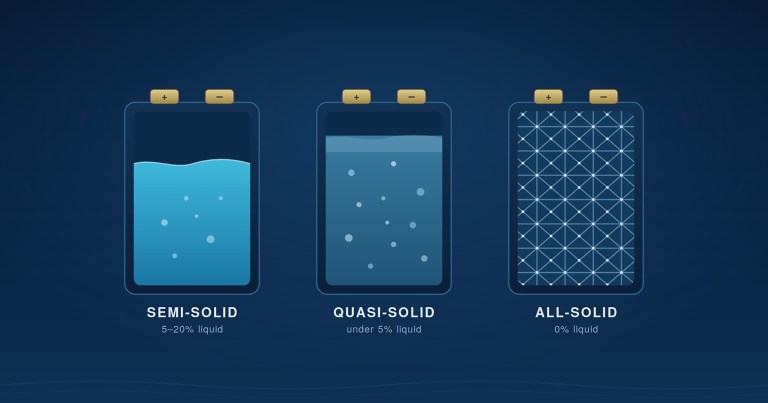
Despite the economic haze, the year also brought a slew of technological advancements related to electrification, artificial intelligence and connectivity — all of which are intended to make boating easier and more eco-friendly, and to entice more people into the sport.
Chris-Craft premiered the Launch 25 GTe, a 25-foot bowrider with a 420-hp EVOA electric motor paired to a sterndrive that provides a 50-mph top end. Brunswick Corp. introduced the electric Veer boat brand with the X13, at the same time its Mercury Marine division brought out the Avator 7.5e electric outboard. Volvo Penta partnered with Groupe Beneteau to launch a hybrid-electric Jeanneau NC37 prototype. Polish catamaran builder Sunreef displayed hull No. 1 of its 80 Power Eco with solar-electric propulsion at the Fort Lauderdale International Boat Show in October. Blue Innovations Group, headed by Tesla’s former head of global manufacturing, was preparing for the debut of the R30 electric boat as this issue went to press.
 epropulsion
Additional strides in electrification included Sweden-based Candela setting a record for distance covered in 24 hours by an electric boat, with a passage of 483 miles, averaging 17 knots with stops to recharge. Canadian company Vision Marine Technologies broke its own speed record, hitting 100 knots with a 32-foot racing catamaran built by S2 Power Boats and powered by E-Motion electric outboards. Safe Harbor Marinas announced a partnership with Swedish e-boat builder X Shore to provide the marina network’s members with access to Eelex 8000 boats. China-based ePropulsion expanded its business into the United States, and Vetus introduced a range of air-cooled electric motors for boats as big as 26 feet.
Still more advancements were made with AI and connectivity. Raymarine partnered with HD Hyundai’s autonomous navigation division, Avikus, on the NeuBoat six-camera system with AI-based obstacle detection and automated docking assistance. Volvo Penta unveiled Joystick Driving, which integrates a boat’s shift, throttle and steering into a single joystick control. Looking to the future, Yamaha named Andrew Cullen director of marine connectivity, following the creation of a connectivity division in 2022.
Cybersecurity
And yet, the machines also proved problematic. Arguably the biggest news involving technology in 2023 was the cyberattack that hit Brunswick Corp. in June. Brunswick initially described the problem as an “IT security incident” that affected some systems and global facilities. Later, the company said the disruption lasted nine days and was most significant in the propulsion and engine parts-and-accessories segments, with a major impact on the Navico Group. The financial damage, according to CEO David Foulkes, was as much as $85 million.
Also disconcerting for the industry was that the Brunswick cyberattack was at least the second one in as many years to hit a major marine company, following Bombardier Recreational Products being targeted in summer 2022. BRP reportedly had to shut down production at four manufacturing sites worldwide for about a week after hackers gained access through one of the company’s trusted third-party vendors.
 Courtesy Regal
Fighting Back
The industry also has had its hands full battling the federal government. Frank Hugelmeyer, president and CEO of the National Marine Manufacturers Association, testified before Congress in June that a speed-limiting proposal by the National Oceanic and Atmospheric Administration represented the greatest attempt to restrict public access in our time.
NOAA wants to slow boats as small as 35 feet to just 10 knots along much of the Eastern Seaboard during large swaths of the calendar year, in an attempt to prevent vessel strikes with North Atlantic right whales. Hugelmeyer told lawmakers that NOAA’s research was deeply flawed, and that the proposal threatened boater safety, along with 314,000 recreational boating and fishing jobs. Instead, Hugelmeyer told lawmakers, Congress should provide funding for research into technology that could help protect the whales.
“NOAA’s proposed rule would be the largest restriction of Americans’ shared access rights to public waters, would put boaters at risk on the water, and decimate tens of thousands of businesses in coastal communities along the Atlantic Seaboard,” Hugelmeyer stated in a press release following the hearing. “Innovative technologies, real-time tracking and monitoring tools offer a more viable solution to protect all whales while allowing for continued recreational-marine-related economic contributions along the East Coast.”
Following the congressional hearing, U.S. Sens. Joe Manchin, D-W.V., and John Boozman, R-Ark., introduced the Protecting Whales, Human Safety and the Economy Act of 2023. The bill would prohibit NOAA from issuing a rule that modifies or replaces the existing North Atlantic right whale vessel-strike regulation until technological solutions recently authorized by Congress can better track whales.
 Courtesy Honda Marine
Still Growing
In better news, regulatory threats and economic headwinds did not stop marine companies from expanding. Regal Boats announced that it is expanding its Belle Isle, Fla., headquarters, including an 82,000-square-foot lamination facility. Electric-boat builder Forza X1 acquired property in McDowell County, N.C., where it will build a factory that initially spans 50,000 square feet, with expectations of growth to 100,000 square feet and the capacity to produce 1,000 boats a year. Cruisers Yachts said it was adding 56,000 square feet to its facility in Pulaski, Wis., giving it the capacity to produce models up to 75 feet on four production lines.
Electric-boat and outboard manufacturer Pure Watercraft opened an 80,000-square-foot factory in Beech Bottom, W.Va., to build 25-foot aluminum pontoon and electric outboards. Chris-Craft opened a 70,000-square-foot manufacturing facility in Sarasota, Fla., that will increase production capacity 50%, with six models from 24 to 28 feet. Scout Boats announced a $10 million plan to expand its Summerville, S.C., headquarters with a 35,000-square-foot building to fabricate components for its yacht division and support a new manufacturing line for the 670 LX series. Hinckley Yachts expanded its Gulf Coast operations by assuming operation of Sweetwater Landing Marina in Fort Myers, Fla.
Also announcing expansions were Suzuki Marine, which opened a technical center on 20 acres in Panama City, Fla., with a 9,037-square-foot main building housing office space, service bays, boat storage and more; and Yamaha Marine, which opened a 75,280-square-foot Marine Innovation Center in Kennesaw, Ga., to house the Yamaha Marine Connected Division, as well as the company’s Marine Development, Yamaha Marine Product Management and Yamaha Marine Technical Marketing.
 Courtesy Chris-Craft
NMMA moved its headquarters from Chicago to Washington, D.C., its offices within walking distance of the Capitol, with 6,000 square feet of space for meetings, offices and rooftop entertainment.
And the sharing economy grew, as Brunswick’s Freedom Boat Club expanded into a 400th location, in Jupiter, Fla.
Mergers & Acquisitions
Some companies achieved growth through the M&A route. Some of the bigger deals in the past year include Correct Craft acquiring Indmar, Nimbus acquiring EdgeWater Boats (and partnering with HMY Yacht Sales to sell Nimbus boats on Florida’s east coast), Garmin acquiring JL Audio, Kadey-Krogen purchasing American Tugs, and Twin Vee buying Aquasport.
Additional deals of note saw Brunswick acquiring the e-foil company Fliteboard, Safe Harbor buying Savannah Yacht Center (with plans to expand superyacht services up the East Coast from their current hub in southeast Florida), Saothair Capital purchasing MJM Yachts, and MMG, a division of Seattle Yachts, acquiring SeaPiper.
Winnebago bought Lithionics Battery, a Clearwater, Fla.-based provider of lithium-ion batteries and “house power” systems, and Raymarine parent company Teledyne Technologies acquired ChartWorld, a provider of digital navigation software and hardware distributed through a subscription-based model.
New Products
Of course, companies continued to roll out product. In some cases, the news involved an expansion of an existing product offering — such as the Seakeeper Ride becoming available not just for OEM use, but also for aftermarket applications — while in other cases, companies launched entirely new offerings.
New Jersey-based Viking Yacht Co. heralded the arrival of the 90-foot Convertible following several years of figuring out how to keep the large-sportfisherman crowd happy in the face of increasingly restrictive regulations, including requirements for emissions technology that Viking says doesn’t yet exist. Mercury Marine leaned into the traditional and electric outboard markets with Verado V-8 and V-10 engines, as well as e-power with three models of the Avator. Honda added to its lineup with a 350-hp V-8, while Yamaha unveiled the XTO Offshore 450. Hoping to add even more efficiency to all kinds of engines, Sharrow brought its XO propeller series to market.
Blackfin excited serious anglers with its new 400CC flagship. At the fall shows, Brunswick unveiled the Navan by Quicksilver brand, promising “high-end standard technology.” (The first Navan models, the C30 and S30, have such features as Simrad NSX GPS and CZone.) Finland’s Saxdor Yachts made its first U.S. appearance with several models at FLIBS. Also at the show, Galeon Yachts premiered the 450 HTC, and Carolina Skiff introduced the first models in its E-Series to “bring affordability back to boating.”
This article was originally published in the December 2023 issue.