The automotive sector drives expectations in recreational boating. Boat designers, builders and components manufacturers carry the burden of meeting those consumer expectations despite significant departures between the two industries and the products they develop.
This year, as I walked around the Miami International Boat Show, I was struck by the numerous ways in which the recreational marine industry is meeting those expectations, despite the inherent challenges. Those challenges are many, beginning with the way boats and cars are used.
When you ask a boat owner what they’re doing this weekend, there is a good chance they will tell you they’re going boating. But when you ask a car owner what they’re doing, there’s little chance they’ll tell you they’re going car-ing. Cars are, for most of us, a means to an end. A nice car may make the trip from point A to point B more comfortable or enjoyable, but few people drive for the pure pleasure of driving.
People do go boating for the pure pleasure of it, and yet boats are built in dramatically smaller quantities than cars. Boats also have lives multiples of time longer than cars do, and are built with major components from different manufacturers.
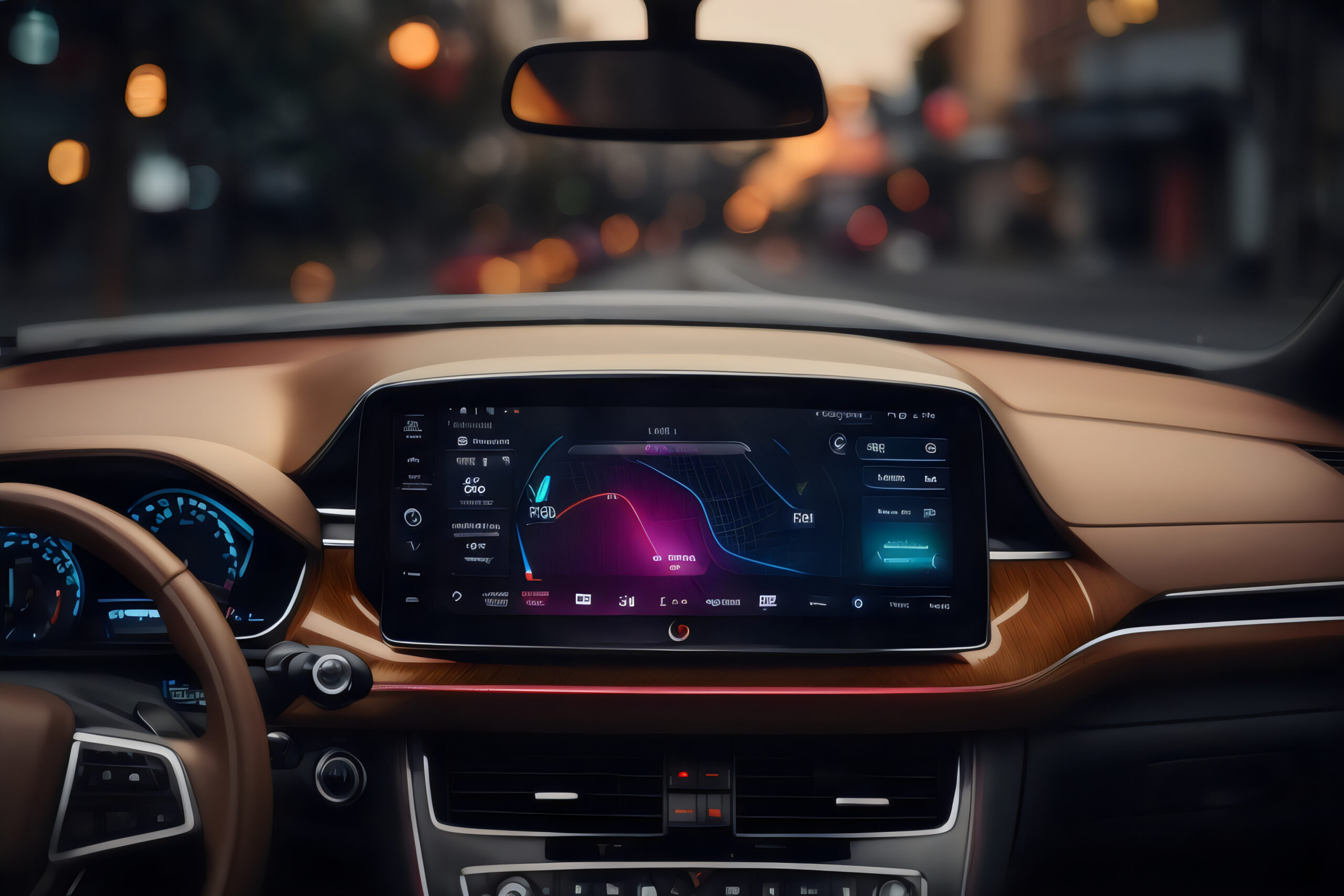
As AC and DC power systems gain integration and refinement, boats get closer to cars with the way people can use on-board systems without a degree in electrical engineering. Many helms offer integrated control of nearly every aspect of boat operation from a single, automotive-style display or a series of displays.
Similarly, Mercury Marine unveiled the Mercury Keyless System, doing away with physical keys and automating startup and shutdown tasks. My first thought was, Huh, a numeric keypad to start your engines. We’ve seen that before. But there was far more to this system, which I learned about while co-chairing this year’s panel of judges for the National Marine Manufacturers Association’s Innovation Awards.
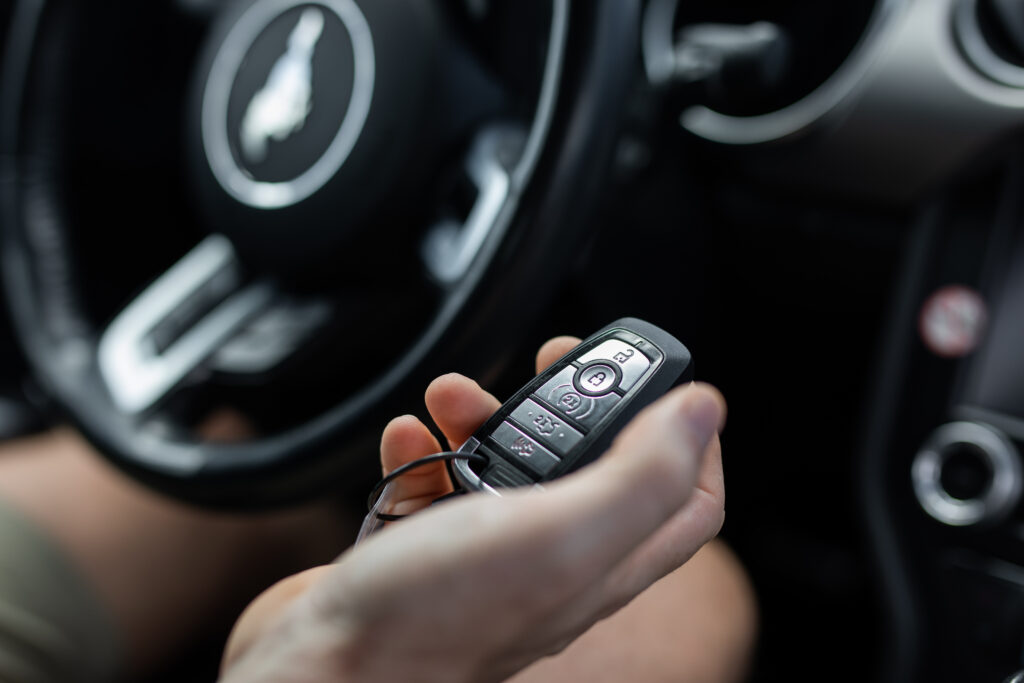
In fact, that keypad may be the least exciting part of the whole Mercury Keyless System. It leverages Mercury’s SmartCraft control systems and ecosystem to automate the process of arriving to and departing from a boat. As an operator with a paired smartphone approaches, the system unlocks, disarms anti-theft protections, automatically turns on battery switches, and allows the operator to start the engines. As the operator leaves and his phone goes out of range, those same steps are reversed.
Conceptually, those integrations may sound simple. But delivering them reliably in challenging conditions on boats, and with appropriate backups, is not easy. Mercury’s Steve Andrasko, who leads product development for Keyless Access, told me: “People are driving their Tesla, BMW or other car to the marina to get to their boat. We don’t want them stepping out of their car and going back 15 years in capabilities. We are watching those trends with a goal of making boating more accessible and as painless as possible.”
To his point, as I walked around the boat show, I was struck by the disparity of the brand-new boats and the boats I see on a daily basis in marinas. Brand-new boats have the modern conveniences we’ve come to expect, such as wireless charging and integrated lighting and control.
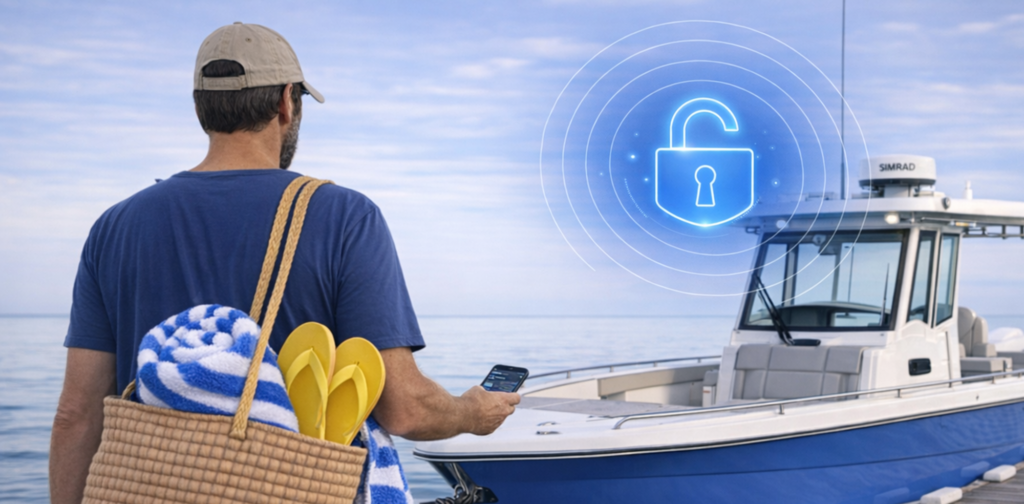
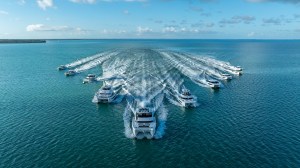
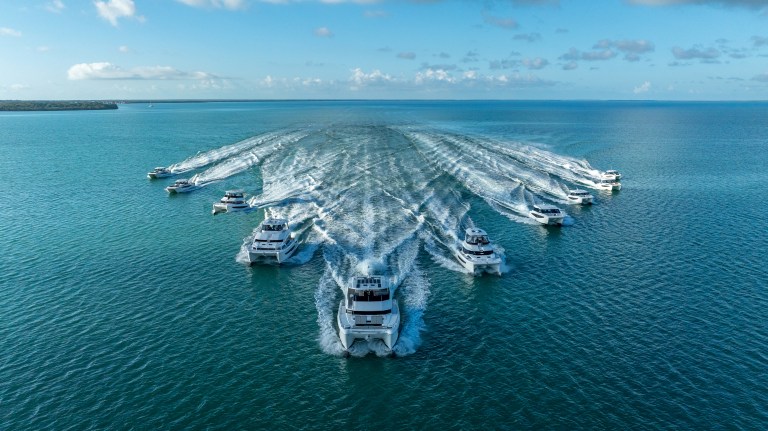
Brunswick boats. PHOTO COURTESY MERCURY
Andrasko says Mercury’s team thought about that discrepancy, too. “We know boats and engines live a long time,” he says. “People may redo portions of their boat, the interior or the helm, and they want modern functionality. But they aren’t ready to repower the boat. So we support that market, as well.” Final pricing isn’t confirmed, but Andrasko indicated the cost of retrofitting, for compatible Mercury engines, would be limited to the cost of the keypad hardware.
The influence of automotive design and technology trends was also evident throughout this year’s boat show in the form of wireless chargers. Companies like Scanstrut, which invested in this technology years ago and have pushed the design envelope, are reaping the benefits of their leadership. Additionally, widescreen displays are being put to good use. Companies like Simrad and Garmin have embraced the availability of ultrawide displays to offer versions of their chart plotters that fit well in a sleek dash. A few years ago, it felt as though the helm of a new boat was packed with screens. Now we are seeing helms get simplified and significantly better-integrated.
Today’s marine electronics manufacturers offer excellent integration paths via HTML5 to allow a single display to control many disparate systems. Boatbuilders are delivering new boats with an integrated user interface that controls and reports on the status of lighting, pumps, electrical
distribution, stabilizers, entertainment, climate control and more.
I’ve written about the technology cycle of first rolling out capabilities and then integrating them with other systems. The trend toward fewer, better-integrated displays demonstrates the maturity of our boats in that cycle. Additionally, many of those integrations utilize standard communications and display protocols like NMEA 2000, Ethernet and HTML5. Reliance on standards-based communications and display technology will greatly assist boaters as they maintain and upgrade their equipment for years to come.
This year’s Miami show demonstrated the work boatbuilders and components manufacturers are doing to keep up with consumer expectations and demands. There is no question that the industry will have to adapt to those expectations, and that adaption will continue to create challenges. Fortunately, what I saw at the show proved the industry is already meeting those challenges.