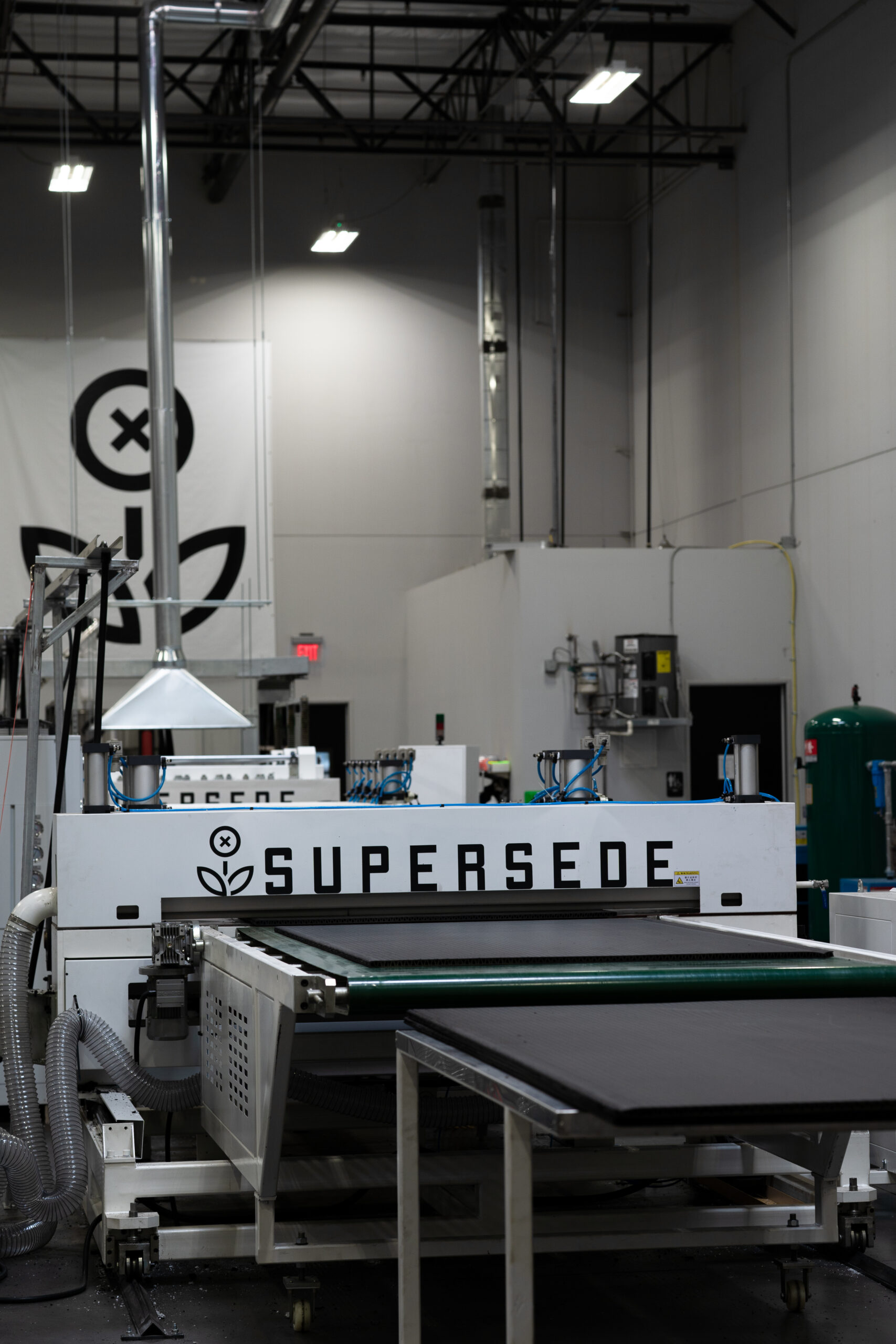
From the Arizona start-up Supersede, whose plywood replacement Marine Board is already in use by boatbuilders and RV makers, to Superwood, which is scheduled to come to the market later this year, there are new alternatives to natural wood. Molecular-restructured wood projects are in the lab too, with a goal of creating materials that are lighter, stronger, more sustainable and rot-proof.
The marine-grade plywood market totals $12 billion, according to various estimates. Overall, plywood is a $50 billion market that’s projected to grow to $74.5 billion by 2033. Supersede, which is based in Phoenix, aims to tap into that market with its Marine Board, which is extruded from recycled polypropylene using a zero-waste process. The result is a polymer panel engineered to match the dimensions, fastener pull-out strength and density of ¾-inch marine ply. Marine Board is waterproof, rot-proof and splinter-resistant, and has none of the chemical treatments of marine plywood.

Marine Board won the 2024 IBEX Innovation Award in the Boatbuilding Methods and Materials category. Earlier this year, Supersede closed a $10 million funding package for production and equipment expenses to ramp up production. “There are boatbuilders and RV manufacturers using Supersede Marine Board,” Sean Petterson, CEO and co-founder of Supersede, told Soundings Trade Only. “We’ve begun production with several prominent brands. Thus far, our partners’ feedback has been overwhelmingly positive. Supersede boards have exceeded expectations in performance, ease of use and compatibility with existing build processes.”
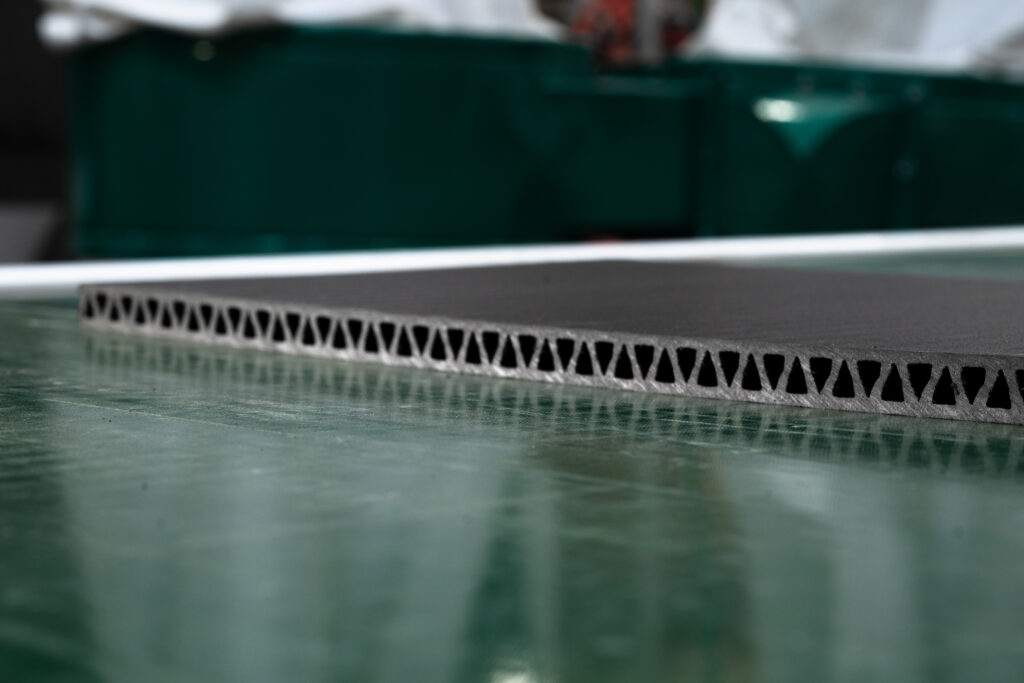
Supersede is currently testing the product’s bonding capacities to fiberglass, Petterson says, after focusing on decking for pontoons and RVs. The goal is to make it a true replacement for marine-grade plywood, including drilling and cutting. “Builders can use the same saws, drills and fasteners they’re already using with wood,” he says. “There’s no need for special tools or additional steps. Unlike wood, which creates hazardous dust, Supersede produces clean plastic chips that are easier and safer to manage during production.”
One builder using Supersede is Brunswick Boat Group’s Thunder Jet Boats in Clarkston, Wash. The material is standard on all 2026 model-year boats. It’s being used for all flooring, kickboards below the dash, and the transom board. “We are covering it with marine vinyl in place of anywhere we previously used plywood,” says Thunder Jet general manager Brian Buggenhagen. “We are currently working on the implementation of Supersede with our in-house seating products. We are specifically targeting the removal of wood in the boats, and Supersede has replaced all the decking and bulkhead use of wood in our boats.”

Buggenhagen says the builder did not have to alter production operations or methods to put the product into use. “It cuts on our saws and routers, the fastener retention is excellent, and the rigidity allowed us to keep our existing substructure,” he says. “We have found our vinyl and carpet adhere to it without any changes.”
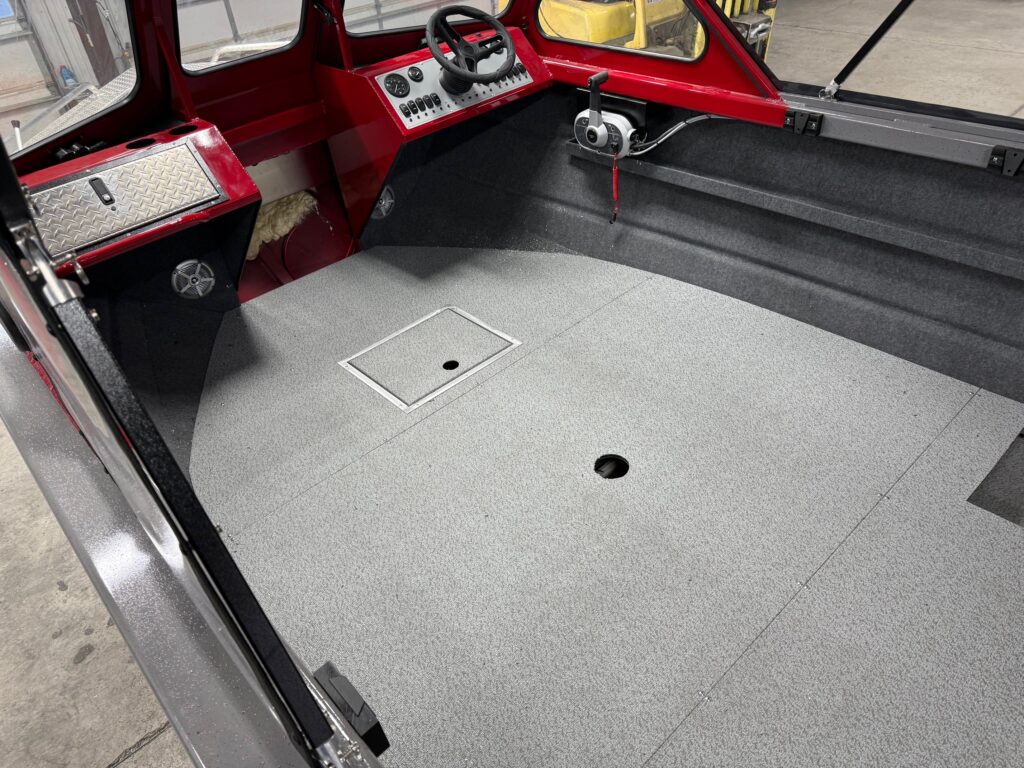
Supersede also eliminates wood dust in the shop, Buggenhagen says, and allows Thunder Jet to eliminate landfill waste. “Wood has always been a problem long-term with rot and leeching of chemicals into the bilge,” Buggenhagen says. “Our dealers and customers are always asking for a better option, and Supersede is an excellent material that meets our goals of durability and sustainability. We have also been sending the scrap back for recycling, which not only eliminates the waste, but it cuts down on our costs by reducing the garbage pickup frequency and weight.”
Superwood
InventWood’s Superwood is set to hit the market later this year. It was developed at the University of Maryland and uses real lumber, but its cell structure is altered. In the process, a board’s lignin and hemicellulose are treated in a mild alkali bath. The softened lumber is then hot-pressed at high temperatures. The pressure collapses cellular voids and brings cellulose fibers together to form hydrogen bonds, densifying the stock.
The resulting material reportedly has higher tensile strength than structural steel on an area basis, with a strength-to-weight ratio multiple times that of steel. It also earns a Class A fire rating and resists damage from termites, fungi and salt spray in accelerated testing. Commercial output is slated to begin this year at the company’s Frederick, Md., facility, backed by $15 million in Series A funding.
Superwood’s applications in boatbuilding may include deck beams, transverse bulkheads, decking, stringer caps and interior joinery. Testing for marine durability — salt exposure, UV cycles and cyclic loading, for instance — is not yet completed. In boatbuilding, with an application such as interior joinery, the product’s visual payoff would be immediate, and direct saltwater exposure would be minimal.
Product Standards
The American Boat & Yacht Council typically writes its standards in a performance-based manner, which means the ABYC allows for innovative materials such as these, says Brian Goodwin, director of standards and compliance. “For example, standard H-41, Reboarding Means, Ladders, Handholds, Rails and Lifelines, requires handholds and grab rails to withstand a load of 400 pounds, at any point, over a horizontal centered length not to exceed 4 inches,” Goodwin says. “The standard does not define or require any specific material to be used.” That process would also leave room for other materials that are not yet on the market, but that are attempting to redesign the structure of natural wood for improved strength.
At the University of Maryland, a different team has edited the genomic structure of poplar trees so they grow with lower lignin. Once lumber from these trees is pressed, it achieves greater strength without the use of chemical baths. Boatyards might one day buy such wood products directly from mills, though regulatory hurdles for gene-altered forest products exist.
Researchers at Florida Atlantic University have created a method that infuses nanocrystalline iron oxyhydroxide into red oak cell walls. The treated oak reportedly shows a significant increase in nanoscale stiffness and in hardness. The wood is reported to remain machineable and flexible. The chemistry in the process is eco-friendly and could be performed at existing wood treatment plants.