
Whether you’re responsible for just one boat or a yard full of them, launch season is the time for checklists. And it’s a good time, while you’re working through those lists, to update each boat’s compliance with time-sensitive technical standards.
Every year, the American Boat & Yacht Council publishes a supplement to its Standards and Technical Information Reports for Small Boats. Each standard is revised or reviewed at least every five years; standards dealing with fast-changing tech are reviewed on a three-year cycle. The most recent edition, Supplement 65 published last July, revised 14 of 70-some standards. Some of these changes may affect a launch-season list.
Take A-24 Installation of Carbon Monoxide Detectors and Alarms. Following Coast Guard statistics on actual cases of carbon monoxide poisoning, since 1992 the ABYC has called for the installation of carbon-monoxide detectors in boats. For this year, some long-standing definitions in A-24 were changed.
The term accommodation space was changed to habitable space. The standard defines habitable space as “space surrounded by permanent structure in which there is a provision for any of the following activities: sleeping, cooking, eating, washing, toilet, navigation or steering.” In real terms, some areas that may not have required a detector before will require one now.
“Habitable space is a much more inclusive definition,” says ABYC standards and compliance director Brian Goodwin. “If you look in a typical 35-foot center console, you’ve got a place where people can sleep, and there’s a toilet in there, but not a galley. This would meet the definition of a habitable space, so the standard would now require a carbon-monoxide detector for this space on the boat.”
H-24 Gasoline (Petrol) Fuel Systems had a moment in the news last year when the Coast Guard announced that it would accept this standard as an equivalent to its fuel-system requirement in the Code of Federal Regulations, particularly 33 CFR 183.566. For commissioning purposes, when it comes to fuel distribution, the standard says: “Check for leaks at least once a year.” Similar annual-inspection language appears in H-33, Diesel Fuel Systems.
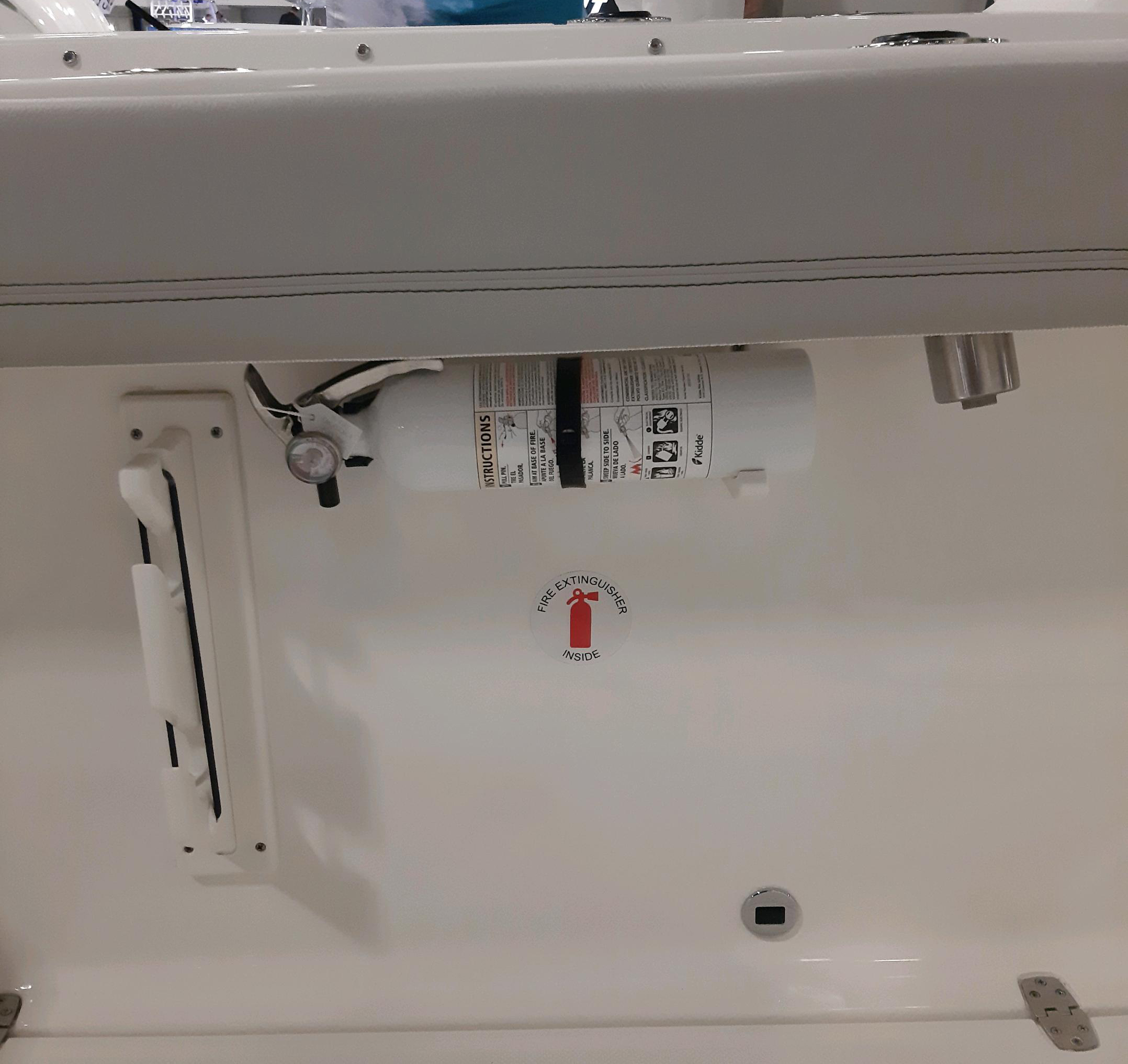
A-4 Fire Fighting Equipment spells out recommendations for fire extinguishers on boats. In addition to basic checks for dates and serviceability, look to A-4 for useful launch-season reminders: “All extinguishers shall be located adjacent to exit paths. It shall not be necessary to travel more than one half the length of the boat or 33 feet, whichever is less, to reach an extinguisher.” Tables in A-4 prescribe the recommended placement (steering position, galley, passenger cockpit) based on the boat’s size.
Definitions provide a useful reminder, too. For example, accessible means “capable of being reached for inspection, removal or maintenance without removal of permanent boat structure,” while readily accessible means “capable of being reached quickly and safely for effective use under emergency conditions without the use of tools.” A-4 calls for portable fire extinguishers to be readily accessible.
A-16 Installation of Navigation Lights contains some chestnuts, particularly for boats that have undergone a refit. Were incandescent bulbs replaced with LED bulbs? “Navigation lights using light emitting diodes should be installed to limit radio frequency interference with VHF radios, AIS or GPS receivers.” The A-16 Appendix describes test procedures to check for excessive radio frequency interference.
Were there any changes to the nav station or the cockpit enclosures? “Navigation lights shall be visible under trim conditions in which the vessel is intended to be operated and shall not be obscured by the hull, deck, fixed structures, optional equipment or designated occupant positions.”
Do you use soap or an open flame to check your propane system for leaks? A-1 Liquefied Petroleum Gas (LPG) Systems offers better ways to check. After preliminary tests of the supply line, fittings and cylinder, the “complete LPG system shall be connected and subjected to the following pressure test: With the appliance turned off, open the shutoff valve (if installed), and open the cylinder valve, then close the cylinder valve and observe the pressure gauge reading. The pressure indicated shall remain constant for not less than three minutes.” Note that some soaps and detergents contain ammonia, which attacks brass fittings and can lead to leaks that are initially undetectable.
Finally, does the bilge pump work? Beyond a simple yes or no, H-22 Electric Bilge Pump Systems offers pro tips. “Metallic parts of the pump that, when exposed to contact with bilge water may become a source of stray current leakage, shall have provision for the connection of a grounding conductor.”
Is that grounding conductor in place? And if so, is it free from excessive resistance? Do any electrical connections fall into bilge water? “The use of a length of water-resistant cable, sealed at the pump connection, is recommended so that all electrical connections can be made above the maximum bilge water level.”
You surely have your own checklists that guide your springtime commissioning steps. Consider adding any of these items that might not have made that list in the past.
Tim Murphy is education director for the American Boat & Yacht Council.
This story originally appeared in the May 2026 issue of Soundings Trade Only.