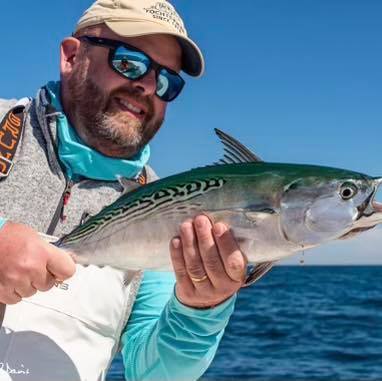

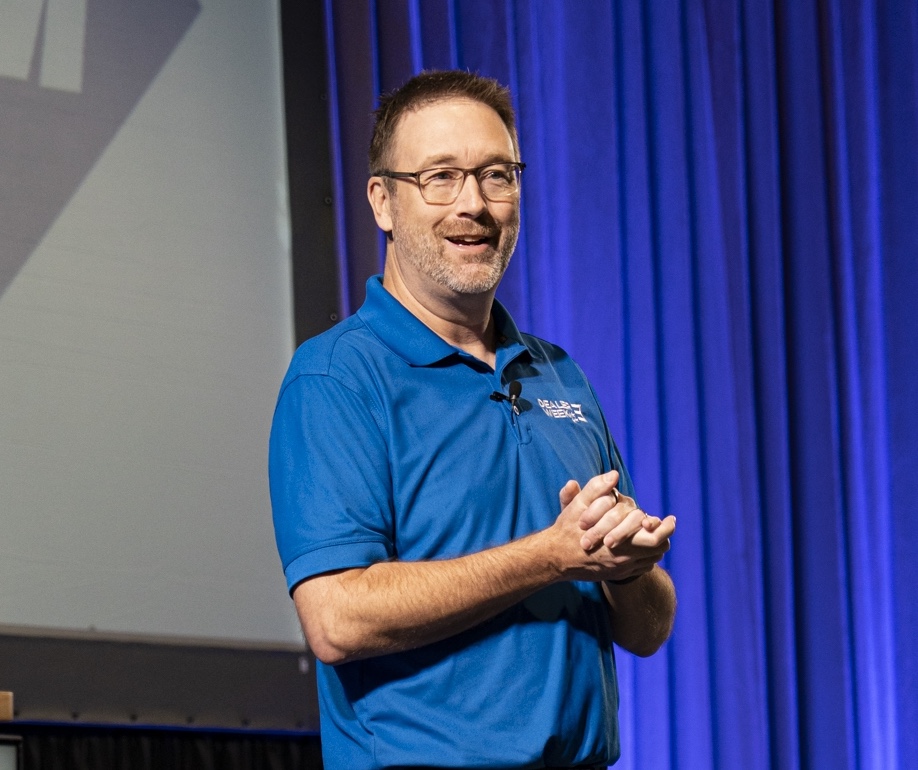
Marine Retailers Association of the Americas president Matt Gruhn has lived a life of loving the outdoors and being immersed in boating. Today, when he is not out on the water, he’s in the mountains soaking up the scenery and fly-fishing for trout from crystal-clear rivers.
Gruhn began his marine industry journey at a local marine distributor at age 14, which allows him to joke that he’s been serving marine distributors since he was a kid. He spent time in marine publishing as the editor of Boating Industry magazine, then transitioned to lead the MRAA, which today has more than 500 members and a staff of 27 working to serve and guide dealerships across North America.
Gruhn sat down with us in late October during the Fort Lauderdale International Boat Show to discuss his background, the MRAA’s mission and the biggest challenges facing marine dealerships in 2026. This interview has been lightly edited for length and clarity.
Please tell us about your background.
I’ve enjoyed being in the outdoors my whole life. Growing up, I spent a lot of time camping, fishing and boating, and I love the mountains. My family did a lot of boating, and lot of fishing from boats. We also spent a lot of time cruising and sightseeing aboard boats and just loved it.
When I was in high school, I ended up taking a part-time job at a marine distributor in Iowa. When I got out of college, I was looking to move to the Twin Cities area in Minnesota. I remember combing through the help-wanted ads in the Star Tribune newspaper, and there was one job that made me think, That’s my job. It was an associate editor position at a personal watercraft magazine. The ad said: “We can teach you about the personal watercraft. We need somebody who can write and edit and present articles to an audience.” That’s when I made the jump into boating publishing.
Fast-forward six or seven years, and our company acquired Boating Industry magazine. They asked me if I wanted to make the leap from the consumer side of journalism to the trade side, which was a big leap for me at the time. I didn’t really understand the differences and had a lot to learn. Ultimately, I fell in love with the business of boating and was very fortunate.
What is the MRAA’s mission?
It’s very simple: We fuel dealer success. That’s what we do. That’s why we exist. That’s why we’re here. We know how challenging it can be to run a small business, and that it’s even more challenging to run a retail business.
MRAA was created to support the welfare of marine dealers. What that means to us is that we provide them with insights, guidance and solutions. We spend a lot of time talking to everybody in the marketplace, whether it’s trade media, some of the industry analysts out there, boat manufacturers or the dealers themselves.
We talk about those things and listen to what’s happening in the marketplace. Then we respond with insights, guidance and the solutions that will help the dealers navigate that moment in the marketplace. It’s super-simple: We provide dealers with the help they need to run their businesses.
How many members does the organization have?
Right now we have around 500 dues-paying members, which equates to around 1,000 dealership locations.
How many folks are on staff at the MRAA?
We’re currently at 27 people. We’ve had steady growth over the last 14 years and have hired to support it.
The organization recently moved into new offices. How is that going?
We simply outgrew our last place. Fourteen years ago, I worked from my basement. We eventually moved into an office that had four individual offices. By the end of 2013, we had grown, and we needed to knock out a wall to expand. By 2019, we needed to knock out another wall. The crews were finishing it up when Covid hit, and we weren’t even done painting. By the end of 2021, we expanded the office again.
We were growing so rapidly that we needed a new location, so now we’re right down the street from where we were. It’s a great new facility that allows us to collaborate in how we serve our members.
How do you find the right people for the important jobs within the organization?
I love talking about this because it is absolutely the most important thing we do. Our people are what make this organization go.
I read a lot and spend a significant amount of time learning and understanding how people find success in running a business because we have to translate that down to our members. But we need to learn internally from it, as well. When I moved into marine trade publishing, I started reading every single book that I could. I had a book recommended to me by Bill McGill, who was MarineMax’s CEO. The book was titled Topgrading: How Leading Companies Win by Hiring, Coaching and Keeping the Best People. The book is all about how you hire and develop the players on your team, as well as how you hire for specific characteristics, how you interview people, how you find great people.
I took what I learned from that book and applied it directly to what we do. It mandated that we define our values and understand who we are as individuals and as an organization. Authenticity emerged as one of the top values that we have here at MRAA.
We interview in stages and often include our leadership team. We are looking for people who have the mentality of, I’m serving this industry and helping it grow. That’s a passion for me. It’s worked out well for us that we have purpose. We live and breathe that purpose every single day. And it’s about fueling the success of our dealers. Of course, we’ve had hits and misses like everybody else. But by and large it’s been a great way to find the right people.
People are talking about artificial intelligence and how AI is going to replace jobs and that sort of thing. For us, part of what we do is to hire people we know can develop into leaders. We see it, we identify it, and we seek out folks who are confident in making decisions, who are resilient, and who have a servant mentality about them.
When you start to layer in AI components, we feel it allows people to more efficiently do mundane work, seek out research and perform due diligence much more quickly. That said, we like to have the decision-makers and the leaders on staff who can take that insight and convert it into what it means for our dealer members. AI can do a lot of things, but we rely on our staff to make the big decisions out of what AI researched for them.
What is the most rewarding aspect of your job?
The most rewarding thing for me is simply the relationships. As you know, this is a relationship business. It’s a relationship between the dealers and their customers, between the manufacturers and their dealers, and between suppliers and boat manufacturers. Without those relationships, this is just a bunch of people trying to sell a product. The relationships are what make it rewarding from beginning to end.
What about your job can be challenging?
We’re a nonprofit first and foremost. A nonprofit is a tax status, not a business strategy. That’s the old saying in the association world. But because we’re trying so hard to serve our members, we’re not keen to drive up our prices or increase our margins. When your business model is to hire more people who will do a better job of serving members, the margins are slim, and that doesn’t allow us a lot of wiggle room to innovate, to go out and drive new programs, or to take big risks.
I would put us up against any organization of our size, considering the heart and passion that we bring to what we do. Our people live and breathe what we do every single day, and they are so passionate about it. And yet getting our industry to really understand the impact that we can have for them and the impact that we can make on their business and on their lives can be tough.

Dealer Week, your signature event, is approaching. What are you planning this year in Tampa, Fla.?
We spend most of our year promoting Dealer Week and telling people about the power of this program. Still, people arrive at the event and say to themselves, I never even knew this program existed. If you want to promote career development, job growth, increase your profitability, run a better service department or take better care of your customers, MRAA has the answers, period. That’s what we bring to Dealer Week, where we deliver four tracks of content, including leadership and management, sales and marketing, service and parts, and finance and insurance.
This year we will have 150-plus exhibitors there, including boat brands, manufacturers, gear suppliers and service providers who are all there on the same mission that we’re on. We want to help dealers grow and interact with exhibitors so they can grow, too — we’re partners in that.
The whole premise is you come to Dealer Week in December, and you learn what the trends and strategies and best practices are, as well as what’s on the horizon for the year ahead. Then we help position your dealership to tackle what’s ahead. The education is robust. The opportunity is there for more dealers and manufacturers to understand the power of the program and what it can offer.
This year in particular we are talking a lot about what we’re seeing ahead. Like I said at the beginning, our job is to support the welfare and prosperity of our members and dealers. But our job is also to look out over the horizon and understand what’s coming at them so we can be out in front of them, helping them respond.
Our keynote speaker is Doug Stephens, who wrote the book Resurrecting Retail. We’re bringing him in to share with our members what they need to be doing, and it’s such a critical conversation. They’re getting the message from us. It’s going out in our newsletter. It’s going out in your magazine. If they understand the urgency, Dealer Week is their road map. And that’s how we help them respond to current market forces and challenges.
There are a lot of macroeconomic headwinds and uncertainty right now. What are you hearing from dealers?
There’s so much uncertainty, and that’s our reality. And it’s going to be our world because of AI, technological changes and new generations coming into the industry.
What does it mean for dealers? It means they’re likely not clear on who the consumer of today and tomorrow is, and they really need to get crystal clear about it. The new generations of consumers are more experiential. They’re more likely to rent and do boat clubs than they are to buy, we believe. Is that the reality? I don’t know. We probably need to change the way we speak to them. Maybe we need to change the ways we build trust with them so that they want to do business with us.
As far as floorplan costs go, we went from this moment during Covid when dealers had no inventory and being sold out of boats to a reality where they’re paying $60,000 or $70,000 a month or more on inventory. And then, underneath it all, the uncertainty goes into what’s going to happen with tariffs, taxes and what’s next with interest rates, because the dealers are paying the elevated interest rates on buying the product from manufacturers. They’re also trying to convince consumers that the interest rates are not preventative to buying a boat. It’s all very difficult to navigate, but we’re here to help.
What do you see in your crystal ball for dealers in 2026?
We see the need for an evolution of the dealership business model, and that’s a complex topic. MRAA is going to be driving an agenda in 2026 that revolves around the dealership business model needing to evolve. These are not entirely drastic evolutions that are needed, but we need to understand that the very first step as an industry is to build trust with the consumer online when the consumer is dipping their toe in the water for the first time.
This means we need to think about how to build trust and what kind of trust consumers and the next generation are expecting to see from our dealers. I think a lot about pricing transparency. What is the out-the-door price of a boat when I’m looking for that boat online? Today the answer is, “I don’t know,” because of all these different pricing models.
We have to figure out what’s the right approach to handling that issue and make the experience better for the consumer. The customers we are doing business with today are used to Airbnb and Uber and DoorDash, where you press a button and you can watch the progress of that product or service coming to you. I can order a cheeseburger and then watch the person driving it to me and see when they’re going to arrive. That’s what we’re up against.
But we are so far from things like that in the boating industry. That’s challenging when you can buy a car from Tesla or Carvana and it shows up in your driveway with a ribbon on it. We need to figure out how to evolve our business models to get closer to that.
The automakers sell in a month what we sell in a year. We’re not the same industry, but we need to figure out how we can create those types of relationships in a meaningful way that takes care of our customers and that drives our businesses forward.
And so our agenda is asking: How do we become that dealership of the future, and what does that look like? We have assembled a task force to help us. It’s a group of dealers and manufacturers and technology providers that we are going to be announcing in the near future.
I think you’re going to see a lot of insights from our meetings. Right now, we’re talking about the challenges that we see on the horizon. Next year is going to be all about providing guidance for our dealers, and that’s what will play out at Dealer Week. You’ll see the keynote presenter talking about it, and then you’ll see the entire agenda come to life in the year ahead.